


The Unpaid Traffic Violation Text Scam Is Hitting Phones Across America
An unpaid traffic violation text scam is a fake text message that pretends to be from your state's DMV, a court, or a traffic agency — claiming you owe a small fine and must pay immediately or face serious consequences like license suspension.
Here's what you need to know right away:
- It's a scam. No state DMV, court, or traffic agency will contact you about unpaid fines via unsolicited text message.
- Do not click any links or scan any QR codes in these messages.
- Do not enter your card details or personal information on any site reached through these texts.
- If you already did, call your bank immediately and request a card replacement.
- Report the text by forwarding it to 7726 (SPAM) and filing a complaint at ReportFraud.ftc.gov.
These scam texts have been reported in dozens of states — Arkansas, Texas, Connecticut, Michigan, Massachusetts, Hawaii, and many more. Thousands of people receive them every day.
The messages are designed to trigger instant panic. They warn about late fees, registration holds, even prosecution. The amount owed is often suspiciously small — think $6.99 or $12.49 — which makes it feel easier to just pay and move on.
That's exactly what the scammers are counting on.
The real goal isn't the small fee. It's your credit card number, your name, your address — and whatever else they can harvest from the fake payment page they've built to look like an official government portal.
One Texas state trooper even received one of these texts personally. That's how widely these messages are being blasted out — scammers are using bulk SMS tools to send them to millions of random phone numbers, with no idea who actually drives a car or lives in that state.
If your privacy matters to you, this scam is worth understanding fully — because the damage goes well beyond a stolen $9.99.
Anatomy of an Unpaid Traffic Violation Text Scam
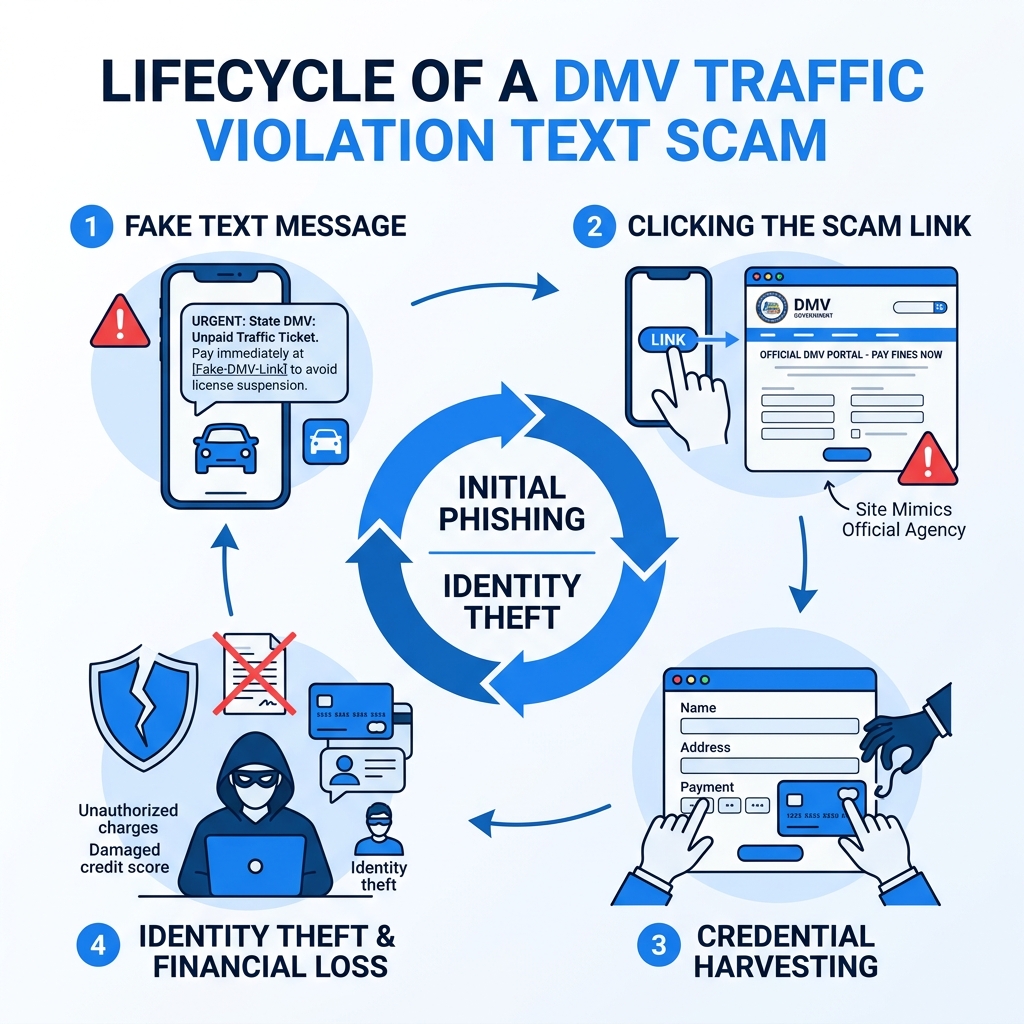
When we look at how an unpaid traffic violation text scam actually functions, we see a highly organized criminal operation. These aren't just random typos; they are carefully crafted traps. The scammers use modular templates, which means they have a basic script where they can easily swap out "Texas DMV" for "Arkansas DFA" or "Michigan 36th District Court" depending on which area code they are targeting that day.
The process usually begins with a text message containing a link or a QR code. This link doesn't lead to a government (.gov) website. Instead, it directs you to a sophisticated fake portal designed to harvest your data. We have seen these sites mimic the exact colors, logos, and fonts of real state agencies.
The most clever part of the "anatomy" is the small payment trap. Scammers often ask for a tiny amount—common bait includes $6.99, $9.99, or $19.95. Why so low? Because a $200 fine might make you stop and think, "Wait, did I really get a ticket?" But a $12.49 "processing fee" feels like a minor annoyance you can solve with a quick click. Unfortunately, Outstanding Traffic Ticket Scam: That Fine is a Trap, and once you enter your card details for that small fee, the scammers have everything they need to drain your account or sell your data on the dark web.
The Psychology Behind the Unpaid Traffic Violation Text Scam
Scammers are amateur psychologists. They rely on "fear-based urgency" to bypass your logical thinking. By claiming your license will be suspended or that you'll face a 35% service fee if you don't act by a specific date (like "June 5th"), they create a "fight or flight" response.
We also see "authority bias" at play. Most of us are conditioned to respect messages from the DMV or the court system. Scammers exploit this trust by using official-sounding titles and legal jargon. Finally, they lean on convenience. In our busy lives, the idea of "paying a ticket in 30 seconds" via a text link is much more appealing than calling a courthouse or mailing a check. This lack of "cognitive friction" is exactly how they get you to lower your guard. Understanding How to Spot a DMV Text Scam starts with recognizing when someone is trying to rush your decision-making.
Why Scammers Use QR Codes in Text Messages
Lately, we’ve noticed a shift: scammers are now texting QR codes instead of just links. This is a tactic designed to bypass the spam filters built into your smartphone. Most security software can scan a URL for "phishing" markers, but it’s much harder for a phone to "read" the destination of a QR code before you scan it.
QR codes also provide a sense of "visual trust." They look modern and official. However, scanning one can lead to malicious routing, taking you to a site that looks like a legitimate payment portal but is actually a credit card skimmer. In Michigan, the Saginaw Township Police alert residents to parking ticket text scam specifically mentioned that these QR codes were being used to trick people into making "instant payments" for non-existent parking violations.
Common Red Flags and Scammer Tactics
To protect ourselves, we need to know what a fake message looks like compared to real agency behavior.
| Feature | Official Agency Communication | Unpaid Traffic Violation Text Scam |
|---|---|---|
| Method of Contact | U.S. First-Class Mail | Unsolicited Text or Robocall |
| Link Type | Official .gov domain | Shortened (bit.ly) or scrambled URLs |
| Payment Type | Check, Official Portal, In-person | Credit Card on site, Gift Cards, Crypto |
| Urgency | Standard due dates (30+ days) | Immediate (24-48 hours) or "Final Notice" |
| Threats | Legal process via mail | Instant license/registration suspension |
If you see a text claiming you owe a "35% service fee" for a late payment you didn't know existed, it’s a major red flag. Real courts don't work that way. The FTC has warned that That text about an overdue traffic ticket is probably a scam, especially if it uses generic case numbers or threatens your credit score.
Identifying a Fake Unpaid Traffic Violation Text Scam Website
If you do click a link (which we strongly advise against!), look closely at the URL. Scammers often use domains that look almost right, like "txdmv-notice.org" instead of the real "txdmv.gov." These spoofed branding sites are designed to look like the real thing, complete with "security" badges and fake confirmation screens.
One of the most dangerous tactics is the "double dip." After you enter your card info, the site might show a fake error message, asking you to "try another card." This allows the scammers to steal information for multiple accounts in one go. If you're ever unsure about a Texas-related text, ask yourself: TXDMV Scam Text Alert: Is TXDMV.org Real or Fake? The answer is almost always that if it came via text, it's fake.
Why Official Agencies Never Text You About Fines
There is a very simple reason why the DMV or the courts won't text you: due process. Legal notifications regarding fines, tolls, or violations must be served in a way that can be legally verified, which almost always means the U.S. Mail.
Furthermore, privacy regulations prevent most government agencies from using your mobile number for unsolicited debt collection. Official policies are very strict. For example, the SC DMV Scam Text: SCDMV Never Texts alert reminds us that even if you have a legitimate issue with your license, the state will send a letter to your address on file, not a "ping" to your pocket.
State-Specific Impersonations: From TxDMV to Arkansas DFA
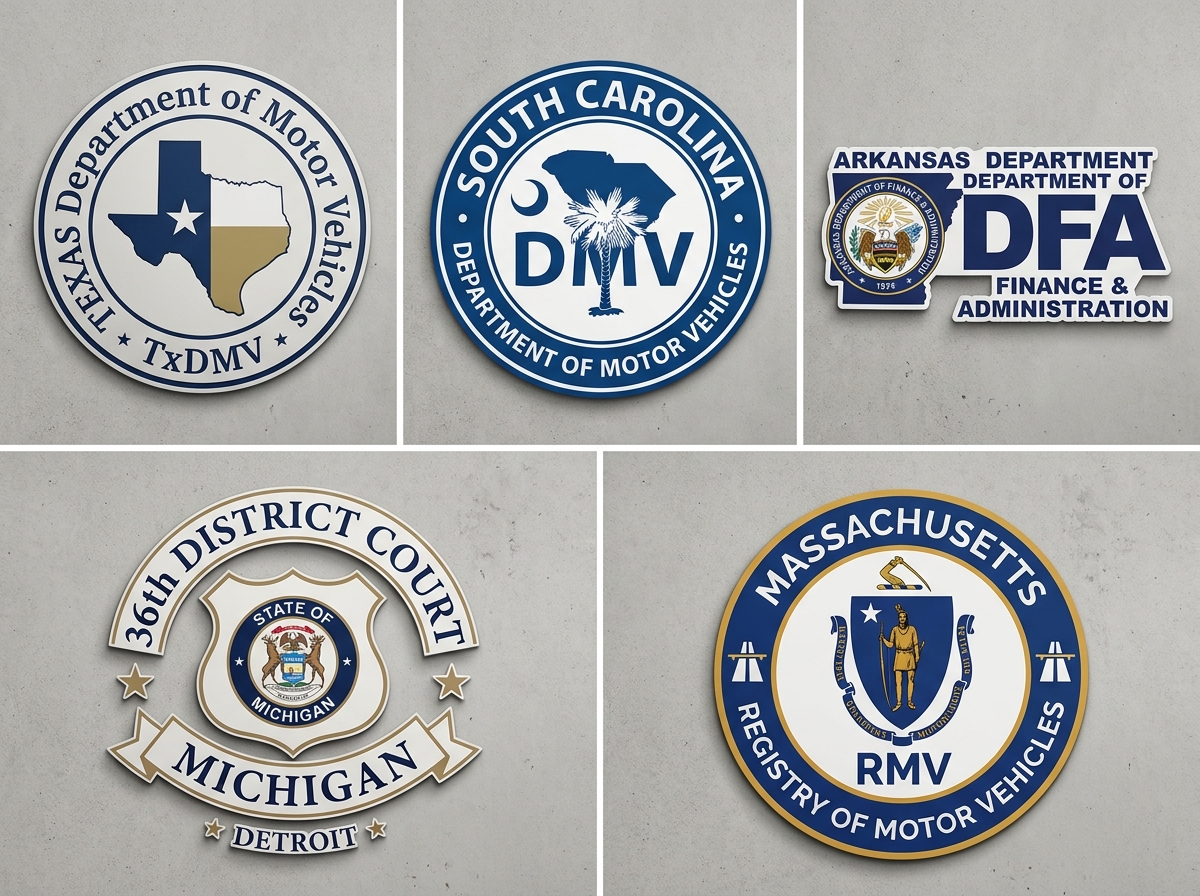
This scam is a "traveling" fraud. It moves from state to state, using the same infrastructure but changing the "face" of the scam. In Arkansas, thousands of residents recently reported receiving texts claiming to be from the DFA (Department of Finance and Administration) regarding unpaid tolls. In Texas, the TxDMV (Texas Department of Motor Vehicles) had to issue a massive alert because scammers were threatening to suspend vehicle registrations.
The Texas DMV Scam Alert: Fake Text Messages & How to Stay Safe guide highlights that these criminals don't even need to be in the same country to target you. They use "spoofed" numbers that appear to have a local area code to increase the chances that you'll answer or click.
The Michigan 36th District Court and RMV Massachusetts Alerts
In Michigan, scammers went as far as impersonating specific judges. A common text claimed to be from a "Judge John Smith" or "Judge Michael Rodriguez" of the 36th District Court, demanding payment for a "Notice of Civil Infraction." The court had to clarify that they never send payment demands via text.
Similarly, in Massachusetts, the RMV (Registry of Motor Vehicles) warned of "Final Notice" texts. These messages often include the name of the Registrar, such as Colleen Ogilvie, to add a layer of false legitimacy. Whether you are in Detroit or Boston, the advice remains the same: PA DMV Scam Text Alert: Is It Real or Fake?—it's fake.
Nationwide Spread of the Unpaid Traffic Violation Text Scam
Why is this spreading so fast? Because it’s cheap and effective. Using bulk SMS software, a scammer can send 10,000 texts for a few dollars. Even if only 0.1% of people click and pay, the profit is enormous. They use rotating numbers to stay ahead of carrier blocks, meaning the text might come from a different number every time.
We've seen this hit Florida (FLHSMV), Missouri, Arizona, and even Hawaii. The FLHSMV Scam Text: What Florida Drivers Must Know report shows that scammers often target states during peak travel seasons—like Spring Break or summer road trips—when people are more likely to believe they accidentally missed a toll or committed a minor traffic violation.
What to Do If You Fall Victim to a Scam Text
If you’ve already entered your information, don't beat yourself up. These scams are designed to be convincing. However, you must act immediately to protect your finances.
- Call your bank: Tell them you entered your card details into a fraudulent site. Request a new card and a new account number.
- Dispute the charges: If you see any unauthorized transactions—even small "test" charges of $1.00—dispute them immediately.
- Freeze your credit: If you provided your Social Security number or other deep personal data, contact the three major credit bureaus (Equifax, Experian, and TransUnion) to place a freeze on your credit.
- Set up alerts: Turn on real-time transaction alerts on your banking app so you know the second money leaves your account.
We’ve detailed the full recovery process in our guide on Parking Violation Scam Text: That Fine is Stealing Your Card.
Immediate Steps to Take After Clicking a Link
If you clicked the link but didn't enter any data, you are likely safer, but not entirely out of the woods. Some malicious sites can trigger "drive-by downloads" that install malware or trackers on your phone.
- Run a malware scan: Use a reputable mobile security app to check for hidden files.
- Clear your browser cache: This removes any tracking cookies the scam site might have placed.
- Change your passwords: Especially if you use the same password for your email or bank as you do for other services.
- Save evidence: Take screenshots of the text and the website for reporting purposes. Our guide on How to Investigate ParkMobile Scams in 5 Easy Steps offers great tips on how to document these crimes.
How to Report Fraudulent Texts to Authorities
Reporting the scam helps protect others by allowing authorities to track the scammers' infrastructure and shut down their websites.
- Forward to 7726: This is the universal "SPAM" reporting code for all major U.S. carriers. It’s free and helps your provider block the number.
- FTC Report: Go to ReportFraud.ftc.gov to file an official complaint.
- IC3: The FBI’s Internet Crime Complaint Center (www.ic3.gov) tracks these as part of larger cybercrime investigations.
- Attorney General: Most state AG offices have a consumer protection division that wants to know about these localized waves.
How to Safely Verify Traffic Tickets and Tolls
If you’re genuinely worried that you might have an unpaid ticket, never use the link in a text message. Instead, use these safe methods:
- Manual URL Entry: Open your browser and type the official state website yourself (e.g., "www.mass.gov/rmv" or "www.txdmv.gov").
- Search by License Plate: Many states, like Hawaii, offer tools like "eCourt Kokua" where you can search for citations using your name or license plate number.
- Call the Traffic Violations Bureau: Use a phone number found on an official government website or in the blue pages of a phone book.
- Check for Collections: If a fine is truly old, it might be with a legitimate collector like Pioneer Credit Recovery. You can verify these by calling their official, verified support lines.
Always remember that a legitimate Traffic Compliance Department Scam notice will come with a physical paper trail you can verify through official channels.
Frequently Asked Questions about Unpaid Traffic Violation Text Scams
Why did I get a text for a state I don't live in?
Scammers use "spray and pray" tactics. They buy lists of millions of phone numbers and blast the same text to everyone. They don't know where you live or if you even own a car. If you live in New York but get a "California DMV" text, it's just a sign that your number was part of a bulk list.
Can the DMV actually suspend my license via text?
No. License suspension is a legal action that requires formal notification, usually via certified or first-class mail. While a DMV might eventually suspend your license for unpaid fines, they will never notify you of this action for the first time via an unsolicited text message.
What happens if I only clicked the link but didn't pay?
While less dangerous than giving away your card info, clicking the link tells the scammers that your phone number is "active" and that you are "responsive." You will likely notice an increase in scam calls and texts over the next few weeks. Monitor your phone for any unusual behavior and avoid clicking any future links.
Conclusion
The unpaid traffic violation text scam is a perfect example of why digital privacy is more important than ever. These criminals rely on having your phone number and being able to link it to your identity.
At Tempo Mail USA, we believe in providing a "privacy firewall" for your digital life. While we specialize in temporary email aliases, our mission is the same across all platforms: secure identity proxying. By using tools that protect your real PII (Personally Identifiable Information), you can prevent your data from ending up on the lists that scammers use for these "smishing" attacks.
Stay vigilant, never rush into a payment, and always verify through official channels. Protect your data with Tempo Mail USA and keep your personal information out of the hands of scammers.