

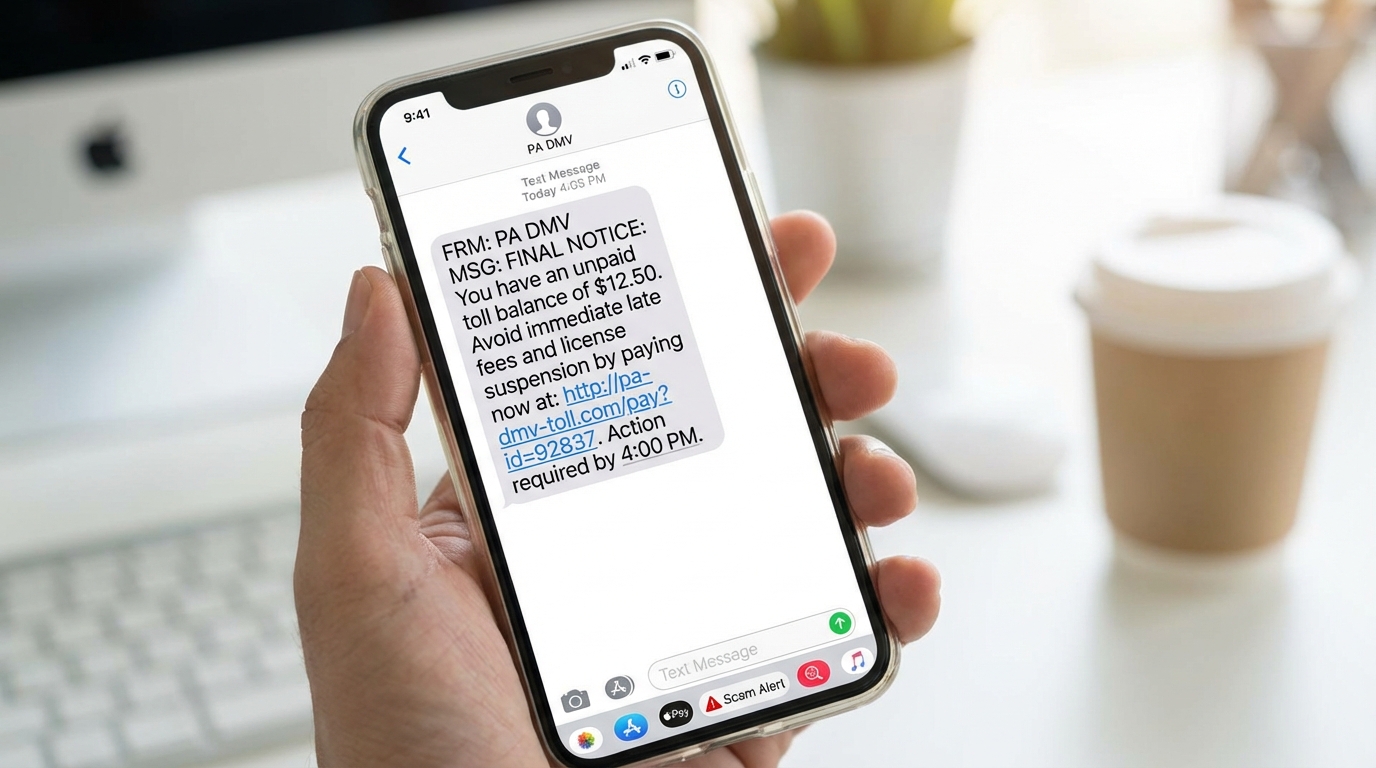

The PA DMV Scam Text Is Fooling Thousands of Pennsylvanians
If you got a pa dmv scam text claiming you owe money for an unpaid traffic ticket or toll, you are not alone — and you should not pay or click anything.
Here's what you need to know right now:
- It's fake. PennDOT, the Pennsylvania DMV, and PA Courts never send text messages demanding payment.
- Do not click the link in the message.
- Do not enter your personal or payment information.
- Report it by forwarding the text to 7726 (SPAM) and filing a complaint at reportfraud.ftc.gov.
- Delete the message after reporting it.
These scam texts have been flooding Pennsylvania phones since at least April 2024. State police have reported receiving hundreds of complaints weekly, and the problem got significantly worse in May 2025, triggering public warnings from local police departments, state senators, and the Pennsylvania Courts system.
The messages are designed to scare you. They use phrases like "Final Notice" and threaten license suspension, criminal prosecution, or credit damage if you don't pay immediately. That urgency is the trap — scammers want you to react before you think.
Criminals send thousands of these texts every single day to random Pennsylvania phone numbers. They impersonate official-sounding names like "Commonwealth of Pennsylvania Motor Vehicles (DMV)" or "PA Courts" and link to fake websites built to steal your banking details and personal information.
If your private contact details are already out there — from a data breach, a newsletter signup, or a public record — you're a potential target.
Understanding the PA DMV Scam Text and How It Works
The pa dmv scam text is a textbook example of "smishing"—a portmanteau of SMS and phishing. In these attacks, scammers leverage the high open rates of text messages to bypass your natural skepticism. Unlike an email that might sit in your junk folder, a text message pings your pocket and demands immediate attention.
In Pennsylvania, these campaigns have become incredibly sophisticated. They don't just claim you owe money; they mimic the branding of PennDOT, the PA Turnpike, and even the Administrative Office of Pennsylvania Courts. By using official-sounding language and stolen logos, they create a digital facade that looks remarkably like a legitimate government portal.
The goal is simple: data theft. Once you click the link, you are directed to a spoofed website. These sites are designed to harvest your Social Security Number, driver’s license details, and credit card information. Once the scammers have this data, they can drain your bank account or sell your identity on the dark web.
The Mechanics of Smishing in Pennsylvania
Scammers aren't just sending these texts by hand; they use automated software to blast thousands of messages to Pennsylvania area codes (like 215, 412, and 717) simultaneously. They often use "spoofing" technology to make the text appear as if it's coming from a local number or a short-code associated with a government agency.
The social engineering aspect is the most dangerous part. By claiming you have an "unpaid traffic ticket" or a "toll violation," they tap into a universal fear of getting in trouble with the law. They know that most people will at least consider the possibility that they missed a payment. To learn more about the specific anatomy of these messages, check out our guide on How to Spot a DMV Text Scam.
Common Threats Used by Scammers
To force you into clicking, a pa dmv scam text will almost always include a threat. These aren't just suggestions; they are high-stakes consequences designed to make you panic:
- License Suspension: The text might say, "Pay now to avoid license dispensation" or "Your driving privileges will be revoked in 24 hours."
- Criminal Prosecution: Some messages threaten that your file has been "sent to the local DA" for prosecution.
- Credit Damage: Scammers claim that unpaid "fines" will be reported to credit bureaus, tanking your score.
- Vehicle Seizure: Threats of "enforcement penalties" often imply your car could be booted or impounded.
It is important to remember that agencies like the Traffic Compliance Department Scam mentioned in some texts don't even exist. They make up names that sound official enough to be real but are entirely fraudulent.
Red Flags and Warning Signs of a PA DMV Scam Text
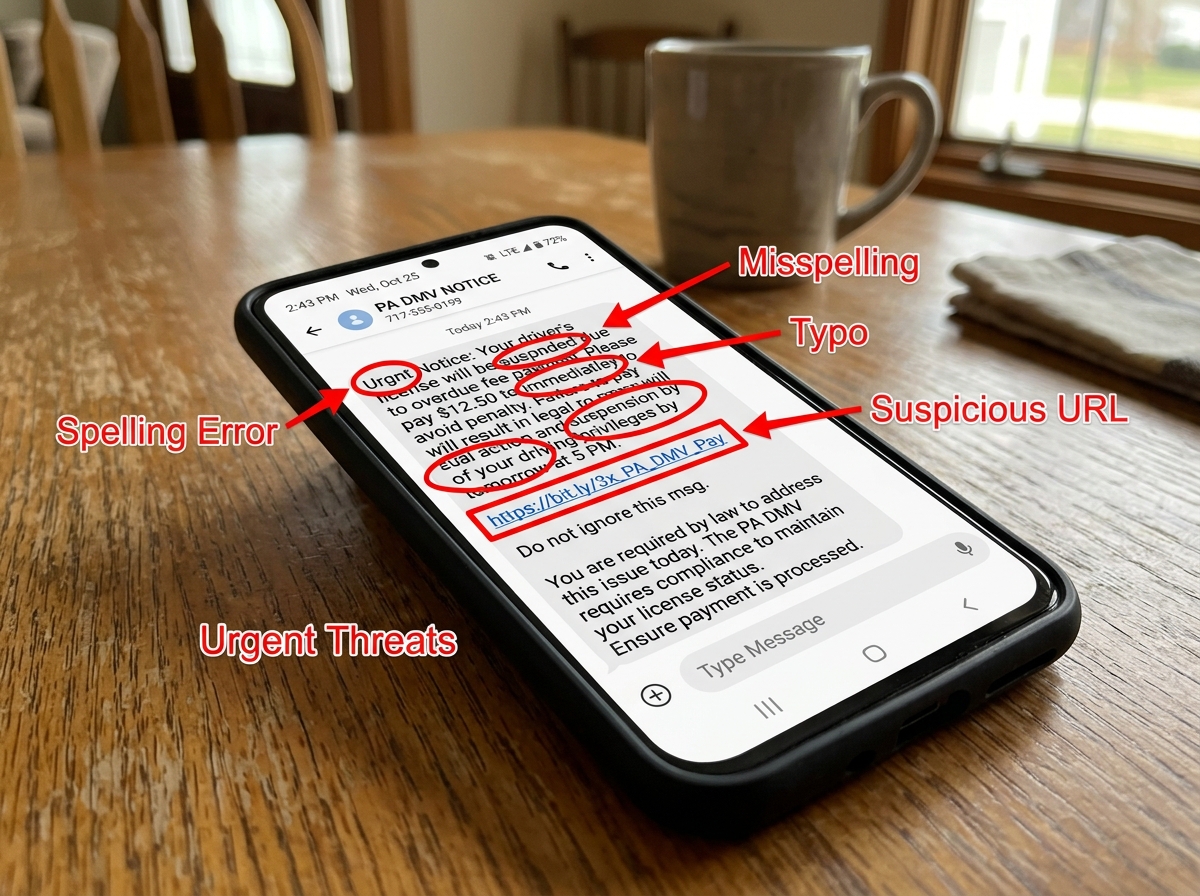
Identifying a pa dmv scam text is easier once you know what the government won't do. Real Pennsylvania agencies are bound by strict communication protocols that involve a lot of paper and postage stamps—not emojis and bit.ly links.
Identifying Fraudulent Links and Senders
The first thing you should look at is the URL (the web link) provided in the text. Official Pennsylvania government websites always end in .gov or .state.pa.us.
Scammers use "look-alike" domains or link shorteners to hide their true destination. Red flags include:
- Links starting with
bit.ly,tinyurl.com, ort.co. - URLs that look almost right, like
pa-dmv-records.comorpenn-dot-payments.net. - Messages coming from a standard 10-digit phone number rather than a verified 5-digit short code.
If you want to sharpen your "scam-dar," we recommend you Master How to Spot Phishing Emails, as many of the same principles apply to SMS messages.
Why Official Agencies Don't Text for Payment
In Pennsylvania, if you owe money to the state, you’re going to get a letter in your physical mailbox.
| Feature | Official PennDOT/Court Communication | PA DMV Scam Text |
|---|---|---|
| Primary Method | First-class USPS Mail | Unsolicited SMS |
| Urgency | Provides a 30-day window for response | Demands payment "immediately" or "within hours" |
| Payment Type | Check, Money Order, or Official Portal | Credit Card via link or Gift Cards |
| Links | Directs you to pa.gov | Directs you to random/shortened URLs |
PennDOT explicitly states on the PennDOT official website that they do not send unsolicited texts or emails asking for personal information or payment. If you haven't received a physical notice in the mail, any text you get is almost certainly a scam.
What to Do if You Receive or Click a PA DMV Scam Text
If a pa dmv scam text lands in your inbox, your best weapon is your thumb—specifically, the one you use to delete the message. However, there are a few steps we recommend taking before you hit delete to help protect the rest of the community.
- Do Not Click: This is the golden rule. Clicking the link can sometimes trigger a malware download or confirm to the scammer that your number is "active," leading to even more spam.
- Forward to 7726: This is a universal "spam" reporting number for major cell carriers. Forward the message there so providers can block the sender's network access.
- Block the Number: Most smartphones allow you to block the sender immediately. While scammers change numbers often, it still helps reduce the noise.
- Delete: Once reported, get it off your phone so you don't accidentally click it later.
For a deeper dive into staying safe, check out our guide on how to Protect Yourself - How to Avoid Phishing.
Immediate Steps for Victims Who Shared Information
If you already clicked the link and—more importantly—entered your information, don't beat yourself up. These scams are designed to be convincing. You need to act fast to contain the damage:
- Contact Your Financial Institutions: Call your bank or credit card company immediately. Tell them you were a victim of a phishing scam. They can cancel your cards and monitor for fraudulent charges.
- Place a Fraud Alert: Contact one of the three major credit bureaus (Equifax, Experian, or TransUnion) to place a free fraud alert on your file.
- Freeze Your Credit: This is the most effective way to prevent scammers from opening new accounts in your name.
- Report to the FTC: Use the official portal to Report fraud to the FTC. This helps federal authorities track the scale of the scam.
Reporting the Scam to Pennsylvania Authorities
In addition to federal reporting, you should notify local authorities. The Pennsylvania Office of Attorney General has a Bureau of Consumer Protection specifically for these issues. You can reach them at (800) 441-2555 or via email at scams@attorneygeneral.gov.
If you have lost money, you should also file a report with your local police department and the FBI's Internet Crime Complaint Center. These reports create a paper trail that may be necessary for insurance or bank reimbursement.
How to Verify Legitimate Pennsylvania Traffic Tickets and Tolls
The most effective way to beat a pa dmv scam text is to go straight to the source. If you’re worried that you actually do have an unpaid ticket, don't use the link in the text. Instead, use these verified methods to check your status.
Verifying Tolls with the PA Turnpike Commission
The Pennsylvania Turnpike Commission has seen a massive surge in "Toll-By-Plate" scams. If you genuinely missed a toll, the Turnpike will send you a physical invoice via mail. You generally have a 30-day window to pay before any late fees are applied.
To check for legitimate tolls, log in to your account at paturnpike.com or call their customer service center directly. Never trust a text that says you have a "toll violation" that needs to be paid in the next few hours. For more on this, visit the PA Turnpike security and fraud info page.
Checking Driver Status via Official Channels
If the text claims your license is suspended, you can verify this through PennDOT’s Driver and Vehicle Services website. You can request a copy of your driving record (for a small fee) or check your registration status through the "Online Services" tab.
Even if you are in a different state, scammers might target you because your number has a PA area code. We've seen similar issues elsewhere, such as the MN DMV Scam Text - Minnesota Has No DMV guide, which highlights how scammers use the same tactics across state lines.
If you are redirected to a site that looks like the Outstanding Traffic Ticket Scam, leave immediately.
Frequently Asked Questions about PA DMV Scam Texts
Does PennDOT ever send a pa dmv scam text for payment?
No. PennDOT’s official policy is that they do not use text messages to solicit payments for traffic violations, registration renewals, or driver's license fees. All such notifications are handled via the U.S. Postal Service. While some agencies may offer opt-in text alerts for appointment reminders, they will never ask for a credit card number or SSN via text. This mirrors policies in other states, such as the SC DMV Scam Text - SCDMV Never Texts.
Why did I get a pa dmv scam text if I don't live in Pennsylvania?
Scammers don't always have a list of "current residents." Instead, they use "autodialers" to target entire blocks of phone numbers associated with specific area codes. If you have a Pennsylvania phone number but live in Ohio or Florida, you will still receive the text. Furthermore, scammers often run multi-state campaigns. You might get a PA text one day and a Kentucky Transportation Cabinet Scam text the next.
What should I do if I already clicked the link?
If you clicked the link but didn't enter data, you are likely safe, but we recommend running a malware scan on your device just in case. If you did enter information, follow the recovery steps mentioned earlier: freeze your credit, change your passwords (especially for banking and email), and monitor your accounts closely. Some victims have reported Ohio BMV Scam Text - Thousands Stolen incidents where losses were significant because they didn't act quickly enough.
Conclusion
The pa dmv scam text is a reminder that our personal information—specifically our phone numbers and email addresses—is a valuable commodity for criminals. These scams work by exploiting the "digital trail" we leave behind whenever we sign up for a service or register for an account.
At Tempo Mail USA, we believe the best way to stop a scam is to prevent the scammer from ever getting your contact info in the first place. By using temporary email aliases and privacy-focused identity proxies, you can create a "firewall" between your real identity and the services you use. When you use a proxy instead of your real PII (Personally Identifiable Information), you significantly reduce the chances of your data appearing in the breaches that scammers use to fuel these text campaigns.
Stay vigilant, stay skeptical, and remember: if the DMV is texting you for money, it’s not the DMV.
For more information on protecting your digital footprint, visit https://tempomailusa.com.