

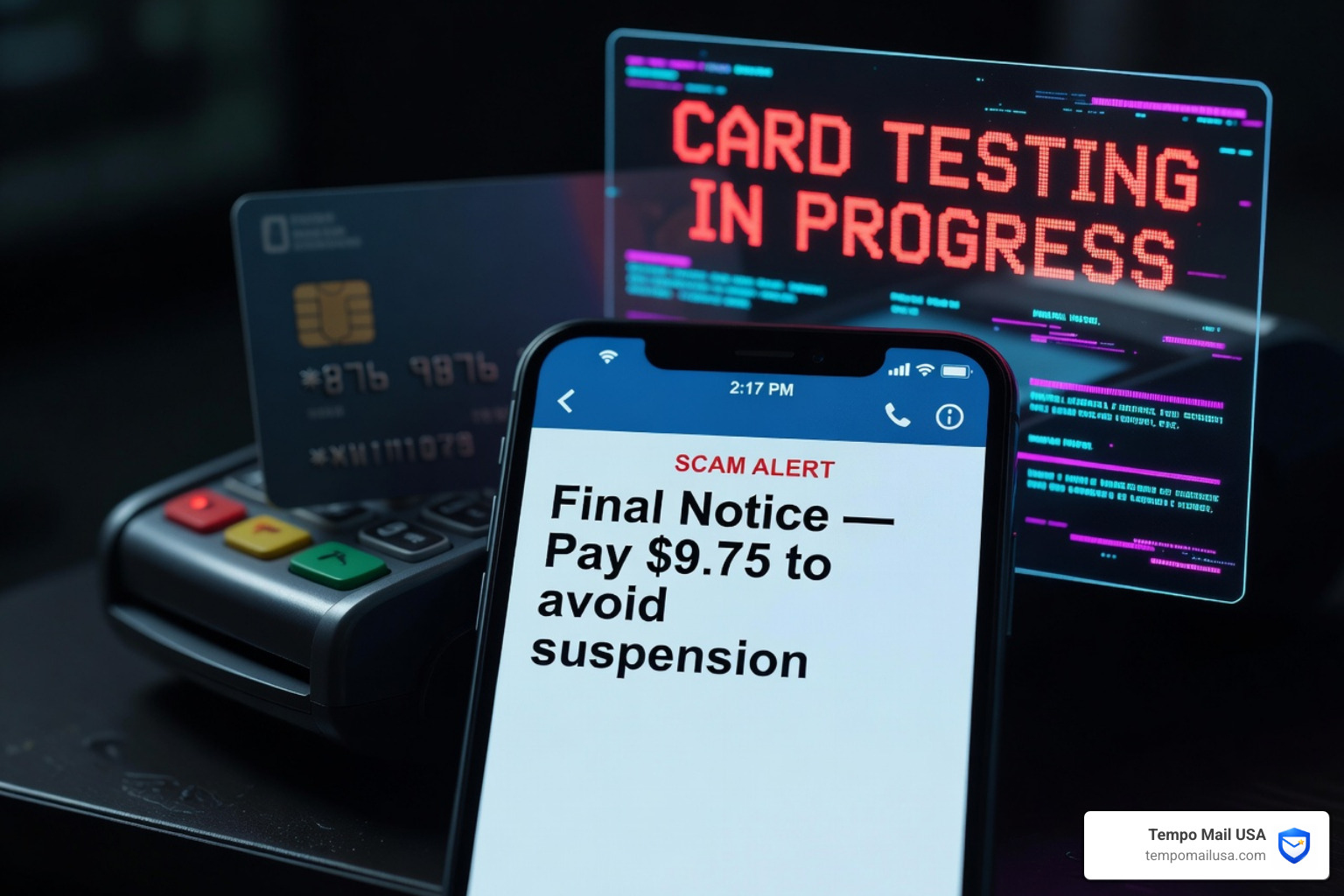

The Outstanding Traffic Ticket Scam Is Targeting Drivers Right Now
The outstanding traffic ticket scam is a phishing scheme where criminals send fake text messages pretending to be your state's DMV, claiming you owe money on an unpaid traffic violation — and threatening serious consequences if you don't pay immediately.
Here's what you need to know at a glance:
- What it is: A fake text (or email) impersonating the DMV, claiming you have an unpaid traffic ticket
- What it threatens: License suspension, registration revocation, added fees, credit damage, or prosecution
- What it wants: Your credit card number and personal information
- Who sends it: Scammers — not your real DMV, FLHSMV, Texas DMV, Georgia DDS, or any other official agency
- What to do: Do not click the link. Do not pay. Contact your real DMV directly using their official website
These scams have been reported across Florida, Texas, Georgia, Arizona, Connecticut, and many other states. The FTC has issued multiple consumer alerts about them. On June 3, 2025 alone, Connecticut's DMV received numerous reports in a single day.
The messages feel urgent and official. They often reference real-sounding legal codes, specific dollar amounts like $9.75, and deadlines as short as 24 hours. Some even include your license plate number.
But here is the hard truth: no legitimate DMV agency in the United States will send you an unsolicited text message demanding payment or threatening suspension.
The small fee they ask for — often just $5 to $10 — is not the real goal. Scammers want your full card details and personal information. The tiny "fine" is just the bait.
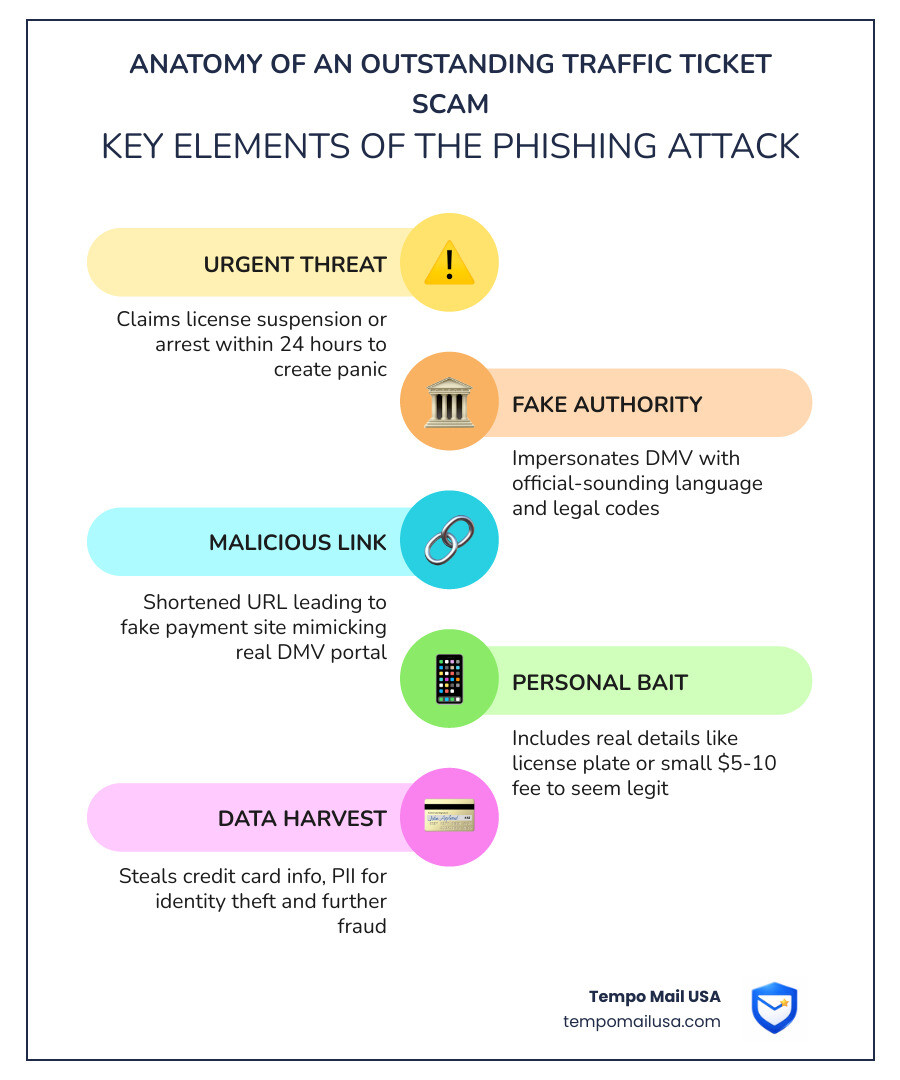
How the Outstanding Traffic Ticket Scam Operates
To understand how to protect ourselves, we first need to pull back the curtain on how these criminals operate. The outstanding traffic ticket scam isn't just a random text; it’s a calculated, multi-step operation designed to bypass our natural skepticism.
Bulk SMS and Domain Mimicry
Scammers don't just target one person at a time. They use specialized software to send "Smishing" (SMS phishing) messages in bulk to thousands of phone numbers simultaneously. They don't even need to know if you actually have a car; they play a numbers game, knowing that in a country of drivers, a significant percentage of recipients will be worried about their records.
To make the message look real, they use "domain mimicry." This involves registering website addresses that look almost identical to official government sites. For example, instead of a real .gov site, they might use txdmv.gov-kljv.win or flhsmv.xyz. At a quick glance, your brain sees "DMV" and "gov" and assumes it’s legitimate.
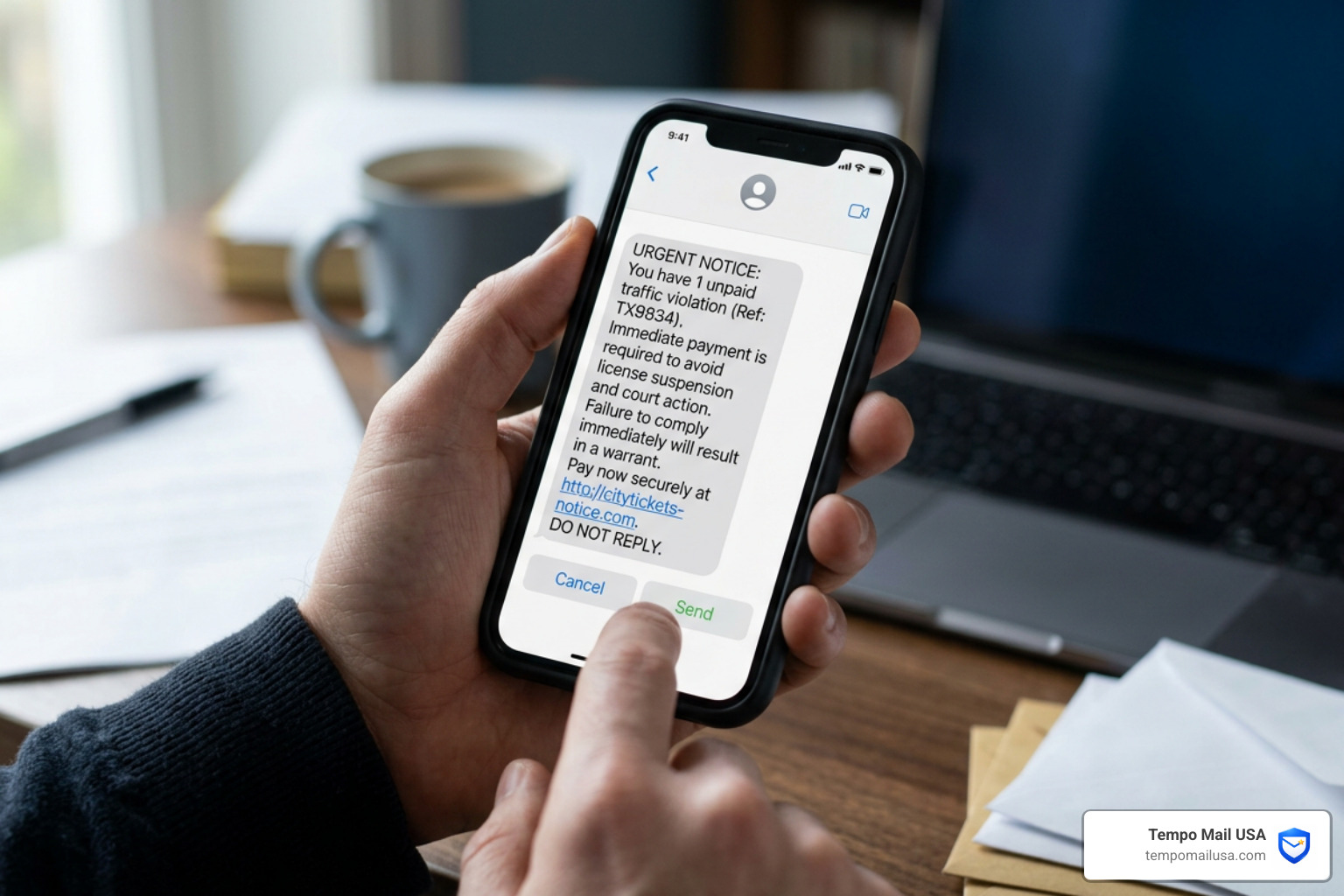
The "Final Notice" Urgency
The hallmark of this scam is the high-pressure tone. The messages almost always lead with phrases like "Final Notice" or "Urgent Action Required." They often impose a 24-hour or 48-hour deadline. This is a classic social engineering tactic: by creating a sense of panic, they hope we will act on impulse rather than logic. According to the FTC, that text about an overdue traffic ticket is probably a scam, especially if it demands immediate payment to avoid "prosecution" or "arrest."
PII Harvesting and Card Testing
Once you click the link, you are taken to a fake portal. Before you even get to the payment screen, the site usually asks for your "Personally Identifiable Information" (PII), such as your full name, date of birth, and driver’s license number. They claim this is for "verification." In reality, they are building a profile for identity theft.
After they have your PII, they ask for your credit card details to pay the "fine." Even if the amount is small—say, $9.75—the moment you hit "submit," the scammers have your full card number, CVV, and expiration date. They often perform "card testing," where they immediately attempt small, automated charges to see if the card is active before selling the data or making large fraudulent purchases.
Domain Rotation and Data Exploitation
These criminals are slippery. As soon as a fake domain is reported and blocked, they simply rotate to a new one. This "domain rotation" allows the scam to stay active for months. The data they collect doesn't just sit there; it is often bundled and sold on the dark web or used for follow-up scams, such as fake "refund" offers or "account recovery" services.
Psychological Triggers: Why the Scam Works
It’s easy to think, "I'd never fall for that," but these scams are professionally engineered to exploit human psychology. We’ve identified several key triggers that make the outstanding traffic ticket scam so effective.
Fear Stacking
Scammers use a technique we call "fear stacking." They don't just threaten one thing; they pile on the consequences. A typical text might claim that if you don't pay, you will face:
- A 35% service fee increase.
- A 30-day driving privilege suspension.
- Vehicle registration revocation.
- Damage to your credit score.
- Potential legal prosecution.
By stacking these fears, the scammer makes the risk of not paying feel much higher than the cost of the small fine.
Authority Bias and Specificity
We are conditioned to respect government authority. When a message mentions "Florida Administrative Code 16C-16.003" or includes a "Case Number," our brains tend to switch off their critical filters. This specificity makes the lie feel grounded in reality.
The Small Payment Bait: A Low-Friction Solution
This is perhaps the cleverest part of the scam. Why do scammers ask for only $5, $10, or $19.95?
- It feels harmless: Most people won't stress over losing $10.
- It bypasses bank alerts: Many banks don't send fraud notifications for sub-$20 transactions.
- It creates a "low-friction" solution: If you think you can make a massive problem (license suspension) go away for just $7, you’re likely to just pay it to "be safe."
| Feature | Legitimate DMV Notice | Scam Text Message |
|---|---|---|
| Delivery Method | Official U.S. Mail | Unsolicited Text (SMS) |
| Link URL | Ends strictly in .gov | Ends in .win, .xyz, or .com |
| Payment Deadline | Usually 30+ days | 24 to 48 hours |
| Tone | Formal and procedural | Threatening and urgent |
| Payment Method | Secure portal or check | Direct link in text |
Identifying Red Flags in an Outstanding Traffic Ticket Scam Message
The best defense is a sharp eye. Even the most "official" looking text has cracks. Here is what we should look for to spot the outstanding traffic ticket scam before it’s too late.
Suspicious URLs and Non-Government Domains
The biggest red flag is the website link. Official government websites in the United States almost exclusively use the .gov top-level domain. If the link in the text ends in .win, .xyz, .top, or even a suspicious .com (like official-dmv-records.com), it is a scam. Look closely at the URL structure—scammers often put "dmv.gov" at the beginning of a long, nonsensical string to trick you.
"Reply Y" Prompts
Many of these texts include an instruction like "Reply Y and reopen the message to pay." This isn't for your convenience. By replying, you are confirming to the scammer that your phone number is active and that you are willing to engage. This makes your number more valuable for future scam attempts.
Grammar, Formatting, and Factual Errors
While scammers are getting better, they still make mistakes. Look for:
- Odd capitalization (e.g., "Department of Vehicles" instead of "Department of Motor Vehicles").
- Missing punctuation.
- Generic greetings like "Dear Citizen."
- Factual errors, such as a "Texas DMV" message being sent to a resident of Idaho who has never been to Texas.
Missing Specifics
A real traffic ticket will include your specific citation number, the date of the alleged offense, the location, and the law enforcement agency that issued it. Scam texts are almost always generic, using "Case Numbers" that don't correspond to any real legal system. If you want to be sure, you should always verify your license status at DDS Online Services or your state's equivalent portal.
Immediate Steps to Take if You Are Targeted
If you receive one of these messages, or worse, if you’ve already interacted with one, don't panic. We have a clear roadmap for what to do next.
If You Just Received the Text
- Do not click the link. This is the most important rule.
- Report the message. Forward the text to 7726 (which spells "SPAM"). This alerts your mobile carrier to the fraudulent sender.
- Delete and block. Once reported, block the number and delete the thread.
- Learn more. You can find more info about traffic compliance department scams on our blog to stay ahead of new variations.
If You Clicked the Link or Entered Information
If you realized too late that the site was a fake, you need to act fast to protect your identity and your wallet.
- Notify Your Bank: If you entered credit card details, call your bank immediately. Don't just "monitor" the account—request a new card and a new account number. Scammers often wait weeks before making a major move.
- Place a Fraud Alert: Contact one of the three major credit bureaus (Equifax, Experian, or TransUnion) to place a free fraud alert on your credit report. This makes it harder for scammers to open new accounts in your name.
- Freeze Your Credit: For maximum security, we recommend a full credit freeze. This prevents anyone from accessing your credit report to open new lines of credit.
- File a Report: You should report fraud to the Federal Trade Commission and your local law enforcement. This helps authorities track the spread of the scam and potentially shut down the infrastructure behind it.
- Update Security: Change the passwords for your primary email and banking accounts. Ensure that Two-Factor Authentication (2FA) is enabled—ideally using an authenticator app rather than SMS codes.
Frequently Asked Questions about DMV Scams
Does the DMV ever send text messages about an outstanding traffic ticket scam?
No. The official policy for the vast majority of state agencies—including the FLHSMV, Texas DMV, and Georgia DDS—is that they do not send unsolicited text messages demanding payment. Official notifications regarding license suspensions or unpaid fines are sent via the U.S. Postal Service. While some states allow you to opt-in for renewal reminders via text, these will never threaten you with arrest or demand immediate "Pay Now" clicks for violations.
How can I safely verify a real outstanding traffic ticket scam notice?
If you’re worried that you might actually have a ticket, never use the contact information provided in a suspicious text. Instead:
- Manual Entry: Open your browser and manually type in the official government URL (e.g.,
flhsmv.govortxdmv.gov). - Official Apps: Use official state-sanctioned apps like "myDMV."
- Direct Contact: Find the phone number for your local clerk of courts or DMV office from a trusted source (like the back of your physical license) and call them directly.
- Check Records: For example, Arizona residents can check Arizona MVD status by logging into their secure portal to see any legitimate outstanding fees.
What happens if I enter my card details on a scam site?
The "fine" you think you are paying is never processed by the state. Instead, your card information is captured by the scammers. You may see a small charge initially, but this is often followed by:
- Unauthorized Large Purchases: Scammers buying high-value electronics or gift cards.
- Subscription Fraud: Your card being signed up for recurring "gray-market" services.
- Identity Theft: Your PII being used to take out loans or commit "synthetic identity fraud."
- Secondary Scams: You may receive calls from "fraud departments" (who are actually the same scammers) offering to "help" you recover your money for an additional fee.
Conclusion
The outstanding traffic ticket scam is a ruthless exploitation of our need to keep our driving privileges intact. By combining the authority of the DMV with the urgency of a "Final Notice," scammers have managed to steal millions of dollars and compromise the identities of thousands of drivers.
However, once you understand the "demystified" terms—like domain mimicry, fear stacking, and smishing—the scam loses its power. Digital vigilance is our best defense. Remember: the DMV has your mailing address; they don't need to text you.
At Tempo Mail USA, we believe in providing a PII firewall for your digital life. One of the best ways to stay safe is to limit where you share your real personal information. By using temporary email aliases and staying informed about these threats, you can keep your identity secure.
Stay safe on the road—and in your inbox. Protect your identity at TempoMailUSA.com.