



Spot and Report DMV Scams
DMV text scams are fraudulent messages designed to trick individuals into revealing personal information or clicking malicious links by impersonating official Department of Motor Vehicles communications. These scams are increasing nationwide, posing significant risks of identity theft and financial loss for unsuspecting consumers. This guide provides essential information on identifying, reporting, and protecting yourself from these deceptive tactics.
Understanding DMV Text Scams: What Are They and How Do They Operate?
A DMV text scam is a fraudulent SMS that pretends to be from a Department of Motor Vehicles office. The goal is usually to get you to reveal sensitive information or follow a malicious link. Scammers often use urgent wording to create panic so you act before checking the source. Because many people trust government messages, these scams can be especially persuasive.
What Common Tactics Do DMV Phishing Texts Employ?
Scammers rely on a few repeat tricks to fool people:
- Urgent Language: Phrases like "immediate action required" or "final notice" push you to react fast.
- Requests for Personal Information: Scammers ask for Social Security numbers, bank details, or other private data.
- Links to Fake Websites: Texts often include URLs that lead to look‑alike sites built to steal credentials.
Knowing these tactics makes it easier to spot suspicious messages before they cause harm.
Why Are DMV Text Scams on the Rise Across the Nation?
Several trends explain the uptick in these scams:
- Increased Reliance on Digital Communication: As more DMV services move online, attackers follow where people interact.
- Lack of Awareness Among Consumers: Many people aren’t sure what official messages look like, so they’re more likely to fall for scams.
- Scammers Adapting to New Technologies: Fraudsters continually refine messages and spoofing methods to get past basic defenses.
Being aware of these trends helps you stay cautious and make smarter choices with incoming messages.
How to Identify a Fake DMV Text Message
Spotting a fake DMV text means watching for clear warning signs. Train yourself to pause and check—don’t react to pressure or threats in a message.
What Are the Key Red Flags of a DMV Phishing Text?

When you get a message that claims to be from the DMV, look for these red flags:
- Unusual Sender Numbers: Official DMV messages usually come from short codes or clearly labeled service numbers—not random personal numbers.
- Poor Grammar and Spelling: Typos, strange punctuation, or awkward phrasing are common in scam texts.
- Requests for Sensitive Information: Legitimate DMVs won’t ask for Social Security numbers, full bank details, or passwords via text.
Spotting one or more of these signs is a strong clue the message isn’t legitimate.
How Can You Verify Legitimate DMV Communication Channels?
If you’re unsure whether a message is real, take these steps to confirm:
- Check Official DMV Websites: Look up your state DMV’s contact and communication policies on their official site.
- Contact the DMV Directly: Call the number listed on the DMV’s official site or visit your local office to verify the message.
- Avoid Clicking Links in Texts: Rather than clicking a link, type the agency’s official web address into your browser.
Verifying via official channels prevents you from following fake links or giving away sensitive details.
Received a Fake DMV Text? Here's What to Do
If a message looks suspicious, act quickly but calmly to protect your information and help authorities track the scam.
How to Safely Report a DMV Text Scam
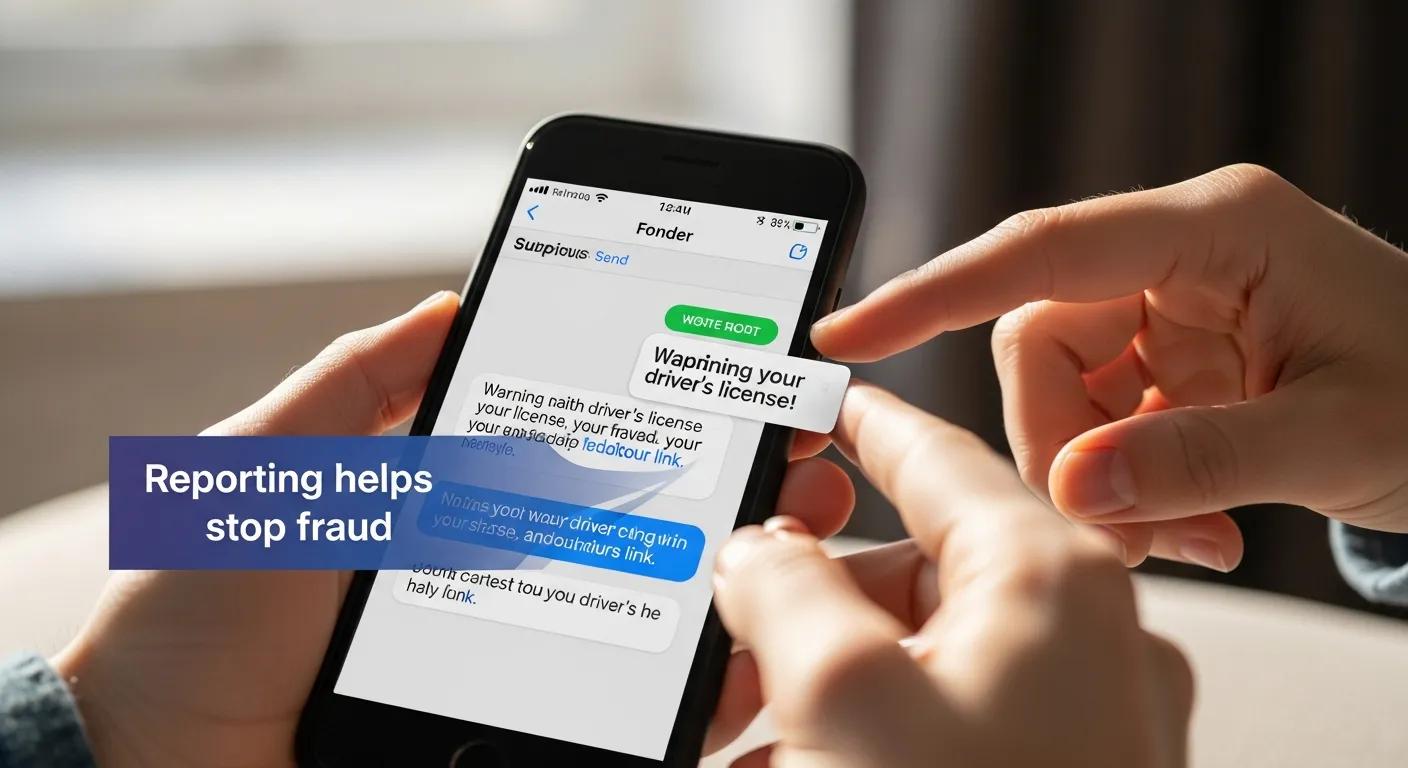
To report a DMV text scam, take these steps:
- Contact the Federal Trade Commission (FTC): File a report on the FTC website or call their hotline to document the scam.
- Notify Your State DMV: Let your state DMV know so they can warn other residents and update guidance.
- Use Online Reporting Tools: Many states and carriers offer online forms to report spam and phishing—use them to create a record.
Reporting helps law enforcement and agencies track scam patterns and protect others.
What Protective Actions Should You Take After a Scam Attempt?
If you think your data might be exposed, follow these protective steps right away:
- Monitor Your Accounts: Watch your bank and credit accounts for unfamiliar charges or activity.
- Change Your Passwords: Update passwords for accounts that may be affected, and enable two‑factor authentication where available.
- Use Credit Monitoring Services: Consider credit monitoring or freezing your credit to catch or prevent identity theft.
Quick action reduces the chance of lasting damage.
How Temporary Email Can Help Prevent DMV Scam Messages
Disposable email addresses can lower how much spam and phishing reaches your main inbox—and make it harder for scammers to reach you repeatedly.
Why Are Disposable Emails Effective Against Phishing and Smishing Attacks?
Temporary email addresses offer a few practical advantages:
- Anonymity in Online Interactions: Use a throwaway address for one‑time signups so your primary email stays private.
- Limiting Exposure to Scams: If a disposable address gets spam, you can discard it without affecting your main account.
- Ease of Use: Creating a temporary email is fast, so it’s an easy privacy layer for casual or risky signups.
Used wisely, disposable emails are a simple tool that reduces spam and attack surface.
How to Use Temporary Email Services for Enhanced Privacy
Follow these steps to make disposable email work for you:
- Choose a Reliable Service: Pick a reputable temporary email provider that respects privacy and doesn’t require personal details.
- Create a Temporary Email Address: Generate an address for newsletters, trials, or sites you don’t fully trust.
- Use for Non-Critical Sign-Ups: Keep your main email for banks, government, and important accounts—use the disposable address elsewhere.
These habits help keep your primary inbox cleaner and reduce phishing risk.
Latest Statistics and Trends on DMV Text Scams
Recent data show a clear increase in text‑based scams, including those impersonating government agencies like the DMV.
How Have the FBI and FTC Reported the Rise in DMV Text Scams?
The FBI and FTC report rising complaints about phishing and smishing. Many victims report financial loss, and agencies note that text messages are an increasingly common delivery method for scams. These trends underscore the importance of awareness and prompt reporting.
What Are the Broader Impacts of Text Scams on Consumers?
Beyond financial loss, scam victims often face stress, loss of trust in legitimate communications, and extra time spent recovering accounts or identity. Those effects can make people more hesitant to engage with necessary services—another reason public education and prevention matter.
| Scam Type | Description | Impact Level |
|---|---|---|
| DMV Text Scams | Fraudulent messages impersonating DMV | High |
| Phishing Emails | Deceptive emails requesting personal info | High |
| Smishing Attacks | SMS phishing targeting mobile users | Medium |
The table summarizes common scam types and their likely impact—use it as a quick reference when evaluating suspicious messages.
Frequently Asked Questions
What should I do if I accidentally clicked a link in a DMV text scam?
If you clicked a suspicious link, disconnect from the internet and run a security scan on your device. Change passwords for any accounts that might be affected and enable two‑factor authentication where possible. Watch your bank and credit statements for unusual charges and alert your bank if you see anything suspicious. Report the incident to the FTC and your state DMV so authorities can track the scam.
Can I block scam text messages from reaching my phone?
Yes. On iPhone, open the message, tap the sender at the top, then choose "Block this Caller." On Android, open the message, tap the three dots, and select "Block." You can also report the number to your carrier—many carriers have spam reporting tools that help reduce future messages.
Are there any apps that can help identify and block scam texts?
Yes. Apps like Truecaller, Hiya, and RoboKiller use community reports and databases to flag and block spam texts and calls. They can reduce unwanted messages, but check reviews and privacy policies before installing to make sure the app fits your needs.
How can I educate others about DMV text scams?
Share clear examples and tips with friends, family, and community groups—post on social media, hand out simple flyers, or host a short talk at a local center. Emphasize verifying messages through official channels and not sharing personal info over text. Practical, repeated reminders go a long way.
What legal actions can be taken against scammers?
You can report scammers to the FBI, the FTC, the Internet Crime Complaint Center (IC3), and your state consumer protection office. While individual legal action may be limited, reporting helps authorities investigate and shut down scam operations. Some states also enforce laws against deceptive practices that can be used to pursue perpetrators.
How can I stay updated on the latest scams and fraud alerts?
Subscribe to alerts from the FTC, FBI, and your state DMV, and follow them on social media for timely updates. Join local consumer‑protection forums or community groups focused on online safety, and check reliable news sources regularly for new scam reports.
Conclusion: Safeguarding Your Information
Protecting yourself from DMV text scams requires vigilance and proactive measures. By understanding common scam tactics, recognizing red flags, and knowing how to verify official communications, you can significantly reduce your risk. Always report suspicious messages to authorities and take immediate steps to secure your information if you suspect a breach. Staying informed and utilizing privacy tools like temporary emails for non-critical interactions are key to safeguarding your personal data against evolving fraud attempts.