

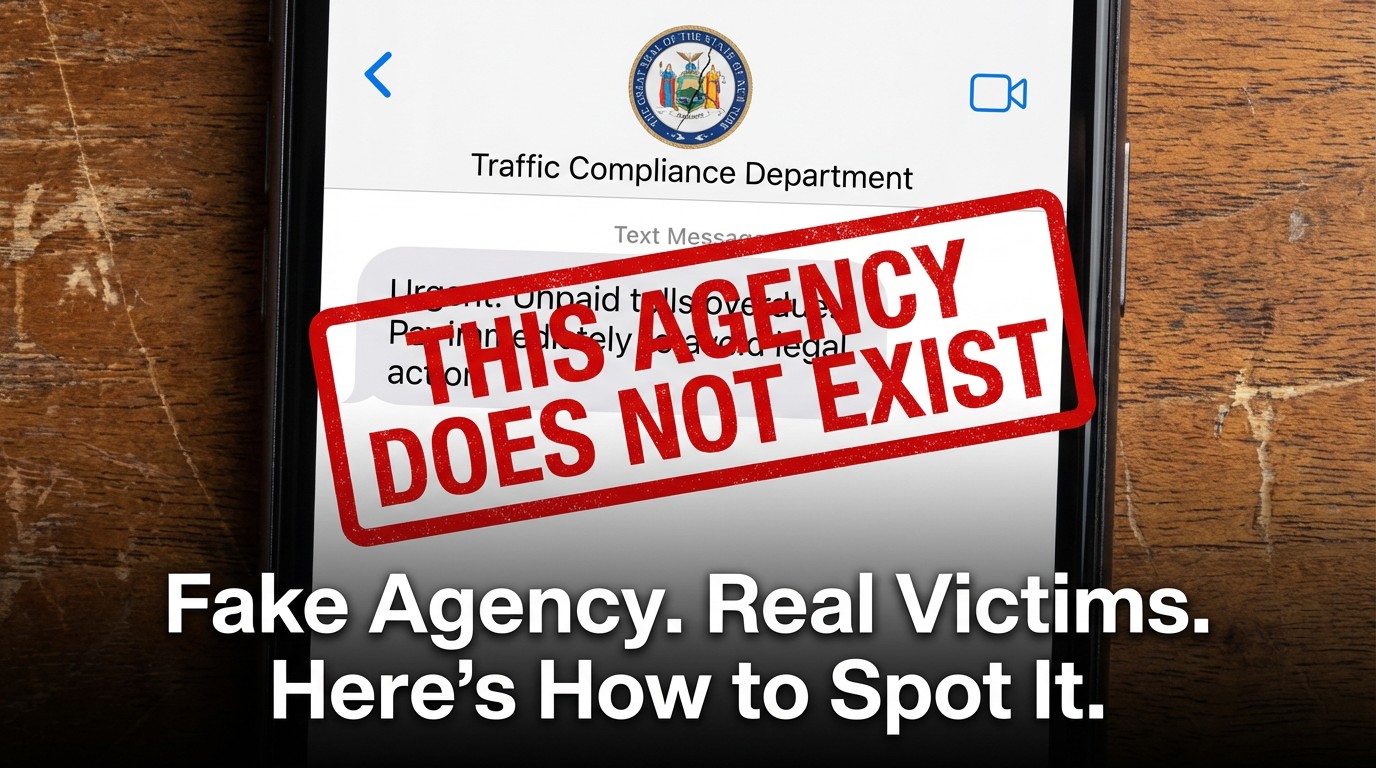

Is the Traffic Compliance Department Scam Real? (Quick Answer)
The Traffic compliance department scam is a real and widespread fraud targeting drivers across the United States right now. If you got a suspicious text about an unpaid traffic ticket or violation, here's what you need to know immediately:
Quick facts:
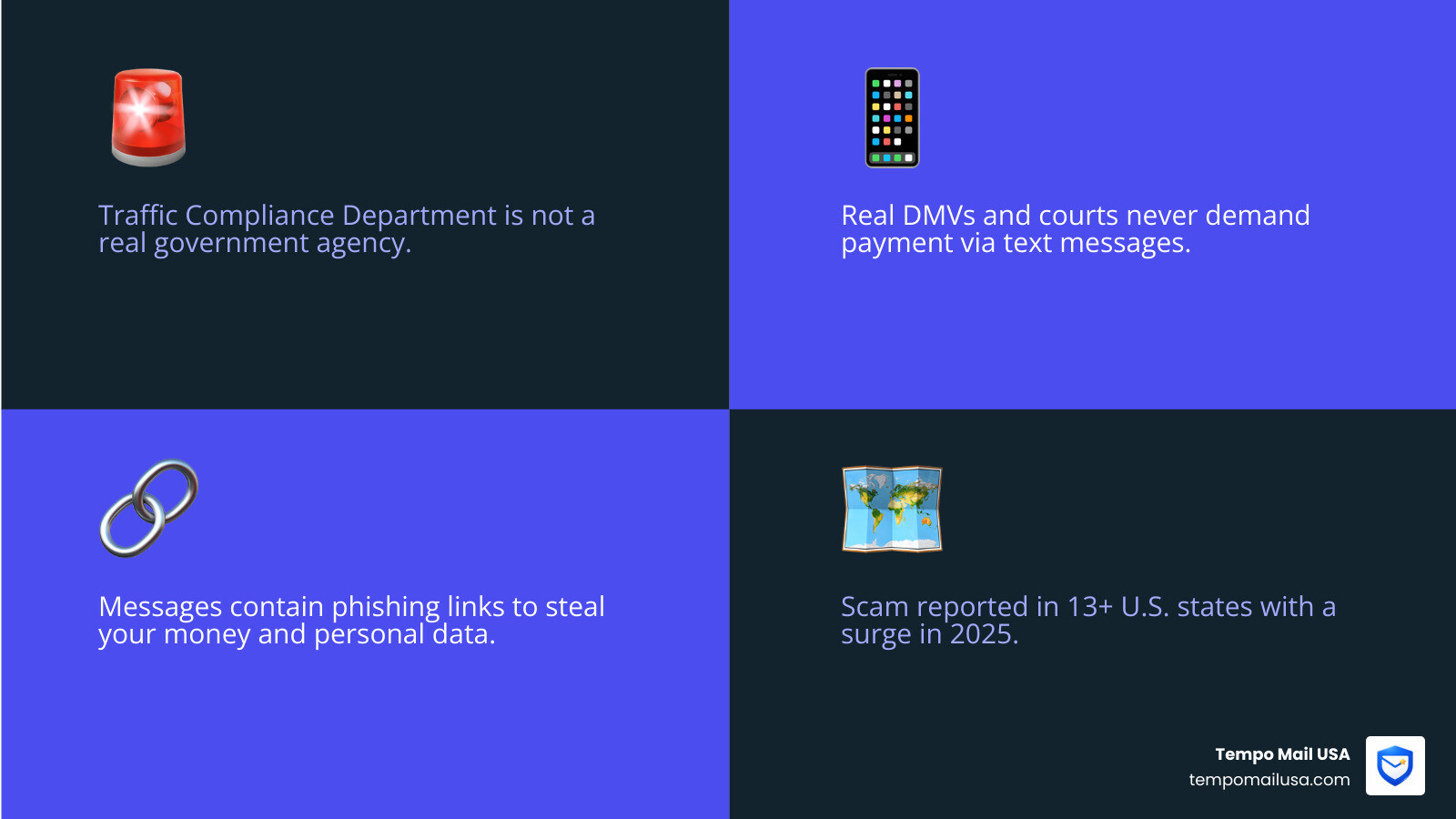
- The "Traffic Compliance Department" is not a real government agency
- Real DMVs and courts never contact you by text to demand payment
- The message is a phishing attempt designed to steal your money and personal information
- You should not click any links in the message
- Delete the message immediately
This scam has been reported in at least 13 U.S. states including New York, Florida, Texas, California, Tennessee, Montana, and more — with a sharp surge in reports throughout 2025.
The texts feel urgent and official. They threaten consequences like license suspension, registration loss, or even prosecution if you don't pay fast. One Montana resident — who uses a wheelchair and hasn't driven in years — received a text threatening to suspend her license if she didn't pay before a specific deadline. That's how indiscriminate these scammers are.
The goal is simple: pressure you into clicking a fake link so scammers can grab your payment details or personal information before you stop to think.
What is the Traffic Compliance Department Scam?
The Traffic compliance department scam is a sophisticated form of "smishing" (SMS phishing) where cybercriminals impersonate government authorities to trick you into paying non-existent fines. These scammers send mass-blast text messages claiming you have an overdue citation, a "failure to pay toll" violation, or an outstanding traffic ticket that requires immediate attention.
What makes this particularly tricky is the use of fictitious but official-sounding names. In Arizona, for instance, residents reported receiving messages from the "Arizona Ministry of Communications"—an agency that doesn't even exist! Similarly, the "Traffic Compliance Department" is a hollow title designed to sound authoritative without being tied to a specific, verifiable local office.
This outstanding traffic ticket scam has exploded in popularity throughout 2025. By leveraging the fear of losing driving privileges, scammers bypass our natural skepticism. They often include a "case number" or a "violation ID" to add a layer of perceived legitimacy. However, these are just random strings of numbers meant to make the phishing bait look more professional. If you want to dive deeper into how these digital traps work, check out our more info about identifying phishing scams.
How the Traffic Compliance Department Scam Targets Drivers
Scammers aren't just sending these texts for fun; they are running a highly organized operation. The process usually begins with an SMS delivered to your smartphone. Because most of us have our phones within arm's reach 24/7, the notification creates an instant "jolt" of anxiety.
Once you open the message, you’ll see a malicious link. This link doesn't take you to a government portal. Instead, it leads to a fake DMV payment website that looks remarkably like the real thing, complete with state logos and official-looking fonts.
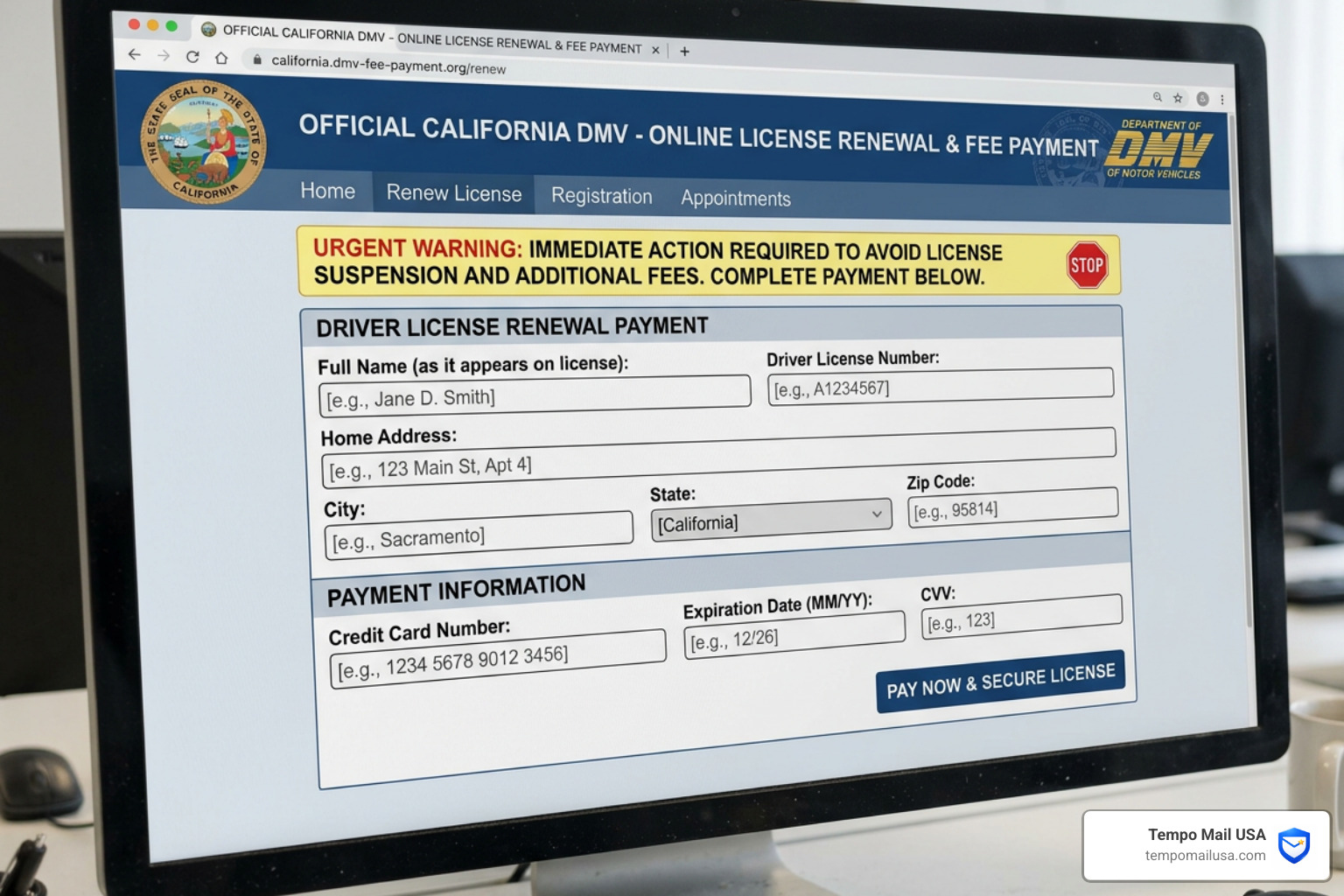
These sites are designed for one purpose: phishing for your Personally Identifiable Information (PII). They want your:
- Full name and address
- Driver’s license number
- Credit card or banking details
- Social Security number (in some extreme cases)
To add more pressure, the messages often mention a "35% service fee" if the fine isn't paid within 24 to 48 hours. They might even use fake judge or clerk names—sometimes even using the same generic name like "John Smith" for both roles! As the New York DMV warns against personal information requests, no legitimate agency will ever ask you to hand over sensitive data via an unsolicited text.
We’ve seen a pattern where scammers set arbitrary deadlines, such as "June 5," to force victims into acting before they can verify the claim. This "ticking clock" strategy is a hallmark of the Traffic compliance department scam.
Common Red Flags in a Traffic Compliance Department Scam Message
If you receive one of these messages, put on your detective hat. There are almost always "tells" that give the scam away:
- Grammar and Spelling Errors: While some scammers are getting better, many messages still contain odd phrasing or capitalization errors.
- Non-Government Domains: Official state websites always end in .gov. If you see a link ending in .icu, .xyz, .com, or .net, it is 100% a scam.
- Threats of Arrest: Real traffic tickets involve a long legal process. A text message will never be the first time you hear about a warrant for your arrest.
- Immediate Payment Demands: Government agencies allow for due process. They don't demand payment via a text link within hours of "notification."
Learning to spot these signs is your best defense. For more examples of how digital fraud looks in the wild, you can learn how to spot fake invoice scams.
Geographic Reach of the Traffic Compliance Department Scam
This isn't a local problem; it’s a nationwide surge. Throughout May and June of 2025, several states issued urgent public warnings. The warning about Illinois DOT text scams highlighted that the IDOT will never text you regarding fines.
Other heavily affected states include:
- Florida: The FLHSMV created a dedicated webpage to warn locals that they never text for payments.
- Texas: Residents in Northlake and surrounding areas reported a spike in "final notice" texts.
- Tennessee: The Highway Patrol warned of "outstanding traffic ticket" texts that look like they come from the DMV.
- Connecticut: The DMV received numerous reports on June 3, 2025, regarding fake toll bills.
- Montana: The Office of Consumer Protection received dozens of calls from confused residents.
Whether you are in California, New Jersey, Georgia, or Vermont, the tactics remain the same. The scammers are casting a wide net, hoping that at least a few drivers in every zip code will take the bait.
How to Verify and Report Fake Traffic Violations
If you’re worried that you might actually have an unpaid ticket, do not use the link in the text. Instead, follow these steps to verify the information safely:
- Use Official .gov Websites: Open your browser and manually type in your state’s DMV or DOT website (e.g.,
dmv.ny.govorct.gov/dmv). - Direct Court Contact: If the text mentions a specific court or "Traffic Compliance Department," look up the official phone number for that local court online. Call them directly to ask if there are any records under your name.
- Check the URL: Look closely at the link in the text. Scammers often use "look-alike" URLs like
ezpassnj-online.cominstead of the legitimate government site.
Once you’ve confirmed it’s a scam, it’s time to fight back. You should report fraud to the FTC at their official portal. Additionally, you can forward the scam text to 7726 (which spells "SPAM"). This alerts your mobile carrier to the fraudulent number so they can block it for everyone. For more technical reporting, you can visit the FBI’s IC3 website. We also recommend taking steps to bulletproof your email account to ensure your broader digital life is secure.
Steps to Take if You Clicked a Traffic Compliance Department Scam Link
If you accidentally clicked the link or, worse, entered your information, don't panic. Take these immediate actions:
- Disconnect from the Internet: Turn off your Wi-Fi and cellular data. This can stop any malicious scripts from communicating back to the scammer's server.
- Run an Antivirus Scan: Use a reputable security app to check for malware or tracking software that may have been downloaded.
- Monitor Your Accounts: Check your bank and credit card statements daily for the next few weeks.
- Place a Fraud Alert: Contact one of the three major credit bureaus (Equifax, Experian, or TransUnion) to place a free fraud alert on your credit report.
- Consider a Credit Freeze: This is the most secure way to prevent scammers from opening new accounts in your name.
For more detailed recovery advice, read our guide on protecting yourself from DMV text scams.
Frequently Asked Questions about Traffic Ticket Scams
Does the DMV ever text about unpaid tickets or violations?
No. Official DMV communication policy across all 50 states is to send notices via the U.S. Postal Service. While some DMVs (like Illinois) might send a text reminder for a scheduled appointment, they will never send a text demanding payment for a violation or threatening to suspend your license. Due process requires formal written notice, not an SMS with a "click here" link.
What are the consequences of paying a fake traffic ticket?
If you pay the "fine," you aren't just losing that initial amount (often a "reasonable" $20 to $90). You are handing your credit card details to criminals. This leads to:
- Immediate Financial Loss: The initial fraudulent charge.
- Recurring Charges: Scammers may set up "subscriptions" or use your card for larger purchases later.
- Identity Theft: Your PII can be used to open loans or file fake tax returns.
- Sale of Data: Your phone number and email are marked as "active," and you will be targeted by even more scams in the future.
Why do I receive these texts if I don't own a vehicle?
Scammers use mass-blast SMS tools that send messages to thousands of random numbers at once. They don't know if you drive, own a car, or even live in the state they are impersonating. They rely on "the numbers game." This is why a wheelchair-bound resident in Montana received a text about a vehicle record she didn't have. They also get numbers from old data breaches. If your number was ever part of a leak, it’s likely on a "sucker list" used by these groups.
Conclusion
The Traffic compliance department scam is a reminder that our personal information is constantly under fire. Scammers exploit our fear of authority and our reliance on driving to steal our hard-earned money. But knowledge is power—once you know that the "Traffic Compliance Department" doesn't exist and that the DMV doesn't text for money, the scam loses all its teeth.
At Tempo Mail USA, we believe in proactive privacy. One of the best ways to stay safe is to limit how much of your real information is out there in the first place. Our service provides temporary email aliases that act as a secure PII firewall. By using an alias when signing up for services or testing new apps, you shield your primary inbox from the data breaches that scammers use to find their victims.
Stay vigilant, never click suspicious links, and always verify through official channels. For more tips on keeping your phone quiet and your data safe, check out the best way to stop spam calls and texts. Protecting your identity starts with one smart decision at a time.