

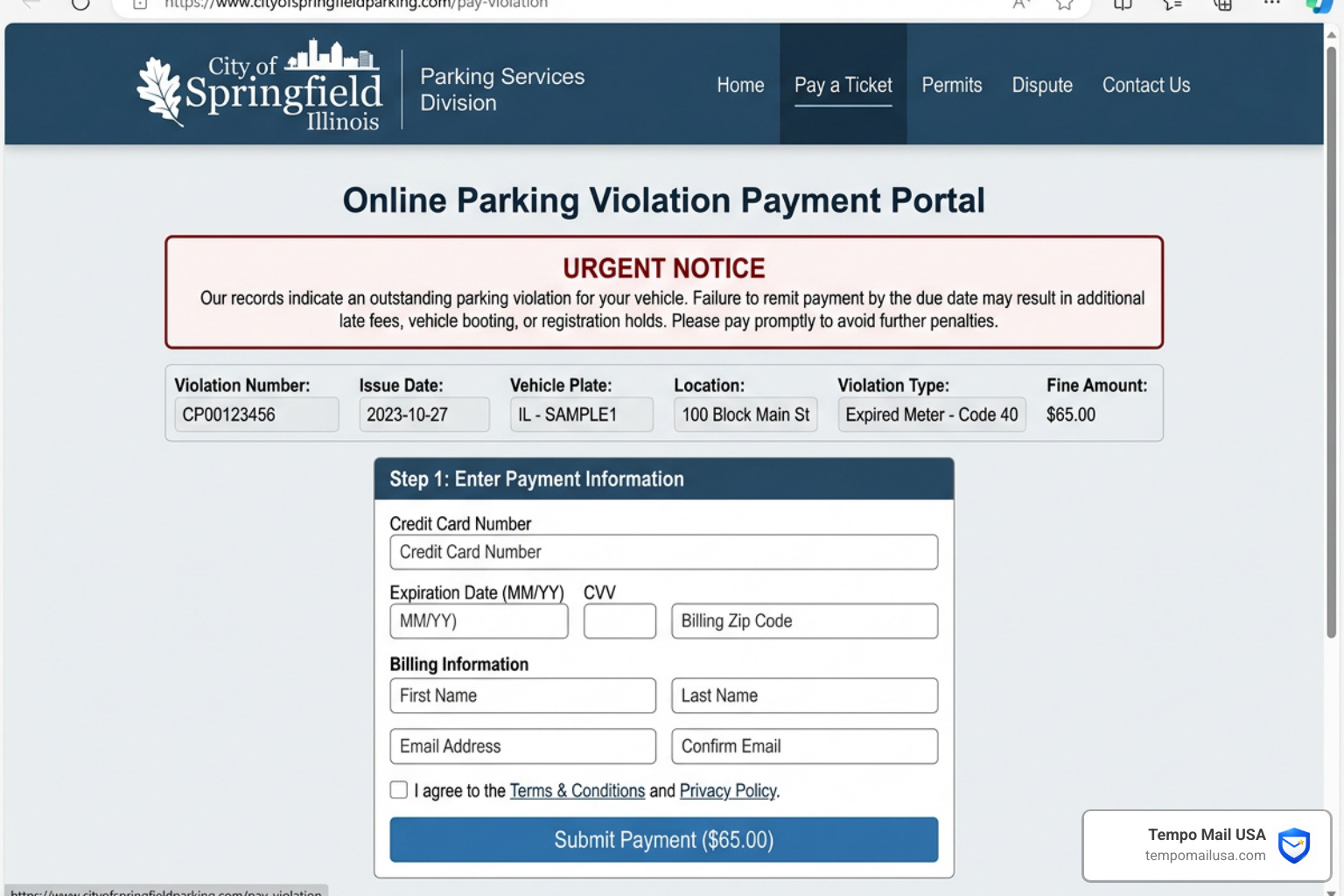

Anatomy of a Parking violation scam text
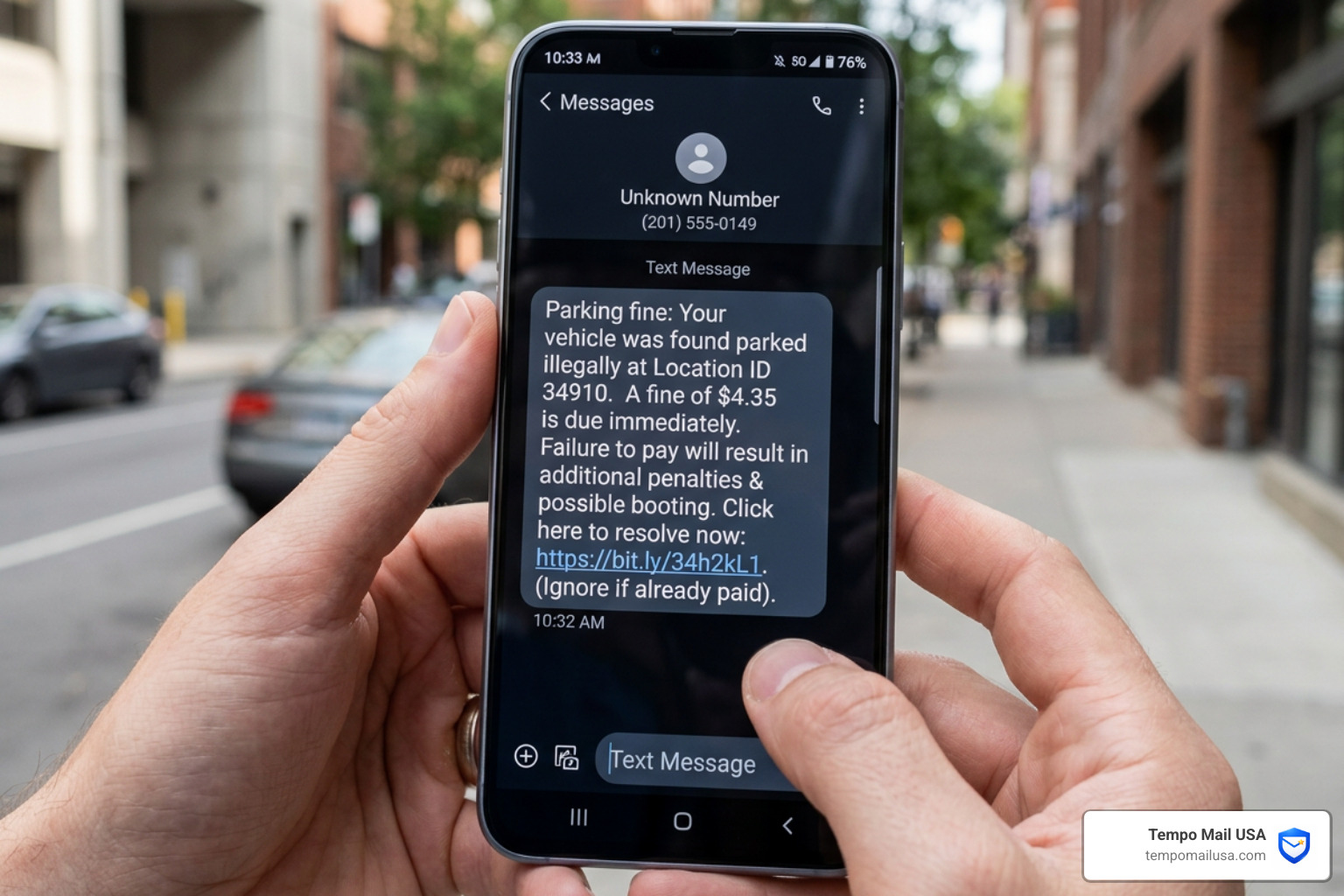
To the untrained eye, a parking violation scam text can look remarkably professional. These messages are a form of "smishing"—SMS phishing—where criminals use the convenience of text messaging to bypass our natural defenses. Unlike an email that might land in a spam folder, a text message pings right in our pockets, demanding immediate attention.
The core of the scam relies on social engineering. This is a fancy term for manipulating people into performing actions or divulging confidential information. By pretending to be a municipal authority, the scammer gains a baseline of trust. They then use fake domains that look nearly identical to official city websites. For example, instead of a legitimate .gov site, they might use a .com or .org address like "cityparking-payments.com."
Urgency is their greatest weapon. The messages often include a "ticking clock" element, such as a looming late fee or a threat of vehicle impoundment. This pressure is designed to make you click before you think. According to the FBI IC3 report on phishing losses, phishing and SMS-based scams contributed to over $1.4 billion in losses in a single year in the United States. When you click that link, you aren't going to a city portal; you're entering a digital trap.
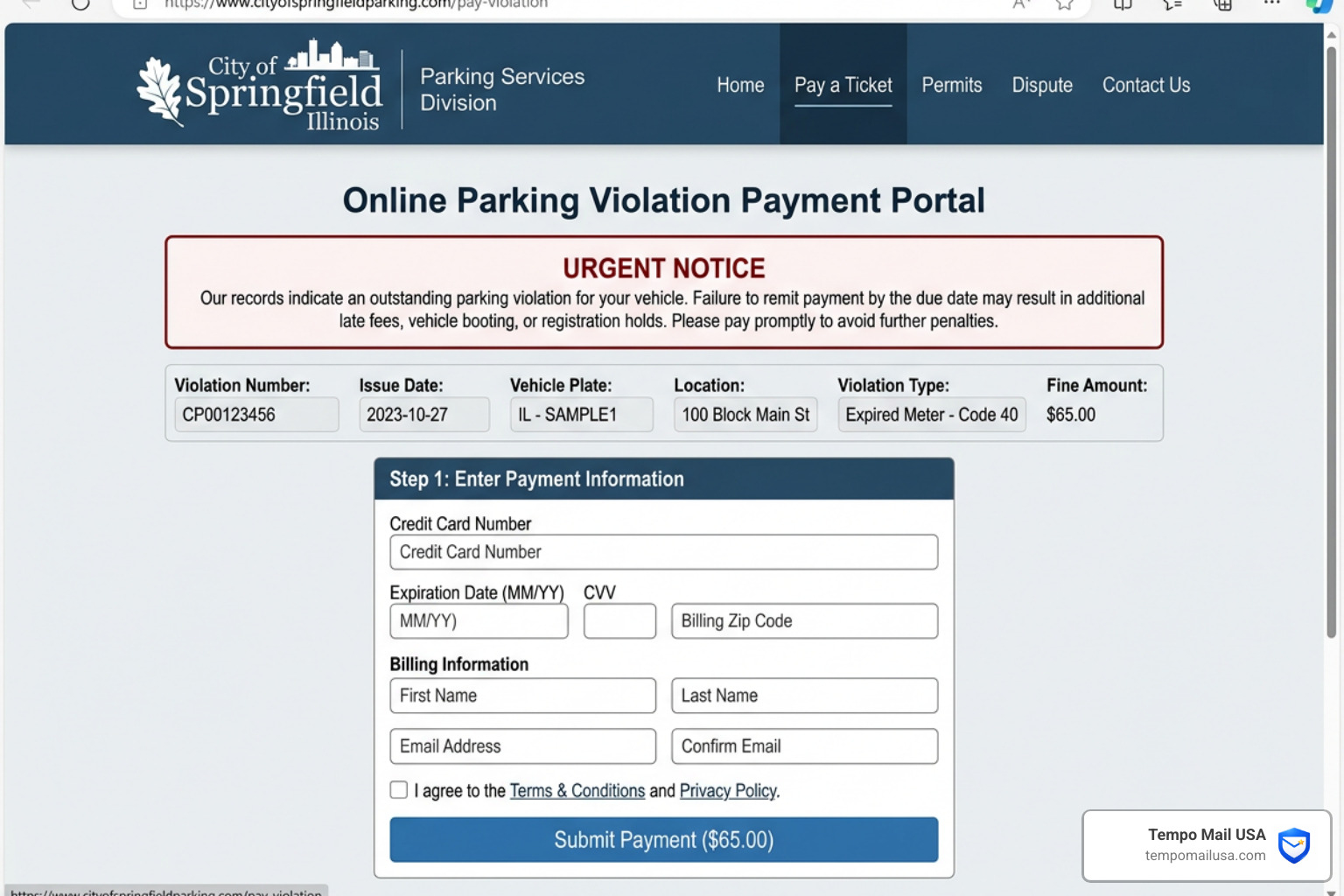
Common Tactics in a Parking violation scam text
Scammers are creatures of habit, and they tend to stick to a script that works. Here are the most common tactics we’ve observed in these fraudulent messages:
- Unsolicited Contact: You receive a message out of the blue, often from an area code that doesn't match your local city.
- Malicious Links: The text always contains a link. These links are often shortened or use "typosquatting" (adding an extra letter to a familiar name) to hide their true destination.
- Stolen Graphics: To make the fake websites look real, scammers steal logos and branding from official apps like ParkMobile or city-specific parking portals.
- Vague Details: The text rarely mentions your specific license plate number or the exact location of the "violation." It relies on the fact that most people have parked in a city recently and might feel a twinge of guilt or doubt.
If you are a frequent user of parking apps, you might wonder how to confirm ParkMobile scam text messages versus real ones. Generally, if the app itself doesn't show an alert, the text is a fraud.
| Feature | Official Municipal Notice | Parking Violation Scam Text |
|---|---|---|
| Delivery Method | U.S. First-Class Mail | SMS / Text Message |
| Payment URL | Ends in .gov (usually) | Ends in .com, .org, or .net |
| Urgency | Standard 15-30 day window | Immediate (e.g., "Pay in 24 hours") |
| Personal Info | Includes Plate # and Location | Vague; asks for SSN or Full DOB |
| Tone | Formal and administrative | Threatening and alarming |
Why Scammers Use a Parking violation scam text for Small Amounts
You might ask, "Why would a criminal go through all this trouble for a $4.35 invoice?" The answer is psychological. A $200 fine would cause most people to stop, investigate, and perhaps call the city to dispute it. However, a $4.35 charge feels like a minor annoyance that is "easier to just pay and forget about."
This small amount creates plausibility. It feels like a simple parking meter overage or a small processing fee. The scammers aren't after your $4.35; they are after the credit card details you enter to pay that small amount. Once they have your card number, CVV, and billing address, they can sell that data on the dark web or rack up thousands in fraudulent charges.
The Detroit Municipal Parking Department scam alert highlighted how scammers used the "Park Detroit" branding to trick residents into paying these "micro-fines." This tactic is becoming a staple in modern fraud, as seen in our DMV text scam 2026 guide.
Red Flags: How to Spot a Fake Parking Ticket
Spotting a parking violation scam text is easier once you know where the cracks are. Even the most "professional" scammers usually leave behind clues that reveal their true nature.
- The Sender's Identity: Look at the phone number. Most city agencies use "short codes" (5 or 6-digit numbers) for official alerts, not standard 10-digit mobile numbers. If the text comes from a random area code—especially one from a different state or country—it’s a massive red flag.
- The URL Check: This is the most important step. Official government websites in the U.S. almost always end in .gov. If the link in your text ends in .com, .site, .online, or .xyz, do not click it. For instance, the Georgia DDS official verification page will always be hosted on a .gov domain.
- Spelling and Grammar: While scammers are getting better, many texts still contain subtle errors. Look for things like "City of Huston" instead of "Houston" or "late fees of 35$" (putting the dollar sign after the number).
- The "Threat" Level: Legitimate government agencies don't use "text-shouting." If the message uses all caps or threatens to "suspend your license immediately" unless you pay within the hour, it's a scam. You can see more examples of this in our Georgia DMV scam text analysis.
Real-World Examples and Affected Cities
This isn't a localized problem; it's a nationwide epidemic. Major metropolitan areas are being hit hard because of the high volume of daily parking transactions.
- Maryland & Baltimore: The Maryland Judiciary warning on court scams recently alerted citizens to a text claiming they had a "Notice of Hearing" for a parking violation. It even went as far as naming a real judge and a real court address to scare victims into paying a "settlement" via a QR code.
- Houston: The city issued a public alert regarding "ParkHouston" fraudulent texts. These messages often claimed an unpaid balance of $4.35 and directed users to "parkinghou.com"—a fake site that looked identical to the real Houston parking portal.
- Philadelphia: Residents have reported receiving urgent texts about unpaid tickets from the "Philadelphia Parking Authority." The PPA has clarified that they never text individuals regarding outstanding tickets.
- Regional DMV Scams: Similar tactics have been reported in the South and West. If you live in these areas, check out our Utah and Louisiana DMV scam alerts to see how these scams evolve across state lines.
Immediate Steps to Take if You Are Targeted
If a parking violation scam text lands in your inbox, don't panic. You have the power to stop the scammer in their tracks before they do any damage.
1. Do Not Click: This is the golden rule. Clicking the link can sometimes trigger a malware download or, at the very least, confirm to the scammer that your phone number is "active," leading to even more spam.
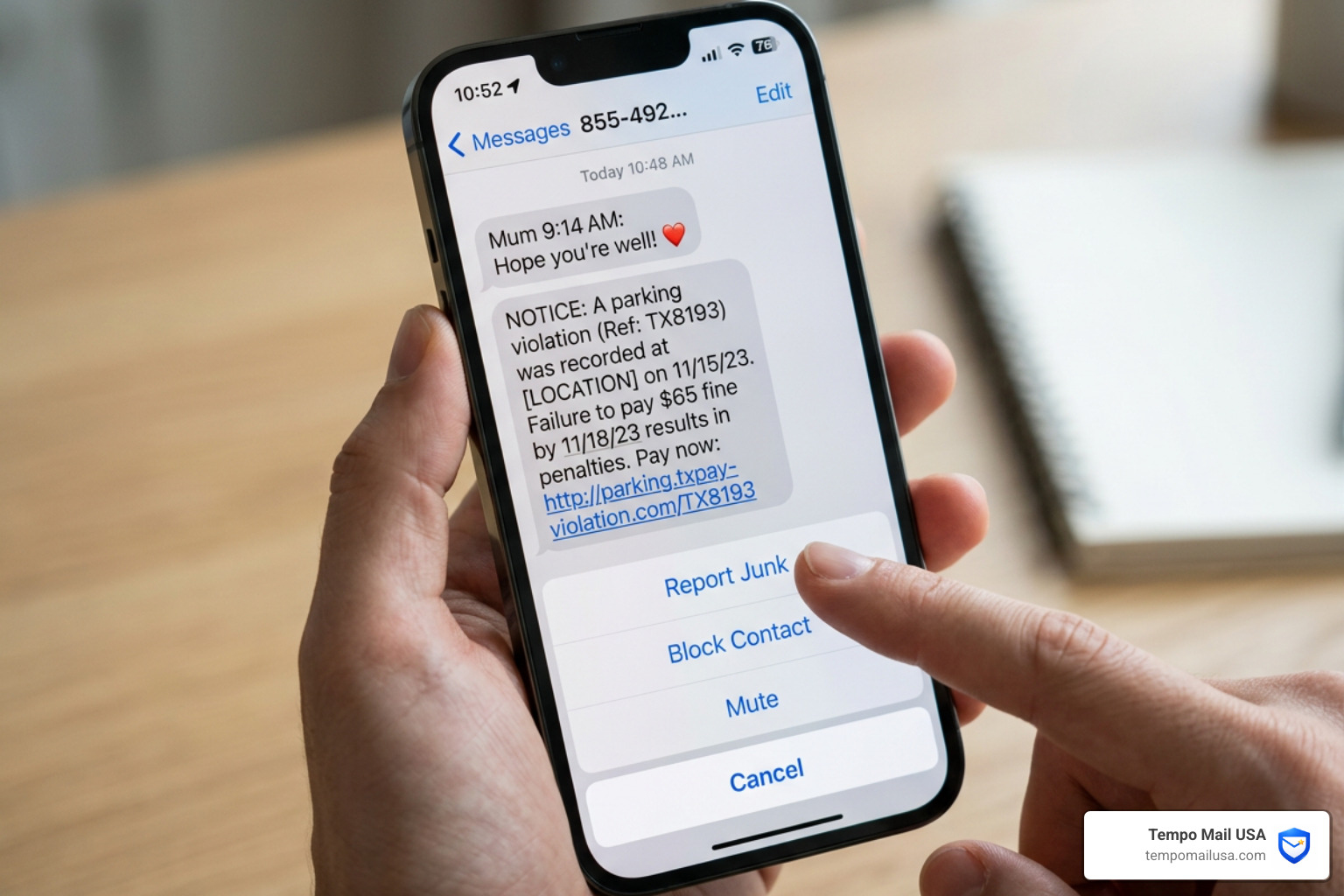
2. Block and Report: Use your phone's built-in features to "Report Junk" or "Block Sender." This helps your mobile carrier identify and filter out these numbers for other users.
3. Use the 7726 Method: In the U.S., you can forward any scam text to the number 7726 (which spells "SPAM"). This goes directly to a task force that works to shut down the infrastructure used by scammers.
4. Register for Privacy: While it won't stop every criminal, registering your number on the National Do Not Call Registry can reduce the amount of telemarketing noise you receive, making it easier to spot the truly suspicious messages. For more detailed strategies, read our guide on how to report phishing in 5 steps.
What to Do if You Already Clicked the Link
We’ve all been there—sometimes you’re in a rush, and you click before you realize something is wrong. If you’ve entered information into a fake parking site, you need to act fast to protect your identity.
- Contact Your Bank: If you entered credit card details, call your bank immediately. Tell them you’ve been the victim of a phishing scam. They will likely cancel your card and issue a new one to prevent unauthorized charges.
- Freeze Your Credit: This is a powerful step. By contacting the three major credit bureaus (Equifax, Experian, and TransUnion), you can "freeze" your credit, meaning no one can open a new loan or credit card in your name.
- Update Your Passwords: If the scam site asked you to "log in" using an email and password, and you used a password that you use elsewhere, change it immediately. Enable Two-Factor Authentication (2FA) on all your sensitive accounts.
- Monitor for Identity Theft: Keep a close eye on your accounts for several months. Scammers sometimes wait weeks before using stolen data.
The Fulton County fake parking violation notice serves as a reminder that even if you've been targeted, official agencies are there to help provide the correct information. If you're using an Apple device and want to tighten up your security, see our tips on how to stop spam calls on iPhone.
Frequently Asked Questions about Parking Scams
Do legitimate parking authorities ever send text messages about fines?
Generally, no. Most municipal parking departments, including the one mentioned in the Houston ParkHouston fraudulent text alert, rely exclusively on the U.S. Postal Service to send official notices. While some third-party apps (like those used for active parking sessions) might send you a text to tell you your time is expiring, they will not send you a text demanding payment for a "violation" or "invoice" after the fact.
What personal information do scammers steal through these links?
These sites are designed for "PII harvesting"—stealing Personally Identifiable Information. They typically ask for:
- Full Name and Home Address
- Credit or Debit Card Numbers (including CVV)
- Date of Birth
- In extreme cases, Social Security Numbers
This data is then bundled and sold on "carding" forums, where other criminals use it for identity theft, tax fraud, or creating fake accounts.
Can I get in legal trouble for ignoring a scam parking text?
Absolutely not. Because the "unpaid invoice" doesn't actually exist, there are no legal consequences for ignoring the text. You cannot be arrested, your license will not be suspended, and your car will not be towed based on a text message. If you are ever in doubt, go to the official city website (ending in .gov) and search for your license plate number in their official ticket portal.
Conclusion
The parking violation scam text is a reminder that our personal information is constantly under fire. Scammers rely on our busy lives and our desire to avoid "trouble" to trick us into handing over the keys to our financial lives.
At Tempo Mail USA, we believe the best defense is a proactive one. We provide temporary email aliases that act as a PII firewall, shielding your real identity from the web. By using an alias, you ensure that if a service you use is ever breached, your real contact information remains hidden from scammers.
Protecting yourself from smishing and phishing is about more than just being careful; it's about using the right tools to stay anonymous and secure. For more ways to take control of your digital privacy, check out our guide on the best way to stop spam calls: 7 methods.
Stay vigilant, don't click the link, and keep your data where it belongs—with you.