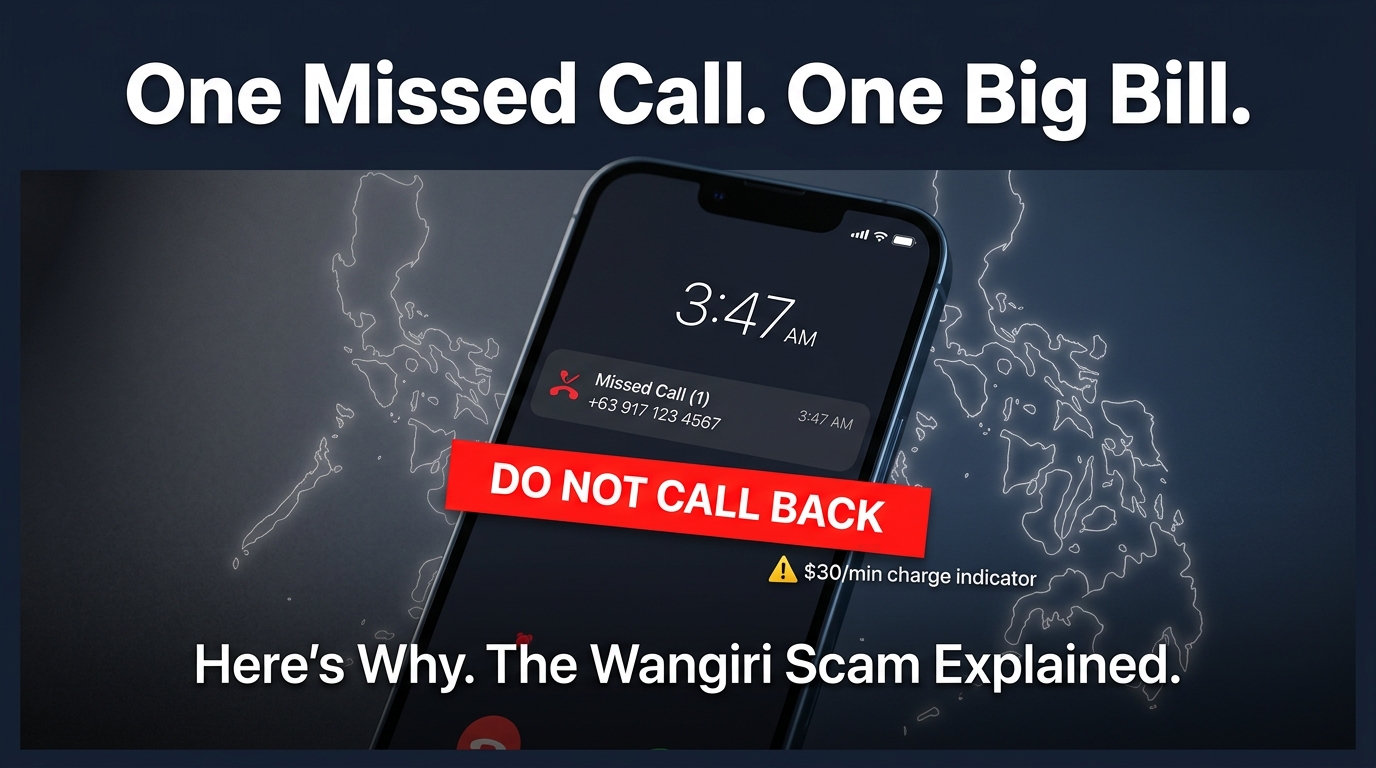

What a 63 Country Code Scam Call Is — and What to Do About It
A 63 country code scam call is an unsolicited call or text from a number beginning with +63 — the international dialing code for the Philippines — used by fraudsters to steal money or personal information from unsuspecting recipients worldwide.
Quick answer: What should you do if you get a +63 call?
- Don't call back an unrecognized +63 number
- Don't click any link sent in a follow-up text
- Block the number immediately on your phone
- Report it to the FTC at ftc.gov/complaint or your phone carrier
- Verify any claimed urgency (tolls, tickets, packages) directly through official websites
These calls are not random bad luck. In 2024, over 56 million Americans reported receiving scam calls, with total losses exceeding $25.4 billion. Text and call-related fraud alone cost consumers around $470 million that same year.
Scammers exploit the +63 prefix in several ways — from the classic one-ring trick designed to make you call back a premium-rate number, to sophisticated phishing texts impersonating government agencies like the Iowa DOT or E-ZPass.
If you've seen a +63 number on your screen and felt that pull of curiosity — "who could that be?" — that reaction is exactly what these fraudsters are banking on.
This guide breaks down how these scams work, why you're being targeted, and how to shut them down before they cost you.

Understanding the 63 Country Code Scam Call
To protect ourselves, we first need to know exactly what we are looking at. The digits "+63" are the international subscriber dialing (ISD) code for the Philippines. While millions of legitimate calls originate from this beautiful archipelago every day, it has unfortunately become a hotspot for international phone fraud.
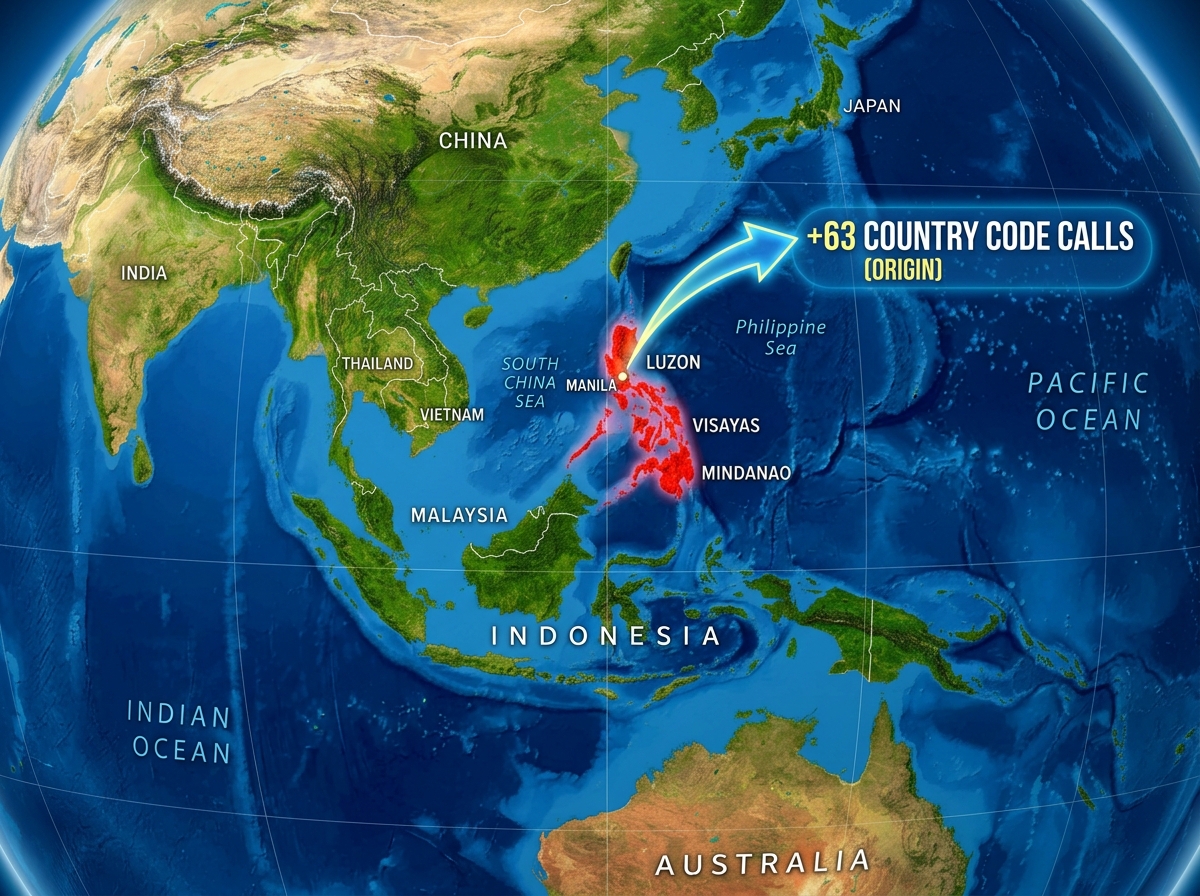
The most common version of this threat is the "Wangiri" scam. "Wangiri" is a Japanese term meaning "one ring and cut." The mechanics are deceptively simple: an automated system dials your number and hangs up after just one ring. The goal isn't to talk to you; it's to leave a "missed call" notification on your screen.
When you see that missed call from an exotic-looking international number, your natural curiosity might tempt you to call back. This is where the trap snaps shut. Many of these numbers are "premium-rate" lines. By calling back, you are connected to a service that charges exorbitant fees—sometimes ranging from $3 to $30 per minute. The scammer receives a cut of these charges, and you are left with a massive phone bill.
To help you distinguish between a friend calling from Manila and a fraudster, we've put together this comparison:
| Characteristic | Legitimate +63 Call | 63 Country Code Scam Call |
|---|---|---|
| Ringing Duration | Rings until you answer or it hits voicemail. | Rings exactly once and disconnects. |
| Voicemail | Leaves a clear, personal, or professional message. | No voicemail, or a vague, urgent recording. |
| Timing | Usually aligns with Philippine business hours. | Often occurs at odd hours (3 AM local time). |
| Context | You expect a call from a contact or business. | Completely unsolicited and unexpected. |
For more details on who might be calling, check out this resource on Who calls from 63?
The Mechanics of the One-Ring Scam
The "one-ring" or Wangiri fraud relies on high-speed auto-dialers that can blast thousands of numbers per minute. These systems don't care who you are; they just want a small percentage of people to be curious enough to hit "redial."
Once you call back, the scammers use various psychological tricks to keep you on the line. You might hear a recording of someone crying for help, a "hold" music loop, or an automated message claiming you've won a prize. Every second you stay connected, the meter is running. Some victims have reported being kept on hold for several minutes, only to find out later that their "quick check" cost them the price of a fancy dinner. You can learn more about these specific tactics in this 63 Country Code Scam: How to Protect Yourself from Missed Call Fraud guide.
Why Scammers Target the +63 Prefix
You might wonder why the Philippines is such a common choice for these operations. It isn't because the country itself is "bad," but rather due to a combination of technical and regulatory factors.
- Call Center Infrastructure: The Philippines is a global hub for legitimate business process outsourcing (BPO). Scammers often hijack or mimic this infrastructure to run illegal "gray" call centers.
- VOIP Spoofing: Modern technology allows scammers to "spoof" their caller ID. Even if the criminal is sitting in a completely different country, they can make the call appear as if it's coming from a +63 number to mask their true location.
- Regulatory Gaps: International law enforcement is complicated. When a scam crosses borders, it becomes much harder for authorities to track and shut down.
Understanding what-does-potential-spam-call-mean-get-the-facts can help you realize that these "potential spam" labels on your phone are often your first line of defense against these international masks.
Common Tactics and Real-World Examples
The 63 country code scam call has evolved beyond just missed calls. Today, we see a heavy shift toward "smishing" (SMS phishing) and social media messaging.
Identifying a 63 country code scam call on WhatsApp
WhatsApp is a favorite playground for +63 scammers because it's free and allows them to see your profile picture, which they use to tailor their approach. Common tactics include:
- The "Wrong Number" Hook: You receive a message like, "Is this the tour guide for our Manila trip?" When you reply saying they have the wrong number, they try to strike up a friendly conversation. This is often the start of a "pig-butchering" scam, where they build trust over weeks before asking for investment money. You can read more about this in our guide on wrong-number-text-scam-how-it-works-how-to-stop-it.
- The Job Offer: A message arrives from a +63 number offering a high-paying, remote "part-time job" that only requires a few hours a day. They will eventually ask for a "training fee" or your bank details.
- Unsolicited Voice Notes: Some users report receiving voice records from +63 numbers asking "How are you?" to pique curiosity and confirm the account is active.
Toll and Agency Impersonation Scams
One of the most dangerous trends in 2024 involves scammers using +63 numbers to impersonate local U.S. government agencies.
- The E-ZPass/FasTrak Scam: Victims receive a text from a +63 number claiming they have an "outstanding toll balance" that must be paid immediately to avoid a $50 fine. The link in the text leads to a fake website designed to steal credit card info.
- The Iowa DOT Phishing: Scammers have been caught sending texts from the Philippines country code claiming your driver's license is suspended. Even if you don't live in Iowa, the urgency often causes people to click.
These are classic examples of an outstanding-traffic-ticket-scam-that-fine-is-a-trap. Always remember that a local agency like the DMV will never text you from an international number. If you see such a message, it is a parking-violation-scam-text-that-fine-is-stealing-your-card.
For more specific examples of agency impersonation, see our articles on the georgia-dmv-scam-text-the-fake-agency and the mva-scam-text-maryland-pay-today-or-be-arrested.
Why You Are Receiving These Fraudulent Calls
It feels personal, doesn't it? You're sitting at dinner, and your phone starts buzzing with a call from halfway across the world. You might ask, "Why me?"
The truth is, it's rarely personal. Scammers get your number through several automated methods:
- Data Breaches: When a website you use gets hacked, your phone number often ends up on a "sucker list" sold on the dark web.
- Random Number Generation: Scammers use software to dial every possible combination of numbers in a specific area code.
- Active Number Confirmation: If you answer a scam call—even for a second—or reply to a text, you've just confirmed that your number is "active." This makes your number more valuable to scammers, leading to even more calls.
If you're wondering why-am-i-getting-so-many-spam-calls-all-of-a-sudden, it's likely because your info was part of a recent leak. We've also seen users struggle with how-to-get-rid-of-google-voice-spam-calls-forever, proving that no platform is entirely safe.
How to Protect Yourself and Block Fraudulent Numbers
The good news is that we have the tools to fight back. You don't have to be a tech genius to secure your phone.
1. Silence Unknown Callers
Both iPhone and Android have built-in features to stop the ringing before it starts.
- On iPhone: Go to Settings > Phone > Silence Unknown Callers. This will send any number not in your contacts straight to voicemail.
- On Android: Open the Phone app, tap the three dots, go to Settings > Spam and Call Screen, and turn on "Filter spam calls."
2. Use Third-Party Apps
Apps like Truecaller, Hiya, or Nomorobo maintain massive databases of known scam numbers. They can identify a 63 country code scam call in real-time and block it automatically. You can find more recommendations in our guide on how to block-spam-calls-easily-best-free-app-for-iphone-users.
3. Practice the "Rule of Three"
If a number calls you and it's important, they will do three things:
- Leave a voicemail.
- Send a follow-up text (from a domestic number).
- Wait for you to call them back. Scammers almost never leave a detailed voicemail. If they don't leave a message, it wasn't important.
For users on specific networks, you might want to look at how-to-stop-spectrum-spam-calls-5-methods.
What to do after a 63 country code scam call
If you've already interacted with one of these calls, don't panic. Take these steps immediately:
- Block the Number: Don't give them a second chance.
- Check Your Phone Bill: Look for any "International" or "Premium" charges you don't recognize. If you see them, contact your carrier to dispute the charges.
- Monitor Your Bank Accounts: If you clicked a link or provided any info, keep a close eye on your statements.
- Report to the FTC: Every report helps authorities build a case. Visit ftc.gov/complaint.
If you are worried that clicking a link might have installed something malicious, read our advice on what-to-do-if-you-receive-a-ransomware-email, as the recovery steps for your device are very similar.
Frequently Asked Questions about +63 Scams
Are all calls from the +63 country code scams?
No, they are not. The Philippines has a massive population and a huge diaspora of overseas workers. If you have friends, family, or business associates in the Philippines, a +63 call is perfectly normal. However, if you don't know anyone there, the probability of it being a scam is nearly 100%. Always exercise skepticism. If you're unsure, you can treat it like we suggest for other unknown calls in how-to-identify-spectrum-scam-calls.
What happens if I accidentally call back a +63 number?
Two main things can happen:
- Financial Loss: You may be charged a connection fee and a high per-minute rate. This is essentially an afterpay-text-scam-that-3000-credit-is-stealing-your-bank situation where your money is drained via your phone bill rather than a direct transfer.
- Data Harvesting: By calling back, you've flagged yourself as a "live" target. Expect an increase in scam texts and calls in the following weeks.
How do I report a +63 scam to the authorities?
Reporting is vital for stopping these syndicates.
- In the U.S.: Report to the FTC and the FBI’s Internet Crime Complaint Center (IC3.gov).
- To Your Carrier: Most carriers allow you to report spam by forwarding the text to 7726 (SPAM).
- For Email/Postal Scams: If the scam involves delivery services, you should report-usps-scam-emails-protect-yourself-from-fraud to the Postal Inspection Service.
Conclusion
The 63 country code scam call is a persistent threat, but it's one that we can easily defeat with a bit of knowledge and the right tools. By understanding the Wangiri mechanics and the psychological tricks scammers use, we take away their power.
At Tempo Mail USA, we believe that privacy is your best defense. Scammers can't call you if they don't have your real number, and they can't phish you if they don't have your real email. Our service provides secure, temporary email aliases that act as a digital firewall, protecting your real identity from being leaked in data breaches. By using a "privacy-first" mindset and identity proxying, you can keep your personal information out of the hands of international fraudsters.
Stay vigilant, keep your phone settings tight, and never let curiosity cost you your hard-earned money. For more information on how to protect your digital life, visit Tempo Mail USA.