

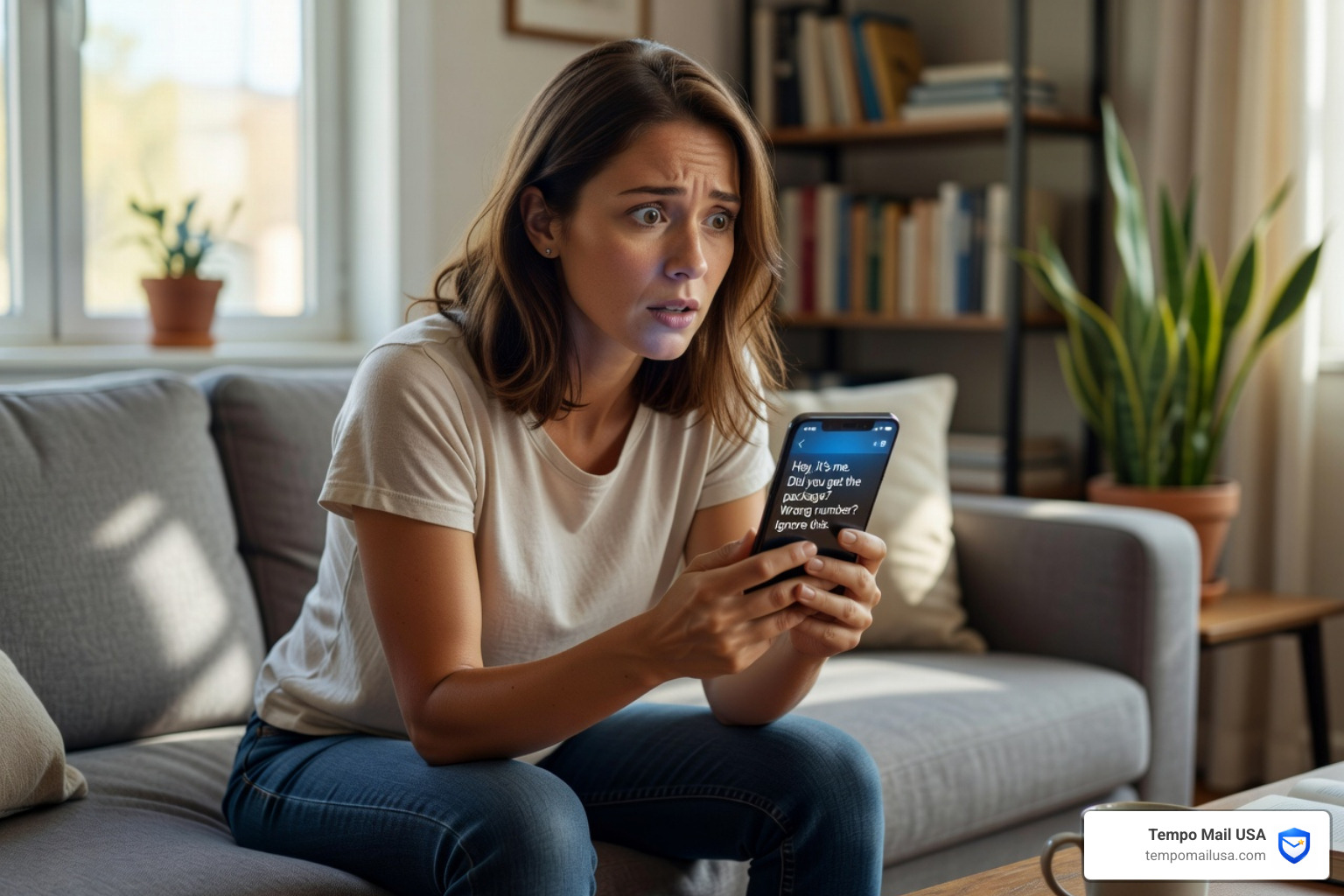

The Wrong Number Text Scam: A Growing Threat to Your Privacy and Wallet
What is a wrong number text scam? It is a type of social engineering fraud where a scammer sends a seemingly accidental message to initiate a conversation, build trust, and eventually steal money or personal data.
Quick Summary: How to Identify and Stop the Scam
- The Hook: A friendly text like "Hey, is this Alex?" or "Are we still on for dinner?"
- The Goal: To confirm your number is active and lure you into a fake investment (pig butchering) or identity theft.
- The Solution: Do not reply. Block the sender. Report the message.
- The Impact: Americans lost $470 million to text scams in 2024 alone.
Recent research shows that 1 in 4 Americans has received one of these texts. Scammers now use AI to generate realistic photos and polished messages, making these traps harder to detect than ever before.
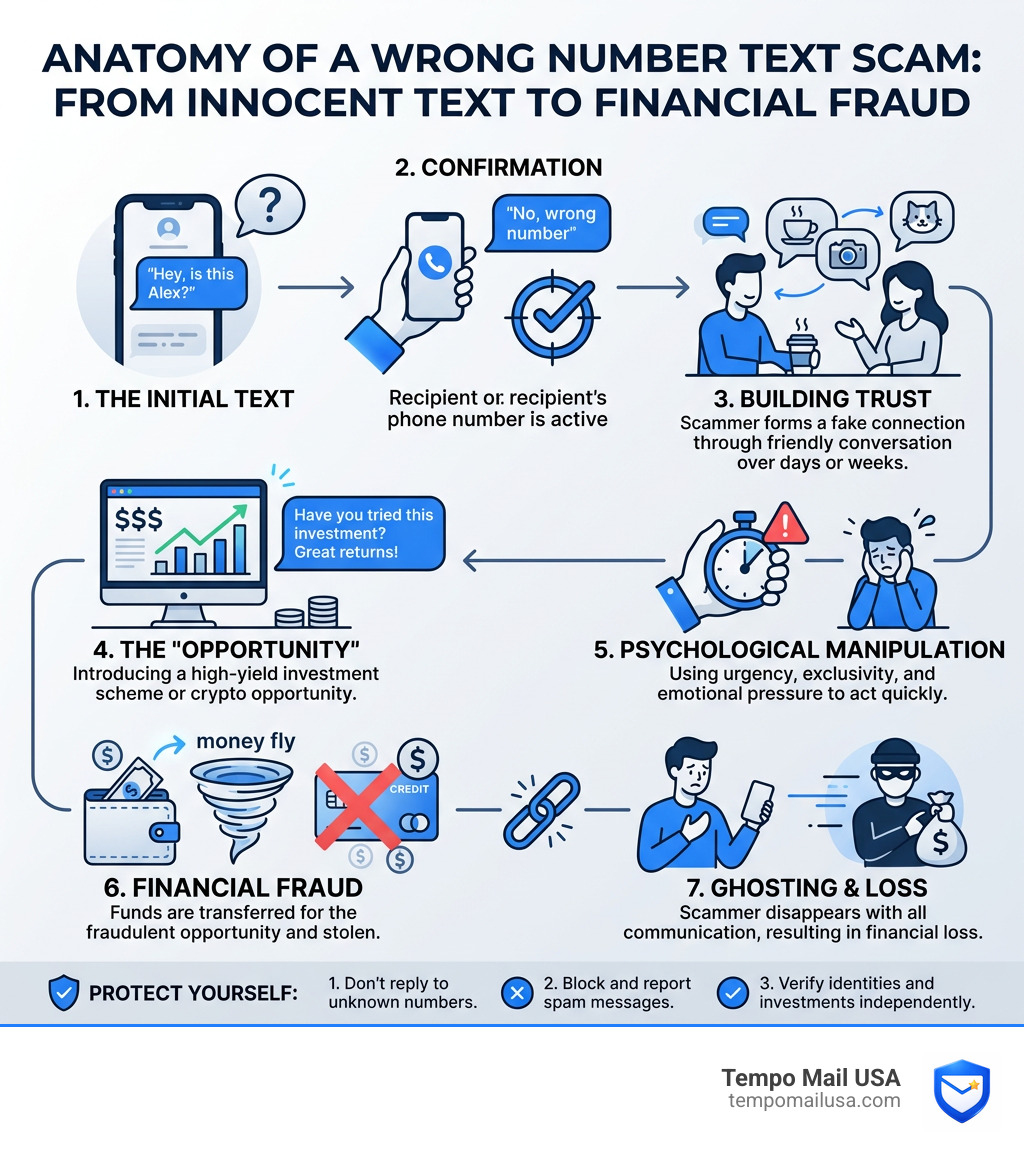
How Does a Wrong Number Text Scam Work?
A wrong number text scam works by exploiting human politeness. Unlike urgent "bank alert" scams, this is a "long game" social engineering tactic designed to bypass your natural defenses.
The Purpose of the Initial Message
When you reply to a "wrong" text, you provide the scammer with data validation. You confirm that:
- Your phone number is active and monitored.
- You are a real person (not a bot).
- You are willing to engage with strangers.
ReportFraud.ftc.gov "Wrong number" text scams are a growing threat. Once validated, your number is often sold on the dark web or targeted for advanced frauds like how-to-spot-a-dmv-text-scam.
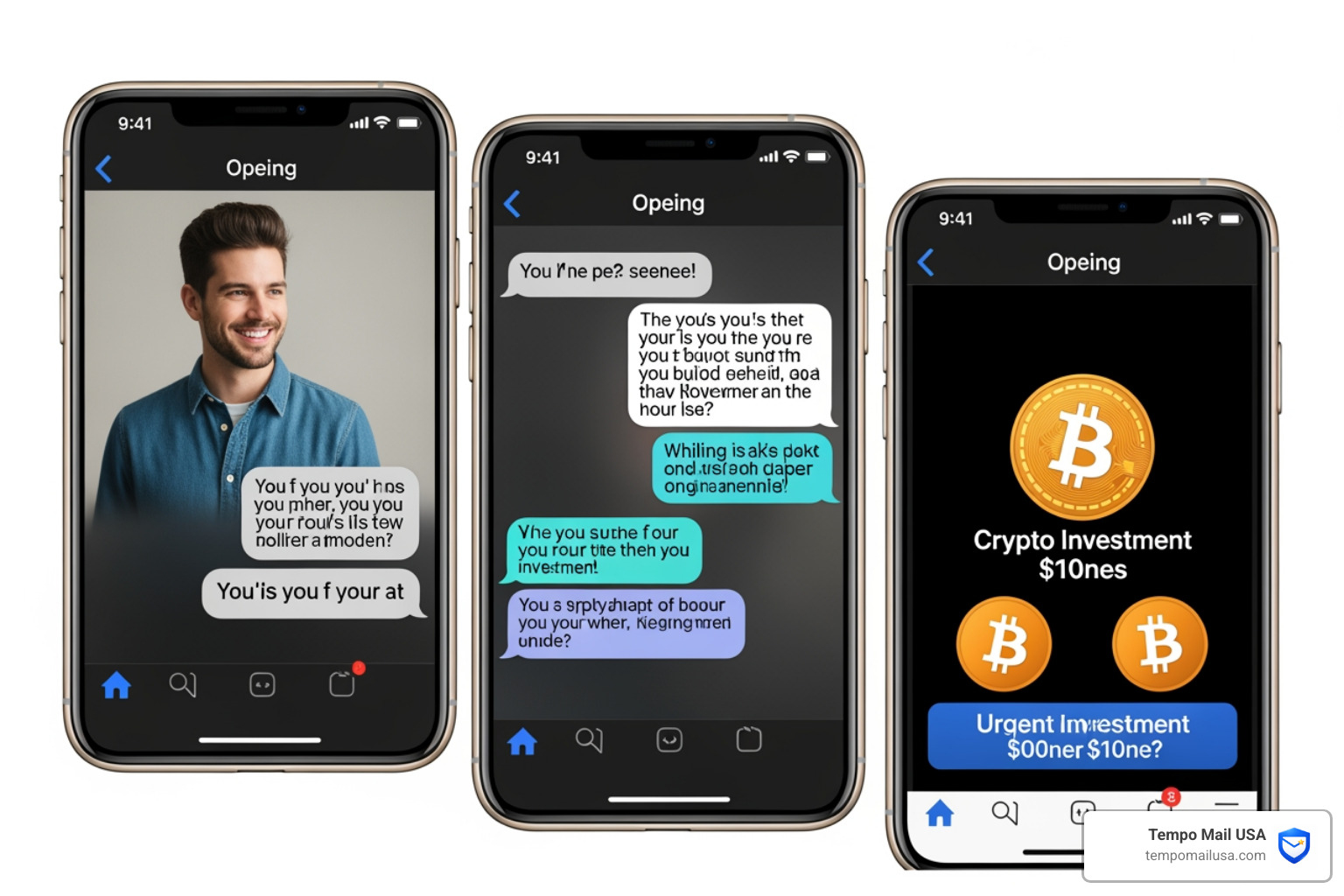
The 5 Stages of the Scam (Pig Butchering)
- The Hook: A generic personal message (e.g., "Is this Sarah?").
- Rapport Building: The scammer apologizes and attempts to start a friendly conversation.
- Trust Fattening: Also known as pig butchering, the scammer shares fake life details to build emotional connection.
- The Pivot: They mention a "guaranteed" investment opportunity, usually in cryptocurrency.
- The Theft: You are directed to a fake platform where your deposits are stolen.
Responding to these texts is the primary reason why-am-i-getting-so-many-spam-calls increases; your "active" status makes you a high-value target for criminal networks.
Common Examples and Red Flags of Text Fraud
Scammers are creative, but they tend to stick to scripts that have proven successful. Here are the most common "wrong number" scenarios we've seen:
- The Social Planner: "Hey, are we still meeting at 7?" or "I had a great time at the club Saturday, let's do it again!"
- The Professional Hook: "Did you get the documents I sent over for the meeting?" or "Is this Dr. [Name]? This is [Name] regarding the appointment."
- The Job Offer Twist: A newer variation involves a "hiring manager" who "saw your resume online" and is offering a high-paying remote role.
- The Delivery Alert: "Your package couldn't be delivered. Update your address here." (This often transitions into a coinbase-text-scam-alert-stay-safe-online if they think you have crypto assets).
| Feature | Genuine Wrong Number | Wrong Number Text Scam |
|---|---|---|
| Response to Correction | "Oh, sorry!" and the conversation ends. | "I'm so sorry! You're so kind. What's your name?" |
| Media Shared | None. | Unsolicited photos of attractive people or luxury items. |
| Grammar | Varies, but usually natural. | Often overly formal or uses "scripted" sounding English. |
| The "Ask" | None. | Eventually asks for money, crypto, or personal info. |
| Urgency | Low. | High (e.g., "This investment window closes in 2 hours!"). |
How AI is Evolving the Wrong Number Text Scam
The rise of Generative AI has been a game-changer for scammers. In the past, many scams were easy to spot due to broken English or obvious typos. Today, AI allows scammers to generate perfectly phrased, empathetic, and culturally relevant messages at a massive scale.
As the FBI warns, scammers are now using AI to create:
- Deepfake Media: They may send short voice notes or even video clips that look and sound like a real person.
- Personalized Hooks: By cross-referencing your phone number with leaked data dumps, they might know your name, city, or even where you work, making the "wrong number" feel incredibly specific and believable.
- Hyper-Realistic Profiles: The "attractive person" they claim to be is often a non-existent human generated by an AI model, making it impossible to find the image via a traditional reverse-image search.
Warning Signs You Are Being Targeted
If you find yourself in a conversation with an unknown number, watch for these major red flags:
- The Pivot to Encrypted Apps: Within a few messages, they will try to move the chat to WhatsApp or Telegram. They claim it's "easier to talk there," but the real reason is that these apps are harder for authorities to monitor and don't have the same spam filters as your carrier.
- Unsolicited Compliments: They might tell you how "kind" or "wise" you seem based on a two-sentence interaction.
- Financial "Humble Brags": They casually mention their "investment gains" or show off expensive watches and cars.
- Guilt Tripping: If you stop responding, they might say things like, "I thought we were friends," or "I'm having a hard day and just needed someone to talk to."
- Requests for Help with Accounts: Be extremely wary if they ask you to "check a link" for them or help them log into a site because their "internet is down." This is a classic way to stop-paypal-spam-how-to-effectively-report-email-scams from reaching your own financial accounts.
The High Cost of Engagement: Risks and Statistics
The impact of the wrong number text scam is staggering. It’s no longer just a "nuisance"; it is a multi-billion dollar criminal industry.
- Massive Financial Losses: In 2024 alone, consumers lost $470 million to scams that originated as text messages. This represents a 500% increase since 2020.
- High Open Rates: Text messages have a nearly 98% open rate. Scammers know that while you might ignore an email from a stranger, you are almost certain to look at a text.
- The Median Loss: For investment-related scams (the most common end-goal of these texts), the median loss is roughly $10,000 per victim. In some "pig butchering" cases, victims have lost their entire retirement savings, totaling hundreds of thousands of dollars.
- Volume: Industry data indicates that Americans received over 19 billion spam texts in a single month in 2025. That’s an average of 63 texts for every person in the U.S.
How to Protect Yourself: 5 Steps to Stop Text Scams
The most effective way to stop a wrong number text scam is to never engage. Follow this checklist to secure your device:
- Do Not Reply: Even a "Wrong number" text confirms your line is active. Silence is your best defense.
- Block the Number: Use your smartphone's built-in "Block Sender" feature immediately.
- Report to 7726: Forward the scam message to 7726 (SPAM). This alerts carriers to the fraudulent activity via CTIA.
- Filter Unknown Senders: Enable "Filter Unknown Senders" in your iOS or Android settings to silence notifications from non-contacts.
- Use Security Tools: If you have already interacted with a scammer, check how-to-get-rid-of-spam-calls-on-iphone and consider block-spam-calls-easily-best-free-app-for-iphone-users for automated protection.
Proactive Privacy Measures
- Protect Your Number: Avoid sharing your phone number on social media or public directories.
- Use Email Aliases: Use temporary or alias emails for online sign-ups to prevent your real data from being leaked in breaches.
- Report to Authorities: Always file a report at ReportFraud.ftc.gov to help law enforcement track these criminal networks.
Frequently Asked Questions about Wrong Number Text Scams
Can scammers hack my phone if I just reply?
Generally, no. Simply sending a text reply won't "hack" your hardware or give someone remote access to your phone. However, the danger isn't technical; it's social. A reply confirms your number is active, leading to an onslaught of more targeted scams. The real "hacking" happens if you click a link, download an "investment app," or share a 2FA (two-factor authentication) code.
Why do they send photos of attractive people so quickly?
This is a psychological "trust shortcut." Humans are biologically wired to be more trusting of people we find attractive or friendly-looking. Scammers use AI-generated images to create an emotional "hook." By presenting a "face" to the voice, they make the interaction feel more like a budding friendship and less like a cold-call scam.
What should I do if I already shared personal information?
If you've shared your name, address, or financial details, act fast:
- Freeze Your Credit: Contact the major credit bureaus to prevent new accounts from being opened in your name.
- Change Passwords: Especially for your email and banking apps.
- Enable 2FA: Use an authenticator app rather than SMS-based codes if possible.
- Monitor Your Identity: Use services that alert you to PII (Personally Identifiable Information) leaks. You might also want to learn how-to-get-rid-of-google-voice-spam-calls-forever if you used a VoIP number that is now compromised.
Conclusion
The wrong number text scam is a sophisticated evolution of traditional fraud. It preys on our kindness, our curiosity, and our desire for connection. By understanding that these "mistakes" are actually calculated attacks, we can reclaim our digital peace of mind.
At Tempo Mail USA, we believe that your personal data should be yours alone. The best way to stop a scammer is to never let them have your information in the first place. By using privacy-first tools and maintaining high digital hygiene, you create a "privacy firewall" that scammers simply can't breach.
Stay vigilant, stay silent when the "wrong" texts arrive, and always protect your identity. For more information on shielding your personal data from the growing wave of digital fraud, visit us at https://tempomailusa.com.