



Is That Georgia DMV Text Real? Here's How to Tell Fast
Georgia DMV scam text messages are fake. Here's what you need to know right now:
Quick answer: How to spot a Georgia DMV scam text
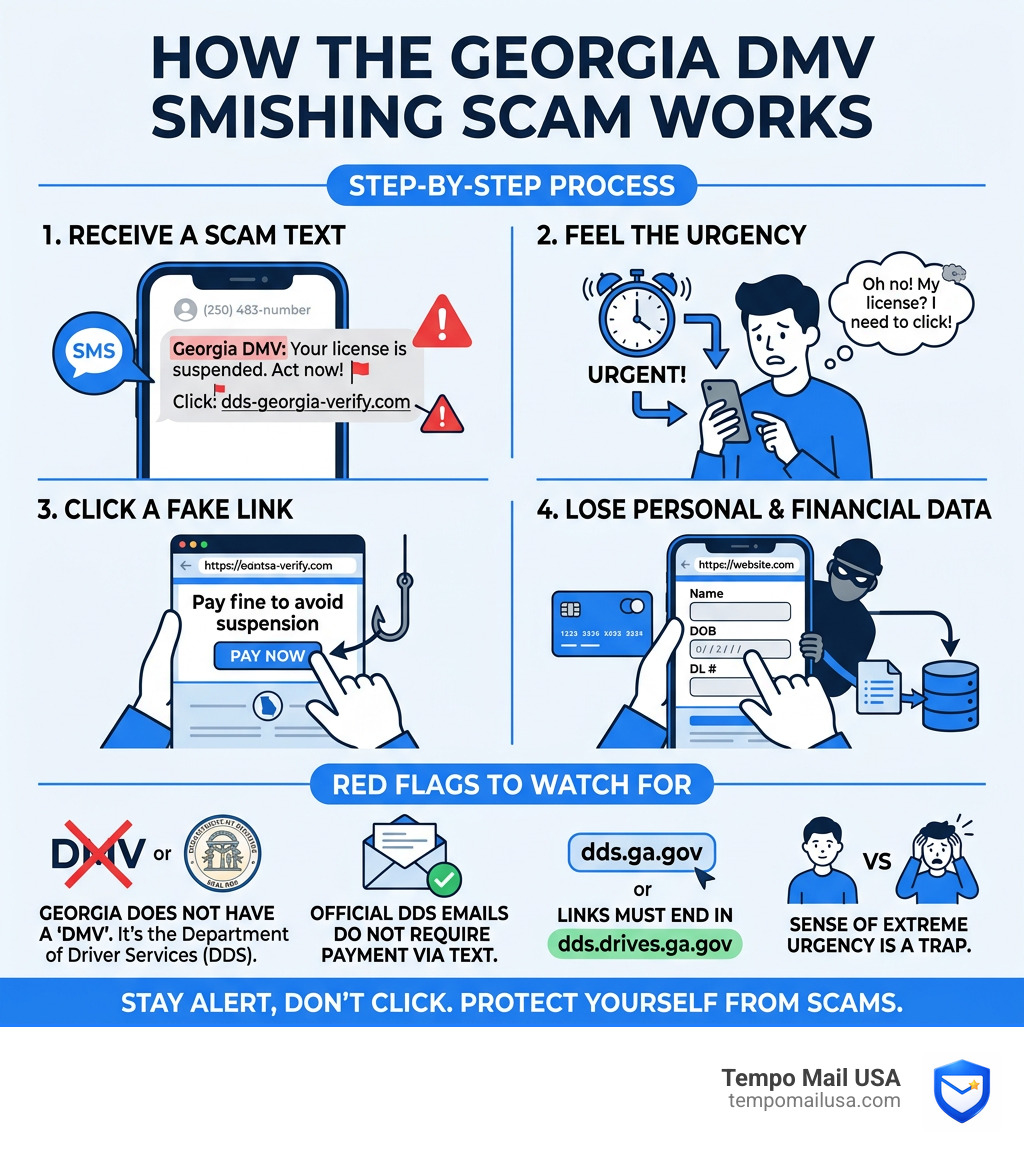
- "DMV" is a red flag - Georgia has no Department of Motor Vehicles. The real agency is the Georgia Department of Driver Services (DDS)
- DDS never texts you for payment - All real license notices come by mail only
- Fake legal codes - References to "Georgia State Administrative Code 15C-16.003" are made up; this code does not exist
- No toll booths in Georgia - Scam texts citing toll violations are false; Georgia only has Express Lanes
- Links don't match official URLs - Real DDS links go to
dds.ga.govordds.drives.ga.govonly
If you got a text claiming you owe a traffic fine, face a license suspension, or must click a link to verify your driver's license — that text is a scam. Delete it without clicking anything.
Georgia's Department of Driver Services has issued repeated warnings about this scam. Fraudsters send texts impersonating a government agency — one that doesn't even exist in Georgia — to pressure drivers into handing over personal and financial information. The messages look urgent. They're designed to make you panic and act fast.
That urgency is the point. Scammers want you to click before you think.
This guide will help you slow down, spot every red flag, and protect yourself — including what to do if you've already clicked a link.
Anatomy of a Georgia DMV Scam Text
To protect ourselves, we first need to understand the "anatomy" of these attacks. This specific type of fraud is known as "smishing"—a combination of SMS (text messaging) and phishing. The goal is simple: to trick you into clicking a link that leads to a fraudulent website designed to steal your money or your identity.
The typical Georgia DMV scam text follows a predictable script. It usually begins with a startling claim, such as an unpaid traffic ticket or an immediate license suspension. By creating a sense of crisis, the scammer hopes you’ll bypass your natural skepticism. According to the Georgia Department of Driver Services warning, these messages often include a call to action, like "Click here to pay your fine and avoid arrest" or "Verify your license status immediately to prevent suspension."
Once a victim clicks the fraudulent link, they are directed to a website that looks remarkably like the official DDS portal. These sites use the same colors, logos, and fonts as the real state agency. However, the form on the page isn't checking a record; it’s harvesting your Personally Identifiable Information (PII). This includes your driver’s license number, Social Security number, and credit card details.
The danger isn't just the immediate loss of money. Once a scammer has your driver's license info and SSN, they can commit long-term identity theft, opening lines of credit or filing fraudulent tax returns in your name.
3 Red Flags to Spot a Georgia DMV Scam Text
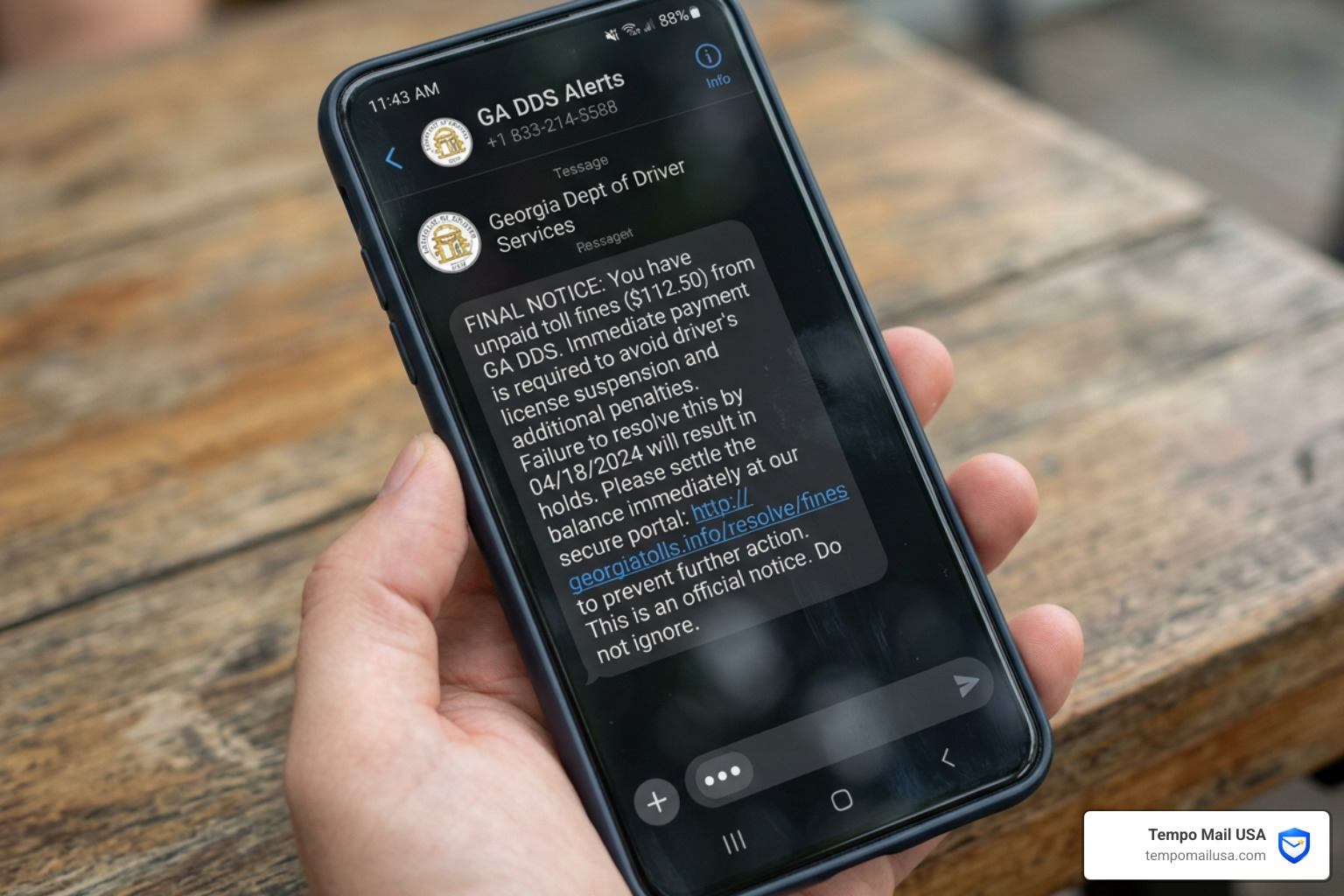
Identifying a scam doesn't require being a tech genius; it just requires a keen eye for detail. When we look closely at these messages, the cracks in the facade become obvious. Here are the three biggest red flags that prove a message is a Georgia DMV scam text.
Red Flag 1: The "DMV" vs. DDS Distinction
This is the "gotcha" moment for most Georgia residents. In many states, the agency that handles licenses is called the Department of Motor Vehicles (DMV). However, in the Peach State, that agency simply does not exist.
Georgia uses the Department of Driver Services (DDS). Any text message claiming to be from the "Georgia State Department of Motor Vehicles" or the "GA DMV" is an immediate tip-off that the sender is a fraudster who hasn't done their homework. Real government communications will always use the correct agency name. If you see "DMV" in a text about your Georgia license, it is a Georgia DMV scam text and should be deleted immediately.
Red Flag 2: Non-Existent Legal Codes and Tolls
Scammers love to sound official by citing specific laws. Many of these fraudulent texts reference "Georgia State Administrative Code 15C-16.003." While it sounds impressive, this code is completely fabricated. It does not exist in the Georgia legal system.
Furthermore, many of these texts claim you owe money for "toll booth violations." Here is the reality: Georgia does not have traditional toll booths anymore. The state has transitioned entirely to Express Lanes that use Peach Pass transponders. You won't get a text from the "DMV" about a toll booth because there are no booths to stop at! If a text mentions fake legal citations or toll booths, it’s a scam.
Red Flag 3: Unofficial Links and Payment Requests
The final and most dangerous red flag is the link itself. Official Georgia government websites will always end in .gov. Most legitimate DDS transactions happen at dds.ga.gov or through the secure portal at dds.drives.ga.gov.
Scammers use "URL shorteners" or look-alike domains (like georgia-dmv-pay.com or ga-dds-service.net) to hide their true destination. Before clicking, we should always inspect the URL. Additionally, the DDS has made it clear: they will never ask for payment via a text message. If you need to verify license status safely, you should navigate to the official site yourself rather than following a link sent by an unknown number. Always use DDS Online Services for any financial transactions.
How to Safely Verify Your Driver’s License Status
If you receive a suspicious text and feel a twinge of worry—"What if I do have a ticket?"—don't use the link in the text. There are several secure, official ways to check your status without risking your data.
The most reliable method is using the Official DDS Account portal. By creating an account, you can monitor your driving record, check for points, and see if there are any legitimate pending suspensions 24/7. Georgia also offers the DDS 2 GO app, a free mobile application that allows you to keep your licensing information at your fingertips securely.
Another modern option is the Georgia Digital ID. You can now add your driver's license to your smartphone wallet (Apple Wallet or Google Wallet). This provides a secure, encrypted way to carry your ID and ensures you are connected to official state systems.
Official Communication vs. Scam Texts
| Feature | Official DDS Communication | Georgia DMV scam text |
|---|---|---|
| Method | Official mail (USPS) or secure app notification | Unsolicited SMS/Text Message |
| Agency Name | Department of Driver Services (DDS) | Department of Motor Vehicles (DMV) |
| Payment Request | Never requested via text or phone | Urgent demand for payment via link |
| Website URL | Ends in dds.ga.gov | Random words or .com / .net |
| Legal Codes | Real, verifiable GA codes | Fake code "15C-16.003" |
What to Do If You Clicked a Georgia DMV Scam Text Link
We all make mistakes, and these scammers are professionals at deception. If you've already clicked a link or, worse, entered your information, you need to act quickly to minimize the damage.
Immediate Steps for Data Protection
- Contact Your Financial Institutions: If you entered credit card or bank account info, call your bank immediately. Ask them to freeze your cards and monitor for unauthorized charges.
- Place a Fraud Alert: Contact the three major credit bureaus (Equifax, Experian, and TransUnion) to place a free fraud alert on your credit file. This makes it harder for scammers to open new accounts in your name.
- Reset Your Passwords: If the scam site asked you to "log in," change the passwords for your email, banking, and government accounts immediately. Use a unique, strong password for every site.
- Report to the Authorities: You should report fraud to the FTC. This helps federal agencies track scam patterns and shut down fraudulent websites.
Reporting Identity Theft in Georgia
If you believe your identity has been stolen, Georgia offers several resources to help you recover. You should visit IdentityTheft.gov to get a personalized recovery plan. Locally, the Governor's Office of Consumer Protection can provide guidance on state-specific protections.
Other agencies that may need to be notified include:
- Social Security Administration: If your SSN was compromised.
- Postal Inspection Service: If you suspect mail fraud is involved. USPIS.gov.
- Secret Service: They handle many high-level financial fraud cases.
Frequently Asked Questions about Georgia DDS Scams
Does the Georgia DDS ever send text messages for payment?
No. The Georgia Department of Driver Services (DDS) does not contact customers via text message, email, or phone to solicit payments or ask for personal information like Social Security numbers. Official notifications regarding license suspensions or fines are sent via the U.S. Postal Service.
What is Georgia State Administrative Code 15C-16.003?
It is a fake legal code. Scammers use this non-existent citation to make their text messages look legitimate. If you see this code in a text, it is a 100% guarantee that the message is a scam.
How can I report a suspicious Georgia DMV scam text?
You can report the message to the Federal Trade Commission (FTC) at reportfraud.ftc.gov. Additionally, most cell phone carriers allow you to report spam by forwarding the suspicious text message to the number 7726 (which spells "SPAM").
Conclusion
The Georgia DMV scam text is a persistent threat, but it loses its power the moment you know the red flags. By remembering that Georgia uses the DDS (not the DMV), staying skeptical of "toll booth" fines, and never clicking unsolicited links, we can keep our personal information safe.
At Tempo Mail USA, we believe in creating a "PII firewall" around your life. Using tools like temporary email aliases and secure digital habits can shield your primary identity from being harvested by scammers in the first place. When you reduce the amount of real data you share online, you reduce your "attack surface" for these fraudsters.
Stay vigilant, delete those suspicious texts, and always protect your identity by using official government channels for your driver services. Your data is your most valuable asset—don't let a scammer take it with a single click.