


Is That WSDOT Toll Text a Scam? Here's What You Need to Know
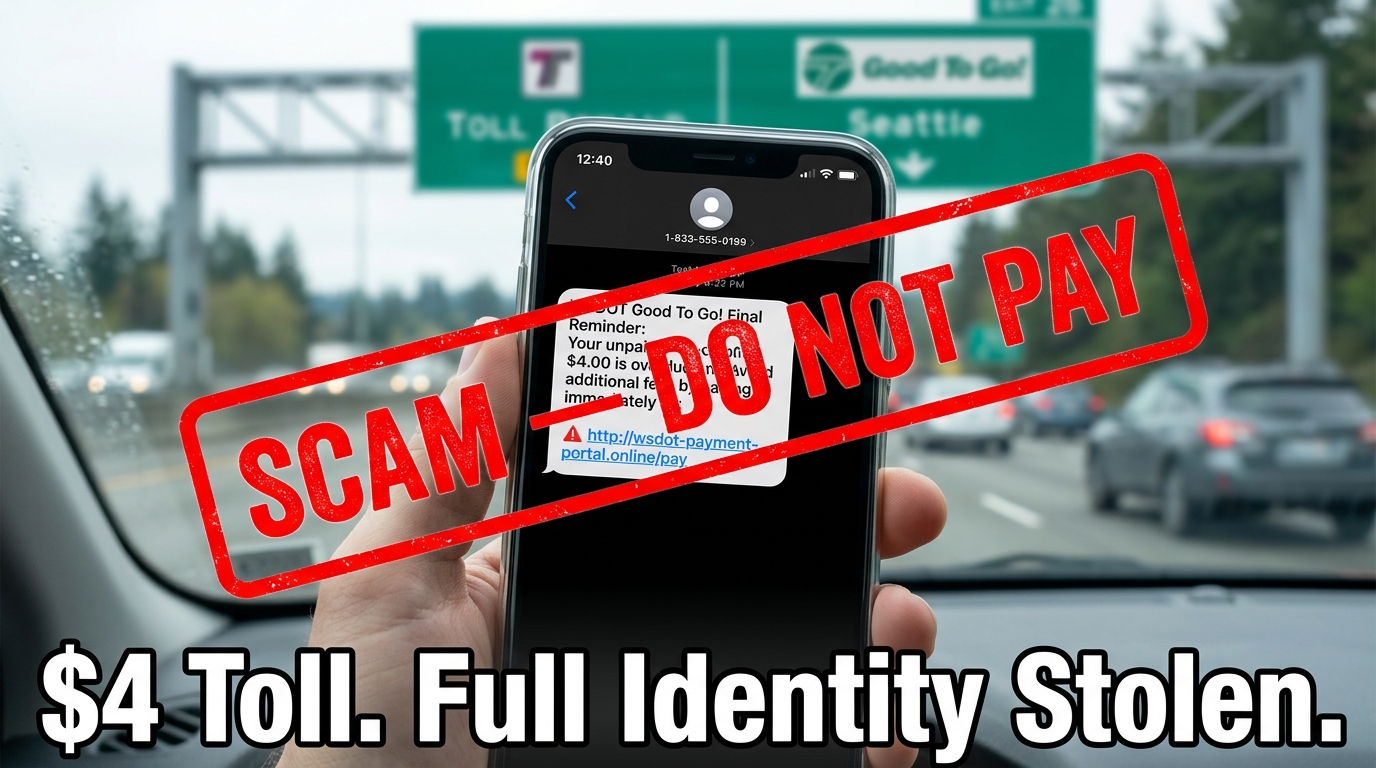
The wsdot text scam is a phishing scheme where criminals impersonate Washington State's Good To Go! toll system to steal your personal and financial information. It is not a legitimate message, and you should not click any links in it.
Quick answer:
- Good To Go! and WSDOT never send text messages requesting payment
- The only official payment site is MyGoodToGo.com
- If you got a toll text, do not click the link - delete it immediately
- Report it to the FBI at ic3.gov or the FTC at reportfraud.ftc.gov
These scam texts are hitting Washington drivers hard. Some people have reported receiving up to three different fake toll texts in a single day, all from different numbers. The messages look convincing - they use real WSDOT branding, mention specific dollar amounts like $3 to $6, and threaten fines or legal action if you don't pay fast.
But here's the thing: that small payment request isn't the real goal. The scammers want your full credit card number, billing address, and personal details. The $4 "toll fee" is just the hook.
WSDOT has been sounding the alarm about this scam, noting it seems like just about everyone in Washington has received one of these texts. And it's not just Washington - this is part of a nationwide wave of fake toll texts targeting drivers across the country.
This article breaks down how the scam works, how to spot the warning signs, and the safest way to check whether you actually owe a toll.
What is the WSDOT Text Scam?
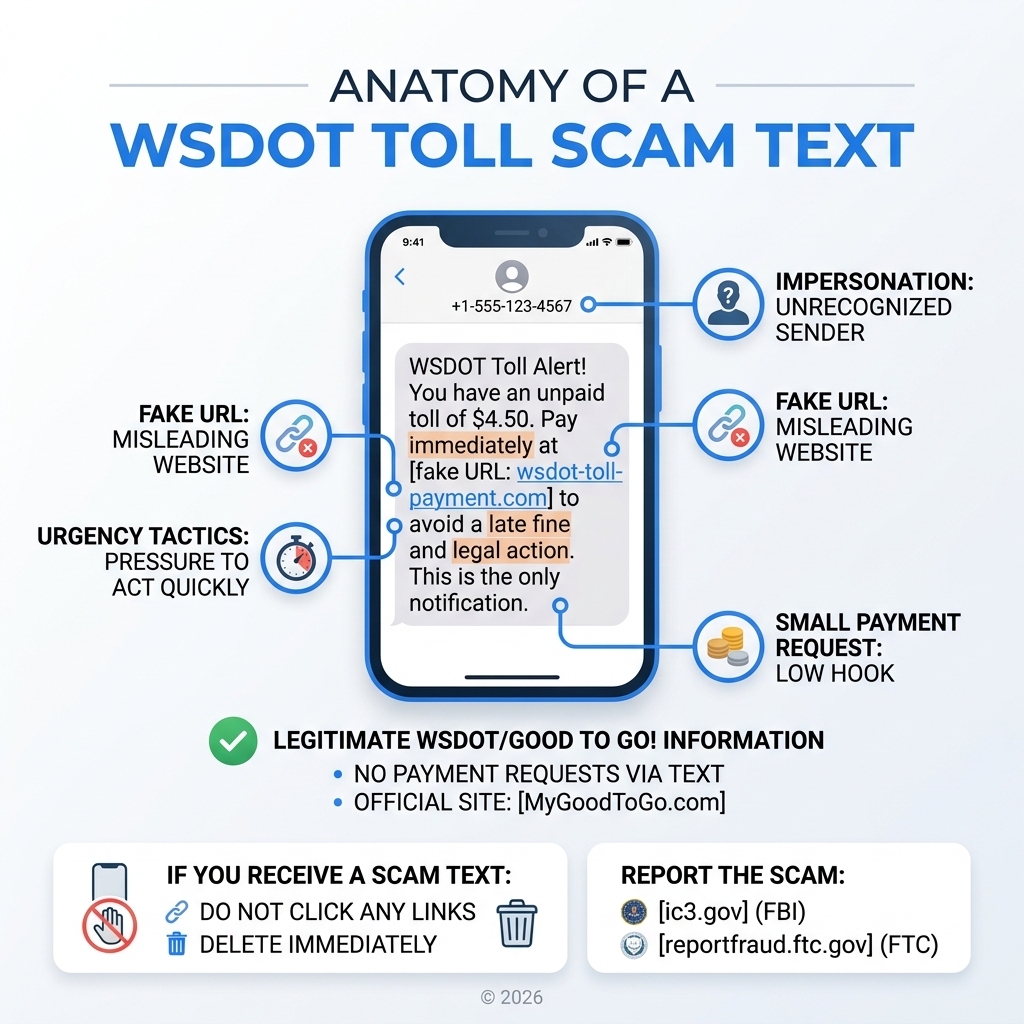
At its core, the wsdot text scam is a form of "smishing"—which is just a fancy way of saying SMS phishing. It’s a digital trap set by cybercriminals who want to harvest your data. By impersonating the Washington State Department of Transportation (WSDOT) and the Good To Go! tolling system, these bad actors play on your sense of responsibility and fear of legal trouble.
According to reports, including those from the Phony toll-bill texts flood WA drivers’ phones coverage, scammers are blasting out thousands of these messages at once. They aren't just looking for a few dollars; they are after your entire digital identity. As we’ve seen in other regions, these campaigns can be incredibly lucrative for criminals, as detailed in our guide on how toll scam texts cost millions and how to stay safe.
How the wsdot text scam works
The mechanics of the scam are simple but effective. It usually follows a predictable four-step process:
- The Hook: You receive an unsolicited text message. It often starts with an alarming header like "[WSDOT Toll Alert]" or "Good To Go! Final Reminder."
- The Pressure: The message claims you have an unpaid toll balance, usually a small, believable amount like $4.15 or $5.80. It warns that if you don't pay within 24 to 48 hours, you'll face late fees, license suspension, or "legal action."
- The Trap: The text includes a link. While it might look legitimate—perhaps containing words like "wa" or "toll"—it leads to a spoofed website. These fake sites are designed to look exactly like the official MyGoodToGo.com portal, complete with stolen logos and bridge photos.
- The Harvest: Once you’re on the fake site, you’re asked to enter your name, address, and credit card information to "pay the bill." In reality, you are handing your credentials directly to a thief who can now use them for unauthorized purchases or "credential stuffing" (trying your password on other sites).
To protect yourself, learn how to recognize and avoid phishing scams by looking for these psychological triggers.
Why this scam is surging now
You might be wondering why your phone is suddenly blowing up with these messages. It’s not because you actually missed a toll; it’s because scammers have automated the process. They use "bots" to send millions of texts to random phone numbers across Washington area codes.
This isn't just a local problem. It's a nationwide trend where scammers impersonate various state toll agencies. For example, the East Coast has seen similar massive waves, such as the E-ZPass scam text with 60,000 reports and counting. Because these scams are cheap to run and high-reward, criminal organizations keep refreshing their tactics every time a specific URL gets blocked.
How to Identify a WSDOT Text Scam
Identifying a wsdot text scam is easier once you know the "tells." Scammers are good, but they often leave breadcrumbs that reveal their true nature.
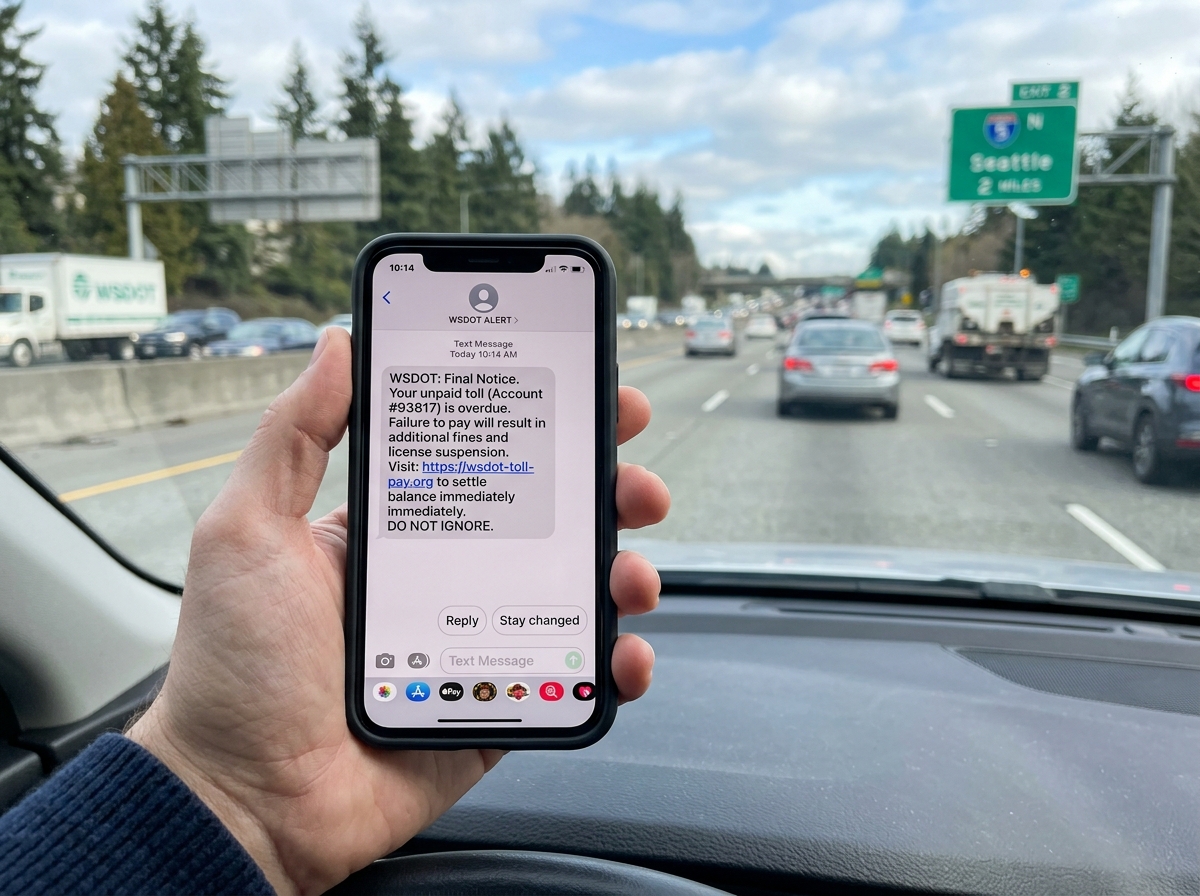
The most obvious sign is the URL. Official Washington tolling business is only conducted at MyGoodToGo.com. If the link in your text says something like "wa-toll-service.com," "goodtogowashington.com," or "mygoodtogosettle.com," it is 100% a scam.
Other warning signs include spelling mistakes, awkward grammar, strange sender addresses, or messages sent from random or foreign-looking numbers. Scam texts also often use terms that do not fit Washington agencies, such as "DMV" instead of the Department of Licensing.
Common examples of wsdot text scam messages
Here are a few variations that have been reported by Washington residents:
- The "Final Reminder": "WSDOT Good To Go! Final Reminder: You have an unpaid toll balance of $4.15. To avoid a $50.00 late fee, please pay at [scam-link]."
- The "Legal Threat": "Official Notification: Your account has an outstanding toll. Failure to pay will result in legal action and license suspension. Visit [scam-link] to resolve."
- The "Account Alert": "Good To Go! WA: We noticed a problem with your recent toll payment. Please update your billing info at [scam-link] to keep your account active."
WSDOT has been very clear: Scam alert: Good To Go! will not request payments on any website but MyGoodToGo.com. They do not send these types of "pay now" texts.
Red flags in toll-related messages
To help you stay safe, we've put together a comparison table of what's real and what's fake.
| Feature | Official WSDOT / Good To Go! | Scam Text Message |
|---|---|---|
| Payment Request | Sent via physical mail or official email alerts. | Sent via unsolicited text message. |
| Website Link | Always MyGoodToGo.com | Random URLs (e.g., "toll-wa.com"). |
| Tone | Informational and professional. | Urgent, threatening, or alarming. |
| Terminology | Uses "Department of Licensing" (DOL). | Often uses "DMV" (which doesn't exist in WA). |
| Phone Numbers | Official customer service lines. | Often from foreign area codes or random emails. |
One major red flag is the use of the term "DMV." In Washington, we have the Department of Licensing (DOL). If you see a text about your "DMV record," that's a strong sign it is fraudulent. You can find more tips on this in our guide on how to spot a DMV text scam.
Official Ways to Check and Pay Your Washington Tolls
If you’re genuinely worried that you might owe money for a trip across the SR 520 bridge or through the SR 99 tunnel, don't use the link in a text. Go straight to the source.
The only safe place to manage your tolls is through the official Log into mygoodtogo.com to manage your account page. We recommend bookmarking this site so you never have to search for it and risk clicking a "sponsored" scam ad on Google.
Legitimate WSDOT communication methods
WSDOT and Good To Go! have established ways of talking to you. They generally stick to these three channels:
- Postal Mail: If you don't have a Good To Go! account, they will mail a bill to the address associated with your vehicle's registration.
- Official Email: If you have an account, you may receive monthly statements or low-balance alerts via email.
- The Portal: All billing history and payment options are inside your secure dashboard at MyGoodToGo.com.
If you ever have a doubt, you should Contact Good To Go! customer service directly at 1-866-936-8246. Other states have similar strict rules; for instance, how TxTag only sends texts from one number, showing that official agencies prioritize security over convenience.
Verifying your account status safely
You don't even need to log in to check for unpaid tolls if you are in a hurry. The official website allows you to search by your license plate number. This is a secure way to see if there is a legitimate balance tied to your vehicle.
Additionally, if the scam text mentions your driver's license being at risk, you can set up a secure License Express account through the Washington Department of Licensing. This is the only way to officially verify your license status in Washington State.
What to Do If You Receive a Suspicious Toll Text
If your phone pings and you see a wsdot text scam message, your first instinct might be to reply "STOP" or click the link just to see what it is. Don't do it.
Here is the protocol we recommend:
- Do Not Click: Even clicking the link can sometimes alert scammers that your phone number is "active," leading to even more spam.
- Do Not Reply: Replying tells the bot there is a human on the other end.
- Take a Screenshot: Save an image of the message so you have details for a report.
- Use Your Phone's Report Feature: On many devices, you can tap "Report Junk" or mark the message as spam before deleting it.
- Block and Delete: Use your phone's built-in features to block the sender and delete the thread.
It is also helpful to see how other states handle these reports, like the NYS DMV scam text reports in Rochester, which shows the power of community reporting.
Where and how to report the scam
Reporting these texts helps law enforcement track down the groups behind them and shut down the fraudulent websites.
- The FBI: File a complaint at the Internet Crime Complaint Center (IC3) at ic3.gov.
- The FTC: Use the Federal Trade Commission reporting tool. This is specifically for Washington-related scams.
- 7726 (SPAM): Most major cell carriers allow you to forward scam texts to the number 7726. This helps the carriers block the scammer's origin number across their entire network.
- The FTC General Site: You can also File a report with the FTC for any general fraudulent activity.
Steps to take if you've already fallen victim
If you realized too late that the site was a fake and you entered your information, don't panic. You need to act fast to minimize the damage:
- Contact Your Financial Institution: Call your bank or credit card company immediately. Tell them you were a victim of a phishing scam. They will likely cancel your card and issue a new one.
- Freeze Your Credit: This prevents scammers from opening new accounts in your name. Contact the three major bureaus: Equifax, Experian, and TransUnion.
- Change Your Passwords: If you used the same password for the fake site as you do for your email or bank, change those passwords immediately.
- Monitor Your Accounts: Keep a close eye on your statements for any "test" charges, often small amounts like $1.00.
For a more detailed recovery plan, check out our checklist on why you should not click that DMV scam link.
Protecting Your Privacy from Future Smishing Attacks
Scammers get your phone number from data breaches, public records, or by simply using software that dials every possible number combination. While you can't always stop them from finding your number, you can build a "privacy firewall" around your digital life.
We always recommend enabling Two-Factor Authentication (2FA) on every account that offers it. This ensures that even if a scammer steals your password, they can't get into your account without a secondary code.
Furthermore, using privacy tech like temporary email aliases can keep your real identity hidden from services that might eventually be breached. When you sign up for rewards programs or non-essential services, using a proxy email ensures your primary PII (Personally Identifiable Information) stays safe. This is a key strategy we discuss in our TxDMV.org scam alert and red flags analysis.
Related scams targeting Washington drivers
The wsdot text scam is just one tool in the criminal shed. Washington drivers are also being targeted by:
- The REAL ID Scam: Texts claiming you need to "update" your license to meet REAL ID requirements by clicking a link. (REAL ID must be handled in person at a DOL office).
- The Traffic Ticket Scam: Messages claiming you have an unpaid speeding ticket from a "Seattle BMV" or "WA DMV."
- Expired Tabs Scam: With roughly 593,000 people in Washington reportedly driving with expired tabs, scammers are sending fake "registration renewal" texts to catch people off guard.
Stay vigilant against these variations, as seen in the Utah and Louisiana DMV scam text reports, which highlight how these tactics jump from state to state.
Frequently Asked Questions about wsdot text scam
Does WSDOT ever send text messages requesting payment?
No. WSDOT and the Good To Go! program do not send unsolicited text messages asking for payment or threatening legal action. Official billing is handled through the mail or via the secure MyGoodToGo.com portal.
What happens if I click the link in a scam text?
Clicking the link usually takes you to a "spoofed" website designed to steal your credit card and personal info. In some cases, simply visiting the site can allow scammers to track your IP address or confirm that your phone number is active, leading to more spam.
Why did I get a text if I don't have a Good To Go! account?
Scammers don't actually know if you have an account. They use automated systems to "blast" texts to thousands of random phone numbers in Washington. They are playing a numbers game, hoping a small percentage of recipients will actually have an account and be worried enough to click.
Conclusion
The wsdot text scam is a reminder that our personal information is always under threat. These criminals rely on urgency and the official look of WSDOT branding to trick you into giving up your hard-earned money and your identity.
At Tempo Mail USA, we believe that privacy is a right, not a luxury. Our mission is to provide you with the tools to protect your digital footprint. By using our temporary email aliases, you can create a secure proxying layer that acts as a firewall between you and the services you use. This prevents your real PII from being leaked in the data breaches that scammers use to fuel their smishing campaigns.
Stay safe, stay skeptical of unsolicited texts, and always verify through official channels. For more information on how to protect your privacy, visit us at https://tempomailusa.com.