


The EZPass Scam Text Is Fooling Millions — Here's What You Need to Know
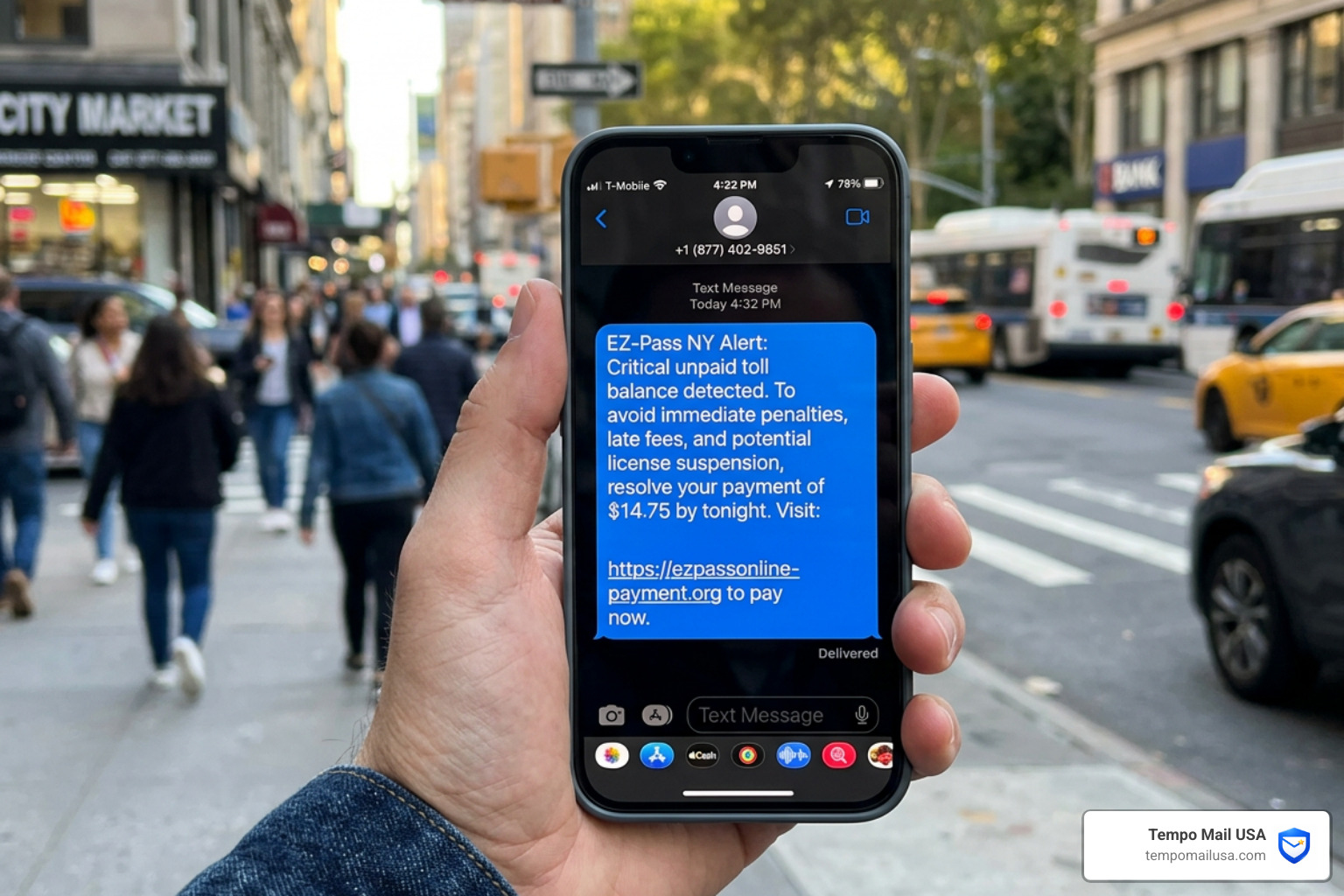
An EZPass scam text is a fake SMS message pretending to be from a toll agency, claiming you owe unpaid tolls and threatening fines or license suspension if you don't pay immediately through a link.
Quick answers:
- What it is: A "smishing" (SMS phishing) attack impersonating E-ZPass or similar toll services
- What it looks like: A text claiming you have an outstanding toll balance, with a link to a fake payment page
- What to do: Do not click the link — delete the text and verify your balance through the official E-ZPass website or app
- Is it real? No. E-ZPass will never text you requesting payment or sensitive personal information
Texting scams are rising fast, and toll scams have become one of the most common types. The FBI's Internet Crime Complaint Center has logged over 60,000 reports of these fake toll texts. Behind many of them is an organized cybercriminal group that has harmed at least 1 million victims across 120 countries.
The scam works because it feels urgent and real. A small toll amount — maybe $4 or $5 — doesn't raise suspicion. And unlike email spam, most people still trust a text message.
With over 59 million E-ZPass devices in circulation, there's no shortage of potential targets.
What is the EZPass Scam and How Does It Work?
The EZPass scam text phenomenon is a sophisticated form of "smishing"—a portmanteau of SMS and phishing. While it might look like a random message from a confused robot, it is actually the work of organized cybercriminal syndicates. Specifically, cybersecurity researchers have identified a group known as the "Smishing Triad" as a primary driver behind these attacks.
These Chinese-speaking syndicates don't just send texts; they operate a business model. They use ready-made "phishing kits," often sold or managed via Telegram, such as the notorious "Lighthouse" kit. This kit allows even low-level scammers to deploy professional-looking websites that mimic official toll agency portals. According to Google’s cybersecurity experts, these groups have generated over 100 different templates to trick users.
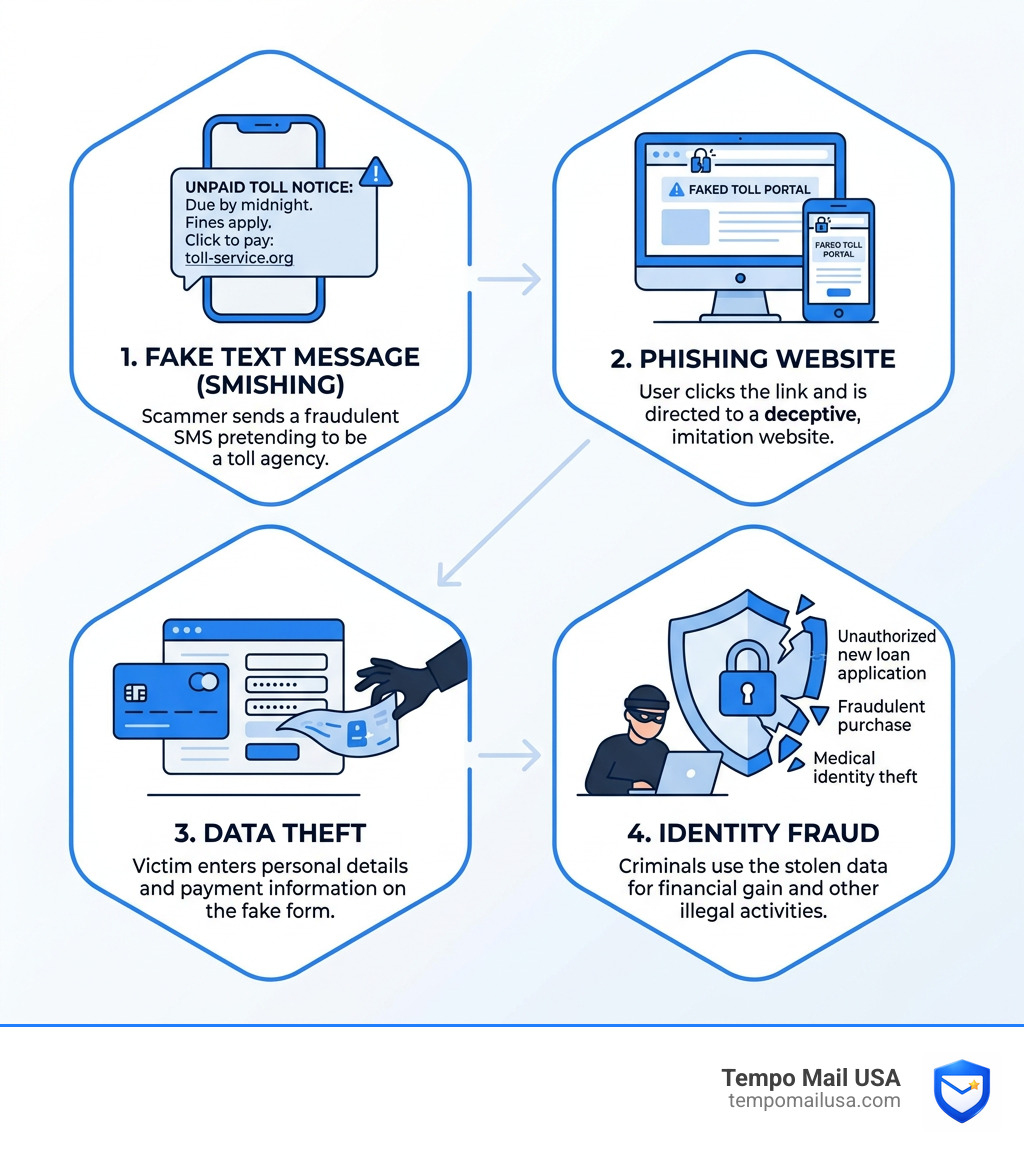
The scam follows a calculated step-by-step process:
- The Hook: You receive an unsolicited text claiming you have an "outstanding toll" or a "final reminder."
- The Pressure: The message uses urgent language, threatening "excessive fees" or "legal action" to make you panic.
- The Trap: You click a link that looks official but leads to a fraudulent domain.
- The Theft: The fake site asks for your credit card number, date of birth, and Social Security number. Once entered, this data is harvested for identity theft or sold on the dark web.
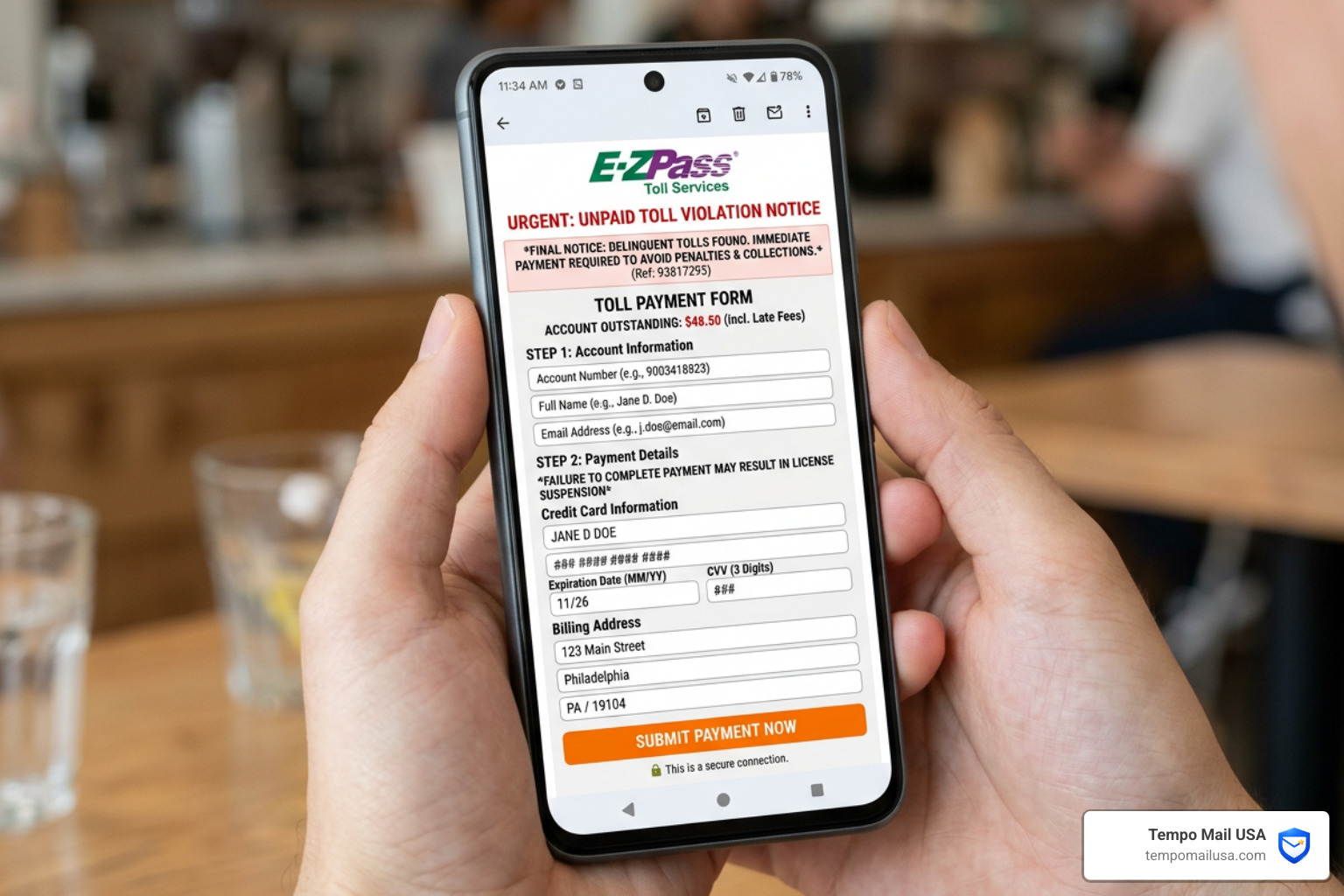
The Official E-ZPass Group Statement is very clear: the E-ZPass Interagency Group does not collect tolls itself; it is an association of toll agencies. Legitimate agencies will never send you a text message out of the blue demanding payment via a link.
Typical Wording in an EZPass Scam Text
To protect ourselves, we need to recognize the "script" these scammers use. Most EZPass scam text messages follow a predictable pattern. They almost always include terms designed to trigger a "fight or flight" response.
Common phrases include:
- "E-ZPass Final Reminder: You have an outstanding toll balance of $4.15."
- "Failure to pay by [Date] will result in a $50.00 late fee."
- "Your driver's license may be suspended if this balance is not settled immediately."
- "Please click the link to avoid further penalties: [Fake URL]."
Scammers often use shortened URLs or domains that look almost right, such as "ezpass-tolls.top" or "ezdrivema-service.com." They might also include instructions like "Reply Y, then exit and reopen the message to activate the link." This is a sneaky tactic used to bypass the built-in spam filters on your phone.
Why This Smishing Attack is Particularly Dangerous
The scale of this scam is staggering. As we mentioned, the FBI's IC3 has already logged over 60,000 reports, but that is likely just the tip of the iceberg. With 1 million victims globally and 59 million E-ZPass transponders in the U.S. alone, the probability of a scammer hitting a real customer is incredibly high.
This isn't just an E-ZPass problem, either. The FBI Internet Crime Complaint Center warns that scammers are spoofing every major toll service in the country. If you live in California, you might see a FasTrak security alert about similar texts. In Florida, it's SunPass; in Illinois, it's I-PASS; and in Georgia, it's Peach Pass.
The danger lies in the "small ask." By requesting a tiny amount—usually under $10—scammers lower your guard. Most people think, "It's only five dollars, I'll just pay it to be safe," not realizing they are actually handing over their entire financial identity.
Geographic Reach and Affected Regions
While the EZPass scam text is a national issue, certain states have been hit particularly hard. This is often because these states have moved toward "all-electronic tolling," where there are no cash booths. Drivers in these areas are used to receiving digital notifications, which makes the scam more believable.
Highly affected regions include:
- New York and New Jersey: Home to some of the busiest toll roads in the world.
- Maryland and Virginia: Frequent targets for "toll evasion" notices.
- New Hampshire: The NH Turnpike E-ZPass warning specifically notes that residents are being targeted with "smishing" attempts.
- Illinois and Indiana: I-PASS and Indiana Toll Road users have reported massive waves of these texts.
No matter where you live, if you drive on a toll road, you are a potential target.
Key Red Flags to Spot an EZPass Scam Text
Identifying an EZPass scam text is easier when you know what to look for. Scammers are good, but they almost always leave "digital fingerprints" that give them away.
- The Sender's Number: Many scam texts originate from international numbers. Look for country codes like +63 (Philippines) or +44 (UK). Others may come from random Gmail or iCloud addresses rather than a verified short code.
- Generic Greetings: Official toll agencies usually have your name or account number. Scammers use generic terms like "Dear Customer" or "Valued Driver."
- The URL (Domain Name): This is the biggest giveaway. Official sites end in .com, .org, or .gov (like ezdrivema.com). Scam sites often use weird extensions like .top, .xin, .site, or .info.
- Urgency and Threats: If the text threatens to suspend your license or send you to collections within 24 hours, it’s a scam. Government agencies move slowly; they send paper letters before taking such drastic actions.
- Grammar and Spacing: Look for odd capitalizations, missing spaces, or awkward phrasing. Scammers often use "broken" English or non-standard punctuation.
Official Communication Policies
To stay safe, we must understand how real toll agencies operate. Agencies like the Illinois Tollway provide clear I-PASS fraud guidelines stating they do not request sensitive information via text.
The Golden Rules of Toll Communication:
- Paper First: Legitimate agencies almost always send a paper invoice via the U.S. Postal Service if a toll goes unpaid.
- No Direct Links for Payment: While some agencies might send a text alert (if you opted in), they will rarely provide a direct link that asks for your credit card immediately.
- Sensitive Data: E-ZPass will never ask for your Social Security Number, date of birth, or credit card PIN via a text message.
What to Do if You Receive or Click a Suspicious Link
If you receive an EZPass scam text, the best thing to do is... nothing. Do not reply. Do not click. Do not even "unsubscribe." Any interaction tells the scammer that your phone number is active, which leads to even more spam.
Step-by-Step Response:
- Report to 7726: This is the universal "SPAM" reporting number for most major carriers. Copy the text and forward it to 7726.
- Block and Delete: Use your phone’s built-in tools to block the sender and delete the thread.
- Verify Independently: If you’re worried you actually owe money, go to the official website by typing the address manually into your browser.
What if you already clicked the link? If you clicked but didn't enter info, you might still be at risk for malware. We recommend putting your phone in airplane mode immediately. Run a malware scan and ensure your operating system is up to date. For more detailed steps, check out our guide on How to Report Phishing Email in USA.
If you entered personal or financial information, you must act fast:
- Contact your bank to freeze your cards and dispute any unauthorized charges.
- Place a fraud alert or "freeze" on your credit through Equifax, Experian, and TransUnion.
- Change your passwords, especially for your email and banking accounts.
We’ve written extensively on how to Stop the Spam Before It Starts to help you avoid these situations in the future.
Reporting an EZPass Scam Text to Authorities
Reporting these crimes helps the government track and eventually shut down the syndicates. Google’s recent lawsuit against the "Smishing Triad" was made possible because people reported the attacks.
- The FCC: You can file a complaint at the FCC Complaint Center. They use this data to push for better carrier-level blocking.
- The FTC: Use our guide on How to Report Fraud to FTC the Right Way to file an official report.
- The FBI: File a complaint at IC3.gov.
- State Authorities: In New York, for example, the NY Division of Consumer Protection provides assistance and helplines for victims.
How to Safely Verify Your Toll Balance
The smartest way to beat a scammer is to bypass them entirely. If you think you might have a legitimate toll violation, use one of these verified methods. Never, under any circumstances, use a link provided in an unsolicited text.
| Method | Official Action | Scammer Tactic |
|---|---|---|
| Website | Manually type EZPassNY.com or your state's specific portal. | Provides a link like "ezpass-pay-now.com". |
| Mobile App | Use the official "PA Turnpike," "E-ZPass NY," or "NJ E-ZPass" app from the App Store. | Tells you to "click to activate" a web-based portal. |
| Phone | Call the number on the back of your transponder or a verified government site. | Provides a "customer service" number in the text. |
| Wait for a physical invoice sent to your vehicle's registered address. | Claims it is a "Final Digital Notice." |
If you are a New York driver, you can also check TollsByMailNY for any violations captured by cameras.
Frequently Asked Questions about Toll Scams
Does E-ZPass ever send text messages for payment?
Generally, no. While some agencies allow you to opt-in for low-balance alerts, they will never send a cold text message demanding payment for a "violation" or "unpaid toll" accompanied by a link to a third-party payment site.
What happens if I clicked the link but didn't enter info?
You are likely safe from identity theft, but your phone may have been flagged as an "active" target. Some malicious sites can also attempt to download malware or "drive-by" cookies. It is best to clear your browser cache and run a security scan on your device.
How do I block these scam texts permanently?
While you can't stop every scammer, you can significantly reduce them. Use your phone's "Filter Unknown Senders" setting. Additionally, using a temporary email or alias for online services can prevent your real contact info from leaking in data breaches.
Conclusion
The EZPass scam text is a reminder that our personal information is constantly under fire. These scammers rely on the fact that we lead busy lives and often react to "urgent" notifications without thinking. By staying informed and recognizing the red flags—like suspicious URLs and international numbers—we can protect ourselves and our finances.
At Tempo Mail USA, we believe in building a "PII Firewall" around your identity. Our mission is to provide you with the privacy tech tools necessary to keep your personal information out of the hands of scammers. Whether it's through temporary email aliases or educating the public on smishing attacks, we are here to help you stay secure.
Don't let a $4.00 fake toll turn into a $4,000 identity theft nightmare. Protect Your Inbox with Affordable Spam Protection and learn more about how we shield your data at https://tempomailusa.com. Stay safe on the road—and on your phone!