

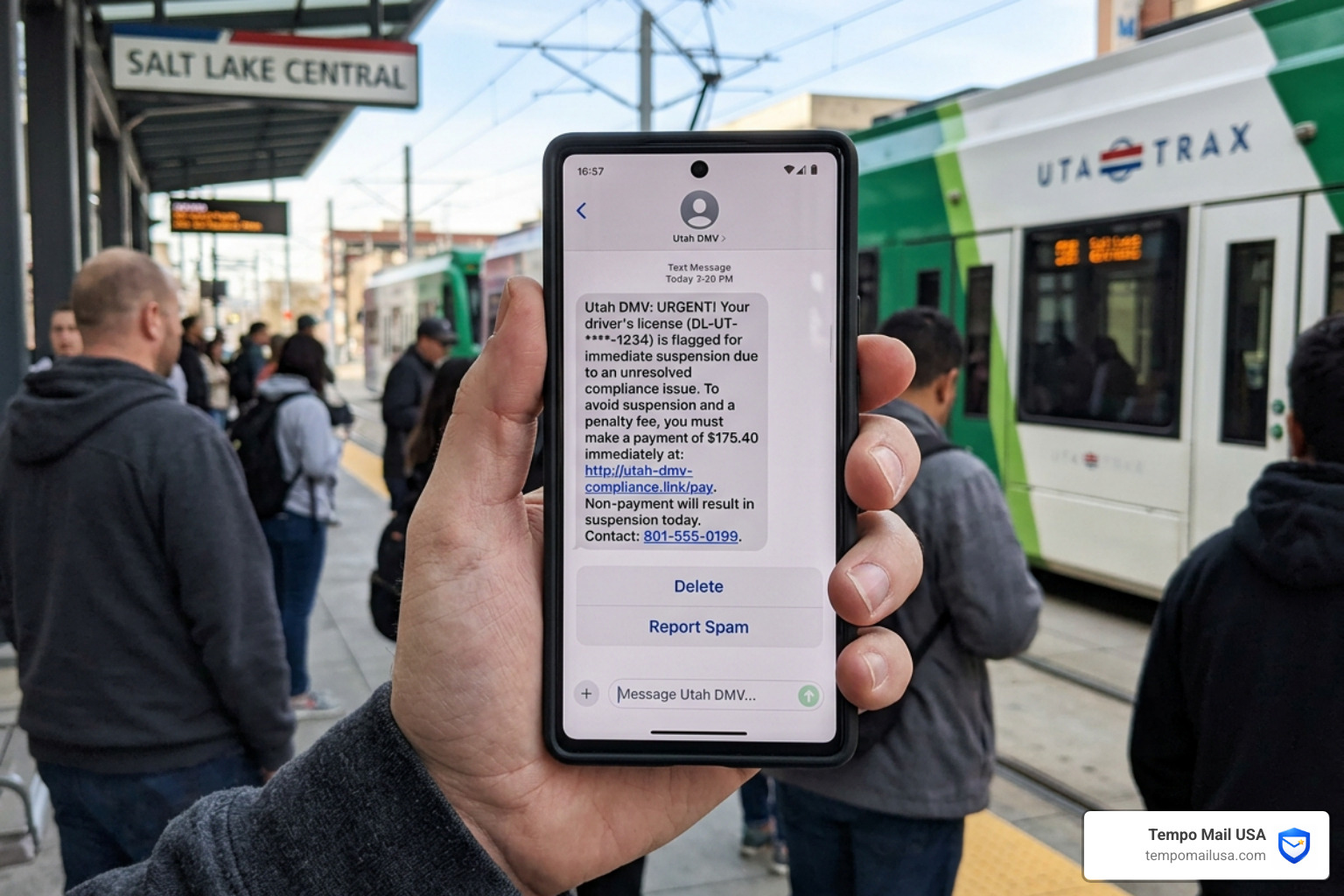

Is That DMV Text Real? How to Spot a Scam Fast
Utah DMV scam text / Utah DMV scam / Louisiana DMV scam text messages are fraudulent. Neither the Utah DMV nor the Louisiana Office of Motor Vehicles (OMV) will ever send you an unsolicited text demanding payment or personal information.
Quick answer if you just received one of these texts:
- Do not click any links in the message
- Do not reply or call any number listed in the text
- Do not provide your Social Security number, driver's license number, or payment details
- Verify by calling the Utah DMV directly at 801-297-7780, or visit dmv.utah.gov
- Report and delete the text — forward it to 7726 (SPAM) and report at reportfraud.ftc.gov
These scam texts — a form of attack called smishing (SMS + phishing) — typically claim you owe unpaid tolls, have an outstanding traffic ticket, or face vehicle registration suspension. They create urgency and fear to push you into clicking a fake link or handing over sensitive personal information.
The scam is not limited to Utah. Warnings have been issued across Louisiana, Illinois, New Jersey, Pennsylvania, Florida, Georgia, and New York. This is a coordinated, nationwide campaign — and it's getting more sophisticated every year.
Your personal data is valuable. And these scammers know exactly how to trick you into giving it away.
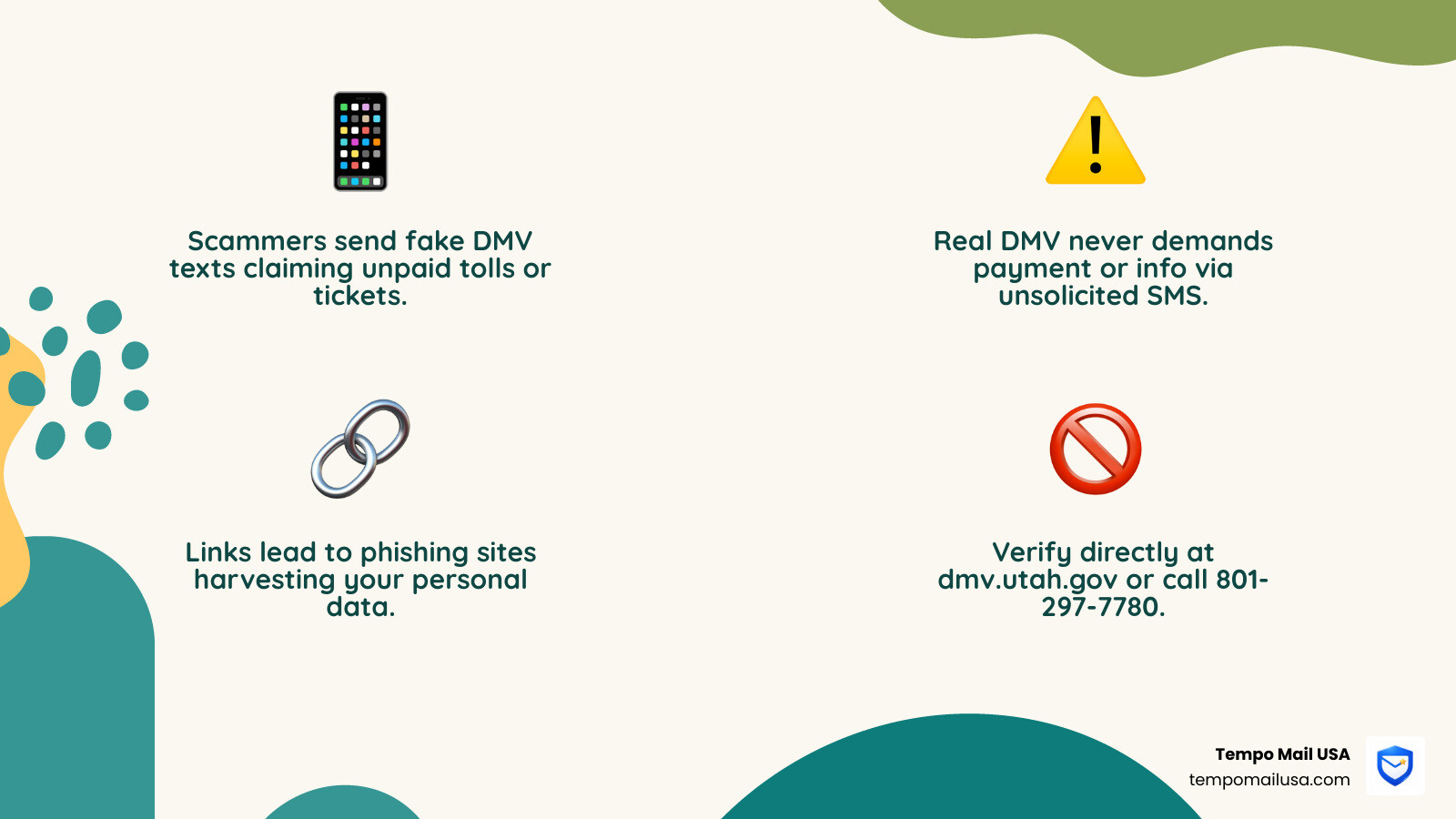
Understanding the Utah DMV scam text / Utah DMV scam / Louisiana DMV scam text
When we talk about a Utah DMV scam text, we are looking at a specific type of cybercrime known as "smishing." According to IBM's definition of smishing attacks, this is a social engineering attack that uses fake text messages to trick people into downloading malware, sharing sensitive information, or sending money to hackers. It is a clever combination of "SMS" and "phishing."
These aren't just annoying telemarketers trying to sell you a car warranty. These are criminals using psychological triggers—like the fear of losing your driver's license—to bypass your natural defenses.
While you might be seeing these messages in Salt Lake City or New Orleans, the scope of this campaign is massive. Reports of similar DMV-themed smishing have flooded in from:
- Illinois: Where the Secretary of State warned of texts threatening registration suspension.
- New Jersey: Where scammers used "ezpassnj" in the link to look official.
- Pennsylvania, Florida, Georgia, and New York: All reporting nearly identical tactics involving fake toll debts and "important" DMV updates.
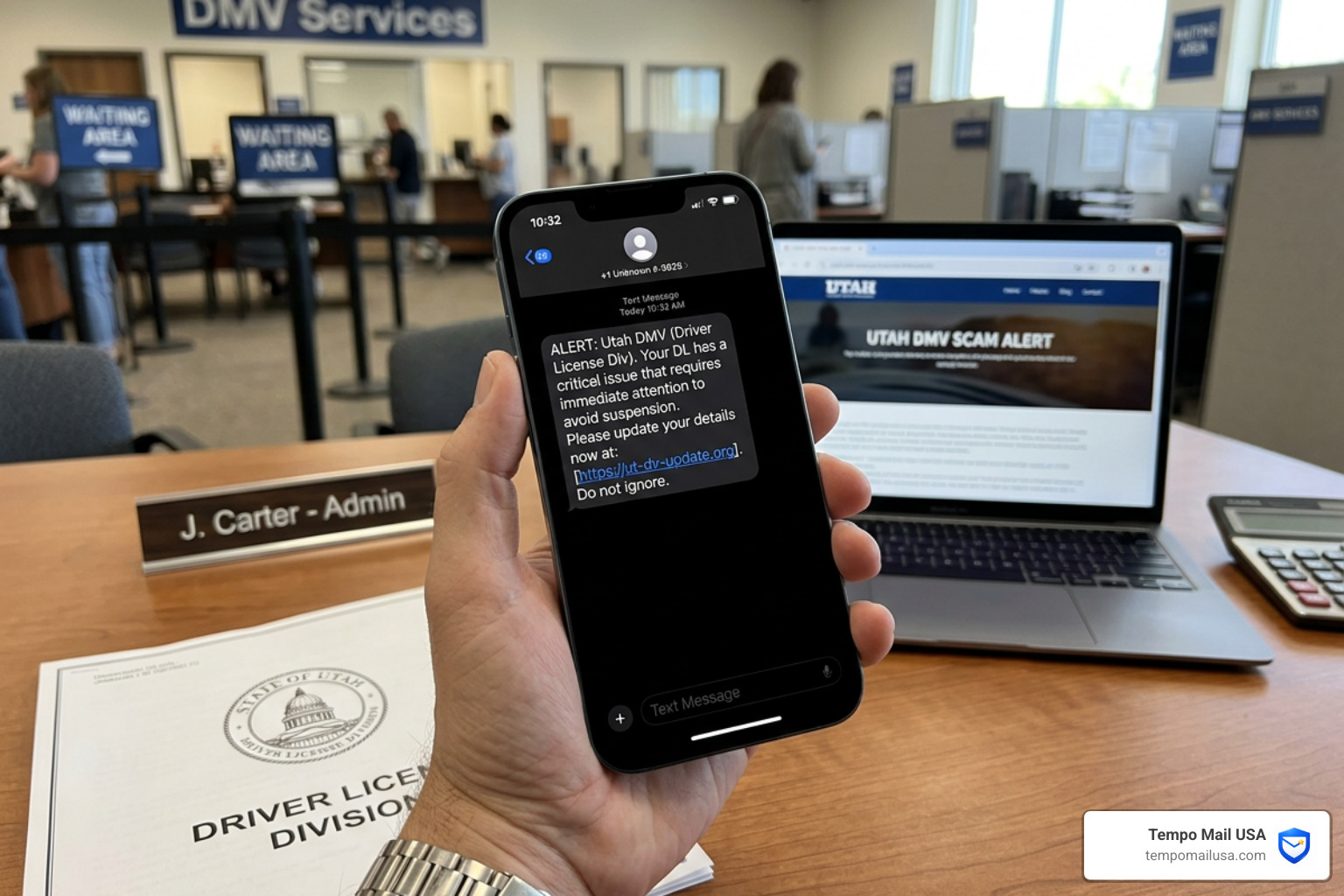
Identifying a Utah DMV scam text
In Utah, the most common versions of this scam involve claims of unpaid tolls or outstanding traffic tickets. You might receive a text stating you have a balance of $11.69 for a "FastTrak Lane" and that you must pay immediately to avoid a $50 late fee.
Other versions of the Utah DMV scam claim your vehicle registration is at risk or that you need to validate your driver's license information via a Google form. These texts often include urgent threats of "enforcement action" or "legal consequences."
To stay safe, always remember: Official Utah DMV verification can only happen through their secure portal. The Utah DMV does not initiate contact via text to request your personal or financial information.
The Rise of the Louisiana DMV scam text
Louisiana residents have faced a similar surge in fraudulent activity. The Louisiana DMV scam text often mimics the Louisiana Office of Motor Vehicles (OMV). Scammers send messages claiming you owe traffic fines or penalties and must take "immediate action" to avoid penalties.
These messages lead to phishing websites that are designed to look exactly like the official OMV site, using the same logos, colors, and layouts. The Louisiana OMV official warning clarifies that they never send threatening texts or emails regarding unpaid tickets. If you see a message like this, it is a trap designed to harvest your credit card data and Social Security number.
Common Red Flags in DMV Smishing Messages
Scammers are good, but they aren't perfect. We’ve identified several "tells" that give these fraudulent messages away.
- Fake .gov Links: A common trick is to use a URL that looks official but isn't. For example, it might say "utah-dmv-payment.com" instead of the official "utah.gov" domain.
- Request to Respond 'Y': Some scammers ask you to reply with a "Y" before they send a link. This is a tactic to bypass automated spam filters on your phone.
- Copy-Paste Prompts: As noted in the New Jersey MVC scam advisory, some texts won't let you click the link directly. Instead, they ask you to copy and paste it into your browser. This is another way to dodge security software that scans for malicious links in real-time.
- Grammatical Errors: While they are getting better, many scam texts still contain odd phrasing, missing punctuation, or awkward capitalization.
- Specific, Low Amounts: The "toll scam" often uses a small, believable amount like $11.69. They hope you'll think, "Oh, I must have missed a toll," and pay it quickly without thinking.
- High Pressure: They will threaten you with a $50 late fee, license suspension, or credit score damage if you don't act within hours.
How to Verify Official DMV Communications
If you receive a text and you're genuinely worried about your registration or a ticket, don't use the info in the text. Use these official channels instead:
- Check the URL: All official State of Utah website addresses, including the Motor Vehicle Portal (MVP), end in utah.gov before any slashes. If you see ".com," ".net," or ".org," it is likely a scam.
- Official Phone Number: Call the Utah DMV Customer Service at 801-297-7780. This is the only way to get a definitive answer about your account status.
- Mail is King: The Utah Driver License Division primarily communicates through the U.S. Mail. They do not send "license validation" requests via Google forms or email.
- Appointment Reminders: The Utah DMV does send texts, but only for appointment reminders. These messages will never ask for your Social Security number, driver's license image, or a payment.
Other states follow similar rules. For instance, the New York DMV scam alerts emphasize that they will never ask for personal info via an unsolicited text.
Steps to Take if You Receive a Scam Text
If a Utah DMV scam text lands in your inbox, follow these steps to protect yourself and others:
- Do Not Click: This is the most important rule. Clicking the link can trigger a malware download or lead you to a site that steals your data.
- Forward to 7726: This is a free service provided by most wireless carriers. Forward the scam message to the number 7726 (which spells "SPAM"). This helps carriers identify and block the scammer's number for everyone.
- Report to the Authorities:
- Report to the Federal Trade Commission to help with national tracking.
- File with FBI IC3 if you have lost money or believe your identity has been stolen.
- Block and Delete: Use your phone’s built-in features to block the sender and then delete the message entirely.
- Credit Monitoring: If you accidentally entered information into a fake site, immediately set up credit monitoring. You may need to freeze your credit to prevent scammers from opening new accounts in your name.
For a deeper dive into upcoming trends, check out our guide on DMV Text Scam 2026: Do Not Click That Link Until You Read This.
Frequently Asked Questions about DMV Scams
Does the Utah DMV ever text for payment?
No. The official policy of the Utah DMV is that they do not initiate contact via text message to request personal or financial information. While they do use text messages for appointment reminders, these are strictly informational and will never include a demand for payment for a ticket or a toll. If you are unsure, always verify by calling 801-297-7780.
What happens if I clicked the link in a Louisiana DMV scam text?
Clicking the link is dangerous because it can lead to two main risks:
- Malware: The site might automatically download software that gives criminals access to your phone’s camera, microphone, or saved passwords.
- Data Harvesting: If you filled out a form, the scammers now have your PII (Personally Identifiable Information). They can use this for identity theft or sell it on the dark web. If you clicked, we recommend running a security scan on your device and changing your important passwords immediately.
Why are these scams targeting multiple states at once?
These are nationwide campaigns. Scammers use automated "war dialing" or "war texting" software to send thousands of messages at once. By mimicking state-specific agencies like the Utah DMV or Louisiana OMV, they increase the "hit rate" because residents are more likely to trust a message that mentions their local government. This trend has evolved significantly from 2021 to 2025, moving from simple emails to highly convincing SMS messages that use local toll road names and accurate-looking government logos.
Conclusion
The Utah DMV scam text, Utah DMV scam, and Louisiana DMV scam text are all parts of a larger effort by cybercriminals to exploit our trust in government institutions. By staying informed and recognizing the red flags—like urgent threats and suspicious URLs—we can protect ourselves from identity theft.
At Tempo Mail USA, we believe the best way to stay safe is to limit the amount of personal information you share online. Our service provides temporary email aliases that act as a secure PII firewall, shielding your real identity from services and potential data breaches. When you use an alias, you keep your primary contact information out of the hands of the databases that scammers often use to find their next target.
Stay vigilant, don't click that link, and protect your digital footprint. For more tips on staying safe in an increasingly digital world, visit https://tempomailusa.com.