

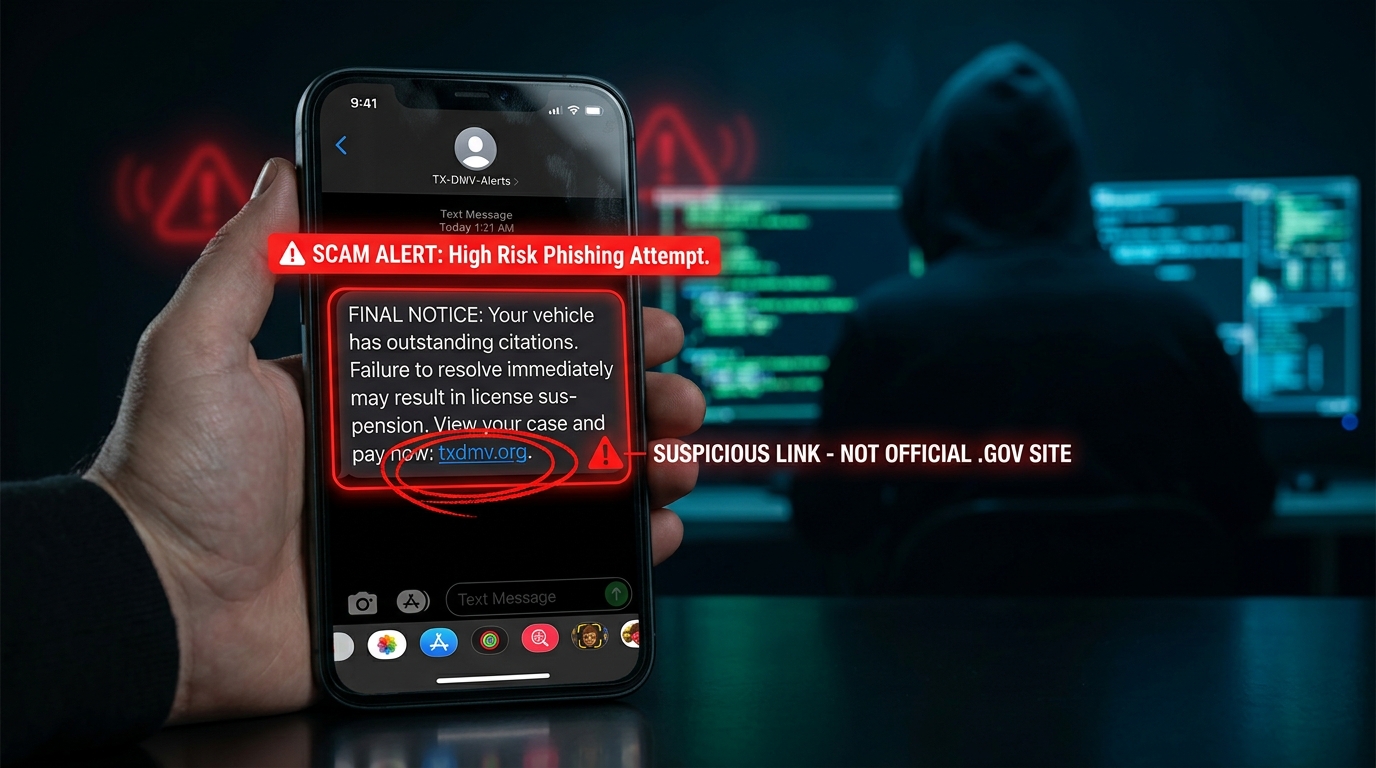

The txdmv.org Scam Targeting Texas Drivers: What You Need to Know
The txdmv.org scam is a real and ongoing threat — and if you just got a suspicious text or email claiming to be from the Texas DMV, here's the short answer:
It's a scam. Do not click any links. Delete the message.
Here's a quick breakdown:
| Question | Answer |
|---|---|
| Is txdmv.org the official TxDMV website? | No. The official site is txdmv.gov |
| Does TxDMV send texts about unpaid tickets? | Never |
| Does TxDMV issue or collect traffic fines? | No — it is not a law enforcement agency |
| What should you do with the message? | Delete it, block the sender, do not click links |
| Where do you report it? | ic3.gov or reportfraud.ftc.gov |
Drivers across Texas — and the rest of the country — have been receiving alarming messages claiming they owe money for unpaid traffic tickets, toll violations, or other infractions. The messages look official. They use TxDMV branding and threatening language to create panic.
But the Texas Department of Motor Vehicles has been clear: these messages are not from them.
The scam has been documented in official TxDMV warnings going back to at least 2021, and it is still actively targeting people as of 2025. The TxDMV news release warning about this scam alone has been visited over 8,000 times — a sign of just how many people are searching for answers after receiving one of these messages.
The goal of these scammers is simple: steal your personal and financial information by getting you to click a link or hand over sensitive data.
Anatomy of the txdmv.org Scam: Red Flags and Tactics
To protect ourselves, we first need to understand how these cybercriminals operate. The txdmv.org scam relies on a technique called "smishing" (SMS phishing) or standard email phishing. The primary weapon in their arsenal is the domain name itself. By using txdmv.org, they hope you won't notice the difference between the ".org" extension and the official government ".gov" extension.
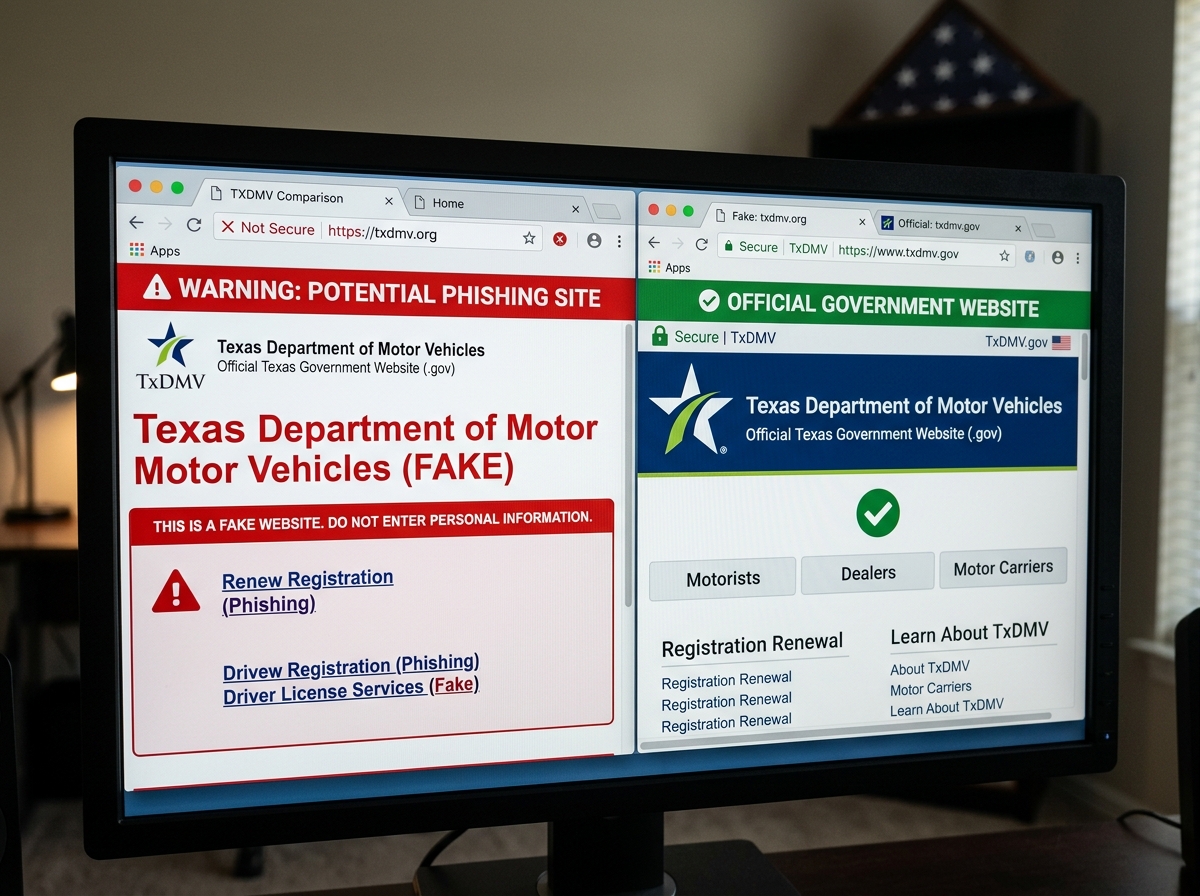
One of the biggest red flags is the language used in these messages. Scammers often use "pseudo-legalese"—big, intimidating words that sound official but don't actually make sense in a government context. For instance, some victims have reported receiving messages mentioning an "immutable credential endorsement" or "registration voidance." As noted in our guide on how to spot a DMV text scam, the real DMV doesn't talk like a character in a sci-fi movie.
Other common tactics include:
- Non-U.S. Phone Prefixes: Many of these texts originate from phone numbers with international country codes. If "Texas" is texting you from a number based in another continent, it’s a scam.
- Urgent Threats: They claim your license will be suspended or you will face prosecution if you don't pay "immediately."
- Suspicious Links: The message will always include a link to a website that looks like the DMV but is actually a data-harvesting trap.
According to an Informational Alert: Customers Receiving Additional eMails & Texts posing as TxDMV, these campaigns are designed specifically to bypass your better judgment by creating a sense of false urgency.
Identifying a txdmv.org Scam Email
While texts are common, email phishing is equally dangerous. When you receive an email, the first thing we recommend checking is the sender address. Legitimate communications from the Texas Department of Motor Vehicles will always come from an address ending in @txdmv.gov.
Scammers often use info@txdmv.org or other variations to trick you. They might even use the names of real TxDMV staff members in the "From" field, but the underlying email address won't match the official domain. We've seen similar patterns in the Michigan SOS Scam Text, where scammers use "DMV" branding even in states where the agency has a completely different name!
Before clicking anything, hover over links with your mouse. This allows you to see the actual destination URL. If it leads to a site like "txdmv-pay-ticket.com" or "txdmv.org/validate," it is a fake profile validation trap.
Common Phrases in a txdmv.org Scam
Scammers love a good script. If you see these phrases in a text or email, your "scam-dar" should be ringing loudly:
- "Your vehicle registration is expired; pay now via this link."
- "Final notice: Unpaid traffic tickets detected."
- "Action required: Validate your profile to avoid license suspension."
- "Toll violations found on your record."
As we explain in our article DMV Text Scam 2026: Do Not Click That Link Until You Read This, these phrases are designed to trigger a "fight or flight" response, making you more likely to click without thinking.
Why the Texas DMV Does Not Issue Traffic Tickets
One of the most effective ways to debunk the txdmv.org scam is to understand what the TxDMV actually does. Many people confuse the DMV with law enforcement, but they are very different entities.
The Texas Department of Motor Vehicles is an administrative agency. Their primary functions include:
- Registering and titling motor vehicles.
- Licensing motor vehicle dealers.
- Credentialing motor carriers.
- Issuing oversize/overweight permits.
- Investigating complaints against dealers.
The TxDMV does not issue traffic tickets, and they do not collect fines for toll violations. Traffic citations are issued by local police departments, county sheriff’s offices, or the Texas Department of Public Safety (State Troopers). If you truly had an unpaid ticket, you would deal with a local court, not the DMV.
This is a common point of confusion exploited by scammers nationwide, as seen in the Georgia DMV Scam Text alerts. If you are ever in doubt, we recommend you contact TxDMV for verification through their official, published phone numbers.
Protecting Your Personal Information from Phishing
The ultimate goal of the txdmv.org scam isn't just to get a one-time "fine" payment. Scammers are after your Personally Identifiable Information (PII). This data is the "gold" of the digital age, and once they have it, they can commit identity theft, open fraudulent bank accounts, or sell your profile on the dark web.
Scammers are looking for:
- Full Name and Address: To build a profile for identity theft.
- Social Security Number (SSN): The holy grail for credit fraud.
- Driver's License Number: Often requested under the guise of "validating your profile."
- Financial Information: Credit card numbers or bank account details used to "pay the fine."
As we noted when a traffic reporter got the SCDMV scam, even people who deal with transit news every day can be targeted. Nobody is immune.
Official TxDMV vs. Scam Tactics
| Feature | Official TxDMV Communication | txdmv.org scam Tactic |
|---|---|---|
| Primary Domain | txdmv.gov | txdmv.org or txdmv-portal.com |
| Method | Official Mail or Opt-in Email | Unsolicited Text/Email |
| Payment Type | Secure Portal/Check/In-person | Suspicious Links/Gift Cards |
| Tone | Informational/Administrative | Threatening/Urgent |
| Fine Collection | Does NOT collect traffic fines | Claims you owe for tickets/tolls |
At Tempo Mail USA, we believe the best way to protect your PII is to never give it out in the first place. Using a temporary email alias when interacting with non-governmental sites can act as a firewall, ensuring your real email address—and the data attached to it—stays private.
What to Do If You Receive a Suspicious Message
If a message claiming to be from the TxDMV hits your inbox or phone, don't panic. Follow these steps to stay safe:
- Do Not Click: This is the most important rule. Links in these messages can install malware or lead to phishing sites.
- Do Not Reply: Replying (even to say "stop") confirms to the scammer that your number is active, leading to even more spam.
- Block the Sender: Use your phone’s built-in features to block the number immediately.
- Delete the Message: Once blocked, get it off your device.
- Report It: Help authorities track these criminals.
Reporting a txdmv.org Scam to Authorities
Reporting is a crucial step in shutting down these operations. Here is where you should go:
- FBI’s Internet Crime Complaint Center (IC3): You can file a report at ic3.gov. The FBI tracks these trends to build cases against large-scale scam rings.
- Federal Trade Commission (FTC): Report the fraud at reportfraud.ftc.gov. The FTC uses this data to protect consumers and alert the public.
- TxDMV IT Department: If you receive a suspicious email, the TxDMV asks that you save the email as a file and send it as an attachment to Report-eFraud@txdmv.gov. This helps their security team analyze the specific tactics being used.
According to the Initial Notification: Awareness of Licensing eMail Scam, forwarding these emails directly to the department's fraud team is the most effective way to help them issue timely alerts to the rest of the community.
Frequently Asked Questions about the txdmv.org Scam
Does TxDMV send text messages about unpaid tickets?
No. The Texas Department of Motor Vehicles does not issue traffic tickets or collect fines for toll violations. They will never send you an unsolicited text message demanding payment for a citation. If you receive such a message, it is a scam.
How can I tell if a TxDMV email is legitimate?
Check the sender's email address. Official TxDMV emails will always end in @txdmv.gov. If the email ends in .org, .net, or any other variation, it is fraudulent. Additionally, legitimate TxDMV emails will not ask for sensitive info like your Social Security number or password via a direct link.
Is txdmv.org the official website for Texas vehicle registration?
No. The official website is www.txdmv.gov. The domain txdmv.org has been used by scammers to impersonate the agency. Always ensure you are on a ".gov" site when performing official government business in Texas.
Conclusion
The txdmv.org scam is a sophisticated attempt to exploit our natural fear of legal trouble. By using "scary" words and mimicking official branding, these criminals hope to catch us off guard. However, by remembering that the TxDMV doesn't handle tickets and only uses the .gov domain, we can stay one step ahead.
Vigilance is our best defense. Always verify through official channels, never click on unsolicited links, and report any suspicious activity to the proper authorities.
At Tempo Mail USA, we are dedicated to helping you reclaim your digital privacy. Our temporary email aliases provide a secure identity proxy, acting as a firewall between your real personal information and the services you use online. By using a proxy identity, you can significantly reduce the risk of your real data falling into the hands of scammers.
Protect your privacy at Tempo Mail USA and stay safe from the ever-evolving world of digital fraud.