


The DMV Text Scam 2026 Is Targeting Drivers Across the U.S. — Here's What to Know
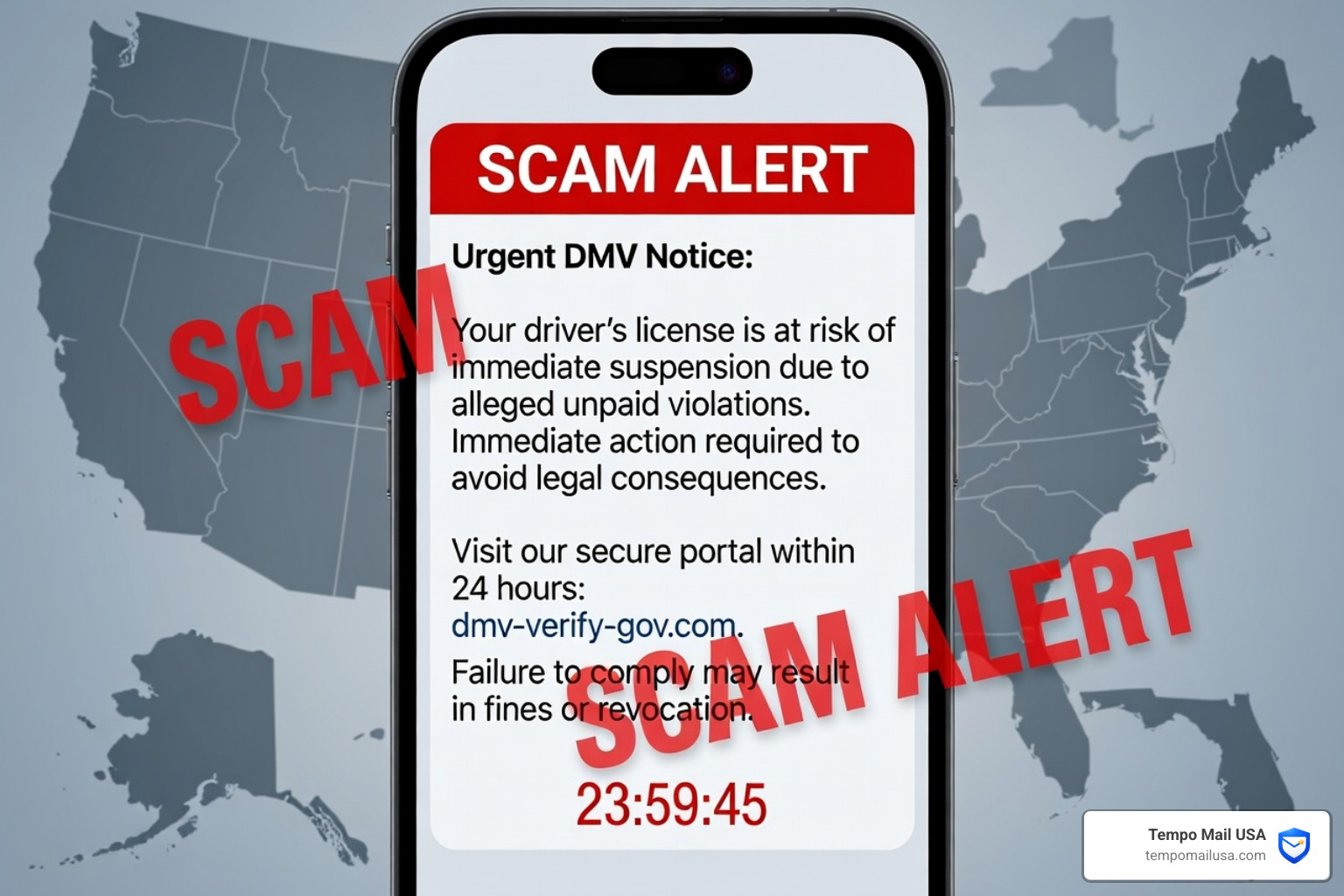
DMV Text Scam 2026 is an active wave of fake text messages impersonating state Departments of Motor Vehicles, threatening drivers with license suspension, registration penalties, and prosecution over alleged unpaid fines — unless they click a link and pay immediately.
Quick answers:
- What is it? A scam text pretending to be your state DMV, demanding payment for overdue tickets or tolls
- Is it real? No — the DMV does not contact residents by text about unpaid violations
- What should you do? Do not click any links. Delete the message. Visit your official state DMV website directly
- Where to report it? Forward to 7726 (SPAM) or report at ReportFraud.ftc.gov
These scam texts are spreading fast. Connecticut, Illinois, and Oregon have all issued official warnings to residents. The messages look convincing — they use urgent deadlines, fake administrative codes, and threats like a 35% service fee or credit score damage to pressure you into acting without thinking.
The FTC has flagged this as an escalation from earlier toll scams. Instead of just targeting highways, scammers are now mimicking DMV agencies from states all over the country.
If you value your personal data — and you should — this is exactly the kind of threat designed to catch you off guard.
Understanding the DMV Text Scam 2026 Trends
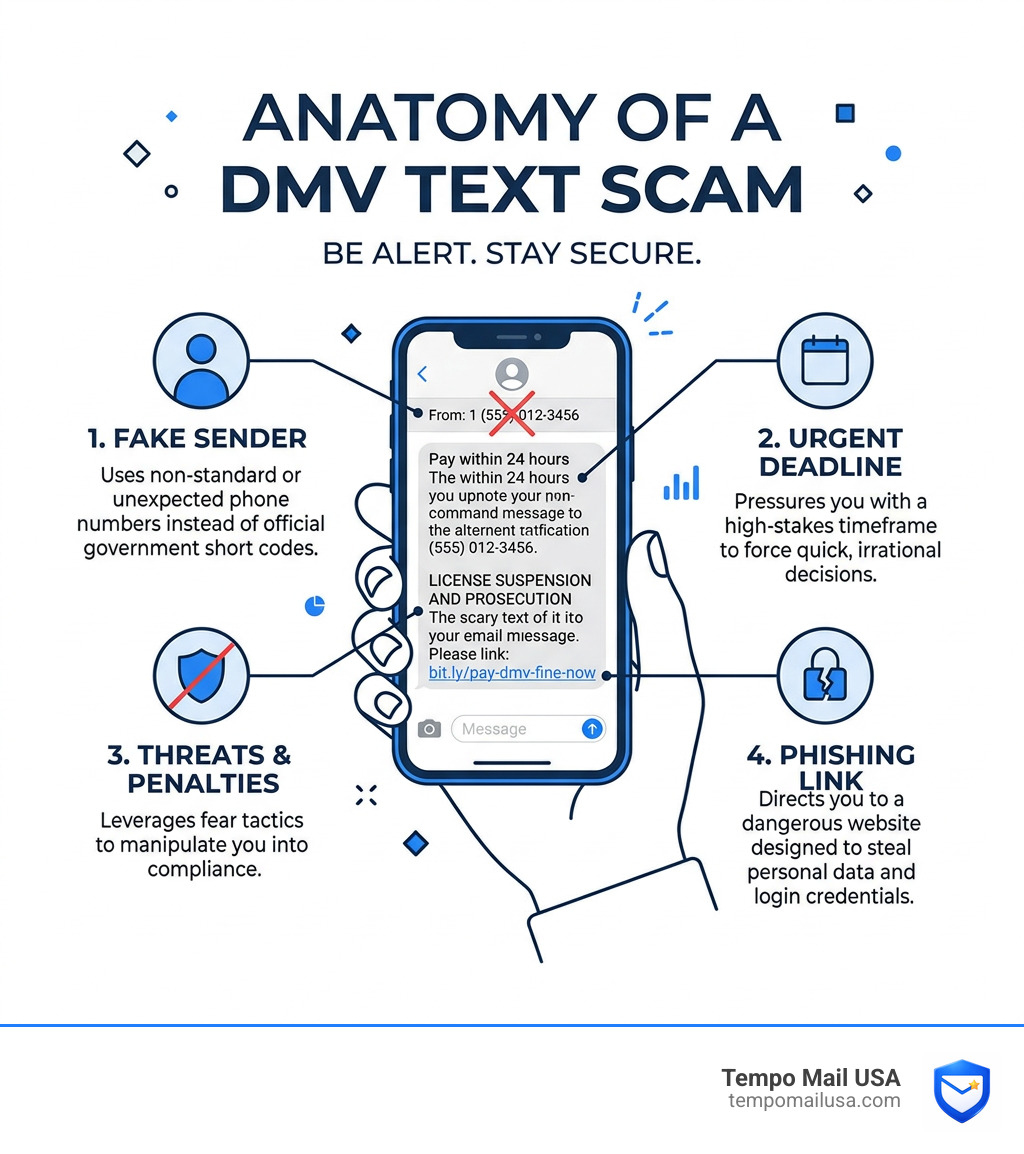
As we move through 2026, we have seen a sophisticated shift in how cybercriminals target motorists. The DMV Text Scam 2026 isn't just a random message; it is a calculated "smishing" (SMS phishing) attack that leverages psychological triggers like fear and urgency. These scammers are no longer just sending generic "you owe money" texts. They are tailoring their messages to look like legitimate government correspondence.
The primary hooks used in these scams usually involve:
- Unpaid Toll Charges: A carryover from previous years, but now more aggressive.
- Overdue Traffic Tickets: Claims that you missed a court date or a speeding fine.
- License Suspension Notices: Threats that your driving privileges will be revoked by a specific date.
- Registration Penalties: Warnings that your vehicle registration is "at risk" due to administrative errors.
Why is this happening so frequently now? Part of the reason lies in the massive amounts of personal data circulating on the dark web. When you consider Why the Social Security Data Breach 2026 has put so much PII (Personally Identifiable Information) at risk, it is easy to see how scammers can match your phone number with your home state to make their lies more believable.
How Scammers Mimic Official DMV Communications in 2026
We often wonder how people fall for these, but the truth is that scammers are getting very good at their "craft." They use several technical and psychological tricks to bypass our natural skepticism:
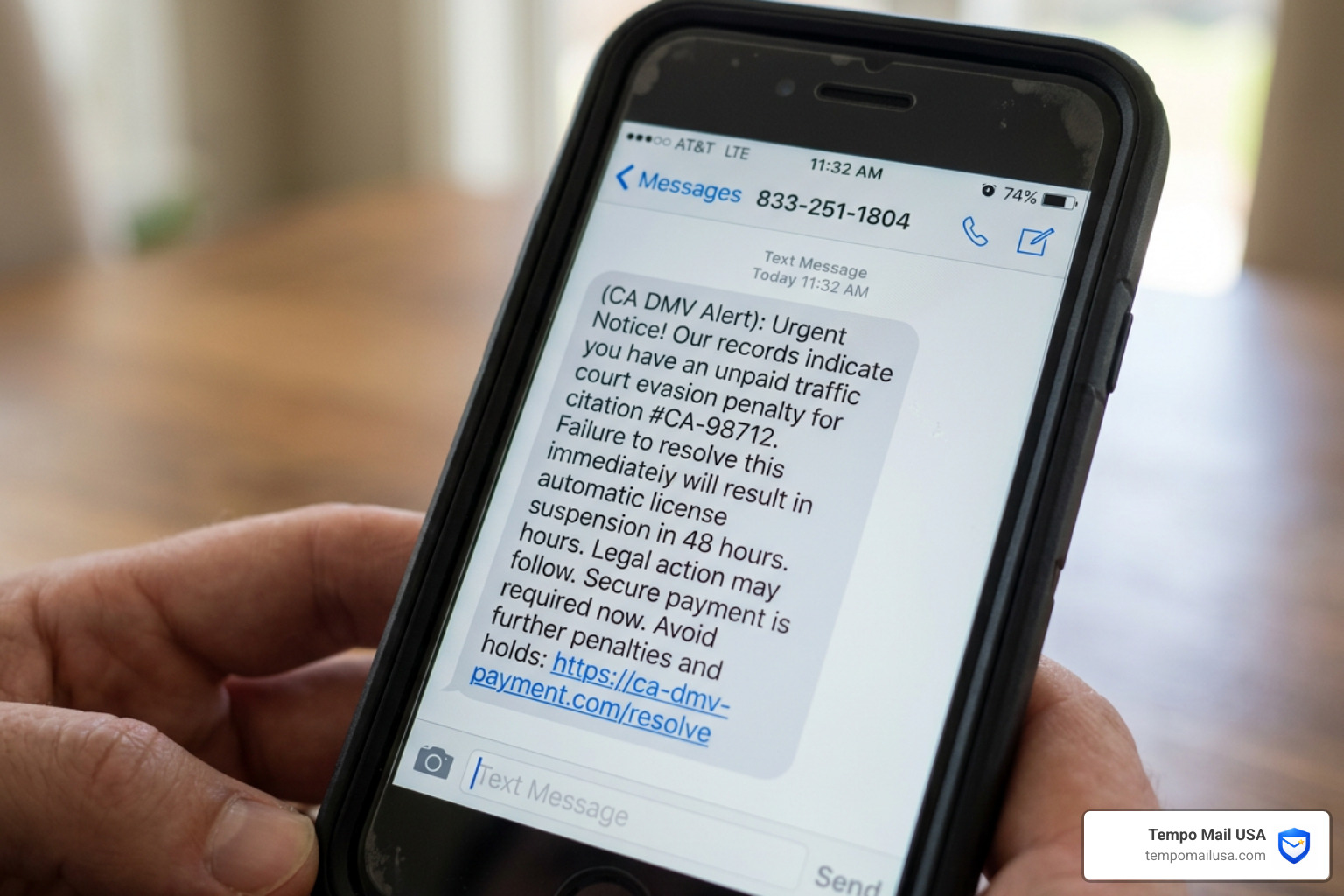
- Spoofing: They use software to make the text appear as if it’s coming from a local area code or even a short-code number that looks official.
- Phony Administrative Codes: To add a layer of "officialdom," many messages include fake "Oregon State Administrative Codes" or specific "Case Numbers" to make the recipient think there is a real legal file open against them.
- Urgent Deadlines: They almost always include a date—often just 24 to 48 hours away—by which you must act to "avoid prosecution."
- Fraudulent URLs: The links look incredibly close to the real thing. Instead of
dmv.ca.gov, they might useca-dmv-gov-payments.com.
Learning Master How to Spot Phishing Emails is a great first step, as many of those same principles apply to these text messages. If you want to be even more proactive, using the Best Phishing Detection Tools for Ultimate Security can help filter out these malicious attempts before they even hit your main inbox.
The Evolution of the DMV Text Scam 2026
The DMV Text Scam 2026 has evolved beyond simple money grabs. While the ultimate goal is often your credit card number, scammers are also after your identity. By clicking the link, you might be directed to a site that asks for your Social Security number, date of birth, and driver’s license number—all under the guise of "verifying your identity" to pay a fine.
New threats we’ve observed in 2026 include:
- 35% Service Fees: Scammers claim that if you don't pay now, a massive surcharge will be added.
- Credit Score Damage: They threaten to report the "unpaid debt" to credit bureaus like Experian or TransUnion.
- Prosecution Threats: Using scary legal language to suggest that local law enforcement is already processing a warrant.
This is a classic example of what experts call "spear phishing," where the attack is somewhat personalized to your location. You can find more What is Spear Phishing: Key Insights to see how these targeted attacks differ from bulk spam.
State Warnings and Official DMV Policies
Government agencies across the country have been forced to go on the offensive. From the East Coast to the West, officials are sounding the alarm.
In Connecticut, the DMV Commissioner recently warned residents about a wave of reports involving texts that threatened registration suspension by a specific date (such as June 5). The CT DMV was very clear: they do not contact residents via text or phone for unpaid violations or toll bills.
In Illinois, Secretary of State Alexi Giannoulias issued a similar warning regarding the "Illinois State Department of Motor Vehicles" scam. These texts often cited a January 17 enforcement date to create panic. The Secretary reminded the public that his office only sends text messages for appointment reminders—never to ask for money or personal data.
In Oregon, both the DOT and the DMV have reported scams featuring "Evasion Notices" and "Final Notices for Toll Violations." These messages often use fake administrative codes to look authentic.
The Golden Rule of DMV Communication: The official policy for almost every DMV in the United States is that they communicate via the U.S. Postal Service for any official business, unpaid fines, or legal notices. If you haven't received a letter in a "government-blue" or official white envelope, the text on your phone is almost certainly a fraud. You can always check the CT DMV Official Warning for a template of how these warnings are issued.
Risks and Immediate Actions for Suspicious Texts
If you receive a suspicious text, the danger isn't just in the "payment" you might make. The risks are much deeper:
- Credential Harvesting: The fake website is designed to record every keystroke. If you "log in" to their fake portal, they now have your password.
- Malware Installation: Simply clicking the link can sometimes trigger a "drive-by download" of malicious software onto your smartphone.
- Financial Loss: Once they have your credit card info, they don't just take the "fine"—they often drain the account or sell the card details on the dark web.
If you’ve already interacted with a text, you need to know How to Report Phishing Email in USA: FTC, FBI, Gmail Steps. For immediate reporting of the text itself, go straight to the source and Report scams to the FTC.
Protecting Your Identity from the DMV Text Scam 2026
We recommend a "Zero Trust" policy when it comes to your mobile phone. Here is how we suggest you handle the DMV Text Scam 2026:
- Verify Independently: If you’re worried about a ticket, don't use the link in the text. Open your browser and manually type in your state's DMV URL (e.g.,
www.dmv.ca.govorwww.ilsos.gov). - Look for the .gov: Official state government websites in the U.S. will almost always end in
.gov. If the link in the text ends in.com,.net, or.org, it is a red flag. - Use 7726: Most major carriers allow you to forward spam texts to 7726. This helps the industry track and block these numbers.
- Check for HTTPS: While not a guarantee of safety, the absence of a padlock icon on a "payment" site is a certain sign of a scam.
For more comprehensive tips, check out Protect Yourself: How to Avoid Phishing. You might also consider using an AI Phishing Detector to help analyze links before you click them.
Frequently Asked Questions about DMV Scams
Navigating digital fraud can be confusing. We’ve compiled this table to help you distinguish between a real DMV interaction and a scammer's trap.
| Feature | Official DMV Communication | DMV Text Scam 2026 |
|---|---|---|
| Primary Method | U.S. Mail (Paper Letter) | SMS / Text Message |
| Urgency | Provides a reasonable window for response | Demands "Immediate" or "24-hour" action |
| Payment Method | Official portal, check, or in-person | Suspicious links, often via credit card only |
| Language | Formal, neutral, administrative | Threatening, aggressive, uses "Prosecution" |
| Links | Always ends in .gov | Ends in .com, .top, .info, or shortened URLs |
| Personal Info | Already have your file; don't ask for SSN via text | Asks for SSN, DOB, and CC to "verify" |
Does the DMV ever text about unpaid tickets?
In a word: No. Official DMV policy across the United States is that text messages are reserved for very specific, opt-in services. These usually include:
- Appointment Reminders: If you scheduled a road test or license renewal.
- Wait-Time Notifications: Letting you know your "virtual spot" in line is coming up.
- Two-Factor Authentication (2FA): If you are logging into your official account.
They will never text you out of the blue to tell you that you owe money for a speeding ticket or a bridge toll. If you're unsure how to handle these messages, follow How to Report Phishing Emails in 5 Easy Steps.
What happens if I click the link in a scam text?
Clicking the link is the first step in the scammer's "conversion funnel." At best, you’ve confirmed that your phone number is active and belongs to a real person, which will lead to even more spam. At worst, you’ve exposed your device to malware.
If you entered any financial information, you are at risk of immediate theft. This is similar to other high-profile attacks, such as the Coinbase Text Scam Alert: Stay Safe Online. Scammers use the same "emergency" tactics across different industries. If you’ve already shared payment details, you should read up on The Easiest Way to Verify CCs: Payment Scam to understand how they validate your stolen data.
How can I tell if a DMV website is real?
The most important thing to remember is that the English version of a DMV website is the only legally binding, authoritative source. Many DMVs use third-party machine translation for other languages, which can sometimes be inaccurate.
To verify a site:
- Check the Domain: It must be
.gov. - Check the Language: Does it sound professional? Scams often have small grammatical errors or "off" phrasing.
- Check for Contact Info: Real government sites have phone numbers and physical addresses for their offices.
You can compare these tactics to other research-based frauds, like The Complete Guide to Luce Research Scam, to see the common threads in how fake websites operate.
Conclusion
The DMV Text Scam 2026 is a reminder that as our lives become more digital, our defenses must become more robust. Scammers are banking on the fact that most people are busy, stressed, and naturally afraid of getting in trouble with the law. By slowing down and verifying the source, you can protect your hard-earned money and your identity.
At Tempo Mail USA, we believe that your personal information deserves a firewall. One of the best ways to keep your primary data safe is to limit where you share it. By using temporary email aliases and being cautious with your phone number, you reduce the chances of your data ending up in a breach that fuels these very scams.
Stay vigilant, don't click that link, and always go straight to the official source. Your peace of mind is worth the extra thirty seconds it takes to type in a URL manually.