

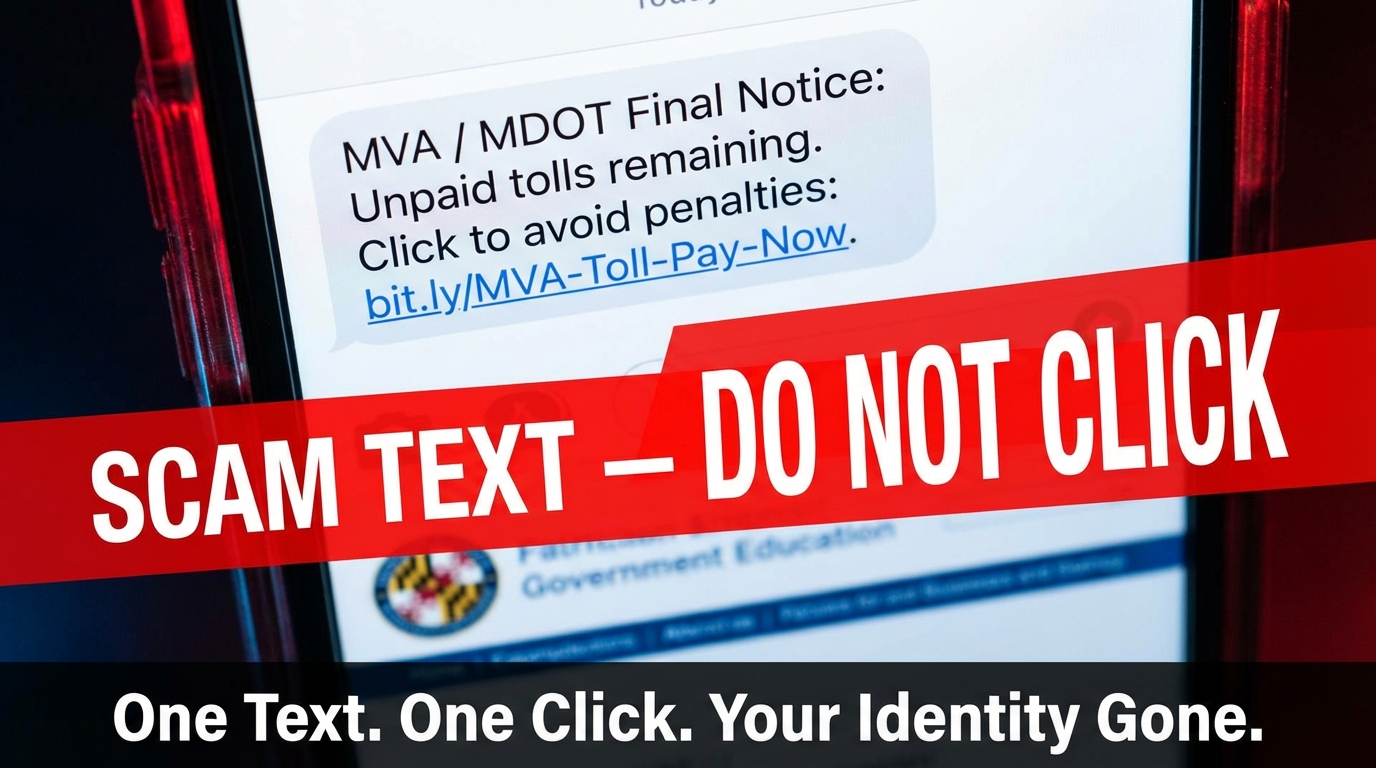

The MVA Text Scam Is Targeting Drivers Right Now
The MVA text scam is a type of smishing (SMS phishing) fraud where criminals impersonate state motor vehicle agencies — like Maryland's MVA, MDOT, the Massachusetts RMV, or Montana's MVD — to steal your personal and financial information.
Quick answer if you just received a suspicious MVA text:
- Do not click any links in the message
- Do not provide any personal information, payment details, or reply
- Delete the message immediately
- Verify independently by visiting your state's official DMV/MVA website directly (type the URL yourself)
- Report it to the FTC at reportfraud.ftc.gov
These scam texts typically claim you owe unpaid tolls, have an outstanding parking fine, or face license suspension. They pressure you to act fast — or face serious consequences.
The messages look real. They may reference specific dollar amounts, fake case numbers, or even cite official-sounding laws. One widely reported example claimed recipients owed money under "New Maryland State Administrative Code 15C-16.003" — a completely fabricated reference designed to sound legitimate.
The reality? No state motor vehicle agency — not Maryland's MVA, not Massachusetts' RMV, not Montana's MVD — will ever text you asking for payment or personal information.
These scams are rising fast. Toll-related smishing attacks have surged across the country over the past year, with Maryland drivers becoming a primary target. Scammers keep sending them because they keep working.
If you care about protecting your personal information — your Social Security number, your credit card, your identity — knowing how this scam operates is the first step to staying safe.

How to Identify an MVA Text Scam
Spotting a mva text scam requires a keen eye because scammers are getting better at playing the part. They often use "spoofed" numbers that look like they could be local or official, and they may even insert their fraudulent messages into existing text threads to trick you into thinking they are part of a legitimate conversation.
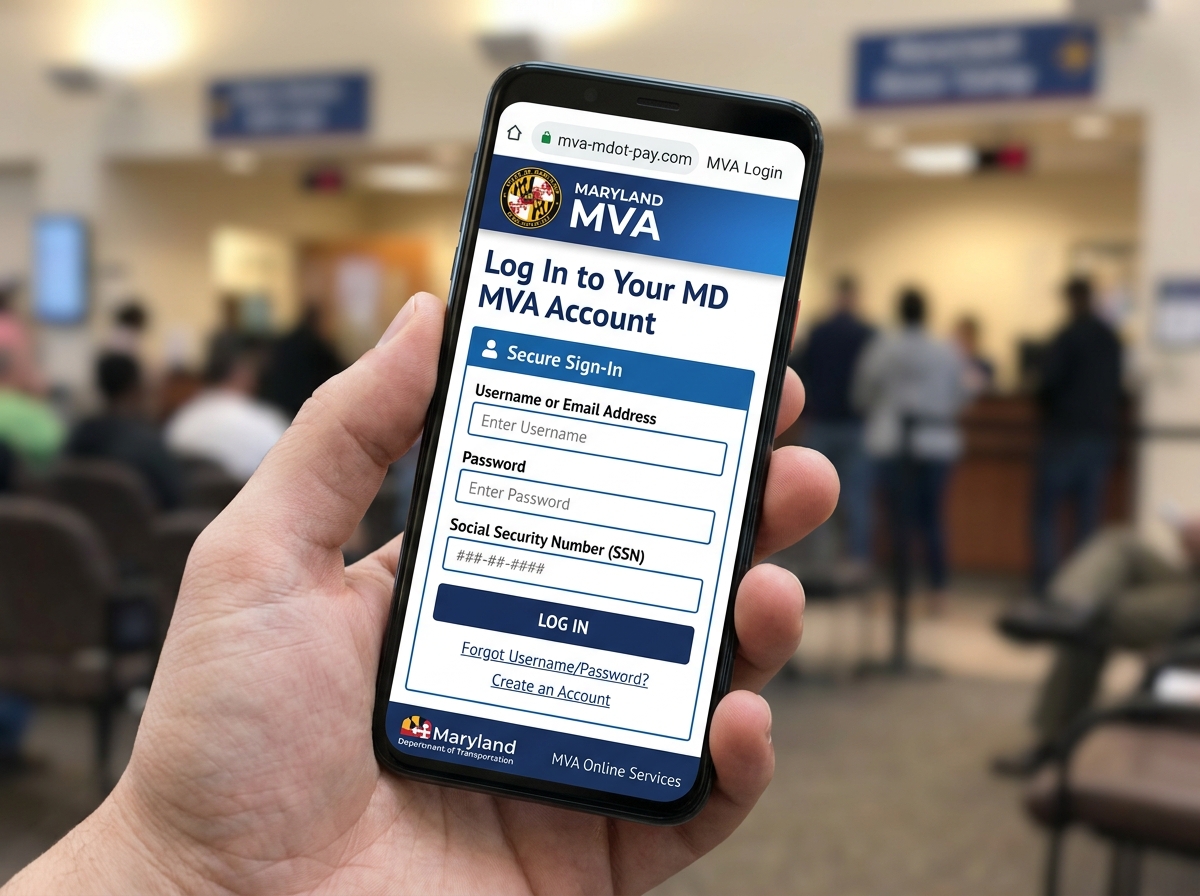
The most common sign of a scam is the use of a malicious link. These links often look "almost" right—perhaps using a slightly different domain extension or a misspelled version of the agency's name. For instance, instead of the official .gov site, they might use a .com, .net, or a random string of characters.
Red Flags in Official-Sounding Language
Scammers love to use "cop speak" and administrative jargon to scare you. You might see references to specific (but fake) case numbers or administrative codes meant to add a layer of false authority. A common tactic involves the mva-scam-text-maryland-pay-today-or-be-arrested narrative, where the text threatens you with immediate arrest or license suspension if you don't pay a "fine" within hours.
Official agencies like the Maryland MVA or MDOT do not operate this way. They don't send "Maryland-MDot Urgent" texts addressing you as "MDot customer" with a link to resolve a debt. If a text uses high-pressure language or threatens your "Social Security number record," it is a scam.
The Danger of Clicking Fraudulent Links
The moment you click a link in a mva text scam, you are entering a digital minefield. These links often lead to "credential harvesting" sites—fake pages designed to look exactly like a government login screen. Once you enter your username, password, or Social Security number, the scammers have everything they need to steal your identity.
Beyond identity theft, these links can also trigger "drive-by" malware downloads. This software can sit quietly on your phone, recording your keystrokes or accessing your banking apps. If you've encountered one of these, you should learn how to report phishing email in usa-ftc-fbi-gmail-steps to ensure the proper authorities are aware of the specific domain being used.
| Feature | Official Agency Communication | MVA Text Scam |
|---|---|---|
| Method | Primarily via U.S. Mail | Unsolicited SMS/Text |
| Urgency | Provides reasonable deadlines | Threatens "Immediate" action/arrest |
| Payment | Through official .gov portal | Via suspicious links or apps |
| Personal Info | Never asks for SSN/DOB via text | Requests SSN, DOB, and CC info |
| Links | Rarely uses links in texts | Always includes a link to "pay" |
For a deeper dive into how these specific toll-related scams work, check out this analysis on the Toll Scam: MVA Text Scam.
Common Tactics Used in MVA Smishing Attacks
Scammers aren't just impersonating the MVA; they are casting a wide net across all driving-related authorities. We've seen a massive spike in texts pretending to be from DriveEzMD or E-ZPass. These messages often claim you have a small, specific debt—like $12.75—to make it seem believable and low-risk enough that you might just pay it to make the "problem" go away.
The "Pay Today or Be Arrested" MVA Text Scam
One of the most aggressive versions of the mva text scam involves threats of legal action. In Maryland, scammers have been sending messages about "unresponded parking tickets" linked to your vehicle. They might even provide a fake court date and a specific address, like the Baltimore City District Court, to make the threat feel imminent.
As noted in the Maryland Judiciary warns of new text scam, the courts do not send texts requesting payment. If you see a message threatening that you'll be "arrested" or that your "driving privileges are suspended" unless you pay via a link, it is a traffic-compliance-department-scam. Interestingly, some scammers are so lazy they send these to states that don't even have an agency by that name; for example, the mn-dmv-scam-text-minnesota-has-no-dmv highlights how scammers use "DMV" even in states where the agency is called something else entirely.
Impersonating Toll Authorities and Courts
Toll authorities are a favorite target because so many people use toll roads daily. The scdmv-scam-a-traffic-reporter-got-one story shows that even people who deal with traffic professionally can be targeted. These "Notice of Default" messages are designed to bypass your logic by triggering a fear of mounting fines.
If you are worried about a real court item, always use the District Court directory to find the official phone number for your local jurisdiction. Never call a number provided in a suspicious text message.
Regional Warnings: From Maryland to Montana
While Maryland has been a major hotspot recently, this is a national issue. State agencies across the country are issuing urgent warnings as these smishing campaigns move from region to region.
Why the MVA Text Scam Targets Specific States
Scammers often target states with high-traffic corridors and complex tolling systems. Maryland, Massachusetts, and Maine have all seen "widespread" campaigns recently. In Montana, the Department of Justice recently issued a warning that Montana warns of scam texts impersonating Motor Vehicle Division because residents were being hounded by fake vehicle fee deadlines.
Whether it's the secretary-of-state-text-scam-illinois-maine-hawaii-all-warned or the txdmv-org-scam-alert-fake-text-messages-how-to-stay-safe campaign, the goal is always the same: to catch you off guard.
Official Agency Communication Policies
Understanding how your state actually talks to you is your best defense.
- Maryland MVA: Only sends texts for appointment confirmations/reminders if you opted in. They never ask for money or SSNs via text.
- Massachusetts RMV: Explicitly states they never text residents for payments. All transactions happen in person or via their official website.
- Maine BMV: Uses the U.S. Mail for sensitive matters like registration suspensions.
If you are in Michigan, be aware that the michigan-sos-scam-text-they-called-it-the-dmv-dead highlights a common error: scammers calling the agency the "DMV" when the state uses "Secretary of State." Always check the Directory of Courts or your state's official portal to verify any notice.
What to Do If You Receive a Suspicious Message
If a text arrives and your "scam-dar" goes off, trust your gut. The most important thing we can tell you is: do not engage. Do not reply "STOP," do not reply "WHO IS THIS," and certainly do not click the link. Replying confirms to the scammer that your number is active, which only leads to more spam.
Steps for Victims Who Clicked a Link
If you did click the link and provided information, don't panic, but act fast.
- Contact your bank: If you provided credit card info, report the fraud immediately.
- Freeze your credit: This prevents scammers from opening new accounts in your name.
- Monitor your accounts: Look for any unauthorized "micro-transactions."
- Change your passwords: Especially if you use the same password for your MVA account and your email.
For those who might have fallen for a georgia-dmv-scam-text-the-fake-agency or similar, time is of the essence in securing your digital identity.
Reporting Scams to Authorities
Reporting helps the authorities track these campaigns and shut down the malicious websites. You should Report fraud to the FTC and also file a report with the IC3 (Internet Crime Complaint Center). If the scam involved a fake court summons, you might also want to contact your Maryland Circuit Court contacts to let them know their name is being used in a fraud scheme. Similar reporting steps are recommended in the texas-dmv-scam-alert-fake-text-messages-how-to-stay-safe guide.
Frequently Asked Questions about MVA Scams
Does the MVA ever text for payment?
No. Official agencies like the Maryland MVA, MDOT, and the RMV will never request payment, credit card numbers, or Social Security numbers via an unsolicited text message. Legitimate texts are strictly for appointment reminders you have already scheduled.
What happens if I clicked the link in an MVA text scam?
Clicking the link may expose your device to malware or lead you to a phishing site designed to steal your personal information. If you entered any data, you should immediately contact your financial institutions and consider a credit freeze.
How can I verify a real MVA notice?
The safest way is to go directly to the official website by typing the address into your browser (e.g., mva.maryland.gov). Never use a link provided in a text. You can also call the agency’s official customer service number found on their website.
Protect Your Privacy with Tempo Mail USA
The mva text scam works because scammers have access to your personal contact information. In many cases, this data is harvested from data breaches or sold by third-party services where you've used your real email address or phone number.
At Tempo Mail USA, we believe your real identity should be protected by a digital firewall. We provide temporary email aliases that allow you to interact with services without handing over your primary, permanent PII (Personally Identifiable Information). By using our secure proxying services, you can keep your real inbox clean and your personal data out of the hands of brokers who eventually sell it to scammers.
In an age where smishing and phishing are becoming daily occurrences, taking proactive steps to hide your real data is the best way to stay safe. Stay alert, stay skeptical, and let’s keep our digital lives secure.
For more information on how to protect your identity, visit https://tempomailusa.com.