



The SCDMV Scam Targeting South Carolina Drivers Right Now
The SCDMV scam is a phishing scheme where fraudsters send fake text messages — and sometimes emails — pretending to be the South Carolina Department of Motor Vehicles. These messages claim you owe money for unpaid traffic tickets or toll violations, then threaten to suspend your license or registration if you don't pay immediately.
Here's what you need to know right away:
- The real SCDMV never contacts you by text to collect payments
- Scam texts include fake links designed to steal your personal and financial information
- The only legitimate SCDMV website is SCDMVOnline.com
- If you get a suspicious text claiming to be from SCDMV: do not click the link — delete it
- You can report spam texts by forwarding them to 7726 (SPAM) on your phone
- If you already clicked, monitor your bank accounts and report to the FTC
Multiple law enforcement agencies across South Carolina have issued warnings after residents reported receiving these fraudulent messages. Even a local traffic reporter received one — which tells you just how widespread this scam has become.
The texts are convincing. They imitate official government language, use links that look like real government web addresses, and lean hard on urgency and fear. Scammers are now using AI to make these messages harder to spot than ever.
If you've landed here because you got one of these texts, you're in the right place.
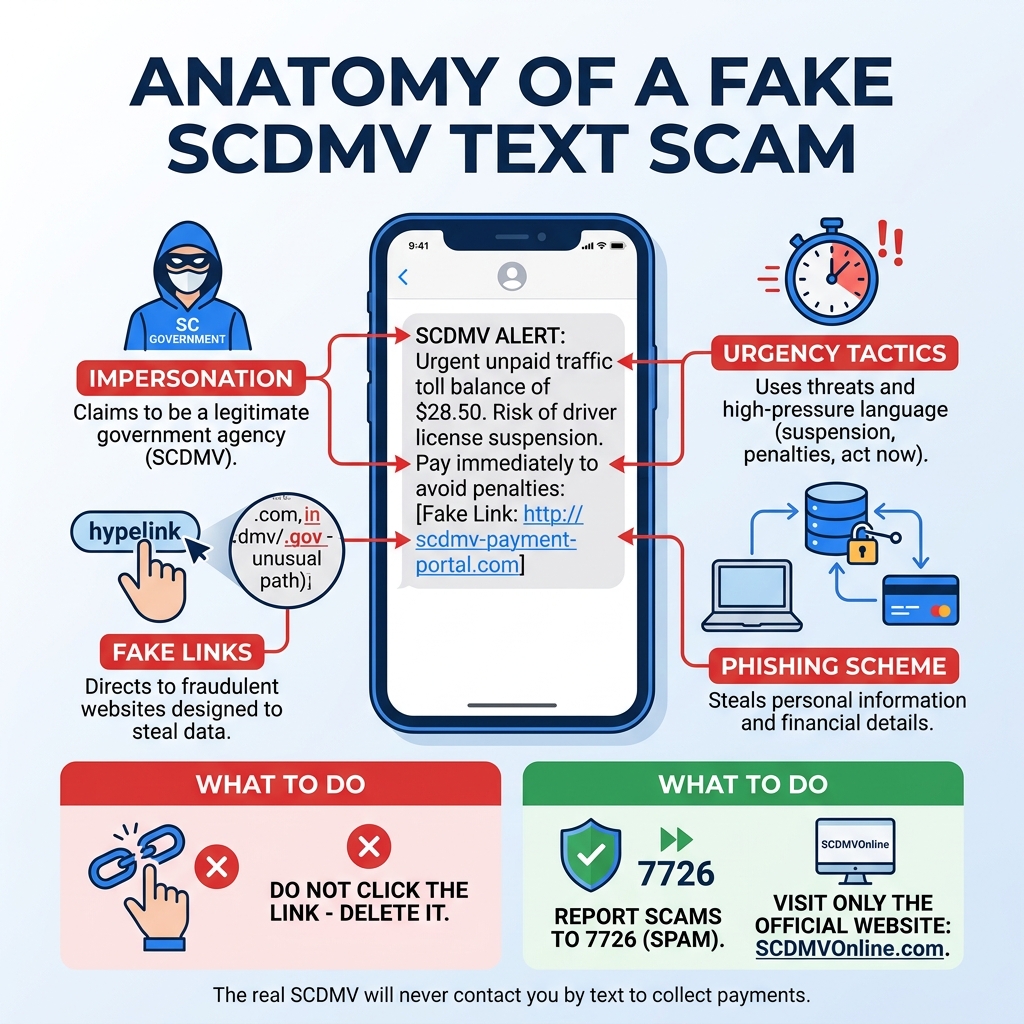
Anatomy of the SCDMV Scam: How Scammers Target Drivers
To protect ourselves, we first need to understand how these criminals operate. The SCDMV scam isn't just a random text; it is a calculated "smishing" (SMS phishing) attack designed to exploit the natural anxiety we feel when government agencies mention "unpaid fees" or "license suspension."
The scam usually begins with a text message appearing on your phone. It might claim you have an outstanding balance for a toll road or a traffic ticket that you completely forgot about. Because many South Carolinians travel through toll areas or busy intersections, it’s easy to think, "Maybe I did miss a payment."
According to the South Carolina Department of Motor Vehicles Fake Text Warning, these messages almost always include a link. This link is the "hook." It is designed to lead you to a fraudulent website that looks remarkably similar to the official SCDMV portal. Once there, you are prompted to enter your driver's license number, Social Security number, or credit card information to "settle the debt."
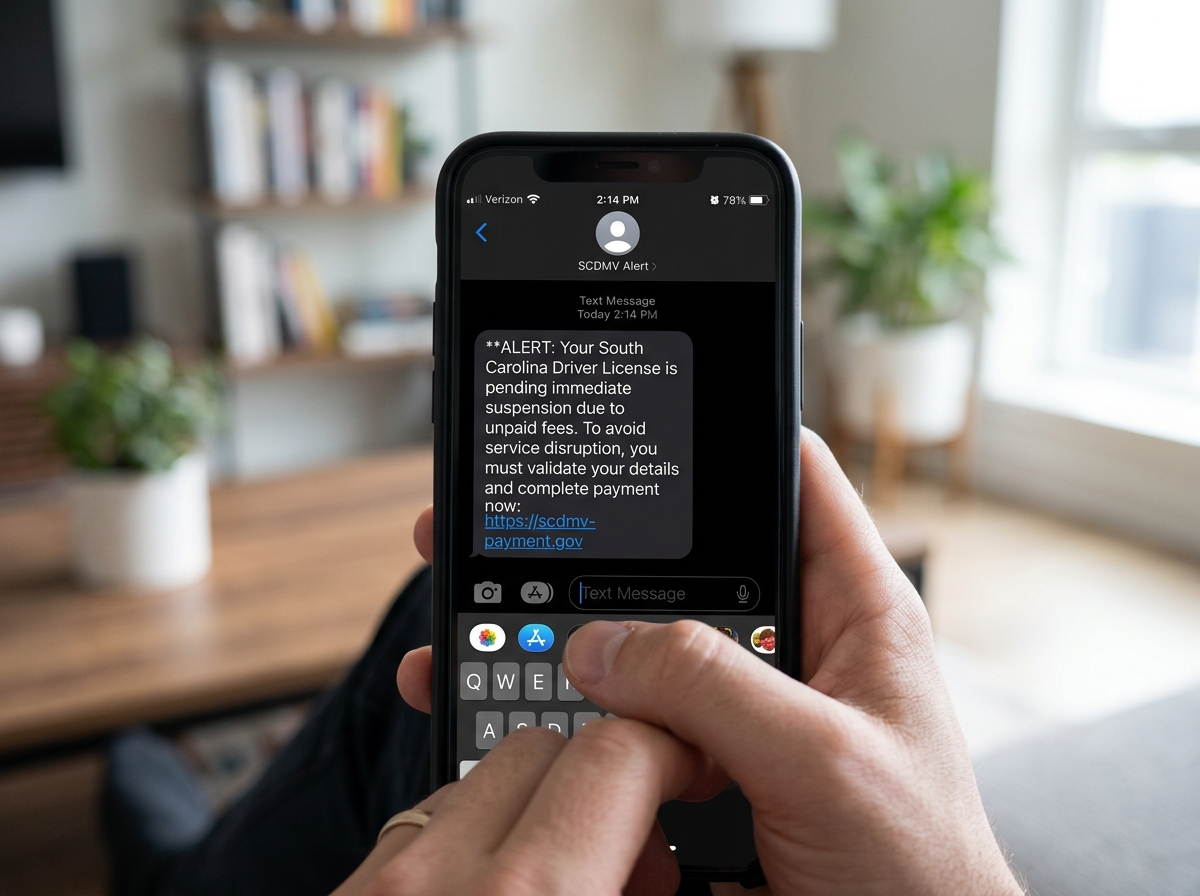
It is important to remember that these "agencies" mentioned in the texts often don't even exist in the way they are described. For instance, we've seen similar traffic compliance scams where scammers invent departments that sound official but have zero legal authority.
Common Tactics Used in an SCDMV Scam
Scammers are constantly evolving their methods. We have seen a significant rise in the use of AI-generated text, which eliminates the obvious spelling errors that used to be a dead giveaway for phishing. Here are the primary tactics they use:
- Extreme Urgency: The message will often say you have "24 hours to pay" or that your "registration will be suspended tomorrow." This is intended to stop you from thinking clearly.
- The Threat of Consequences: By mentioning license suspension or arrest warrants, they use fear to bypass your skepticism.
- Impersonation of Authority: They use official-sounding titles like "South Carolina DMV Payment Portal" or "Department of Safety."
- Masked Links: They use URL shorteners or deceptive domains that include words like "scdmv-gov" or "south-carolina-tolls" to make the link look legitimate.
The SCDMV has issued an official scam text advisory reminding drivers that they simply do not operate this way. If a message feels like a high-pressure sales tactic, it’s a scam.
Why the SCDMV Scam is Dangerous
You might think, "What's the harm in just clicking the link to see what it is?" Unfortunately, the danger starts the moment you interact with the message.
- Identity Theft: By collecting your driver's license and SSN, scammers can open lines of credit or file fraudulent tax returns in your name.
- Financial Fraud: Once they have your credit card details, they can drain your accounts or sell your card info on the dark web.
- Credential Harvesting: If the fake site asks you to "log in," they are stealing the username and password you might use for other important accounts.
- Malware: Sometimes, simply clicking the link can trigger a background download of malicious software onto your phone.
We have seen this pattern before in other states, such as parking violation scams where a small "fine" is just a front for stealing your entire wallet.
How to Spot a Fake SCDMV Text or Email
The best defense is a sharp eye. While scammers are getting better at imitating the SCDMV, they still leave clues. One of the biggest red flags is the use of generic greetings. If the message starts with "Dear Citizen" or "Valued Driver" instead of your actual name, be on high alert.
Furthermore, pay close attention to how they refer to themselves. Many scam messages simply say "The DMV." In South Carolina, the official agency is the SCDMV. Using a generic term allows scammers to blast the same message to thousands of people across multiple states without changing the text.
Comparison: Official SCDMV vs. Scammer Tactics
| Feature | Official SCDMV Communication | SCDMV Scam Tactics |
|---|---|---|
| Primary Method | U.S. Postal Service (Paper Mail) | SMS Text Message or Unsolicited Email |
| Urgency | Provides at least 30 days notice | Demands "Immediate" or "Same Day" action |
| Links | Always leads to SCDMVOnline.com | Uses strange URLs (e.g., bit.ly, scdmv-pay.com) |
| Payment Request | Through secure portal or in-person | Requests payment via texted link |
| Personal Info | Already has your records on file | Asks you to "verify" your SSN or License # |
Red Flags of an SCDMV Scam Message
If you receive a message, look for these specific warning signs:
- The Sender's Number: Often, these texts come from standard 10-digit phone numbers or international codes that have no connection to South Carolina government offices.
- Poor Grammar: While AI is helping them, many scammers still use odd phrasing or incorrect capitalization.
- Unsolicited Links: The SCDMV will never send you a link out of the blue asking for money.
- Threatening Language: Real government agencies use formal, measured language, not "Pay now or be arrested."
Learning how to spot phishing emails is a skill that will protect you far beyond just DMV scams; it's an essential part of modern digital life.
Verifying the Official SCDMV Website
If you are ever in doubt, stop what you are doing and go to the official source yourself. Do not use the link in the text. Instead, open your browser and manually type in SCDMVOnline.com or dmv.sc.gov.
A legitimate government website will always:
- End in .com (for the SCDMV specific portal) or .gov.
- Have a lock icon in the address bar (indicating a secure HTTPS connection).
- Feature the official South Carolina state seal and consistent branding.
Protecting Your Data: What to Do if You Receive a Suspicious Message
If a text from "The DMV" pops up on your screen, don't panic. The most powerful thing you can do is nothing. Do not reply, do not click, and do not "unsubscribe."
- Delete the Message: This removes the temptation to click later.
- Block the Sender: Prevent that specific number from reaching you again.
- Forward to 7726: This is a free service provided by most mobile carriers. Forwarding the message to 7726 (which spells SPAM) helps carriers identify and shut down scammer networks.
- Report it: You can report fraud to the Federal Trade Commission to help federal authorities track the latest waves of smishing.
Steps to Take if You Already Clicked the Link
We all make mistakes, especially when we're busy or stressed. If you clicked the link or, worse, entered information, here is your emergency checklist:
- Monitor Your Bank Accounts: Check for any unauthorized charges immediately. Even a $1 "test" charge is a sign your card is compromised.
- Freeze Your Credit: Contact the three major credit bureaus (Equifax, Experian, and TransUnion) to place a freeze on your credit. This prevents scammers from opening new accounts.
- Change Your Passwords: If you used a password on the scam site, change it on all other accounts where you use that same password.
- Run an Antivirus Scan: Ensure no malware was installed on your device.
In some extreme cases, clicking a link can lead to more aggressive attacks. Knowing what to do if you receive a ransomware email or link can save your digital life.
Reporting SCDMV Scams to Authorities
Reporting these scams isn't just about your own safety; it's about protecting your neighbors. When you report a scam, you provide data that law enforcement uses to issue public warnings.
You should notify:
- The SCDMV: They keep a log of fraudulent activities impersonating their agency.
- The FTC: The primary federal agency for consumer protection.
- Local Police: Especially if you have actually lost money to the scam.
This isn't just a South Carolina problem. We've seen similar patterns with Florida DMV scams, proving that these groups often move from state to state using the same playbook.
Official SCDMV Communication Policies You Need to Know
The best way to avoid an SCDMV scam is to know how the real agency communicates. The SCDMV is a traditional government body that relies heavily on "snail mail."
- The 30-Day Rule: If there is a problem with your license or registration, the SCDMV will send you a notice via the U.S. Postal Service. They provide at least 30 days of advance notice before taking any action against your driving privileges.
- No Text Payments: The SCDMV does not use text messages to collect fees, tolls, or fines. Period.
- Limited Email Use: While they may use email to answer questions you have asked or send reminders for appointments you made, they do not use it for official legal notices or payment demands.
- Verified Payments: Official payments are only accepted through their website, via mail to their headquarters, or in person at a branch office.
Similar strict policies exist in other states, like the Maryland MVA, where "pay today or be arrested" texts are always a sign of fraud.
Frequently Asked Questions about SCDMV Scams
Does the SCDMV ever text customers for payment?
Absolutely not. The SCDMV has stated repeatedly that they do not use text messages for the collection of tolls, traffic tickets, or any other fees. If you receive a text asking for money, it is 100% a scam. This is a common tactic across the country, much like the Michigan SOS scams that have targeted drivers in the Midwest.
What is the official SCDMV website?
The only official website is SCDMVOnline.com. You can also access information via dmv.sc.gov. Always check the address bar to ensure you haven't been redirected to a look-alike site.
How do I report a scam text in South Carolina?
The fastest way is to forward the text to 7726. Additionally, you should report the incident to the Federal Trade Commission.
Conclusion
The SCDMV scam is a reminder that our personal information is constantly under fire. While being aware of the red flags is a great first step, proactive privacy is the ultimate shield.
At Tempo Mail USA, we believe that the best way to stop a scammer is to never give them your real information in the first place. We provide temporary email aliases that act as a secure "PII firewall." By using an alias when you sign up for services or interact with websites, you keep your primary inbox — and your real identity — hidden from the data breaches that scammers use to find their targets.
Protect your data, stay skeptical of urgent texts, and never let a scammer rush you into a mistake. Stay safe on the road and online!
Ready to protect your privacy? Create your first secure email alias with Tempo Mail USA today!