


The Michigan SOS Scam Text Is Fooling Real People — Here's What You Need to Know
If you received a Michigan SOS scam text, here is the short version of what to do:
- Do not click any link in the message
- Do not reply to the text
- Delete it immediately
- The Michigan Secretary of State will never text you asking for a fee or payment
The Michigan Secretary of State (SOS) handles what most states call "DMV" functions — things like driver's licenses and vehicle registration. Right now, scammers are sending fake text messages pretending to be a government agency, threatening to suspend your license unless you pay a fee through a link.
These texts are not from the state. They are a smishing scam — that is, phishing carried out through SMS text messages.
The Michigan State Police Jackson post received 10 complaints in a single day (June 9, 2025). Their warning post on Facebook went viral, with over 4,600 shares — a sign of just how widely these texts are spreading.
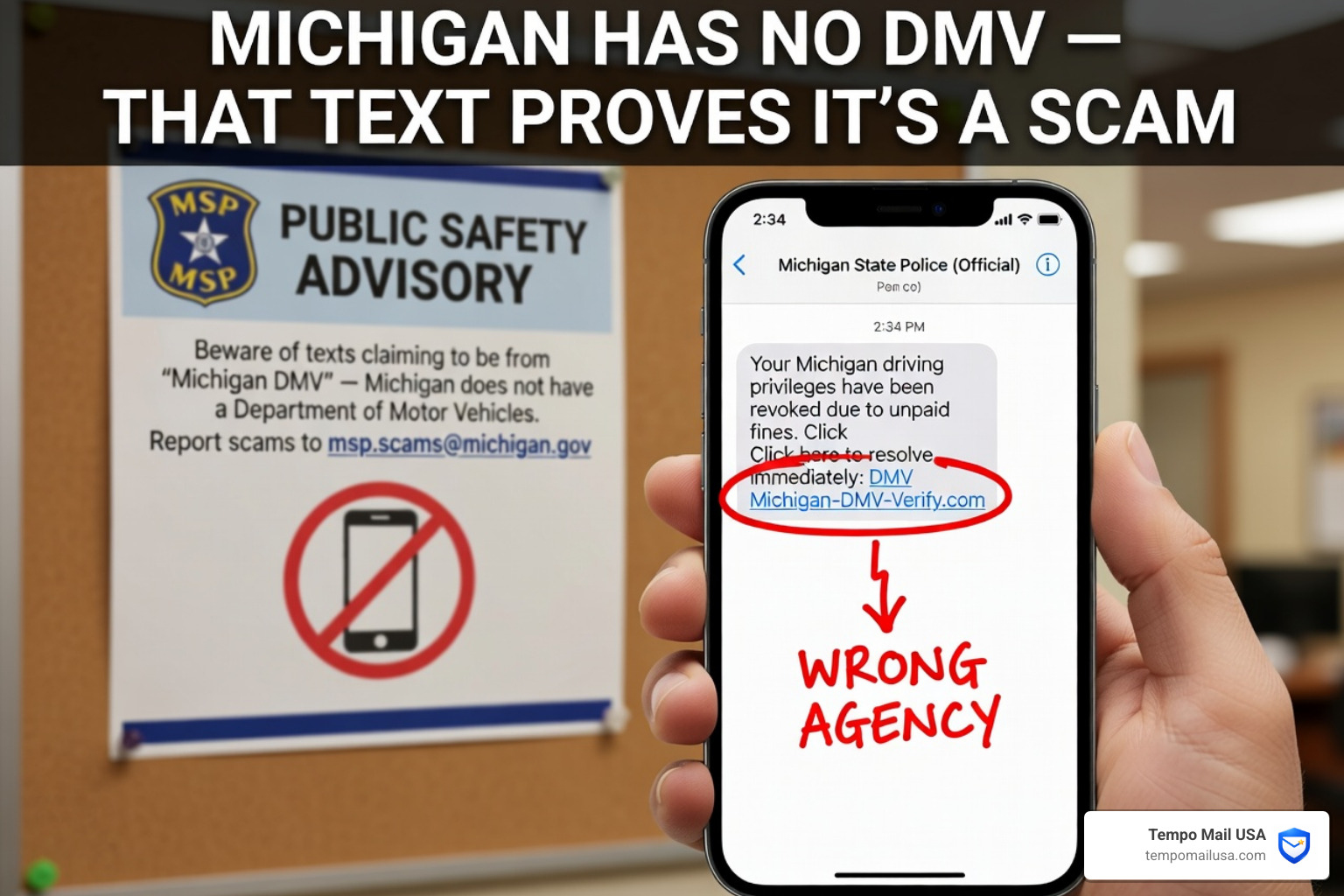
One easy tell? The fake texts refer to a "Michigan DMV." Michigan doesn't have a DMV. That agency is called the Secretary of State. Scammers got the name wrong, and that mistake is your first red flag.
With more than 20 billion texts sent every day in the United States — and smartphone users three times more likely to fall for fake texts than desktop users are to fall for phishing emails — this scam is designed to catch you off guard and make you act fast before you think.
What is the Michigan SOS Scam Text?
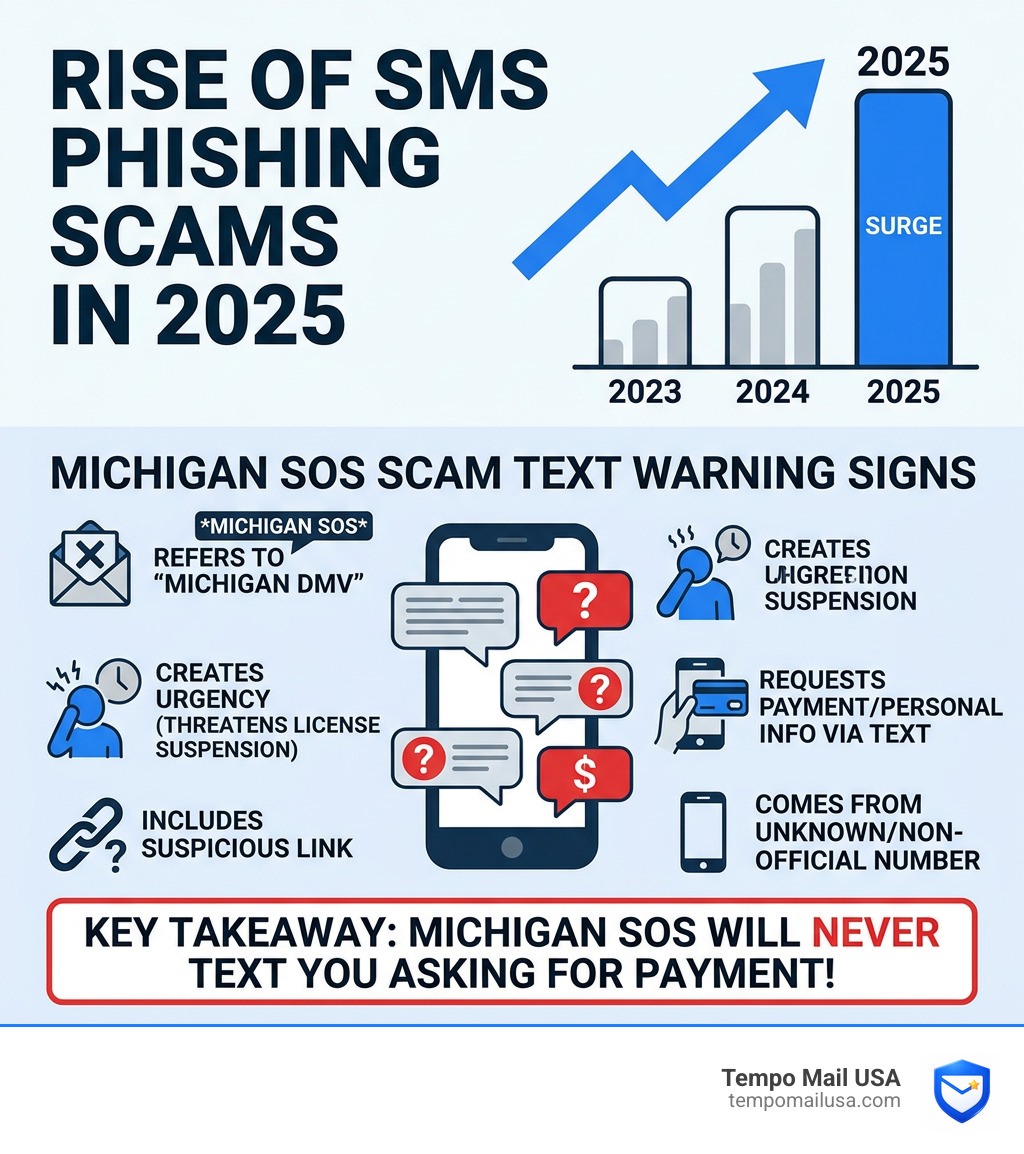
At its core, the Michigan SOS scam text is a "smishing" (SMS phishing) attack. These messages are designed to impersonate official government channels to steal your personal identifying information (PII) or financial data.
On June 9, 2025, the Michigan State Police (MSP) Jackson Post reported a massive surge in these fraudulent messages. According to Fake DMV text messages prompt warning from Michigan State Police amid rising complaints, the scam typically involves a text message claiming the recipient has an outstanding ticket or a problem with their vehicle registration.
The message usually follows a strict psychological script:
- The Hook: A claim that your driver's license is at risk of suspension.
- The Pressure: A demand for immediate payment or action to avoid "legal consequences."
- The Trap: A shortened, suspicious link that leads to a clone of an official-looking website.
How the Michigan SOS Scam Text Appears
Scammers are getting better at mimicry, but they still rely on classic high-pressure tactics. When you see a Michigan SOS scam text, it almost always features extreme urgency. It might say, "Action Required: Your Michigan Driver's License will be suspended in 24 hours. Pay your outstanding fine here: [Malicious Link]."
These links are often shortened (using services like bit.ly or tinyurl) or contain scrambled characters that don't match an official .gov domain. As we've noted in our guide DMV Text Scam 2026: Do Not Click That Link Until You Read This, these links are the primary delivery mechanism for malware or credential-harvesting forms. Once you click, you are directed to a site that asks for your Social Security number, date of birth, and credit card information to "settle the debt."
Why "DMV" is a Red Flag for Michigan SOS Scam Text Recipients
One of the funniest — and most helpful — mistakes these scammers make is their lack of local knowledge. In many states, the agency that handles cars is called the Department of Motor Vehicles (DMV). However, in the Great Lakes State, we do things differently.
Michigan uses the Secretary of State (SOS) for all driver and vehicle services. If you receive a text message mentioning the "Michigan DMV," you can be 100% certain it is a fraud. As highlighted in our look at the Georgia DMV Scam Text: The Fake Agency, scammers often use "DMV" as a catch-all term because they are running these campaigns nationwide and don't bother to customize the agency name for specific states.
Official Warnings and Government Response
The response from Michigan authorities has been swift and loud. Attorney General Dana Nessel, the Michigan State Police, and the Secretary of State's office have all issued urgent alerts.
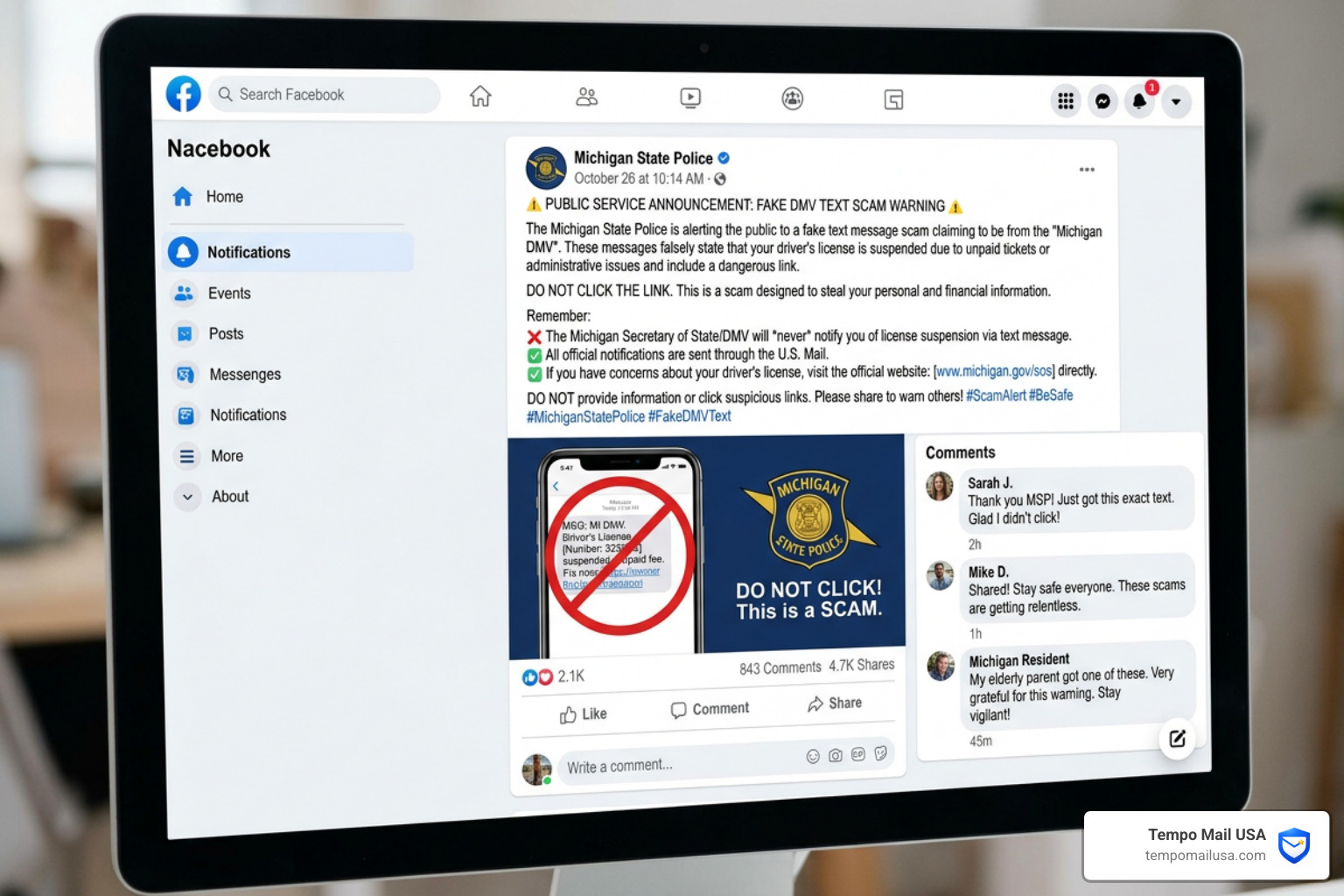
The Michigan State Police Facebook post regarding this scam garnered massive engagement:
- 1.4K reactions
- 834 comments
- 4.6K shares
This level of social media activity shows that the Michigan SOS scam text is hitting thousands of phones across the state. In an official statement, Attorney General Nessel Warns Michigan Residents of Smishing Text Threatening License and Registration Suspension, the AG's office reminded residents that the state will never threaten license suspension via an unsolicited text message.
Common Red Flags in a Michigan SOS Scam Text
Beyond the "DMV" naming error, there are several other tell-tale signs that the message in your inbox is a fake:
- International or Unusual Area Codes: Many of these texts originate from 10-digit numbers or international codes that have no connection to Michigan government offices.
- Mentions of "Credit Scores": The government doesn't care about your credit score when it comes to traffic tickets. If the text claims a "payment is needed to protect your credit," it's a scam.
- "Toll Road" Errors: Some versions of the text claim you owe money for toll roads. While Michigan has bridges with tolls, we don't have a sprawling state toll road system like our neighbors in Ohio or Illinois.
- Grammar and Spelling: Look for odd capitalization, missing periods, or awkward phrasing. Official government communications go through multiple rounds of editing; scammers usually don't.
- Shortened Links: Official state websites will almost always end in
.gov/sosor.michigan.gov. Any link that looks likemiv-gov.comorbit.ly/3xYzis a trap.
Risks of Clicking and Related Smishing Threats
Clicking the link in a Michigan SOS scam text is like opening your front door to a burglar. The risks are not just financial; they are deeply personal.
| Feature | Official SOS Communication | Scammer Tactics |
|---|---|---|
| Primary Method | U.S. Postal Service (Mail) | Unsolicited Text/SMS |
| Payment Requests | Secure, official portal or in-person | Suspicious links, CashApp, or Wire |
| Tone | Formal and informative | Urgent, threatening, and scary |
| Agency Name | Secretary of State | "Michigan DMV" or "Dept. of Vehicles" |
| Link Destination | .gov domain | Shortened or scrambled URLs |
According to the FBI’s IC3 report, phishing and smishing scams accounted for over $1.4 billion in losses in the United States in a single year. When you click that link, you risk:
- Malware Installation: Your phone could be infected with software that tracks your keystrokes or steals your banking passwords.
- PII Theft: By providing your SSN or license number, you give scammers everything they need to open fraudulent credit lines in your name.
- Financial Drain: Once they have your credit card info for a "small fee," they often begin making large, unauthorized purchases.
Similar Scams Targeting Michigan Residents
The Michigan SOS scam text isn't the only one making the rounds. Scammers often pivot to other agencies depending on the time of year.
The Michigan Department of Treasury has also issued warnings about texts claiming a "tax refund is ready" or that "bank info needs to be updated" to avoid forfeiting a payment. As noted in Treasury: Be Alert for Text Message Phishing Scam Making the Rounds, the Treasury Department exclusively uses the U.S. Postal Service for initial correspondence regarding tax issues.
Other common Michigan-based smishing threats include:
- Bank Fraud Alerts: Fake texts from "banks" asking you to confirm a large Zelle or Venmo transfer.
- Package Delivery Fakes: Messages claiming a package is "held at the warehouse" and requires a small redelivery fee.
How to Report and Protect Yourself from Smishing
If you receive a suspicious text, the best thing you can do is nothing. Do not reply, even to say "STOP." Replying confirms to the scammer that your number is active and monitored by a real person, which makes your number more valuable to sell to other criminals.
Here is how we recommend you handle these messages:
- Report to Carriers: Forward the message to 7726 (SPAM). This is a free service used by major carriers to block malicious senders.
- Report to the FCC: You can file a complaint online with the Federal Communications Commission.
- Delete and Block: Block the number and delete the thread immediately.
The Verizon Data Breach Investigations Report indicates that phishing remains one of the most pervasive threats, accounting for over 36% of all data breaches. Being proactive is your best defense.
Proactive Security Measures
We believe that security should be layered. You wouldn't just lock your front door and leave the windows wide open.
- Enable Multi-Factor Authentication (MFA): Even if a scammer steals your password, MFA provides a second layer of defense. Microsoft MFA adds an additional layer of security beyond your password, which can prevent over 99.9% of account compromise attacks.
- Use Built-in Spam Filters: Most modern iPhones and Android devices have "Filter Unknown Senders" settings. Turn these on!
- Protect Your Primary Identity: We recommend using temporary or alias identities when signing up for non-essential services. This keeps your real phone number and email off the "sucker lists" that scammers buy and sell.
Frequently Asked Questions about the Michigan SOS Scam Text
Does the Michigan Secretary of State ever text for payments?
No. The Michigan Secretary of State will never send an unsolicited text message asking for a fee, payment, or banking information. While they may offer text alerts for appointment reminders if you have opted in, these will never demand money or threaten legal action.
What should I do if I clicked the link in a scam text?
If you clicked the link but didn't enter info, run a reputable antivirus scan on your phone. If you did enter personal or financial information:
- Contact your bank to freeze your cards.
- Change your passwords for any account that uses the same credentials.
- Place a fraud alert on your credit report via Equifax, Experian, or TransUnion.
- File a report with the Michigan Attorney General’s Consumer Protection Team.
How can I verify if a message from the SOS is legitimate?
The safest way is to go directly to the source. Do not use any contact info provided in the text. Instead, visit Michigan.gov/SOS or call the official customer service line at 888-SOS-MICH (888-767-6424). If there is a real issue with your license, it will be visible in your official online account.
Conclusion
The Michigan SOS scam text is a reminder that our digital lives are constantly under fire. Scammers are betting on your fear and your busy schedule, hoping you'll click a link before you notice the "Michigan DMV" error.
At Tempo Mail USA, we are dedicated to helping you build a "PII firewall" around your life. By using our temporary email aliases and identity protection tools, you can shield your personal information from the data breaches that feed these scammer databases in the first place.
Don't let a fake text ruin your financial future. Stay vigilant, stay skeptical, and always verify before you click.