


The Secretary of State Text Scam Is Targeting Drivers Right Now
The Secretary of State text scam is a fraud where criminals send fake text messages pretending to be your state's DMV, BMV, or Secretary of State office — threatening license suspension, unpaid fines, or legal action unless you click a link and pay immediately.
Here's what you need to know right now:
- These texts are fake. No Secretary of State or DMV office will ever text you to request personal or financial information.
- Do not click any links in these messages.
- Delete the text and report it to the FTC at reportfraud.ftc.gov.
- If you already clicked and entered info, contact your bank immediately and freeze your credit.
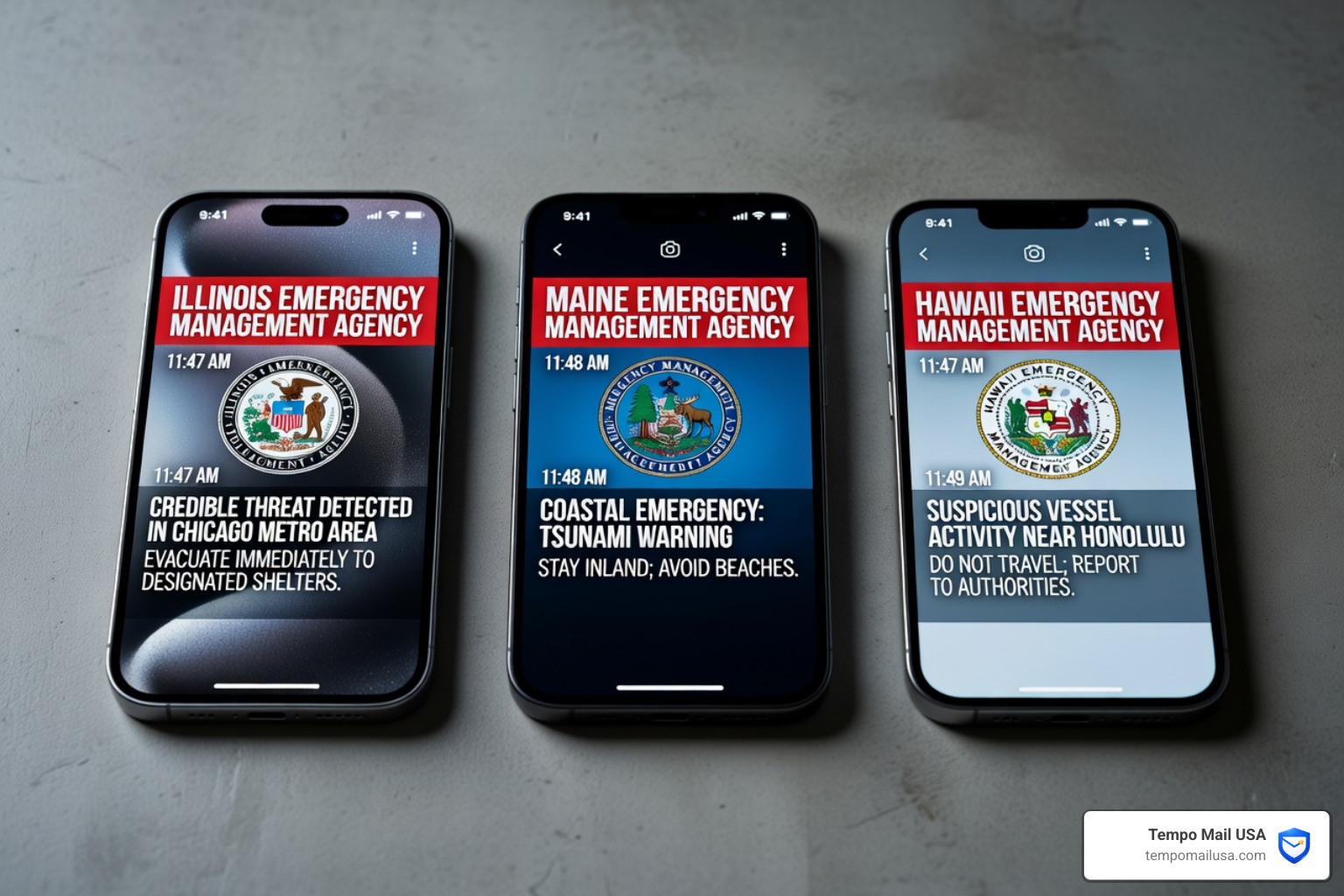
This scam has been officially flagged by multiple states. Illinois Secretary of State Alexi Giannoulias warned drivers about texts impersonating the "Illinois State Department of Motor Vehicles" and threatening enforcement starting a specific deadline date. Maine Secretary of State Shenna Bellows issued similar alerts after residents across the state received texts claiming to be a "Final Notice" from the Maine DMV — with a link leading to a fake website asking for credit card details.
And it's not slowing down. Similar warnings have come from Hawaii, Michigan, and other states — meaning this is a nationwide pattern, not a local fluke.
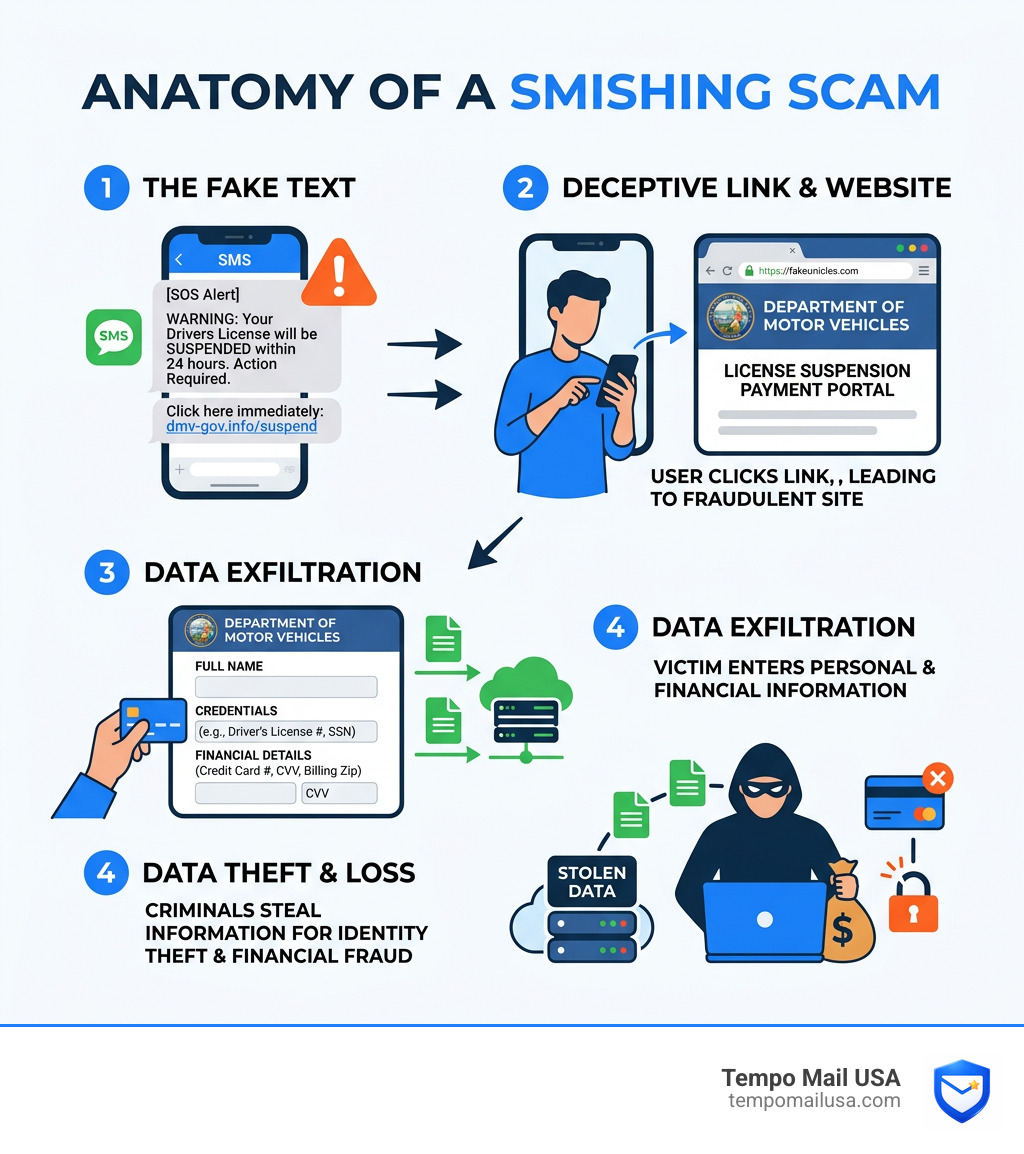
Scammers use a technique called smishing (SMS phishing) — blasting out mass texts hoping a small percentage of people panic and comply. The urgency is the trap. The moment you feel rushed, that's the signal to stop and think.
What is the Secretary of State Text Scam?
At its core, the Secretary of State text scam is a high-pressure impersonation game. Scammers send out thousands of text messages designed to look like official government alerts. They often use the names of well-known agencies like the Department of Motor Vehicles (DMV) or the Bureau of Motor Vehicles (BMV).
Why do they do this? Because most of us rely on our driver’s licenses for everything—getting to work, buying groceries, or just proving who we are. When we see a text saying our "driving privileges are at risk," our fight-or-flight response kicks in. We want to fix the problem now, which is exactly what the scammer is counting on.
This type of attack is known as "smishing" (SMS phishing). While traditional phishing happens over email, smishing targets the device that is almost always in your hand: your smartphone.
Regional Variants of the Scam
We’ve seen this scam pop up in various forms across the country:
- Illinois: Scammers have sent texts claiming to be from the "Illinois State Department of Motor Vehicles," warning residents that their vehicle registration will be suspended by a specific date (like January 17) unless they "validate" their information.
- Maine: The Secretary of State warns of return of widespread BMV text scam, where texts titled "Important Reminder" or "Final Notice" lead to a fake website that looks remarkably like the official Maine.gov portal.
- Hawaii: The Hawaii Police Department recently warned residents in Hilo and Kona about texts claiming people owe money for unpaid traffic violations. Interestingly, there is no "Hawaii Department of Motor Vehicles"—vehicle registration is handled at the county level—which is a major red flag for anyone paying attention.
- Michigan: The Michigan Department of Treasury has also flagged similar "smishing" campaigns where scammers claim a tax refund is waiting, but only if you provide your bank details via a text link.
If you're wondering what exactly a phishing scam is and how to protect yourself more broadly, check out our guide on What is a Phishing Scam? Protect Yourself.
How to Identify a Fake Secretary of State Text Scam
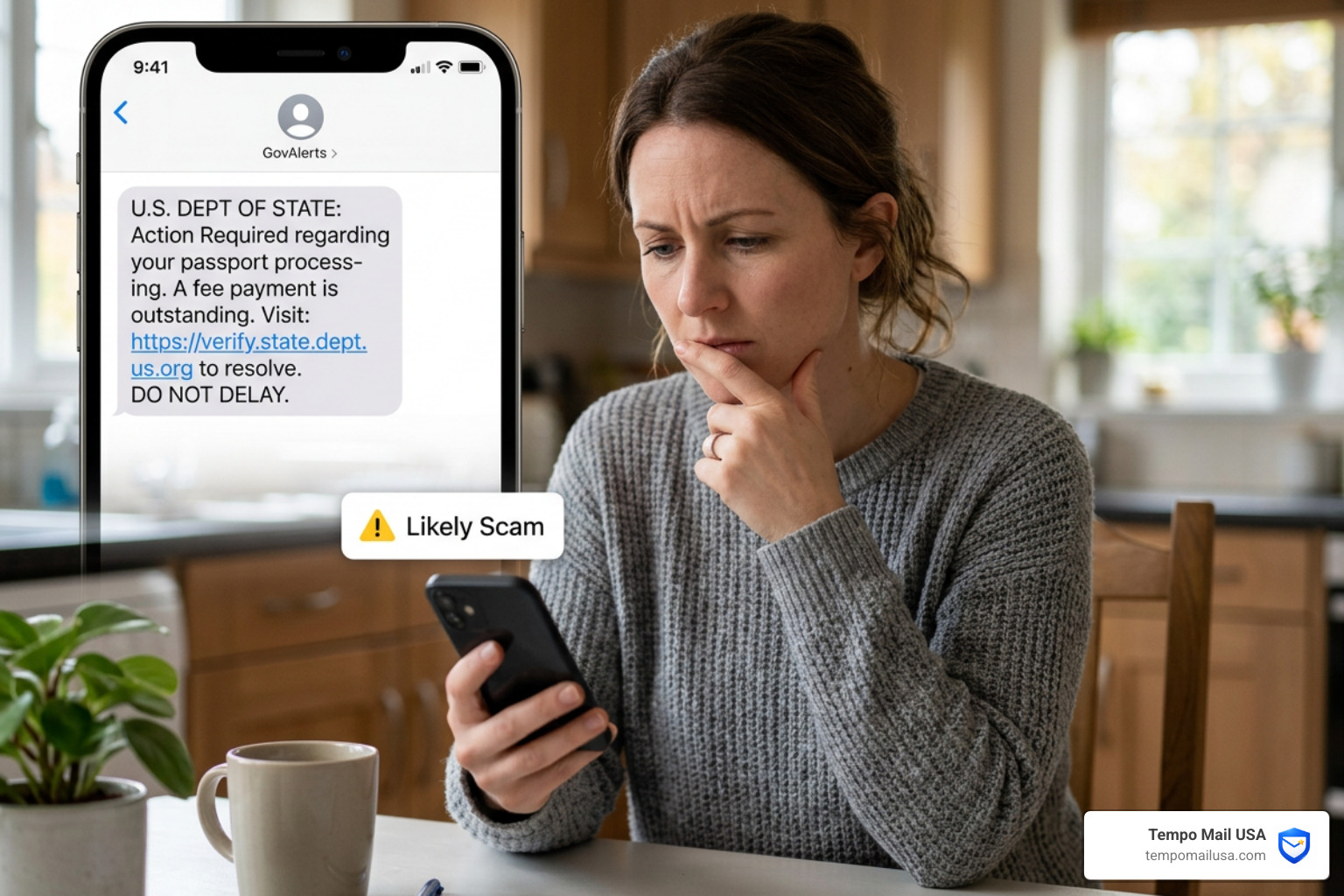
Identifying a Secretary of State text scam doesn't require a degree in cybersecurity. It just requires a healthy dose of skepticism. Scammers are good, but they almost always leave "digital fingerprints" that give them away.
The Red Flags
- Artificial Urgency: If the text says "Action Required Immediately" or "Your license will be suspended in 24 hours," it’s likely a scam. Real government agencies communicate through the U.S. Postal Service for serious matters.
- Suspicious Links: Official government websites usually end in
.gov. If the link in the text is a shortened URL (like bit.ly) or a strange domain (likedmv-registration-update.com), do not touch it. - Grammatical Errors: While some scammers are getting better, many texts still contain odd phrasing or capitalization. For example, "Illinois State Department of Motor Vehicles" is not the actual name of the agency in Illinois (it's the Secretary of State).
- Generic Greetings: Instead of using your name, the text might say "Dear Citizen" or "Valued Driver."
To help you stay sharp, we've put together a Quick Guide: How to Spot Phishing Emails, which covers many of the same tactics used in text scams.
Official vs. Scam: A Comparison
| Feature | Official Communication | Scam Text Message |
|---|---|---|
| Delivery Method | U.S. Postal Mail (Paper) | SMS/Text Message |
| Tone | Formal and informative | Urgent and threatening |
| Request | Directions to a physical office or official portal | Immediate payment or link click |
| Payment Method | Official state payment portals | Credit card entry on a linked site |
| Greeting | Your full name and address | Generic (e.g., "Dear Driver") |
The Secretary of State is not emailing you or texting you for your Social Security number or credit card details. If you get an unsolicited message, it is safest to assume it's a fraud.
Common Threats and Information Scammers Seek
The primary goal of a Secretary of State text scam is "data harvesting." Scammers aren't just looking for a one-time payment of a "fine"; they want your entire identity.
What They Threaten
- License Suspension: This is the most common hook. They claim your license is already suspended or will be within days.
- Vehicle Registration Issues: They might claim your registration has expired or that you owe surcharges (sometimes as high as 35%).
- Legal Proceedings: Some texts go as far as threatening "prosecution" if you don't respond.
If you receive a message from an entity calling itself the "Department of Legal Compliance," be extremely wary. We have a specific update on the Department of Legal Compliance Scam - Do Not Pay.
What They Want
When you click the link in a Secretary of State text scam, you are usually taken to a "mirror site"—a website that looks exactly like a government page. There, you are asked to provide:
- Credit Card Information: To pay a "small fee" or "fine."
- Social Security Number: To "verify" your identity.
- Bank Account Details: For "refunds" or "direct payments."
- Home Address and DOB: To complete your profile for identity theft.
The Staggering Cost of Scams
The scale of this problem is massive. According to the FBI’s IC3 report, phishing and email scams resulted in over $1.4 billion in losses in the United States alone last year. Furthermore, research from Proofpoint shows that 83% of organizations experienced at least one successful phishing attack in the last year. These aren't just random occurrences; they are part of a 31% year-over-year increase in phishing activity.
Steps to Take if You Receive a Secretary of State Text Scam
If your phone pings and you see a suspicious message, don't panic. You have all the power in this situation as long as you don't engage.
1. Do Not Click
This is the most important rule. Even clicking the link to "see what it is" can be dangerous. Some links are designed to install malware on your device the moment the page loads.
2. Block and Delete
Most smartphones allow you to "Report Junk" or "Block Sender." Use these features. This prevents the scammer from reaching you again from that specific number and helps your service provider identify scam patterns.
3. Report the Scam
Reporting is vital because it helps authorities track and shut down these operations.
- FTC: Report the scam at FTC. This is the primary database for fraud in the U.S.
- IC3: You can also report to the FBI’s Internet Crime Complaint Center at ic3.gov.
- State Authorities: Many states have their own reporting lines. For instance, you can call the Michigan Treasury’s Individual Income Tax Information Line at 517-636-4486 to log a scam.
For more detailed instructions, see our post on How to Report Phishing Emails in 5 Easy Steps. We also keep a running Department of Legal Compliance Scam Update for those who have been targeted by legal-themed threats.
Frequently Asked Questions about DMV and SOS Scams
Does the Secretary of State send texts requesting info?
The short answer is: No. While some agencies might send automated reminders for appointments you have already booked, they will never send an unsolicited text asking for your Social Security number, bank details, or credit card information. Official business regarding license suspensions or fines is conducted via the U.S. Postal Service. If you are in doubt, look up the official phone number for your local DMV or Secretary of State and call them directly. Never use the contact info provided in a suspicious text.
What should I do if I clicked a link in a Secretary of State text scam?
If you’ve already interacted with a scam, time is of the essence. Follow these steps:
- Contact Your Bank: If you entered credit card or bank info, call your financial institution immediately to cancel the card and monitor for fraudulent charges.
- Freeze Your Credit: Go to the three major credit bureaus (Equifax, Experian, and TransUnion) and place a freeze on your credit file. This prevents scammers from opening new accounts in your name.
- Visit IdentityTheft.gov: This is the government's one-stop resource for creating a recovery plan if your identity has been compromised.
- Change Passwords: If the site asked for a login, change your passwords for all sensitive accounts (email, banking, etc.).
- Run a Malware Scan: Use a reputable antivirus tool to scan your phone for any malicious software that might have been downloaded.
How can I prevent a Secretary of State text scam in the future?
Prevention is all about layers.
- Enable Multi-Factor Authentication (MFA): According to Microsoft MFA research, MFA can prevent over 99.9% of account compromise attacks. Even if a scammer gets your password, they can't get into your account without that second code.
- Use Privacy Tools: Be careful where you share your phone number and email address. The more "public" your info is, the more likely you are to be targeted.
- Education: Staying informed by reading guides like this one is your best defense. When you know what a Secretary of State text scam looks like, you're much less likely to fall for it.
Conclusion
We live in an age where our digital identities are constantly under fire. The Secretary of State text scam is just one of many tools scammers use to pry away your hard-earned money and personal information. By staying vigilant, recognizing the red flags of smishing, and knowing exactly how to report these attempts, you can keep your data safe.
At Tempo Mail USA, we believe your privacy is a right, not a luxury. We provide secure, temporary email aliases that act as a "PII firewall," shielding your real identity from services that might leak your data to scammers. By compartmentalizing your digital life, you reduce the "surface area" that attackers can target.
Protect your inbox, protect your phone, and protect your identity. For more tools on how to stay safe in an increasingly connected world, visit https://tempomailusa.com.