


Is the Who's Who in America Scam Real? Here's What You Need to Know Fast
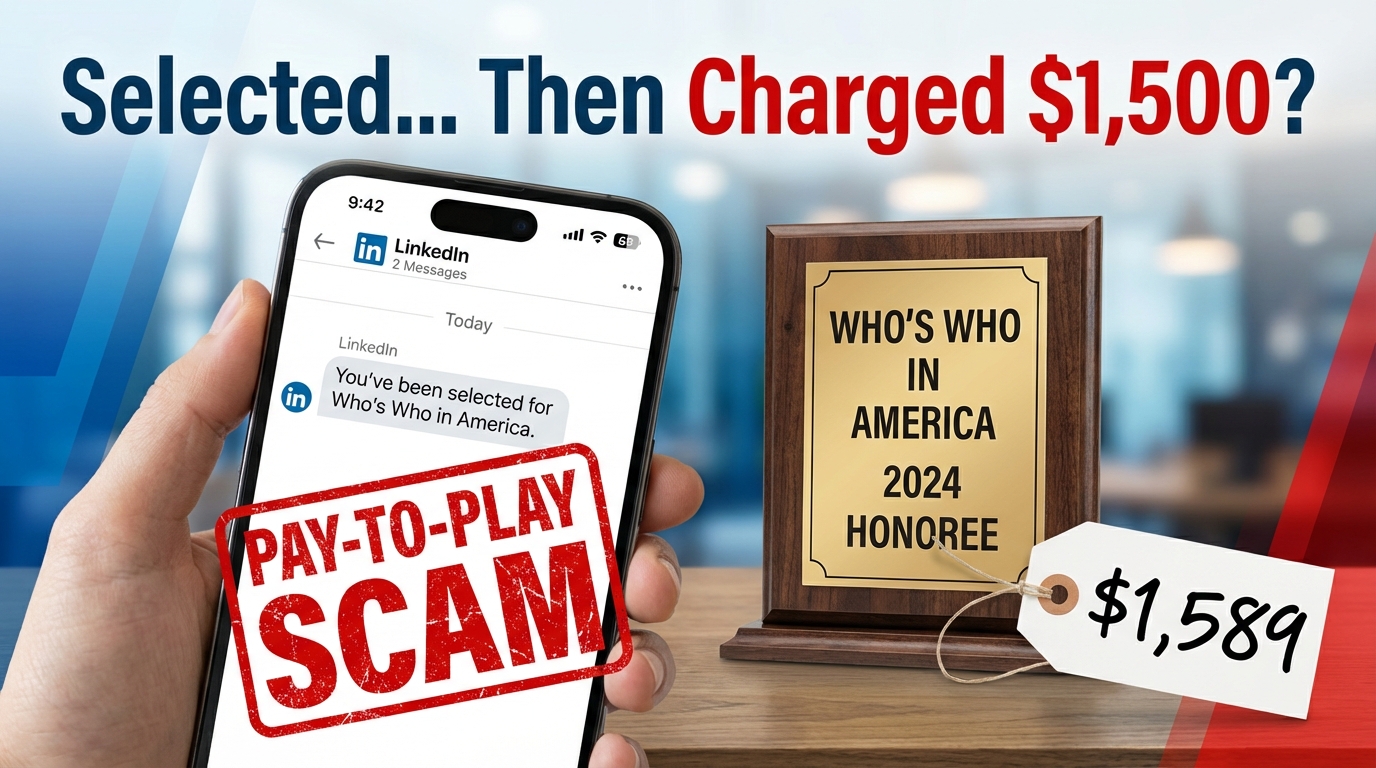
The who's who in america scam is real — and it takes two distinct forms you need to understand right away.
Quick Answer:
| Situation | Verdict |
|---|---|
| Unsolicited email or LinkedIn message saying you've been "selected" | Likely a scam |
| Interview call followed by a $750–$1,589 package pitch | Scam tactic |
| Request for payment to be listed or receive a plaque | Red flag — legitimate inclusion is free |
| Official Marquis Who's Who outreach (no fees, no cold email) | Potentially legitimate |
| Any company using "Who's Who" name with upfront fees | High risk — the name is public domain |
There are two things happening here. First, legitimate Marquis Who's Who — founded in 1899 — is a real directory. But its BBB rating sits at just 1.21 out of 5 stars, and many professionals describe its model as "pay-to-play vanity publishing." Second, and more dangerously, outright fraudsters impersonate the brand entirely — using the "Who's Who" name (which is in the public domain, meaning anyone can use it legally) to steal money and personal information.
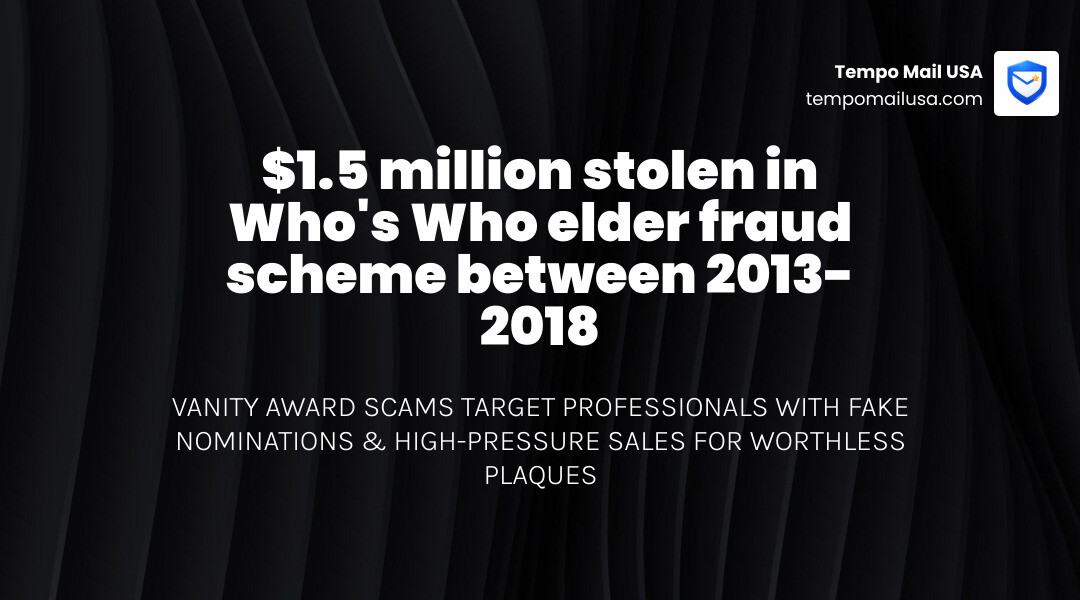
One case from Long Island resulted in over $1.5 million stolen between 2013 and 2018, with a scammer soliciting small $14 checks from victims for fake biographical books, then using their banking details for larger fraud.
If you got an unexpected LinkedIn message, email, or phone call about a "nomination," you're almost certainly looking at one of these two scenarios. The sections below will help you tell them apart — and protect yourself either way.
The Anatomy of a Who’s Who in America Scam
To understand the who’s who in america scam, we have to look back at the history of the original publication. Marquis Who's Who was established by Albert Nelson Marquis in 1899 as a biographical dictionary of notable Americans. For over a century, being listed was considered a genuine mark of prestige. However, as the digital age progressed, the business model shifted.
Today, the term "Who's Who" is in the public domain. This is a critical vulnerability. Because no single entity owns the trademark for the phrase "Who's Who," any fly-by-night operation can set up a website, call themselves "Who's Who in Your Industry," and start harvesting data or money. This legal loophole is the engine behind the who's who in america scam that floods our inboxes today.
We often see these operations described as "vanity presses." A vanity press doesn't select you because of your achievements; they select you because you have a credit card. They exploit the human desire for recognition, wrapping a sales pitch in the guise of an "exclusive honor." As noted by the Scam alert: dubious "Who's Who" publications - UBIT - University at Buffalo, these dubious publications often target faculty and students, hoping to leverage their professional aspirations for profit.
How the Who’s Who in America Scam Targets Professionals
The modern who’s who in america scam has moved from physical mailers to sophisticated digital outreach. Most victims report receiving a LinkedIn message from someone claiming to be an "Executive VP" or a high-level recruiter. They use official-sounding language: "You have been selected for inclusion in the 2024 edition based on your professional achievements."
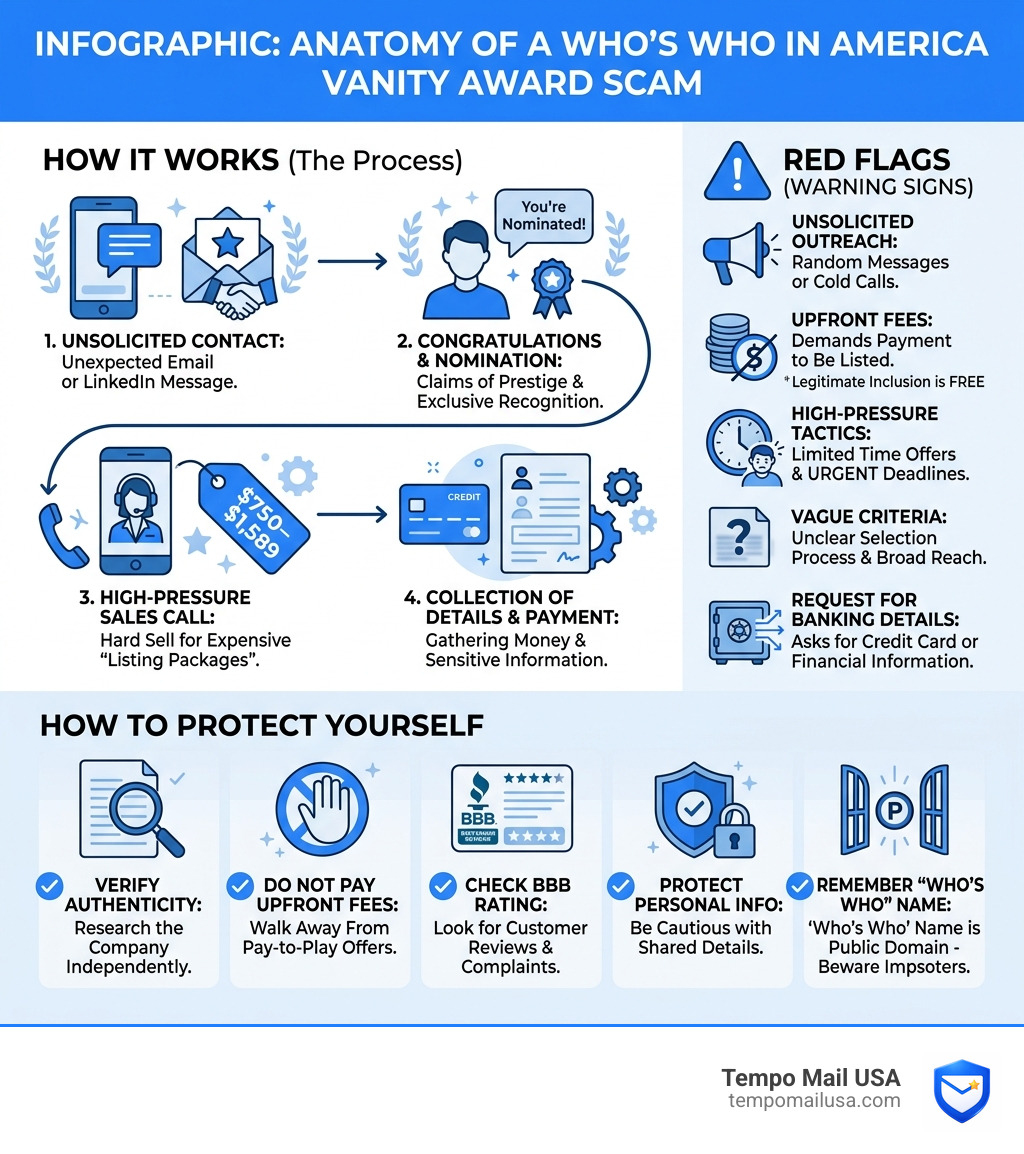
Once you respond, the process usually follows a scripted path:
- The Nomination: You receive an email or LinkedIn message.
- The Interview: You are asked to schedule a "biographical interview." This call is designed to build rapport and make you feel important.
- The Acceptance: At the end of the call, the interviewer "congratulates" you on being accepted.
- The Upsell: This is where the scam reveals itself. You are told that while the listing is free, the "Premium Professional Package" — which includes a plaque, a printed book, and "online networking access" — costs anywhere from $750 to over $1,589.
According to Unmasking the “Who’s Who in America Scam”: Know Your Facts - Greatsenioryears, these high-pressure sales pitches are designed to catch you while your ego is boosted. If you refuse the expensive packages, the "interviewer" may suddenly become less friendly or try to pressure you with "limited-time offers."
Red Flags in a Who’s Who in America Scam Invitation
Recognizing the who’s who in america scam requires looking past the flattery. If you receive an invitation, we recommend checking against this list of common red flags:
- Unsolicited Contact: You never applied for the award, and the organization cannot explain exactly who nominated you.
- Generic Praise: The invitation uses vague terms like "notable personal and professional achievements" without citing specific projects or milestones.
- The "Processing Fee": Legitimate awards do not charge you to receive them. If there is a fee for "shipping," "editorial costs," or "membership," it is a vanity scheme.
- High-Pressure Tactics: They insist you must decide during the phone call or within 24 hours to "secure your spot."
| Feature | Legitimate Recognition | Vanity/Scam Operation |
|---|---|---|
| Selection Criteria | Specific, verifiable achievements. | Mass-scraped LinkedIn data. |
| Cost | $0 for inclusion. | $500 - $2,000 "packages." |
| Communication | Professional, formal, often via mail. | Aggressive LinkedIn messages/emails. |
| Value | Industry-recognized prestige. | Worthless plaque or digital badge. |
| Publicity | Featured in reputable news/media. | Only exists on the scammer's website. |
Advanced Identity Theft Protection Services and Credit Monitoring
The danger of the who’s who in america scam isn't just the loss of a few hundred dollars for a fake plaque. The real risk lies in the "biographical interview." During these calls, scammers gather a treasure trove of Personally Identifiable Information (PII), including your full name, home address, work history, and sometimes even financial details under the guise of "verifying your profile."
To protect your assets, we highly recommend investing in identity theft protection services. These platforms act as a secondary shield, alerting you if your PII appears on the dark web or in unauthorized credit applications. In an era where data is the new currency, credit monitoring software is no longer optional for professionals. It provides real-time alerts for any changes to your credit report, allowing you to freeze your accounts before a scammer can do significant damage.
Furthermore, businesses should consider cybersecurity insurance. If an executive falls for a "Who's Who" style phishing attack that leads to a corporate breach, the financial fallout can be catastrophic. Insurance helps cover the costs of legal fees, data recovery, and notification requirements. Before you engage with any unknown entity, we suggest you perform a BBB Scam Check: How to Spot Fake Businesses Before You Pay to see if other professionals have reported similar issues.
If you have already shared financial information, you must act quickly. While some platforms offer protection, getting your money back is never guaranteed. For instance, understanding the nuances of a Zelle Scam Refund: Can You Get Your Money Back? is vital, as many peer-to-peer payment apps do not offer the same protections as traditional credit cards.
Recovering from Financial Fraud and Data Breaches
If you’ve fallen victim to a who’s who in america scam, recovery should be your top priority. Start by contacting your bank or credit card issuer to dispute the charges. Most vanity publishers will fight the chargeback, claiming you "authorized" the purchase during the recorded interview, so be prepared to provide evidence of their deceptive tactics.
Next, file a report with the Federal Trade Commission (FTC) at reportfraud.ftc.gov. You should also reach out to the AARP Fraud Watch Network, especially if the scam targeted an older professional or retiree. For the latest updates on how legal authorities are handling these deceptive entities, stay informed with our Department of Legal Compliance Scam Update.
Preventing Phishing with Disposable Email Infrastructure
The most effective way to stop the who’s who in america scam is to prevent the scammers from reaching you in the first place. Scammers use automated scrapers to find "real" email addresses attached to professional profiles. Once your primary email is on their list, you will be bombarded with "nominations," "awards," and "exclusive invitations."
This is where Tempo Mail USA becomes your most powerful PII firewall. By using our disposable email infrastructure, you can create temporary email aliases for every professional directory, networking site, or "award" application you encounter.
Why use Tempo Mail USA?
- Instant Identity Proxying: Our service masks your real email address, so scammers never get your actual contact data.
- Advanced Malware Protection: By isolating incoming mail to a temporary inbox, you prevent malicious payloads from reaching your primary device.
- Stop Phishing at the Source: If a "Who's Who" site turns out to be a scam, you can simply delete the alias. The scammer's access to you is instantly severed.
We cannot emphasize enough that your professional email should be guarded like your Social Security number. Scammers often use sophisticated phishing defense bypasses to make their emails look legitimate. For example, many professionals have been fooled by PayPal Scam Emails: How to Spot Them or DocuSign Email Scam: How to Spot It. Using a temporary email for initial inquiries ensures that even if you click a bad link, your primary professional identity remains secure.
Securing Your Professional Identity Online
Securing your identity requires a proactive approach. Beyond using temporary emails, you should audit the amount of information you share publicly. Scammers love LinkedIn because professionals often list their full work history, education, and even contact details.

Always be wary of unexpected invites. Just as we've warned about the Paperless Post Scam Email: Fake Invite Warning, the "Who's Who" nomination is just another lure designed to get you to lower your guard.
Enterprise VPN Solutions and Data Privacy Compliance
For businesses and high-profile executives, the who’s who in america scam is part of a larger threat landscape. Organizations must prioritize data privacy compliance to protect their employees from being targeted. When employees use their corporate emails for vanity awards, they inadvertently open a door for hackers to conduct "spear-phishing" attacks.
Implementing enterprise VPN solutions, such as NordVPN, is a critical step in securing remote professional communications. A VPN ensures that even if an employee is working from a cafe while responding to a "nomination," their data remains encrypted and safe from local "man-in-the-middle" attacks. Additionally, moving company data to secure cloud storage for business prevents sensitive documents from being leaked through insecure email attachments.
The scale of professional fraud is staggering. To put it in perspective, the IRS Dirty Dozen 2026: $45B in Tax Fraud report highlights how scammers use stolen PII to file fraudulent tax returns. Whether it's a "Who's Who" scam or Jury Duty Scam Calls: Fake Court Threats - How to Stay Safe, the end goal is always the same: your money or your data.
Implementing a Security Checklist for Executive Recognition
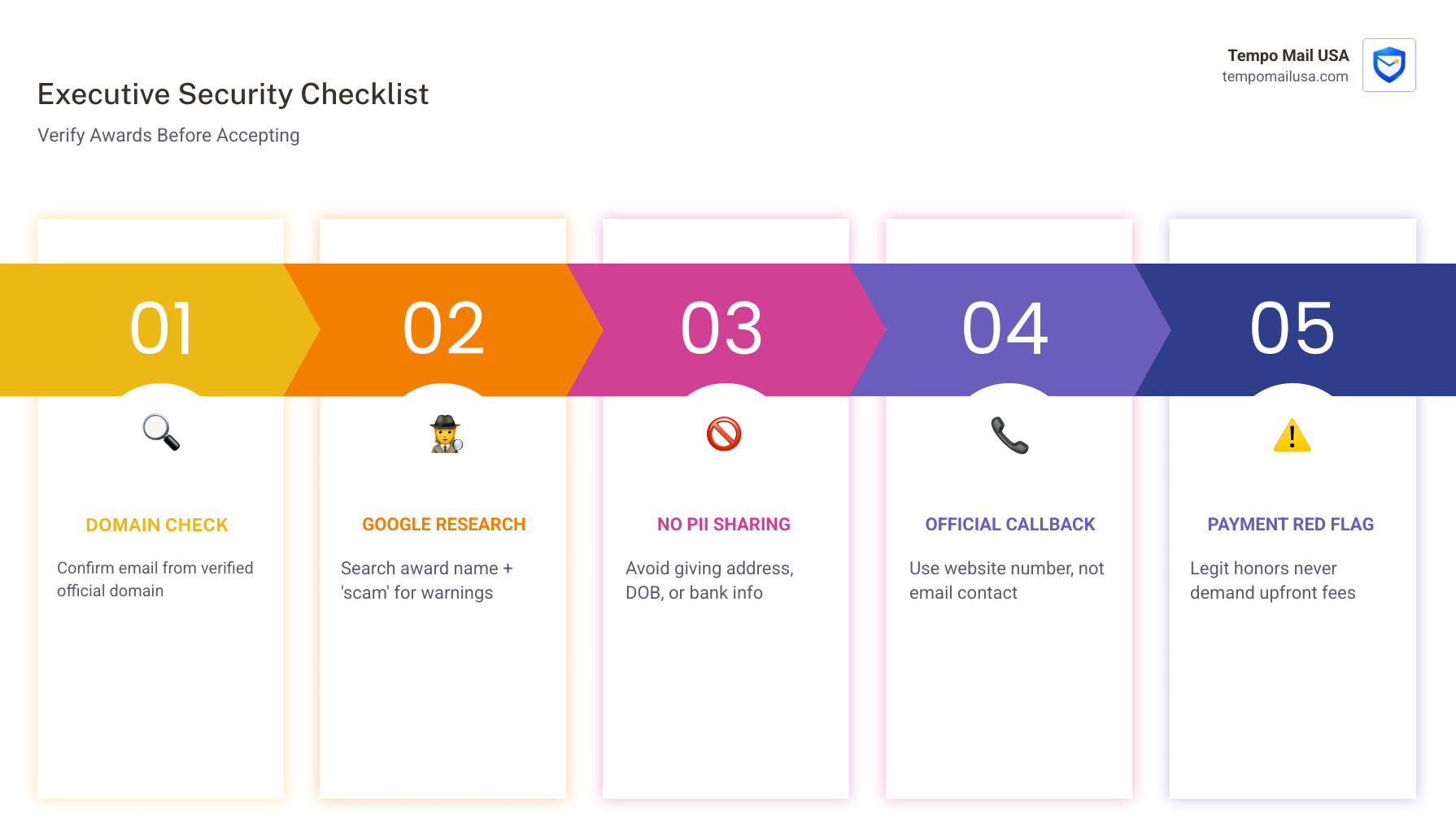
Before accepting any award or listing, run through this executive security checklist:
- Domain Authentication: Does the email come from a verified domain? (e.g., @marquiswhoswho.com, not @marquis-awards-office.net).
- Independent Research: Search the name of the award + "scam" on Google.
- No PII Disclosure: Never give your home address, date of birth, or banking info during an "interview."
- Verification Call: Call the organization back using a number found on their official website, not the number provided in the email.
Be especially careful with websites that look professional but are designed to harvest sensitive data. We've seen this with This Passport Website Looks Official But It's Taking People's SSNs, and "Who's Who" imposters use the exact same playbook.
Cybersecurity FAQ for Professional Recognition
Is Marquis Who's Who in America a scam?
Marquis is a legitimate historical entity, but it operates on a "vanity" model where inclusion is often tied to purchasing expensive directories or plaques. However, many outright "Who's Who in America" scams are impersonators using the name—which is in the public domain—to steal credit card info or sell non-existent honors. If you are asked for money upfront, it is likely a scam or a low-value vanity play.
How can I tell if a Who's Who invitation is fake?
Legitimate recognition never requires an upfront payment for the listing itself. If you are asked for a "processing fee," "shipping fee" for a free plaque, or a "membership fee" during a high-pressure phone interview, it is a scam. Authentic Marquis outreach typically happens through established professional channels and does not involve aggressive cold-calling or LinkedIn spam.
What should I do if I gave my credit card to a vanity publisher?
Immediately contact your bank to dispute the charges as fraudulent. You should also enroll in credit monitoring software and identity theft protection services to ensure your PII is not sold on the dark web. Change your passwords if you provided any login information during the "interview" process.
Why am I being targeted for these scams on LinkedIn?
Scammers use automated tools to scrape professional data, targeting people who list impressive titles or recent promotions. To prevent this, use a PII firewall and disposable email infrastructure like Tempo Mail USA to limit the exposure of your primary contact details. Adjust your LinkedIn privacy settings to hide your email address from everyone except your first-degree connections.
Conclusion
The who’s who in america scam thrives on our natural desire for professional validation. Whether it's a legitimate company pushing expensive "vanity" packages or a criminal syndicate using a public domain name to steal your identity, the risks are significant.
At Tempo Mail USA, we believe that the best defense is a strong offense. By using secure identity proxying, you take control of your digital footprint. Don't let your primary email address become a target for scammers and data harvesters. Use our temporary email aliases to vet every opportunity before you commit your real identity.
Stay vigilant, protect your PII, and remember: if an award requires you to pay for the "honor," the only one being honored is the scammer's bank account. For more strategies on building cybersecurity resilience, visit Tempo Mail USA and start protecting your professional identity today.