

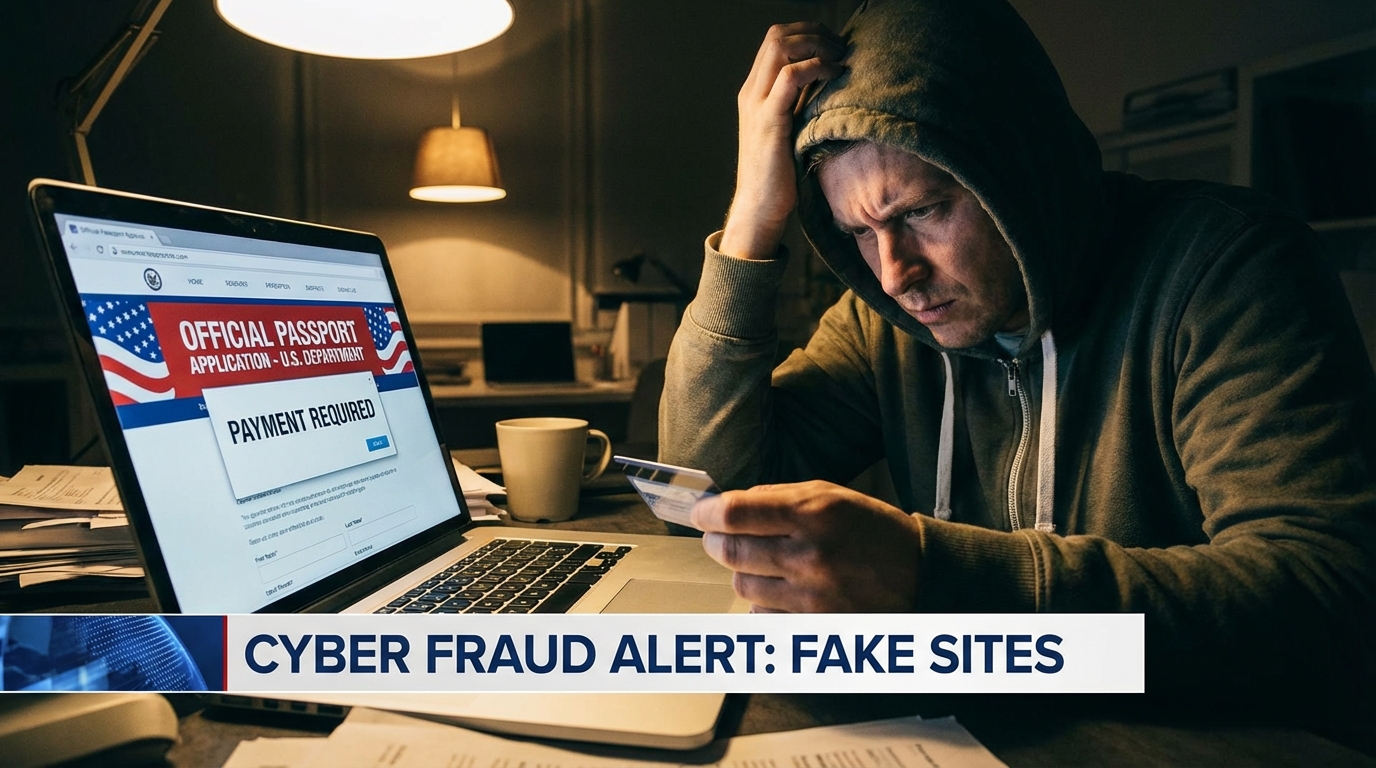

This Passport Website Isn’t Official — But People Are Treating It Like It Is
If you searched for passport renewal help and landed on a site called uspassportandvisa.org, you’re not the only one.
At first glance, it looks legitimate. Clean design, official colors, everything feels like a government portal.
It isn’t.
And people are handing over some of the most sensitive information they have because of it.
What the Site Actually Does
The site doesn’t issue passports.
It doesn’t speed up your application.
And it’s not connected to the U.S. government in any way.
What it does is simple: it charges you — usually somewhere between $60 and $130 — to fill out a form that is already available for free on the official government website.
After you pay, you get a basic PDF. Nothing more.
Why So Many People Fall For It
The timing is what makes it work.
Most people visit these sites when they’re in a rush — planning a trip, dealing with deadlines, trying to get documents done quickly.
So they click the first result they see.
Sites like this often appear at the top of search results, sometimes even above the real government page. Once you’re inside, the design does the rest.
Patriotic colors. Official-looking language. A process that feels structured and legitimate.
By the time you start entering your details, your guard is already down.
The Real Problem Isn’t the Money
Losing $80 or $100 is frustrating.
But that’s not the biggest risk here.
The real issue is the data.
To complete the form, users are asked for:
- Social Security numbers
- full legal names and birth dates
- home addresses
- passport details
- even parental information
That’s enough to build a full identity profile.
Once that information is submitted, you don’t know where it goes or how it’s used.
The One Rule That Would Have Prevented This
There’s a simple check that catches almost every case like this:
Official U.S. government websites use .gov domains.
Always.
If the site ends in anything else — .org, .com, .net — it is not an official government service.
The real passport site is travel.state.gov. Everything you actually need is there, and the forms are free.
The Details That Give It Away
Even though the site looks polished, there are small signs that something is off.
There’s usually a disclaimer somewhere on the page saying it’s a private company. It’s not obvious, but it’s there.
The domain itself is also new, which is common with sites like this. They appear, collect data, and disappear once complaints start building.
And then there’s the pricing. Government forms are free. Any site charging you just to access or fill them should raise a flag immediately.
If You Already Used the Site
If you entered your information, don’t ignore it.
Start by contacting your bank or card provider and monitoring your transactions. If you shared sensitive data like your Social Security number, it’s worth taking additional steps to protect your identity.
You can also report the incident through the Federal Trade Commission so it’s officially logged.
Why These Sites Keep Showing Up
They don’t rely on hacking.
They rely on timing and presentation.
People search, click quickly, trust what they see, and move on. That’s enough.
As long as that behavior doesn’t change, new versions of the same site will keep appearing.
Final Word
This isn’t a sophisticated scam.
It’s a simple one that’s executed well.
It looks official, charges for something free, and collects more information than it should.
That’s all it takes.
If you remember one thing, make it this:
If it’s not a .gov site, it’s not the government.