

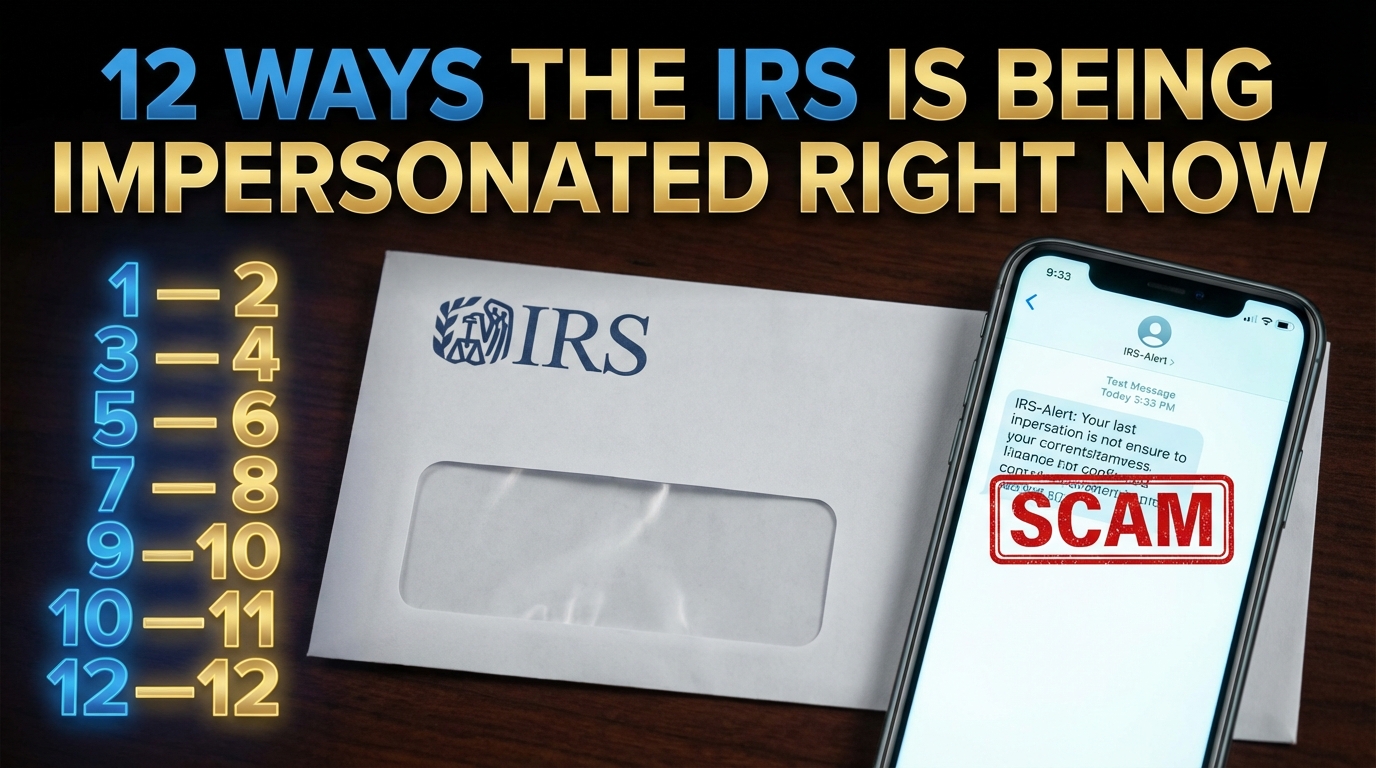

The IRS Dirty Dozen Scams Cost Taxpayers Billions — Here's What You Need to Know
IRS Dirty Dozen scams are the 12 worst tax scams the IRS warns Americans about every year. Here's a quick look at the full 2026 list:
- IRS impersonation by email and text (phishing and smishing)
- AI-enabled IRS impersonation by phone (robocalls, voice mimicry, spoofed caller ID)
- Fake charities soliciting donations and personal data
- Misleading tax advice on social media ("tax hacks" and bogus credits)
- Identity theft involving IRS Online Account access
- Abusive undistributed long-term capital gains claims (Form 2439)
- Bogus "Self-Employment Tax Credit" promotions
- Ghost preparers who refuse to sign your return
- Non-cash charitable contribution schemes with inflated appraisals
- Overstated withholding schemes using fake W-2s or 1099s
- Spear-phishing and malware campaigns targeting tax professionals
- Aggressive or misleading Offer in Compromise marketing
Tax scams aren't seasonal. They peak during filing season, but criminals run these schemes year-round.
The numbers make that clear. The IRS identified $4.5 billion in tax fraud in Fiscal Year 2025 — a staggering 111.8% increase from the year before. And that's just what was caught.
What's changed in 2026 is how scammers operate. AI voice cloning, deepfakes, QR codes in fake IRS emails, and over 600 social media impersonators detected in a single fiscal year — the tactics are getting harder to spot.
As IRS Commissioner Frank Bisignano has noted, thieves continuously adjust their pitches to exploit honest taxpayers. In other words, the scams evolve. Your defenses need to as well.
This article breaks down all 12 scams on the 2026 Dirty Dozen list and gives you concrete steps to protect your personal information, your refund, and your identity.
Understanding the 2026 IRS Dirty Dozen Scams
The "Dirty Dozen" isn't just a catchy name; it is an annual campaign by the IRS to highlight the most prevalent and dangerous tax schemes facing the public. This list is a core component of the Security Summit, a powerful partnership between the IRS, state tax agencies, and the private-sector tax industry. Together, we work to build a defensive wall around your data.
Why should we pay attention to this list right now? Because the scale of the threat is exploding. According to the Fiscal Year 2025 Annual Report released by IRS Criminal Investigation, authorities identified $4.5 billion in tax fraud. This represents a massive 111.8% increase from fiscal year 2024.
To combat this, the IRS spotlights these threats during events like National Slam the Scam Day (held annually on March 5). The goal is to remind everyone that while you have specific Taxpayer Rights, scammers are constantly trying to bypass those protections to get to your wallet. By staying informed, we can exercise our right to a fair and secure tax system.
The Evolution of IRS Dirty Dozen Scams in 2026
In 2026, the "old school" scams have received a high-tech makeover. We are no longer just looking for poorly spelled emails. Scammers are now using AI impersonation to create highly convincing messages and documents.
One of the most terrifying developments is voice mimicry. Using just a few seconds of audio, AI can clone the voice of an IRS agent—or even a loved one—to demand immediate payment. This is often paired with spoofed caller ID, making your phone display "Internal Revenue Service" when it’s actually a criminal calling from overseas.
We are also seeing a rise in the use of QR codes in phishing emails. These codes bypass many traditional email filters, leading you to fake websites designed to harvest your Social Security number. These digital threats mirror other high-stakes frauds we've seen recently, such as the Ponzi Scam 2026 $328M Crypto Fraud & AI Deepfakes, proving that deepfakes and AI are the new frontier for financial criminals.
Why the Dirty Dozen List Matters to Taxpayers
The Dirty Dozen list serves as a vital set of consumer alerts. It helps us recognize the psychological triggers scammers use—specifically fear and urgency. When we know what the common criminal tactics are, we can pause before clicking a link or giving out a PIN.
At its core, this list is about financial protection. By understanding these threats, we can implement better security habits, such as identity proxying—using tools like temporary email aliases to ensure our real primary email address (and the sensitive tax data attached to it) stays off the "sucker lists" sold on the dark web.
12 Critical Tax Scams to Avoid This Year
To protect ourselves, we first need to know the difference between a real IRS interaction and a fraudulent one.
| Feature | Legitimate IRS | Scammer Tactics |
|---|---|---|
| Initial Contact | Official letter via U.S. Mail | Unsolicited email, text, or DM |
| Payment Method | Direct Pay, check, or approved portal | Gift cards, wire transfers, crypto |
| Tone | Formal and provides appeal rights | Threatening, urgent, demands arrest |
| Social Media | Information only; no DMs | Direct messages offering "tax hacks" |
The 2026 list highlights several recurring nightmares. Phishing (fraudulent emails) and Smishing (fraudulent texts) remain the top entry points. These messages often claim your "account is on hold" or you have an "unclaimed refund" to bait you into clicking.
We must also be wary of fake charities. Scammers often exploit tragedies or natural disasters to solicit donations. Before giving, we should always use tools like Charity Navigator or the IRS Tax Exempt Organization Search to verify the group is legitimate.
Furthermore, the IRS is cracking down on non-cash contribution schemes and overstated withholding. These involve taxpayers being talked into claiming massive, inflated deductions for things like "syndicated conservation easements" or using fake W-2s to claim refunds they never earned. If a deduction sounds too good to be true, the IRS will likely flag it.
Spotting IRS Dirty Dozen Scams on Social Media
Social media has become a breeding ground for viral misinformation. We’ve all seen the videos: an "influencer" claims they found a "secret tax hack" that the government doesn't want you to know about. In reality, these are often illegal schemes that lead to audits, massive penalties, and potential criminal charges.
The IRS reported over 600 social media impersonators during fiscal year 2025. These accounts often mimic official IRS social media accounts to gain trust.
One major scam currently circulating is the promotion of bogus credits. For example, promoters are aggressively pushing a fake “Self-Employment Tax Credit.” They mislead gig workers and self-employed individuals into believing they qualify for huge pandemic-related payouts that simply don't exist in the way they are described. Always verify "viral" advice with a certified professional.
Red Flags of Shady Tax Preparers and "Ghost" Filing
Most tax professionals provide excellent service, but "ghost" preparers are a recurring fixture on the IRS dirty dozen scams list. A ghost preparer is someone who gets paid to prepare your return but refuses to sign it or provide a Preparer Tax Identification Number (PTIN).
By law, anyone who is paid to prepare or assist in preparing federal tax returns must have a valid PTIN and sign the return. If they don't, it’s a massive red flag.
Watch out for these signs of a dishonest preparer:
- They base their fee on a percentage of your refund.
- They ask you to sign a blank or incomplete return.
- They insist on being paid in cash only and don't provide a receipt.
- They direct your refund into their bank account instead of yours.
- They promise a "guaranteed" larger refund than other preparers.
Remember: You are legally responsible for everything on your tax return, even if someone else prepared it.
Advanced Protection Against Identity Theft and Fraud
Identity theft is the engine that drives many IRS dirty dozen scams. One of the best ways to protect ourselves is to take control of our digital footprint. We should all create an IRS Online Account directly at IRS.gov. By setting this up ourselves, we prevent a scammer from doing it in our name.
If you suspect your identity has been stolen—perhaps your return was rejected because someone else already filed using your Social Security number—head immediately to identitytheft.gov. This is the government's official one-stop resource to help you report and recover from ID theft.
Another warning sign is receiving a Form 1099-G for unemployment benefits you never applied for or received. This is a clear indicator that a criminal used your info to file a fraudulent claim. This type of "found money" fraud is common in complex schemes; for more on how these structures work, check out our guide on Ponzi Scam Explained: Meaning & Red Flags.
Defending Against IRS Dirty Dozen Scams Targeting Professionals
It’s not just individual taxpayers at risk; tax professionals are prime targets for spear-phishing. These are highly targeted emails that appear to be from a "new client" or a "document request" from a software provider.
Once the pro clicks a link, malware is installed on their system, allowing criminals to steal the data of hundreds of clients at once. This business identity theft is why the Security Summit emphasizes that tax offices must use multi-factor authentication and encrypted drives. As clients, we should ask our preparers about their security protocols before handing over our sensitive documents.
Avoiding Abusive Schemes and "Mills"
A new addition to the 2026 list involves abusive undistributed long-term capital gains claims using Form 2439. Scammers are fabricating these claims to trick the IRS into issuing refunds for taxes that were never actually paid.
We also see the continued rise of Offer in Compromise (OIC) "mills." The OIC is a legitimate program that allows taxpayers with severe financial hardship to settle their debt for less than they owe. However, unscrupulous "mills" aggressively advertise that they can wipe out your debt for "pennies on the dollar," charging you thousands in fees for a service you may not even qualify for.
Before paying a cent to a debt settlement company, use the IRS’s official Pre-Qualifier tool to see if you are actually eligible for the program. Don't let high-fee promoters exploit your financial stress.
Frequently Asked Questions about IRS Scams
How does the IRS typically contact taxpayers?
The IRS almost always starts the conversation with an official letter sent through the U.S. Postal Service. They do not send initial emails, they do not send text messages demanding immediate payment, and they definitely do not slide into your DMs on Instagram or X (formerly Twitter).
If you receive an unsolicited digital message claiming to be from the IRS, do not click any links. Instead, you should report it to the IRS by forwarding the email to [email protected].
What should I do if I receive a suspicious IRS phone call?
The best thing to do is hang up. Scammers use spoofed numbers to make it look like the call is coming from Washington, D.C.
The real IRS will never:
- Call to demand immediate payment using a specific method like a gift card, prepaid debit card, or wire transfer.
- Threaten to bring in local police or other law-enforcement groups to have you arrested for not paying.
- Demand that you pay taxes without giving you the chance to question or appeal the amount they say you owe.
To learn more about these specific red flags, visit the IRS page on how to recognize tax scams and fraud.
How can I report a suspected tax scam or fraudulent preparer?
If you encounter an abusive tax scheme or a preparer who is breaking the rules, you can use Form 14242, Report Suspected Abusive Tax Promotions or Preparers. You can also submit a tip through the official IRS website.
Keep all documentation of your interactions with the scammer, including emails, phone numbers, and any "contracts" they sent you. This information is vital for law enforcement to track down these criminals and prevent others from becoming victims.
Conclusion: Staying One Step Ahead of Fraudsters
The IRS dirty dozen scams are a sobering reminder that our financial data is under constant attack. As scammers adopt AI and sophisticated social media tactics, our best defense is a combination of education and privacy-first technology.
At Tempo Mail USA, we believe your primary email address shouldn't be a target. By using our temporary email aliases, you create a privacy firewall between yourself and the digital world. Think of it as secure identity proxying—you get the information you need without exposing your real PII (Personally Identifiable Information) to services that might be breached or sold to scammers.
Protecting your tax refund starts with protecting your data. Stay vigilant, use the official tools provided by the IRS, and consider an extra layer of digital security to keep your identity safe.
Visit https://tempomailusa.com to learn how we can help you stay off the scammers' radar this tax season and beyond.