



Spot and Prevent Coinbase Scams
Scams have moved beyond email — now many arrive as convincing text messages pretending to be Coinbase. This guide explains what a Coinbase text scam (smishing) looks like, how to tell real messages from fake ones, and the practical steps you can take to stay safe. Read through the red flags, defensive tips, and reporting actions so you can protect your account and personal data with confidence. According to the Federal Trade Commission (FTC), consumers reported losing over $10 billion to fraud in 2023, with cryptocurrency scams accounting for a significant portion of these losses. Staying informed is your strongest defense.
What Is a Coinbase Text Scam and How Does Smishing Work?
A Coinbase text scam tries to trick you into giving up sensitive details — like passwords or account info — by sending deceptive SMS messages. These attacks use smishing (SMS + phishing): scammers send texts that look official to get you to click malicious links or share private data. "The sophistication of smishing attacks has grown exponentially, making it harder for the average user to distinguish between legitimate and fraudulent communications," notes Dr. Evelyn Reed, a leading cybersecurity researcher at the Institute for Digital Trust. "Vigilance and education are paramount."
What defines smishing and its role in Coinbase scams?
Smishing targets people over SMS. Scammers write messages that mirror Coinbase’s tone and formatting and add pressure to act fast. A typical example says your account was compromised and directs you to a link to “verify” details. Because the message seems to come from a trusted brand, many people respond without double-checking. These attacks often leverage publicly available information or data breaches to personalize messages, increasing their perceived legitimacy.
Which social engineering tactics do scammers use in text scams?
Scammers rely on social engineering tactics to push victims into making mistakes. Common moves include:
- Urgency tactics: Texts claim immediate action is required to avoid account suspension or financial loss, creating panic-driven clicks. This often involves threats of irreversible account closure or asset forfeiture.
- Impersonation techniques: Messages mimic Coinbase support — logos, language, and formatting — to appear legitimate. They might even use spoofed sender IDs to make the text appear to come from a known Coinbase shortcode.
- Fear and Greed: Scammers exploit human emotions, either by instilling fear of loss or promising unrealistic gains (e.g., fake crypto giveaways or investment opportunities).
Knowing these tricks makes it much easier to spot scams before they do damage. Always question unsolicited messages, especially those demanding immediate action or offering something too good to be true.
How Can You Identify Fake Coinbase Text Messages?

Spotting a fake Coinbase text comes down to watching for clear warning signs. A few checks can tell you whether a message is safe or malicious. The Cybersecurity and Infrastructure Security Agency (CISA) consistently advises verifying the source of any suspicious communication.
What are the red flags in suspicious Coinbase texts?
When you get a text claiming to be from Coinbase, watch for these red flags:
- Suspicious links: Hover or preview URLs (don’t click). If the link doesn’t go to an official Coinbase domain (e.g., coinbase.com or wallet.coinbase.com), don’t follow it. Be wary of subtle misspellings or subdomains designed to look legitimate (e.g., coinbase-support.xyz).
- Urgent language: Any message pressuring you to act immediately or threatening loss is likely a scam. Legitimate financial institutions rarely use such aggressive tactics.
- Generic greetings: Coinbase typically uses your name. “Dear User” or vague salutations are warning signs. Scammers often lack specific account details.
- Grammar and Spelling Errors: While not always present, poor grammar or unusual phrasing can be a strong indicator of a scam.
- Requests for Personal Information: Coinbase will never ask for your password, 2FA codes, or full seed phrase via text or email.
These simple checks are effective first lines of defense. When in doubt, always navigate directly to the official Coinbase website or app to log in and check your account status.
How do real Coinbase messages differ from scam texts?
Genuine Coinbase texts usually have a few consistent traits:
- Official communication style: Clear, professional wording without frantic or aggressive tone. They adhere to strict brand guidelines.
- Specific account details: Authentic messages reference concrete account activity instead of vague claims, often including partial account numbers or transaction IDs.
- No requests for sensitive data: Legitimate messages will never ask you to click a link to "verify" your password or private keys.
- Consistent sender ID: Official Coinbase messages often come from a consistent, recognized shortcode or sender name.
When a text doesn’t match these patterns, treat it with caution and verify through official channels. Cross-referencing the message with your account activity on the official Coinbase platform is always recommended.
What Are the Best Coinbase Security Tips to Avoid Text Scams?
Protecting your Coinbase account means adding simple, reliable layers of security. Below are practical measures that reduce your risk, aligning with industry best practices for digital asset security.
How does two-factor authentication protect your Coinbase account?
Two-factor authentication (2FA) gives you a second checkpoint beyond your password — like a code from an authenticator app or a hardware key. Even if someone gets your password, they still need that second factor to access your account. Use an authenticator app (e.g., Google Authenticator, Authy) or a hardware security key (e.g., YubiKey) instead of SMS-based codes when possible. SMS 2FA is vulnerable to SIM swap attacks, making app-based or hardware 2FA significantly more secure. Coinbase strongly recommends these stronger 2FA methods.
How can temporary email reduce your digital footprint and scam risk?
Temporary email addresses can keep your primary inbox private and limit exposure. Using services like TempMail for sign-ups to non-critical services reduces the amount of personal data tied to your everyday email, which in turn lowers how often scammers target you. This strategy minimizes the attack surface for phishing and smishing campaigns, as your primary contact information remains protected from data breaches on less secure platforms.
Additional Proactive Security Measures:
- Strong, Unique Passwords: Use a password manager to create and store complex, unique passwords for all your accounts, especially Coinbase.
- Regular Software Updates: Keep your operating system, browser, and Coinbase app updated to benefit from the latest security patches.
- Enable Anti-Phishing Codes: Coinbase allows you to set an anti-phishing code that will be included in all legitimate emails from them, helping you distinguish real emails from fakes.
- Review Account Activity Regularly: Periodically check your Coinbase account for any unauthorized transactions or login attempts.
What Steps Should You Take If You Receive a Coinbase Scam Text?
If a text looks suspicious, act deliberately to protect yourself and others. Your swift action can prevent personal loss and contribute to broader scam prevention efforts.
How do you safely report and block suspicious Coinbase texts?
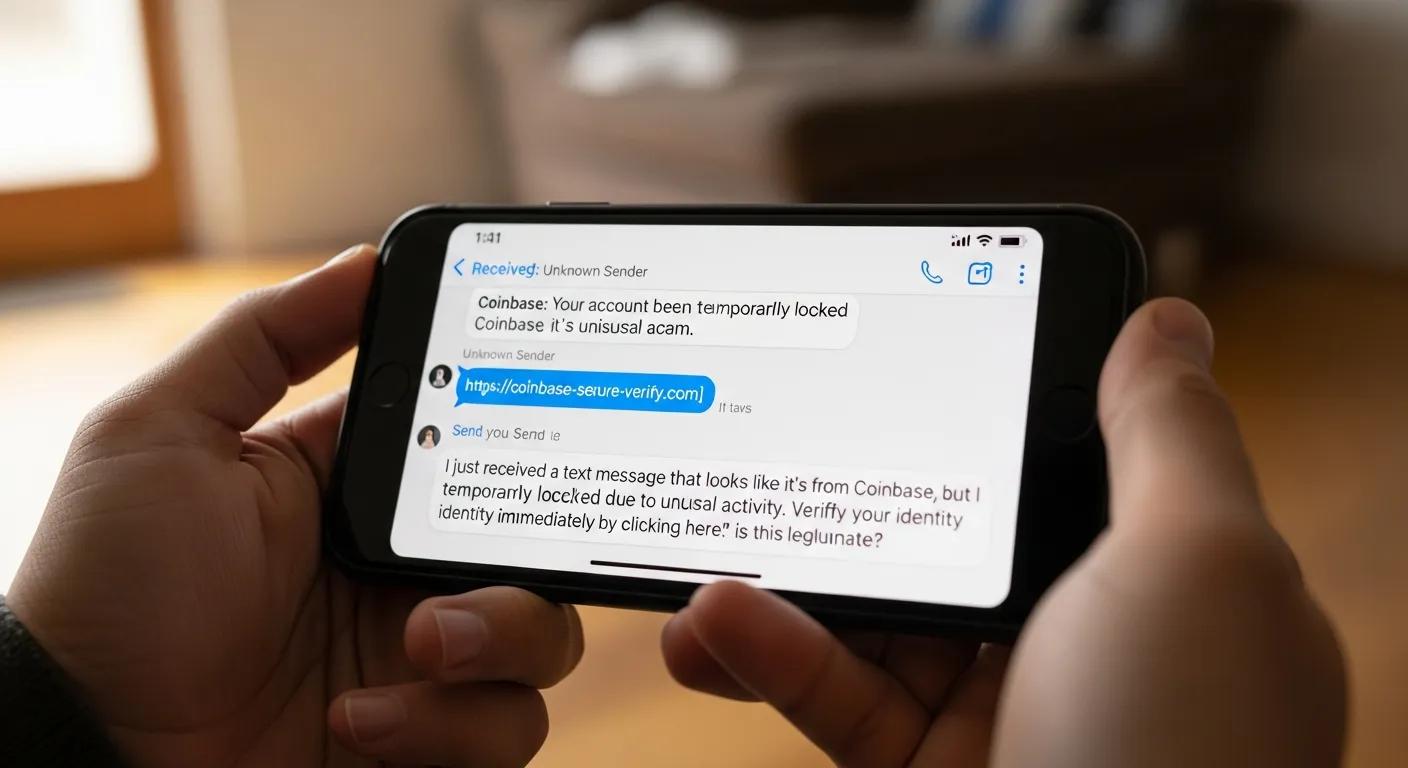
Forward suspicious texts to 7726 (SPAM) in the US to report them. This service is free and helps mobile carriers identify and block scam numbers. Then block the sender’s number to stop further messages. Reporting helps carriers and companies track and shut down scam campaigns, protecting the wider community. Additionally, report the scam attempt directly to Coinbase support through their official website, providing screenshots and details of the message.
What immediate actions prevent account compromise after a scam text?
If you clicked a suspicious link or shared information, take these steps right away:
- Disconnect from the Internet: If you clicked a link, immediately turn off Wi-Fi and mobile data to prevent any potential malware from communicating with its command and control server.
- Change your password: Create a strong, unique password for your Coinbase account and any other accounts that might share the same password.
- Enable 2FA: Turn on two-factor authentication (preferably using an authenticator app or hardware key) if you haven't already.
- Scan your device: Run a full antivirus and anti-malware scan on your device to detect and remove any malicious software.
- Monitor accounts: Keep a close watch on your Coinbase account and linked bank accounts for any unusual activity.
Acting quickly reduces the window attackers have to misuse your information and can significantly mitigate potential damage.
How Do You Recover Your Coinbase Account After a Scam or Compromise?
If your account has been compromised, move fast and follow Coinbase’s recovery process while documenting what happened. Time is critical in these situations.
What are the essential recovery steps for a compromised Coinbase account?
To regain control, do the following:
- Secure your account: Change your password immediately and revoke any unknown sessions or linked devices from your Coinbase settings. If you cannot access your account, use Coinbase's account recovery process.
- Notify Coinbase: Contact Coinbase support immediately to report the breach and request help recovering access. Provide them with all relevant details and evidence.
- Review transaction history: Scrutinize your transaction history for any unauthorized transfers.
- Secure other accounts: Change passwords for any other online accounts that share credentials or are linked to your Coinbase account (e.g., email, banking).
Quick, documented action improves your chance of a full recovery and helps Coinbase investigate the incident effectively.
When and how should you involve law enforcement and Coinbase support?
If you lost money, report the fraud to local law enforcement and provide all evidence. Also inform Coinbase support — they have procedures for fraud claims and may be able to help trace the issue. Keep records of messages, transactions, and communications to support any investigation. The more detailed information you can provide, the better the chances for investigation and potential recovery. Consider filing a report with the FBI's Internet Crime Complaint Center (IC3) if the loss is substantial.
What Are the Latest Trends and Types of Crypto Text Scams in 2025?
Scammers adapt fast. Staying current on trends helps you spot new tricks before they succeed. The landscape of cyber threats is constantly evolving, making continuous education vital.
How is AI enhancing the sophistication of Coinbase phishing texts?
Scammers increasingly use AI to craft messages that closely mimic legitimate communications — matching tone, phrasing, and formatting. AI-powered tools can generate highly convincing text, personalize messages at scale, and even mimic human conversation patterns, making some texts harder to distinguish, so rely on verification steps rather than style alone. This includes generating realistic fake websites and voice phishing (vishing) scripts.
What role do SIM swap attacks play in crypto text scams?
SIM swap attacks let criminals take control of your phone number and intercept SMS messages and calls. Because many accounts still offer SMS as a 2FA option, attackers can use SIM swaps to bypass that protection. Use carrier-level protections like SIM locking (a PIN on your SIM card) and prefer non-SMS 2FA where possible. These attacks are particularly dangerous for crypto accounts due to the irreversible nature of transactions.
Emerging Scam Vectors:
- QR Code Phishing (Quishing): Scammers embed malicious QR codes in emails or physical flyers that direct users to fake login pages.
- Deepfake Impersonations: While less common in text, deepfake technology is being used in video calls to impersonate trusted individuals for social engineering.
- Fake Crypto Investment Platforms: Sophisticated fake platforms that mimic legitimate exchanges, often promoted through social media or dating apps, leading to "pig butchering" scams.
The Broader Landscape: Regulatory Efforts and Industry Standards
Combating crypto scams is not just an individual responsibility; it's a collective effort involving regulators, exchanges, and technology providers. Understanding these broader initiatives can provide additional context and reassurance.
How are governments and financial institutions responding?
Governments worldwide are increasing regulatory scrutiny on cryptocurrency platforms to enhance consumer protection. This includes:
- Anti-Money Laundering (AML) and Know Your Customer (KYC): Stricter requirements for exchanges to verify user identities and monitor transactions to prevent illicit activities.
- Consumer Protection Laws: Development of specific legislation to protect crypto investors from fraud and market manipulation.
- International Cooperation: Law enforcement agencies are collaborating across borders to track and apprehend cybercriminals involved in crypto scams.
What role do crypto exchanges like Coinbase play in security?
Leading exchanges like Coinbase invest heavily in security infrastructure and user education:
- Advanced Security Protocols: Implementing multi-layered security, cold storage for assets, and continuous monitoring for suspicious activity.
- Dedicated Fraud Teams: Employing specialized teams to investigate and respond to scam reports.
- User Education Initiatives: Providing resources, guides, and warnings to help users identify and avoid scams.
- Partnerships with Law Enforcement: Collaborating with authorities to share intelligence and assist in investigations.
These efforts, combined with individual vigilance, form a robust defense against evolving scam tactics.
| Security Measure | Description | Effectiveness |
|---|---|---|
Two-Factor Authentication (2FA) | Requires a second verification step; use authenticator apps or hardware keys when you can for superior protection. | High (especially non-SMS 2FA) |
| Temporary Email Services | Limits exposure of your main email address by using disposable addresses for sign-ups to non-critical services. | Medium to High |
| SIM Locking / PIN | Adds carrier-level protections to prevent unauthorized SIM swaps, securing your phone number. | High |
| Anti-Phishing Code | A custom code set on Coinbase that appears in legitimate emails, helping you verify sender authenticity. | High (for email-based phishing) |
| Password Manager | Generates and securely stores strong, unique passwords for all your accounts, reducing credential stuffing risk. | High |
Understanding these threats and applying layered defenses makes it far less likely you'll fall victim to text-based scams. Stay proactive: vigilance plus a few good habits protects your information and funds.
Frequently Asked Questions
What should I do if I accidentally clicked a link in a scam text?
If you clicked a suspicious link, immediately disconnect from the internet (turn off Wi-Fi and mobile data) to limit further communication. Run a full antivirus and anti-malware scan on the device. Change passwords for any affected accounts (starting with Coinbase and your email), and enable two-factor authentication. Watch your accounts for unusual activity and report the incident to Coinbase and your internet/mobile provider if necessary. Consider backing up important data and potentially factory resetting your device if you suspect deep compromise.
Can I recover funds lost due to a Coinbase text scam?
Recovering stolen funds can be difficult, but not impossible. Contact Coinbase support right away and report the theft to local law enforcement (and potentially the FBI's IC3). Provide transaction records, screenshots of messages, and any other evidence related to the scam. While recovery isn’t guaranteed, prompt reporting gives you the best chance of assistance and helps authorities track down perpetrators. Coinbase may have internal procedures to assist in certain cases.
How can I educate others about Coinbase text scams?
Share clear examples and simple rules: never click unknown links, verify messages through official channels, and enable 2FA. Post tips on social media, talk to friends and family, or distribute short guides at community groups or workplaces to raise awareness. Emphasize the importance of skepticism and the "trust but verify" principle. Direct them to official Coinbase security resources.
What are the legal implications of receiving a scam text?
Receiving a scam text usually has no legal consequence for the recipient, but you should report it to help authorities. If you suffered financial loss, you may have grounds for legal action against the perpetrators if they can be identified — consult a lawyer and keep detailed records to support any claims or investigations. Law enforcement agencies actively pursue cybercriminals, and your report contributes to these efforts.
How can I protect my phone number from being targeted in scams?
Limit who sees your phone number, use privacy settings on social platforms, and consider a secondary number for public registrations. Ask your carrier to enable SIM locking or a PIN to prevent unauthorized swaps, and be careful about sharing your number with unfamiliar services. Regularly review your mobile carrier account settings for any suspicious changes. Avoid posting your phone number publicly online.
What are the signs that a text message is from a legitimate source?
Legitimate messages usually include your name, clear and professional language, and specific account information. They won’t demand urgent action or ask for passwords or PINs. They will typically come from a recognized shortcode or sender ID. If you’re unsure, contact the company directly using contact details from its official website rather than replying to the text or clicking any links within it. Always cross-reference information with official sources.
Conclusion
Coinbase text scams are common and constantly evolving, but you can stay ahead of them. By understanding the red flags, implementing strong protections like 2FA and temporary emails, and reporting suspicious messages right away, you build a formidable defense. Small, consistent security habits go a long way toward keeping your accounts and money safe. Remember, Coinbase will never ask for your password or 2FA codes via text or email. Always verify through official channels. Visit our resources for more practical tips on staying secure online and protecting your digital assets in an increasingly complex threat landscape.