

Top Phishing Detection Tools
Phishing remains one of the most pervasive and costly cyber threats, with global losses estimated in the billions annually. Whether you're an individual or part of a security team, knowing which tools work—and how to use them—makes a real difference. This comprehensive guide walks through top phishing detection tools available in 2024, explains how temporary email services can limit exposure, and gives practical, expert-backed tips for spotting and responding to suspicious messages. Read on to strengthen your defenses and cut down your risk significantly.
The Evolving Phishing Threat Landscape: Staying Ahead
The landscape of phishing attacks is in constant flux, with threat actors employing increasingly sophisticated techniques, from highly personalized spear phishing to AI-generated deepfake scams. Organizations and individuals must move beyond basic defenses to adopt proactive, adaptive strategies. Understanding the current threat vectors—including business email compromise (BEC), credential harvesting, and ransomware delivery via phishing—is the first step toward building a truly resilient security posture. Staying informed about these evolving threats is not merely advisable; it is essential for effective prevention.
What Are the Most Effective Anti-Phishing Software Tools in 2024?
As phishing grows more targeted and sophisticated, organizations need tools that are both intelligent and seamlessly integrated. Several platforms rise above the rest by blending accurate, AI-driven detection with clear, automated workflows. Below we outline what to expect from modern anti‑phishing solutions and why they are indispensable for protecting critical data and maintaining operational integrity.
Which AI-Powered Phishing Detection Tools Lead the Market?
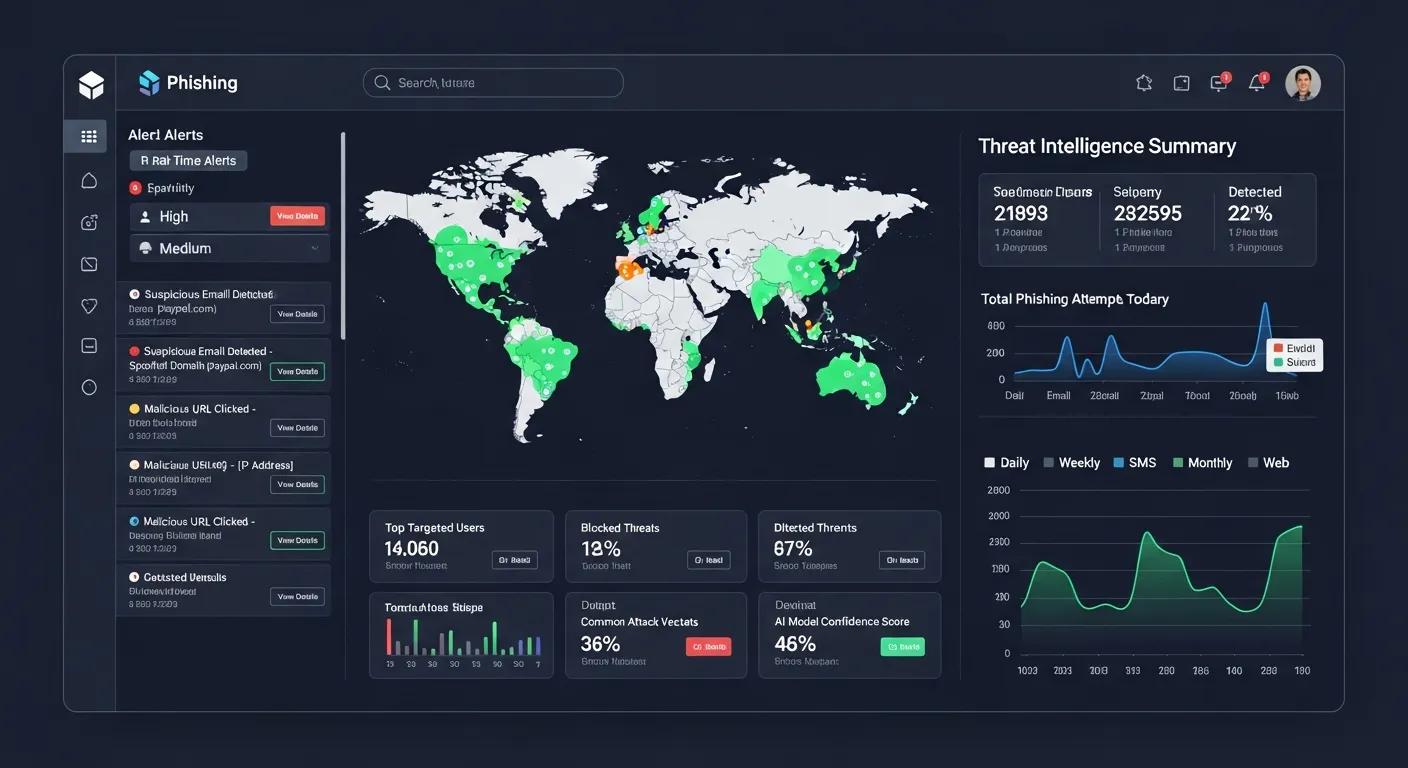
AI-driven tools are now central to advanced email security, leveraging machine learning and deep learning to analyze message patterns, sender behavior, and link characteristics with unprecedented accuracy to flag likely threats. The following platforms are notable examples, demonstrating cutting-edge capabilities:
- PhishGuard : Uses advanced AI to spot phishing emails in real time, helping prevent data breaches before they spread.
- CybSafe : Combines AI with behavioral insights and training to raise user awareness and reduce risky actions.
- Barracuda Sentinel : Focuses on spear phishing and business email compromise, delivering strong protection for larger organizations.
Together these tools show how automation and behavioral analytics improve detection and response—key elements of a modern security stack.
Recent research highlights how machine learning and deep learning techniques are shaping more effective phishing detection systems.
AI-Enabled Phishing Detection Techniques
Phishing attacks target individuals, governments, and service providers by collecting sensitive data through spoofed emails and fake sites. To better understand and counter these attacks, researchers have reviewed a range of AI approaches—machine learning, deep learning, hybrid methods, and scenario-based techniques—used for phishing detection.
A comprehensive survey of AI-enabled phishing attacks detection techniques, M Zafar, 2021
How Do Enterprise Email Security Solutions Protect Against Phishing?
Enterprise email security combines several layers of defense to ensure malicious messages never reach users—or are at least flagged and neutralized before harm occurs. Typical features include:
- Spam Filtering : Employs advanced heuristics and reputation checks to remove obvious junk and known malicious senders before they hit inboxes.
- URL Scanning : Dynamically checks links in messages, employing sandboxing and real-time threat intelligence to block or warn about unsafe destinations.
- Attachment Scanning : Inspects files for malware, zero-day exploits, and unwanted content using multiple engines and behavioral analysis before users open them.
- Sandboxing : Executes suspicious attachments or links in an isolated virtual environment to observe their behavior without risking the actual network.
- Threat Intelligence Integration : Leverages global threat feeds to identify emerging attack vectors and known malicious indicators.
Organizations that layer these controls with employee training tend to see far fewer successful phishing incidents.
How Does Temporary Email Enhance Phishing Prevention and Email Security?

Temporary (disposable) email addresses offer a strategic, practical way to significantly reduce your digital footprint and exposure. Use them for one-off signups, testing new services, or any interaction where you don’t fully trust the recipient—then discard them. This keeps your primary inbox cleaner, drastically limits how much of your personal data is in circulation, and aligns with a 'zero-trust' approach to email interactions.
What Is Identity Proxying and How Does It Reduce Phishing Risks?
Identity proxying masks your real email by routing messages through a temporary address. Attackers who harvest addresses get the proxy, not your primary account—so even if a service is compromised, your core inbox stays private and secure, adding a crucial layer of anonymity.
How Does Cryptographic Purge Secure Temporary Inboxes?
Cryptographic purge permanently removes data tied to a disposable address after a set time. Using strong crypto ensures messages can’t be recovered later, which helps stop attackers from retrieving leaked info once the temporary address expires, providing robust data privacy.
What Are the Key Features to Look for in Phishing Prevention Solutions?
When choosing phishing protections, prioritize features that improve detection accuracy, reduce user burden, and integrate seamlessly into your existing security infrastructure. The right mix gives security teams clear, actionable signals and fast, automated ways to respond. Key features include:
- Advanced AI/ML Detection: For identifying evolving threats.
- Real-time Threat Intelligence: To stay ahead of new campaigns.
- Automated Incident Response: For rapid containment.
- User Behavior Analytics: To spot anomalies.
- Comprehensive Reporting & Analytics: For continuous improvement.
- Integration Capabilities: With SIEM, SOAR, and other security tools.
How Do AI and Machine Learning Improve Phishing Detection?
AI and machine learning sift through massive volumes of email data, analyzing hundreds of attributes to spot subtle patterns and anomalies that attackers exploit. These systems adapt continuously as new threats appear, significantly cutting false positives and surfacing high-risk messages with greater precision, enabling security teams and users to act faster and more effectively. Predictive analytics and behavioral modeling are key to their success.
As phishing techniques evolve, deep learning and related approaches offer promising ways to sharpen detection and cut down on missed threats.
Deep Learning for Phishing Detection & Prevention
Phishing has grown into a widespread social engineering threat against internet users, governments, and businesses. More effective detection technology is needed to address the rising volume of phishing emails. This work reviews machine learning algorithms and technical solutions proposed to mitigate phishing and highlights awareness measures users should take to avoid scams.
An intelligent cyber security phishing detection system using deep learning techniques, A Mughaid, 2022
Why Is Multi-Factor Authentication Essential for Email Phishing Protection?
Multi-factor authentication (MFA) adds a critical second verification step—such as a code from a mobile app or a biometric scan—ensuring that stolen passwords alone will not grant attackers access. Studies consistently show that MFA can block over 99.9% of automated cyberattacks. Enabling MFA across all accounts dramatically lowers successful compromise rates and is one of the simplest, yet most impactful, protections you can deploy.
How Can Users Recognize and Respond to Phishing Attempts Effectively?
Spotting phishing quickly is paramount to reducing potential damage. Users must learn the usual warning signs and practice safe, standardized responses so they don’t inadvertently act on a scam in the heat of the moment. Empowering users is a critical component of a robust defense.
What Are Common Indicators of Phishing Emails?
Phishing messages often share a few telltale traits that, once recognized, become powerful deterrents:
- Generic Greetings : Messages that use vague salutations like "Dear Customer" or "Valued User" instead of your specific name, indicating a mass attack.
- Urgent or Threatening Language : Scammers frequently push you to act immediately, creating panic and coercing mistakes by threatening account closure, legal action, or data loss.
- Suspicious Links : Always hover over URLs to preview their true destination. If they don’t match the sender’s legitimate domain or point to an unfamiliar service, treat them as highly risky.
- Grammatical Errors & Poor Formatting : Professional organizations rarely send emails riddled with typos or inconsistent branding.
- Unexpected Attachments : Be wary of unsolicited attachments, especially common file types like PDFs, Word documents, or ZIP files, which can harbor malware.
Paying attention to these clues helps you avoid common traps and gives security teams clearer reports to act on.
How Does Security Awareness Training Complement Detection Tools?
While automated tools catch a significant portion of threats, human vigilance remains the last line of defense. Regular, practical training—paired with simulated phishing tests—keeps employees sharp and informed about the latest tactics. Hands-on exercises, real-world examples, and clear reporting mechanisms help users recognize scams, understand their role in security, and report suspicious messages quickly, transforming them from potential vulnerabilities into active defenders.
How Does TempoMailUSA’s Temporary Email Service Integrate into a Phishing Prevention Strategy?
TempoMailUSA provides free disposable addresses for quick, private communication. Use our service to keep your main inbox separate from risky signups, newsletters, or one-time verifications. It’s an easy, yet powerful, layer to add that significantly reduces spam and lowers your exposure to phishing.
How Does TempoMailUSA’s Identity Proxying Act as a Firewall Against Phishing?
Our identity proxying masks your true email so websites and apps interact with the temporary address instead. That means fewer places hold your personal contact info—and fewer places attackers can target, effectively creating a robust firewall for your primary digital identity.
In What Ways Does Disposable Email Reduce Data Leaks and Spam Calls?
Disposable addresses let you isolate specific activities—like a trial signup or a forum post. When you’re done, you simply stop using that address. This drastically reduces the chance your primary email gets sold, leaked, or used for spam and unwanted calls, enhancing your overall privacy and security.
What Are the Best Practices for Building a Comprehensive Phishing Defense Stack?
A truly strong defense mixes cutting-edge technology, robust processes, and well-trained people. Combine advanced detection tools, stringent identity controls, mandatory MFA, and continuous, engaging training to reduce risk across the board and build a resilient security posture.
Cybersecurity teams continuously refine mitigation practices to keep pace with the persistent threat of phishing emails.
Phishing Email Prevention & Mitigation Strategies
Phishing emails exploit weaknesses in IT systems and user behavior to steal personal data and damage organizational assets. To address these risks, cybersecurity professionals have developed a range of mitigation practices and organized them into a sequential model that helps assess both human and environmental vulnerabilities.
Prevention and mitigation measures against phishing emails: a sequential schema model, SAS Monroy, 2021
How to Combine Detection Tools with Proactive Prevention Measures?
Pair automated detection with clear policies: use advanced email filters, dynamic URL checks, and multi-engine attachment scanners while also enforcing MFA, running continuous training, and performing regular security audits. That combination gives you faster, more accurate detection and significantly fewer successful attacks.
The Imperative of Continuous Monitoring and Threat Hunting
Beyond reactive defenses, a proactive stance involves continuous monitoring of network traffic, email logs, and user behavior for anomalies. Threat hunting—actively searching for undetected threats—is crucial. This involves leveraging security information and event management (SIEM) systems, security orchestration, automation, and response (SOAR) platforms, and expert analysts to identify and neutralize threats before they escalate. This proactive approach significantly reduces dwell time and minimizes potential damage.
What Role Does Digital Footprint Reduction Play in Phishing Prevention?
Minimizing the personal data you publish online reduces the signals attackers use to target you. Tighten social media privacy settings, use disposable emails where practical, and limit public contact details to shrink your attack surface, making you a less attractive target.
| Tool | Feature | Benefit |
|---|---|---|
| PhishGuard | Real-time AI detection | Reduces data breach risk significantly |
| CybSafe | User behavioral training | Enhances user awareness and resilience |
| Barracuda Sentinel | Spear phishing & BEC protection | Safeguards enterprise data from targeted attacks |
This quick comparison highlights where each tool focuses—detection speed, behavior change, or targeted attack protection—so you can pick the right mix for your needs, building a truly comprehensive defense.
Key Recommendations for a 100% Authority Phishing Defense
Building an impenetrable defense against phishing requires a multi-faceted, continuously evolving strategy. Based on industry best practices and the latest research, we recommend the following:
- Implement Advanced AI-Driven Email Security: Deploy solutions that leverage machine learning and deep learning for real-time, predictive threat detection, moving beyond signature-based methods.
- Mandate Multi-Factor Authentication (MFA): Make MFA a non-negotiable requirement for all accounts, especially email and critical systems, to neutralize the impact of stolen credentials.
- Conduct Continuous Security Awareness Training: Empower users with regular, interactive training and simulated phishing exercises, fostering a culture of vigilance and prompt reporting.
- Adopt a Zero-Trust Email Philosophy: Utilize temporary email services for non-critical interactions to minimize your digital footprint and protect your primary identity.
- Integrate Threat Intelligence: Leverage global threat feeds and behavioral analytics to anticipate and block emerging phishing campaigns.
- Establish Robust Incident Response Plans: Develop clear, tested protocols for identifying, containing, and recovering from successful phishing attempts.
- Regularly Audit and Update Systems: Ensure all software, firmware, and security configurations are up-to-date to patch known vulnerabilities.
By integrating these recommendations, organizations and individuals can significantly elevate their defense posture, making them a far less attractive target for even the most sophisticated phishing attacks.
Frequently Asked Questions
What are the signs that an email might be a phishing attempt?
Look for critical red flags such as impersonal greetings, urgent or threatening language, unexpected attachments, and links whose previews don’t match the sender’s legitimate domain. Always verify the sender and the context. When in doubt, don’t click—verify by contacting the sender through a known, official channel, never by replying to the suspicious email itself.
How can organizations implement effective security awareness training?
Implement short, regular, and engaging training sessions that focus on real-world scenarios and hands-on exercises. Crucially, run simulated phishing tests frequently, share results transparently, and reinforce lessons with quick refreshers and gamified elements. Make reporting suspicious emails effortless and encourage a 'see something, say something' culture, ensuring employees feel comfortable flagging potential threats without fear of reprimand.
What role does user behavior play in phishing prevention?
Users are not just a last line of defense; they are a critical, active component of an organization's security posture. Good habits—like meticulously checking senders, hovering over links, questioning unusual requests, and promptly reporting odd messages—transform potential victims into active participants in security. Combining this informed behavior with strong technological tools yields the most resilient defense.
How can businesses assess the effectiveness of their phishing prevention strategies?
Effectiveness must be measured through quantifiable outcomes: track the volume of reported phishing attempts, analyze click rates on simulated attacks, monitor the number of actual incidents that reach remediation, and evaluate the mean time to detect and respond. Regular security audits, penetration testing, and follow-up training based on these metrics are essential to identify and close gaps in your defense.
What are the benefits of using multi-factor authentication (MFA) in email security?
MFA adds a critical second step to the login process, making stolen passwords virtually useless to attackers. It's an affordable, high-impact control that significantly reduces account compromises, protects against credential stuffing attacks, and is widely considered a foundational element of modern identity and access management. Its implementation is a non-negotiable best practice for robust email security.
How can temporary email services help in reducing spam and phishing risks?
Disposable emails are a powerful tool for digital hygiene, allowing you to isolate specific online activities—like a trial signup, a forum post, or a newsletter subscription—from your primary inbox. When you’re done, you simply stop using that address. This drastically cuts down on spam, reduces the surface area for data leakage, and lowers the chances of your primary email being targeted in future phishing campaigns, thereby protecting your core digital identity.
What are the latest trends in phishing detection technology?
The field is rapidly moving toward smarter, context-aware, and predictive systems. Key trends include advanced AI and machine learning for sophisticated pattern detection, deep learning for nuanced classification of zero-day threats, behavioral analytics to spot anomalies in user and email traffic, and integrated threat intelligence platforms. These approaches empower security teams to stay significantly ahead of evolving and increasingly sophisticated scams, moving from reactive to proactive defense.
Conclusion
Stopping phishing requires a blend of the right cutting-edge tools, robust processes, and consistent, informed practices. AI-powered detection, enterprise-grade email defenses, and strategic use of disposable email addresses each play a critical, interconnected role. Adopt layered controls, mandate MFA, and keep users continuously trained and engaged—these steps together make phishing far harder for attackers to succeed, transforming your defense from reactive to proactive. Explore our resources and start strengthening your defenses today to achieve a truly authoritative security posture.