
Anatomy of a Smishing Attack: How DMV Scam Texts Work in 2026
To beat a scammer, we first need to understand their playbook. These attacks are technically known as "smishing"—a mashup of "SMS" and "phishing." In 2026, these attacks have become remarkably sophisticated, moving far beyond the misspelled, clunky messages of the past. A proactive way to defend your mobile device is by utilizing a PII firewall like TempoMailUSA, which prevents your personal data from being leaked to the databases scammers use to find their targets. By shielding your primary contact info, you stop the threat before it even reaches your screen.
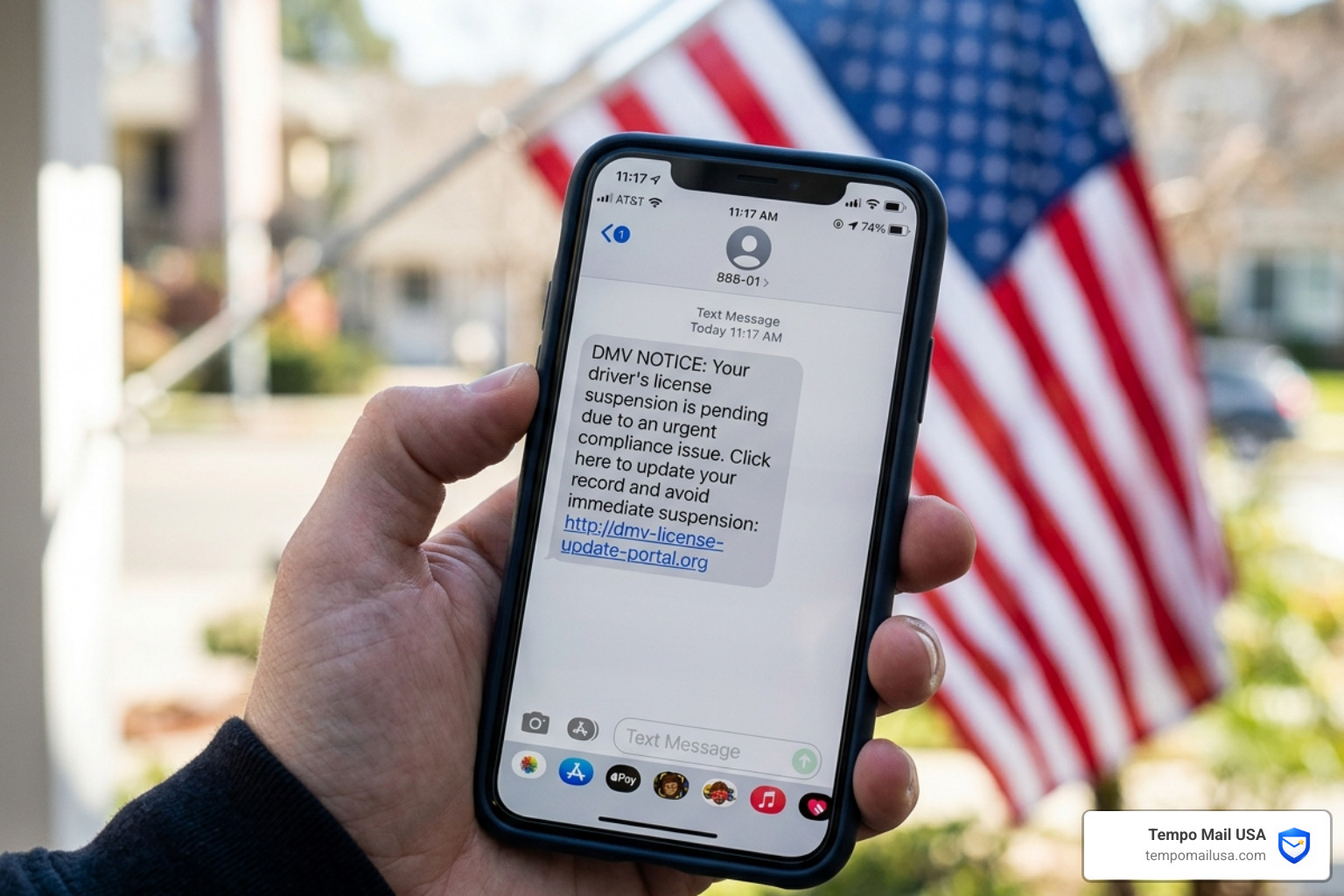
The core of a smishing attack is social engineering. Scammers aren't hacking your phone; they are hacking your emotions. By creating a sense of extreme urgency, they hope you will click a link before your logical brain has a chance to intervene. According to experts, these messages often prey on fear—the fear of losing your driving privileges or facing legal "prosecution."
As we've seen in recent reports, these messages are often part of a broader wave of DMV scam texts: How to spot and avoid fake messages. They often follow a predictable pattern:
- The Hook: A notification about a problem (unpaid toll, expired registration, or license suspension).
- The Threat: A consequence if you don't act (legal action, 35% service fees, or credit score damage).
- The Bait: A clickable link that looks official but leads to a credential-harvesting site.
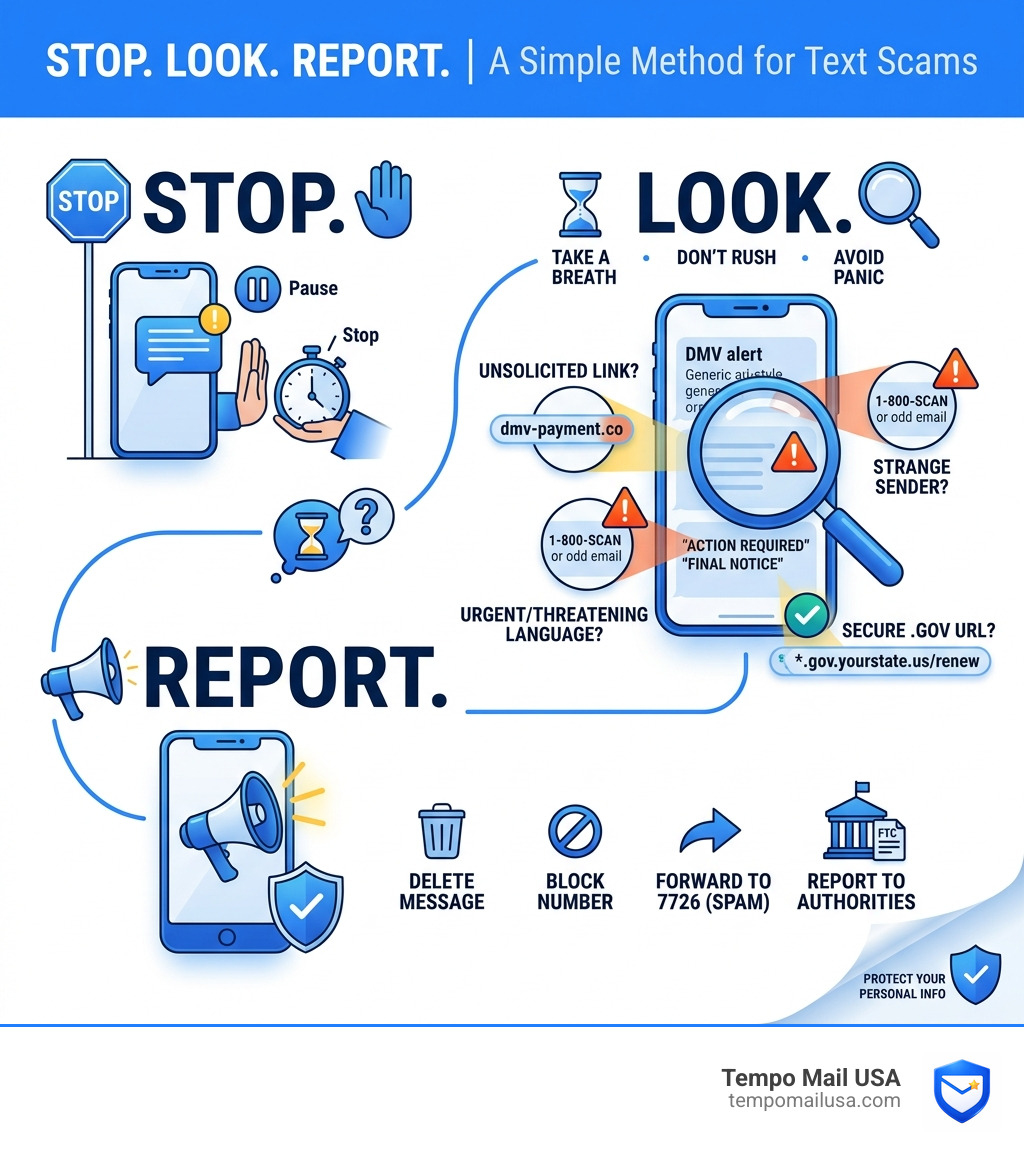
Understanding how to spot a DMV text scam is your first line of defense. If a text makes your heart race, it’s likely a scam.
Identifying DMV Scam Text Messages: How to Avoid Phishing Alerts and Protect Personal Information USA
When you receive a text, look for these specific red flags. Scammers are good, but they almost always leave "digital fingerprints" that give them away.
- Fake URLs: This is the biggest giveaway. A legitimate state agency will almost always use a
.govdomain. Scammers use look-alike domains likedmv-notice-ca.comorstate-tolls-ny.org. They may even use URL shorteners (like bit.ly) to hide the destination. - Generic Greetings: Official agencies usually have your name on file. If a text starts with "Dear Citizen" or "Valued Driver," be wary.
- Threatening Language: "Final Notice," "Immediate Action Required," or "Warrant for Arrest" are classic tactics. The real DMV doesn't threaten to arrest you via a text message.
- Unexpected Origin: If you live in Texas but get a message about a New York toll, or if the area code is from out of the country, it’s a fraud.
For example, the TX DMV scam text explained: How it works & red flags highlights how scammers specifically target Texas drivers with fake registration renewal links. Interestingly, some scammers aren't even great at geography—there have been reports of the MN DMV scam text targeting people in Minnesota, despite the fact that Minnesota’s agency is actually called the DVS (Driver and Vehicle Services), not the DMV!
Common Scenarios: Tolls, Tickets, and REAL ID
Scammers rotate their "scripts" based on what is currently in the news or what people are most likely to believe. In 2026, we are seeing three main categories of dmv scam text messages how to avoid phishing alerts and protect personal information USA:
- The Unpaid Toll/E-ZPass Scam: This is the most common. You get a text saying you missed a toll and owe a small amount (usually under $10). It’s a low enough amount that many people just pay it to "make the problem go away," handing over their credit card info in the process.
- The Traffic Violation Scam: The FTC has warned that that text about an overdue traffic ticket is probably a scam. These texts claim you have an outstanding ticket that will result in license suspension if not paid immediately.
- The REAL ID Compliance Scam: Since REAL ID requirements are a major point of confusion for many drivers, scammers send texts claiming your documents were rejected or you need to "verify your identity" by uploading your Social Security card and birth certificate to a fake portal.
Even public figures aren't immune; the SCDMV scam even targeted a professional traffic reporter who knew exactly what to look for!
DMV Scam Text Messages: How to Avoid Phishing Alerts and Protect Personal Information USA
The best way to protect yourself is to adopt a "Zero Trust" policy for your smartphone. If you didn't go to the DMV website and request a text, you should assume any message you receive is fraudulent.
Verification Through Official Channels
If you receive a text and you're worried it might be real, never use the contact information provided in the message.
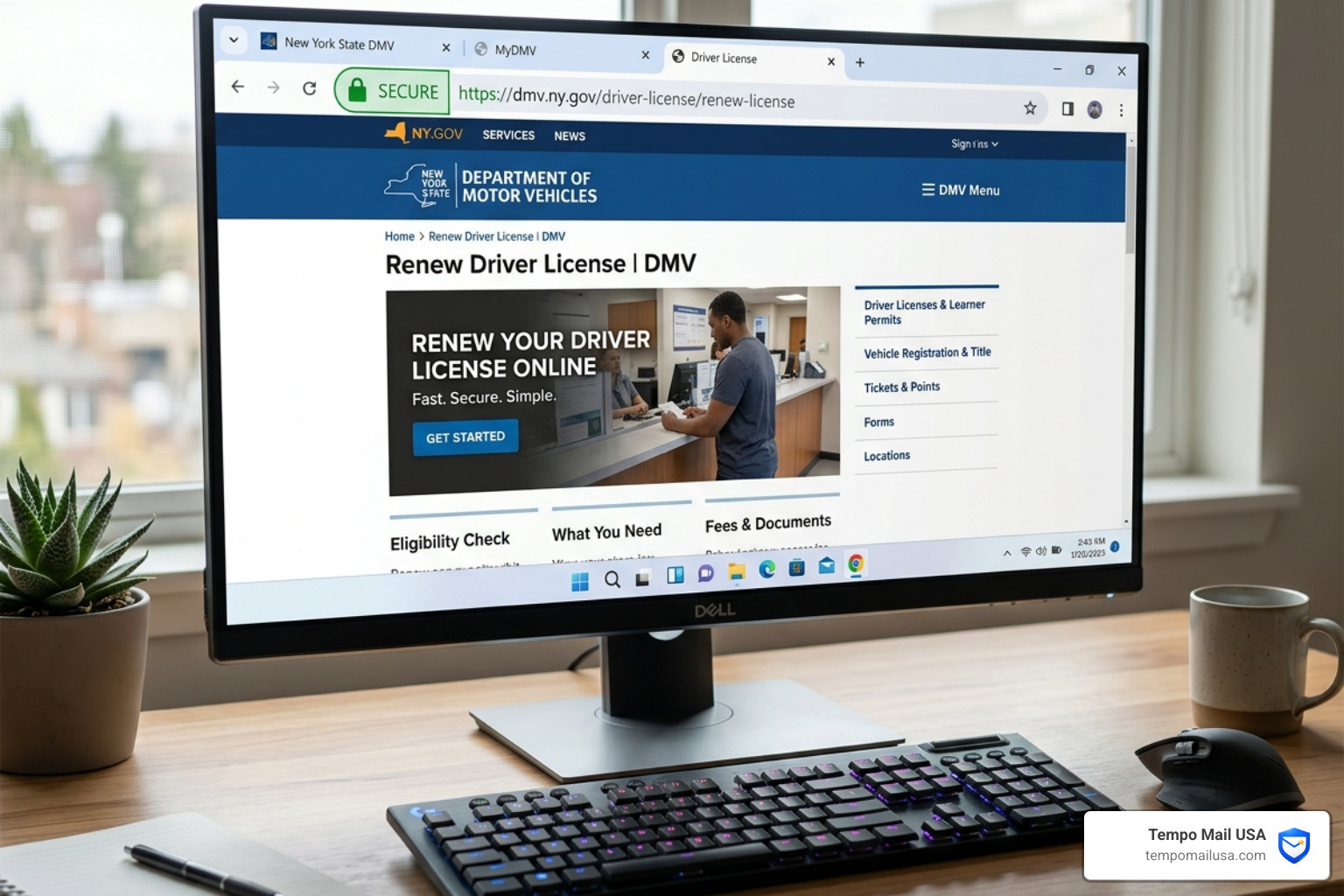
- Go to the Source: Open your browser and manually type in your state's official DMV website (e.g.,
dmv.ca.govorncdot.gov). - Use the Official Portal: Log into your driver's account using your established credentials. If you truly owe money, it will be listed in your official dashboard.
- Call the Official Number: Find the customer service number on the back of your driver's license or the official
.govsite.
States like California have issued a DMV scam alert specifically stating they will never ask for personal or financial information via text. Similarly, the Georgia DDS text scam reminds residents that the agency does not send payment links through SMS.
Reporting DMV Scam Text Messages: How to Avoid Phishing Alerts and Protect Personal Information USA
Reporting these texts doesn't just protect you; it helps authorities shut down the scammers' infrastructure.
- Forward to 7726: This is a universal "spam" reporting number for all major US carriers (AT&T, Verizon, T-Mobile). Forward the scam text to 7726. It’s free and helps your carrier block the sender.
- Report to the FTC: Use ReportFraud.ftc.gov. This data is used by law enforcement to track scam trends nationwide.
- The IC3 (FBI): If you have lost money, file a report with the Internet Crime Complaint Center.
We recommend following the how to report phishing email in USA and how to report phishing emails in 5 easy steps guides, as the process for reporting text-based phishing (smishing) follows very similar logic.
Immediate Recovery Steps for Compromised Data
If you’ve already clicked a link or entered your information, don’t panic—but do act fast.
- Freeze Your Credit: Contact the three major bureaus (Equifax, Experian, TransUnion) to place a credit freeze. This prevents scammers from opening new accounts in your name.
- Change Your Passwords: If you entered a password on a fake site, change that password on all other accounts where you use it. We recommend using a password manager to create unique, complex passwords.
- Monitor Financial Statements: Look for small "test" charges on your credit card.
- Remove Your Info: Use guides on how to remove personal info from the internet to reduce your "digital footprint" so scammers have a harder time finding your phone number in the first place.
Learning how to spot phishing emails can also help you identify the "follow-up" scams that often happen once a scammer has your initial contact details.
Proactive Defense: Tools and Verification Strategies
Staying safe in 2026 requires a mix of common sense and the right technology. When deciding how to protect your mobile identity, comparing official protocols against scammer tactics is the first step in building your defense.
| Feature | Official DMV Communication | DMV Scam Text Tactics |
|---|---|---|
| Link Domain | Always ends in .gov | Ends in .com, .net, or .org |
| Payment Method | Secure portal or official mail | Direct links to "pay now" via credit card |
| Urgency | Provides 30-60 days to respond | Demands action in "24 hours" |
| Language | Professional and neutral | Threatening, alarming, or poor grammar |
| Personal Info | Never asks for SSN via text | Asks for SSN, DL#, or Bank info |
To add an extra layer of security, we recommend using a reputable VPN like NordVPN. A VPN can help block known malicious websites and "phishing" domains before they even load on your phone, acting as a real-time filter for suspicious links.
Using a PII Firewall for Digital Privacy
The reason you are getting these texts is that your phone number and email are likely floating around on "lead lists" sold on the dark web. At TempoMailUSA, we believe the best way to stop a scam is to never let the scammer get your real information in the first place.
We provide temporary email aliases that act as a PII (Personally Identifiable Information) Firewall. When you sign up for services, newsletters, or apps that might eventually sell your data, you can use temporary email for safe online sign-ups. This is a powerful alternative to using your permanent, sensitive contact details for every digital interaction.
If that alias starts receiving "DMV" spam, you can simply delete the alias. Your real inbox stays clean, and your real identity remains shielded. You can find more info about temporary email services and how they protect your digital life on our blog. By choosing a temporary solution for non-essential sign-ups, you effectively starve scammers of the data they need to target you.
State-Specific Warnings and Official Portals
Scammers often tailor their messages to your location. Here are some specific state-level warnings to be aware of:
- Illinois: The Secretary of State has warned that they only send texts for appointment reminders, never for payments or "verification."
- New York: The DMV has noted a massive spike in E-ZPass and toll-related phishing.
- Texas: Scammers are frequently using the "unpaid registration" angle. See the Texas DMV scam alert for more details.
- Indiana: The BMV (Bureau of Motor Vehicles) has warned about texts claiming your "credentials need updating." Check the Indiana BMV text scam guide for specific examples.
Frequently Asked Questions about DMV Scam Texts
Does the DMV ever send text messages for payment?
No. While some state DMVs may send text alerts for appointment reminders or registration renewal notifications, they will never ask you to make a payment directly through a link in a text message. Legitimate payments are always handled through a secure, official .gov portal that you log into yourself.
How can I tell if a DMV link is legitimate?
A legitimate link will almost always end in .gov. Before clicking, long-press the link (on most smartphones) to see a preview of the actual URL. If it looks like a string of random characters or points to a .com or .org site, it is a scam. When in doubt, ignore the link and type the official DMV address into your browser manually.
What should I do if I clicked a link in a DMV scam text?
If you clicked the link but didn't enter info, close the tab and run a malware scan on your phone. If you did enter personal or financial information, immediately:
- Contact your bank to freeze your cards.
- Place a fraud alert on your credit reports.
- Change the passwords for your email and banking accounts.
- Report the incident to ReportFraud.ftc.gov.
Conclusion
The rise of dmv scam text messages how to avoid phishing alerts and protect personal information USA is a reminder that our digital identities are constantly under fire. Scammers are clever, but they rely on you being in a hurry. By taking a breath, looking for the red flags, and using tools like TempoMailUSA to shield your real data, you can stay one step ahead of the fraudsters. Our temporary email services provide the ultimate defense, ensuring that even if a database is breached, your primary identity remains untouched.
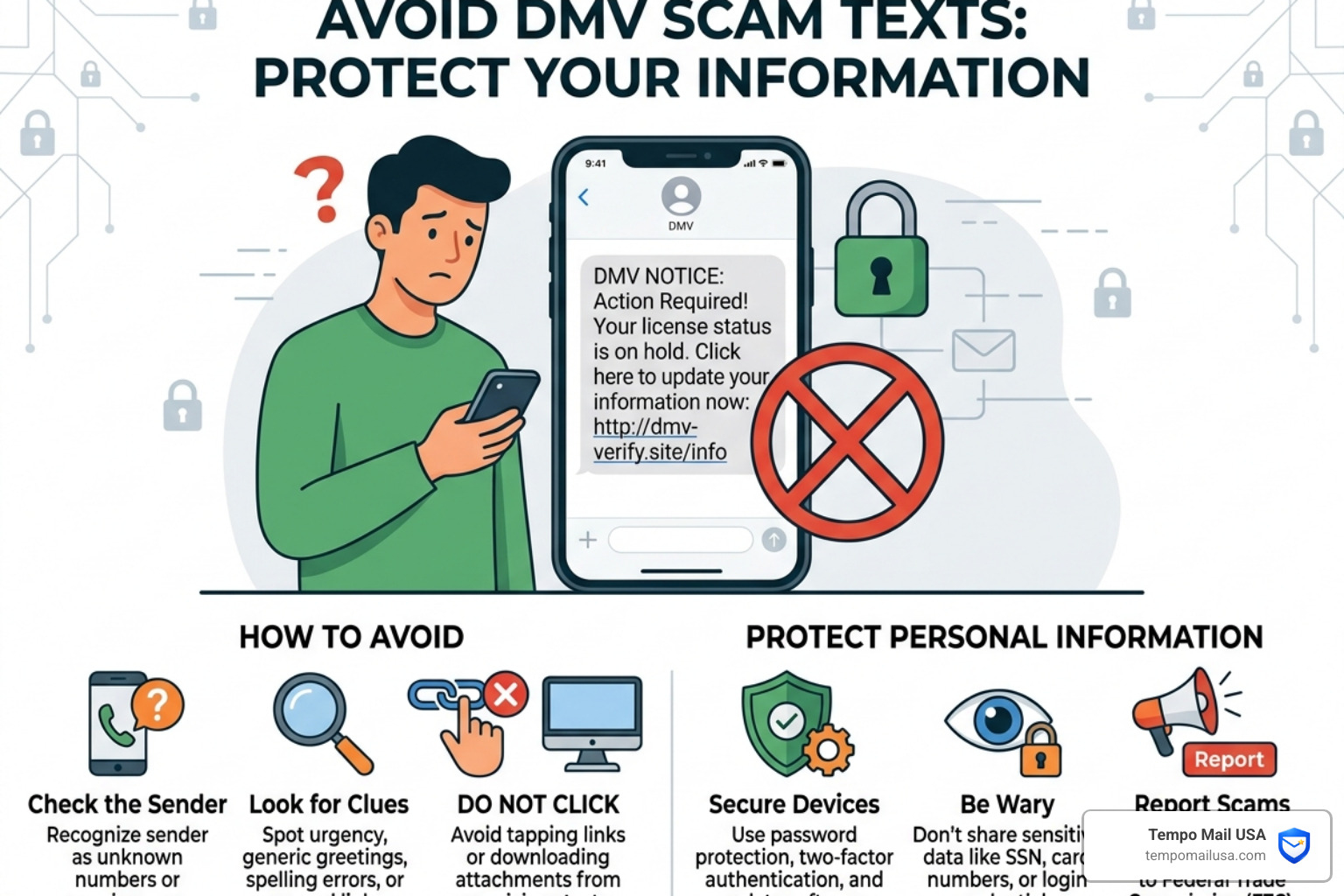
Protecting yourself isn't just about deleting a single text; it's about building a "PII Firewall" around your life. Stay vigilant, verify everything, and never let a "Final Notice" text ruin your day.