

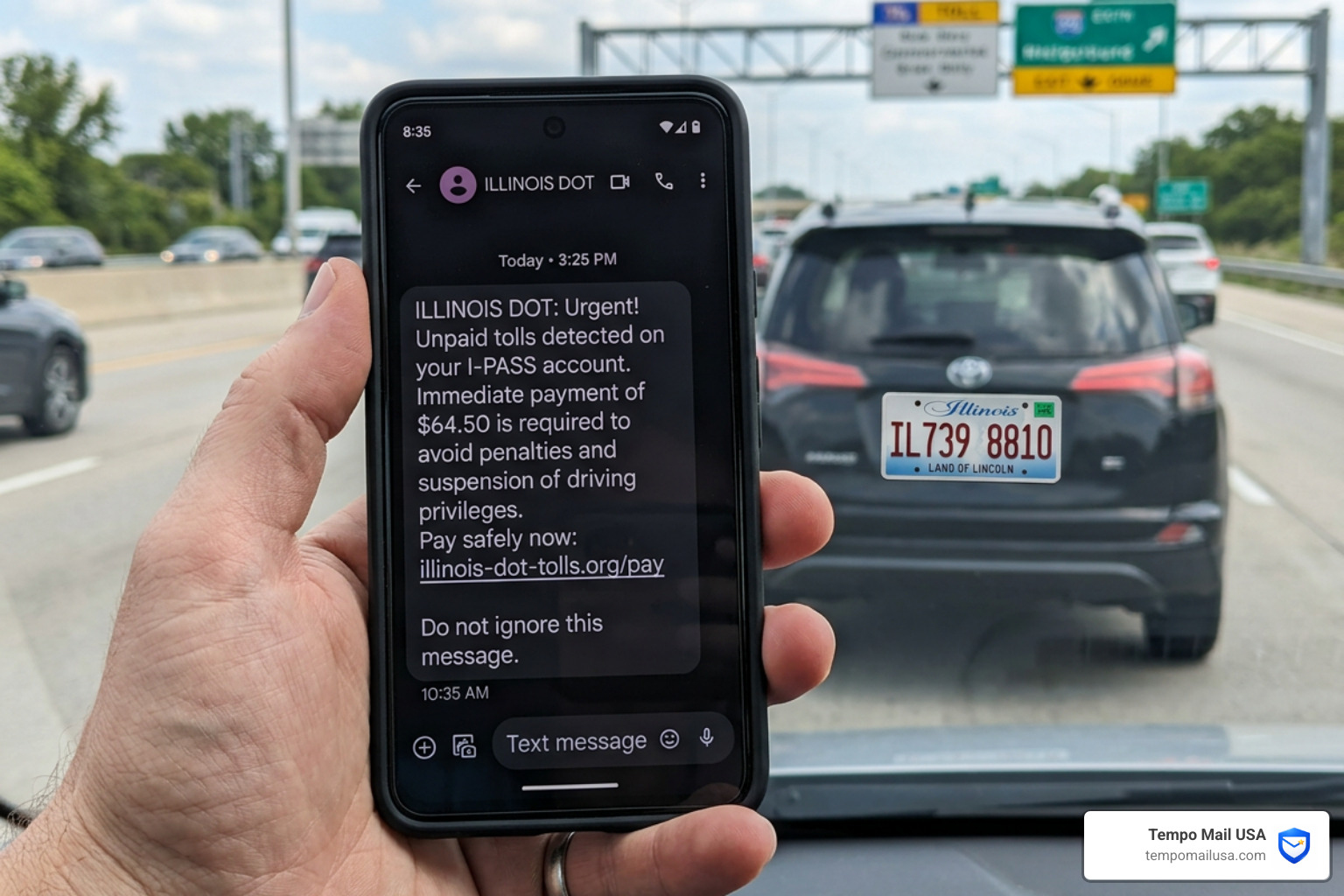

The Illinois DOT Text Scam Is Targeting Illinois Drivers Right Now
The Illinois DOT text scam is an active phishing scheme where criminals send fake text messages pretending to be from the Illinois Department of Transportation (IDOT), the Illinois Tollway, or the Illinois DMV — demanding payment for unpaid tolls, traffic tickets, or other fines.
Here's what you need to know at a glance:
- What it is: Fake texts impersonating IDOT or the Illinois Tollway demanding money
- What the texts claim: You owe unpaid fines, tolls, or traffic ticket fees
- The threat: License suspension, legal action, or additional penalties if you don't pay immediately
- The truth: IDOT does not send unsolicited texts — all legitimate notices arrive by mail
- What to do: Do not click any links. Delete the message immediately.
These scam texts are spreading fast. When IDOT posted a public warning on Facebook, it was shared over 60 times and received at least four comments from people who had just received one — with one commenter writing "I got one just this morning."
That's how active this scam is right now.
If you're privacy-conscious, this scam is especially dangerous. Clicking a link in one of these messages can expose your personal information — or worse, install malware on your device. And the tactics these scammers use are getting harder to spot.
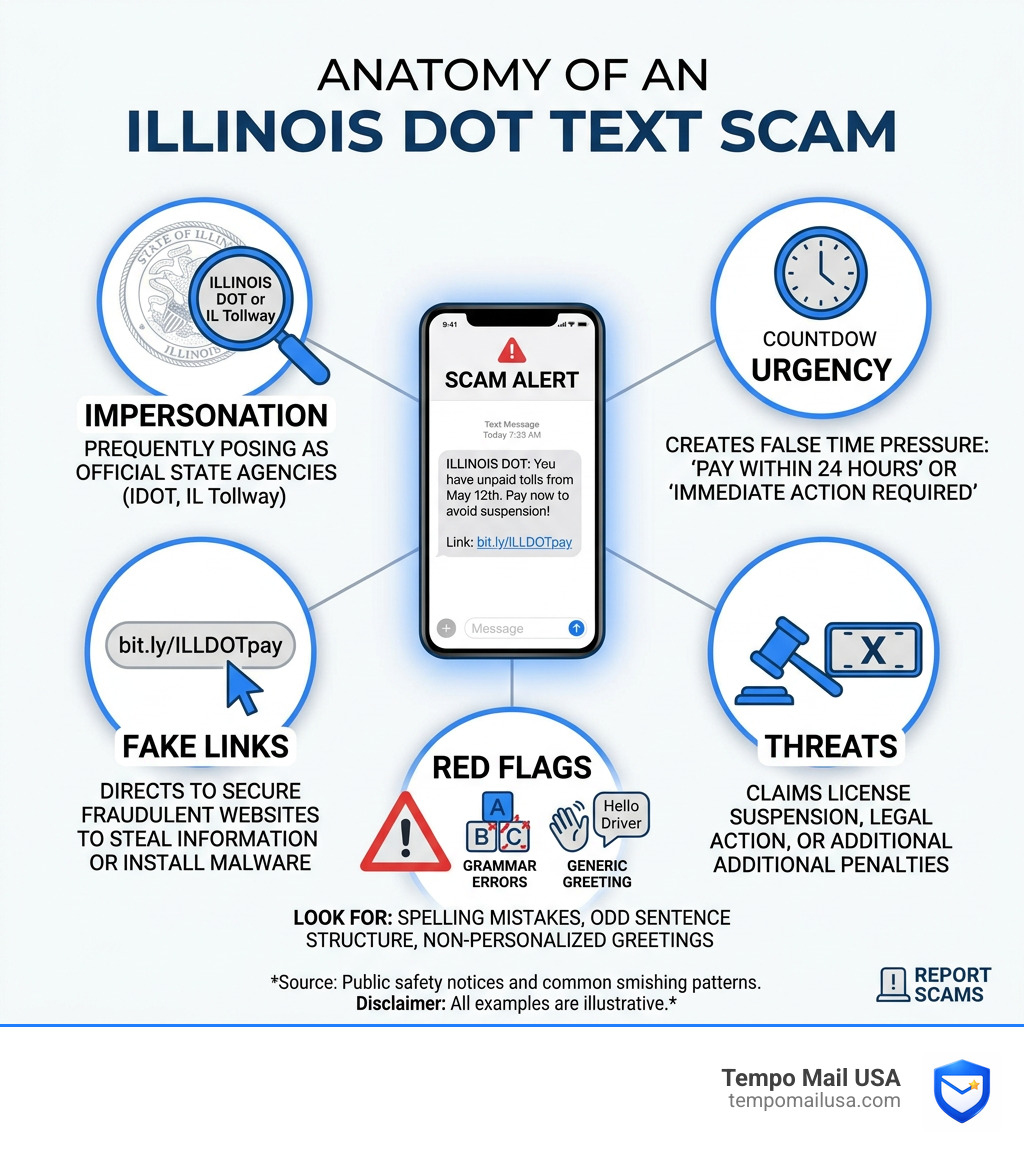
Understanding the Illinois DOT Text Scam
The Illinois DOT text scam is a classic example of "smishing"—a portmanteau of SMS and phishing. In this scheme, scammers cast a wide net, sending hundreds of messages simultaneously to Illinois area codes. Their goal is simple: to trick you into believing you have an outstanding debt with the state.
These criminals aren't just after a few bucks for a "toll violation." They are hunting for your most sensitive data. By impersonating a trusted state agency like the Illinois Department of Transportation, they create a false sense of authority. They claim you owe money for traffic tickets, toll violations, or various unpaid fines.
According to reports, including a Scam alert issued for fake Illinois DOT text messages, the messages often look incredibly professional. They might use official-sounding language or even include a link that looks like it belongs to a government website. However, the reality is that IDOT and the Illinois Tollway operate under strict communication protocols that do not include unsolicited texting.
To help you distinguish between a real notice and a fraud, we’ve put together a comparison of how the state actually communicates versus how scammers operate.
| Feature | Legitimate IDOT/Tollway Notice | Fraudulent Text Message |
|---|---|---|
| Delivery Method | Official U.S. Mail (Paper) | SMS/Text Message or Unsolicited Email |
| Payment Link | Directs to official .gov or illinoistollway.com sites | Uses shortened or suspicious links (e.g., idot-online.com) |
| Personal Info | Already has your info; doesn't ask for SSN via text | Asks for SSN, DOB, or banking details |
| Urgency | Provides a reasonable window for response | Demands "Immediate Action" or "Pay within 24 hours" |
| Threats | Outlines legal process clearly | Uses aggressive threats of "Enforcement Penalties" |
How the Illinois DOT Text Scam Operates
The engine that drives the Illinois DOT text scam is psychological manipulation. Scammers know that if they give you time to think, you’ll realize the message is fake. That’s why they lean heavily on urgency and coercion.
A typical message might be labeled as a "Final Notice." It might claim that "Enforcement Penalties Begin on [Date]" or warn that your "records show you still have an outstanding traffic ticket." To make the stakes even higher, they often threaten the suspension of your driver's license or vehicle registration. For many of us, the thought of losing our ability to drive is terrifying, which is exactly what the scammer wants. They want you to panic and click the link before you can verify the claim.
This isn't a localized issue, either. Similar tactics have been seen in other regions, such as the ezpass-scam-text-60000-reports-and-counting and the unifin-text-scam-exposed-what-you-need-to-know. These scams all share a common DNA: high-pressure language designed to bypass your critical thinking.
Common Tactics Used in the Illinois DOT Text Scam
Once a victim clicks the link in a Illinois DOT text scam message, they are usually directed to a "spoofed" website. This site is designed to look exactly like an official Illinois government portal. Here, the scammers employ several dangerous tactics:
- Identity Theft Harvesting: The site will ask for sensitive information like your Social Security number (SSN), birthdate, and driver's license number under the guise of "verifying your identity."
- Financial Fraud: You will be prompted to enter banking information or credit card details to pay the "fine." This gives the scammers direct access to your funds.
- Malware Links: In some cases, simply clicking the link can trigger a background download of malware onto your smartphone. This software can track your keystrokes, steal passwords, and monitor your private communications.
The state has been very clear about these tactics. As noted in the report IDOT Warns about Text Message Scams, the department will never request personal information like banking details or passwords via text. These tactics are also mirrored in other financial frauds, such as the cnfi-usa-loan-text-scam-what-you-need-to-know, where urgency and fake portals are used to strip victims of their PII (Personally Identifiable Information).
Official Verification and Safe Practices
If you receive a message and you're worried that you actually do owe a fine, do not use the link provided in the text. There are safe, official ways to verify your status without putting your identity at risk.
First, the Secretary of State and IDOT primarily use the mail for official notifications. The Secretary of State's office has clarified that they only send text messages for appointment reminders. They do not send texts regarding your driver’s license status or vehicle registration.
If you suspect you have unpaid tolls, the safest course of action is to:
- Go directly to the official Illinois Tollway website.
- Log into your I-PASS account.
- Check your "Pay By Plate" or violation history within the secure portal.
By going directly to the source, you bypass the scammers entirely. This "verify at the source" method is the gold standard for avoiding smishing, whether you're dealing with the flhsmv-scam-text-what-florida-drivers-must-know or the utah-louisiana-dmv-scam-text-do-not-click.
How to Report Fraudulent Activity
Reporting these scams is vital. It helps law enforcement track the "campaigns" and take down the fraudulent websites. If you've encountered the Illinois DOT text scam, here is who you should contact:
- Federal Trade Commission (FTC): You can Report phishing attempts to the FTC. This helps the federal government build cases against large-scale scam operations.
- FBI Internet Crime Complaint Center (IC3): This is the primary hub for reporting digital crimes. Filing a report here helps the FBI track the technical infrastructure scammers use.
- Illinois Attorney General: You can contact the Consumer Fraud Hotline. They provide specific resources for Illinois residents and can help if you believe your identity has already been compromised.
Learning how-to-report-bogus-emails-safely-gmail-outlook and following a report-phishing-attack-your-guide-to-outsmarting strategy can significantly reduce the impact of these criminals on our community.
Frequently Asked Questions about IDOT Scams
Does IDOT send text messages for fines?
No. According to an official Press Release regarding IDOT scams, the Illinois Department of Transportation does not send unsolicited text messages or emails to collect payments. All legitimate notices regarding traffic tickets, tolls, or fines are sent through the Official U.S. Mail. If you receive a text message demanding money for a fine, it is a scam 100% of the time.
What should I do if I clicked a link in a suspicious text?
If you've already clicked the link, don't panic, but act quickly:
- Disconnect: Turn off your Wi-Fi and cellular data to stop any potential malware from communicating with a server.
- Scan for Malware: Use a reputable mobile security app to scan your device.
- Reset Passwords: If you entered any credentials, change your passwords immediately from a different, clean device.
- Monitor Credit: If you shared your SSN or banking info, contact your bank and place a fraud alert on your credit reports with Equifax, Experian, and TransUnion.
Who is most at risk for these scams?
While anyone can be a target, scammers often focus on the elderly. Police departments, including the McHenry County Sheriff’s Office, have specifically asked the public to warn elderly family members about these texts. Scammers rely on the fact that some seniors may be less familiar with smishing tactics and more likely to trust a message claiming to be from a government authority. Additionally, new Illinois residents who are unfamiliar with how the state handles tolls and tickets may also be more vulnerable.
Conclusion
The Illinois DOT text scam is a persistent threat, but it's one we can beat with a little bit of knowledge and the right tools. Scammers rely on the fact that our phone numbers and email addresses are often floating around the public web, making us easy targets for their fraudulent messages.
At Tempo Mail USA, we believe the best way to stop a scam is to prevent the scammer from reaching you in the first place. By using temporary email aliases, you can create a "PII firewall" that shields your personal information. When you use an alias for services or sign-ups, your real identity remains hidden. If an alias starts receiving spam or phishing attempts, you can simply delete it—cutting off the scammer's access to you forever.
Protecting your identity in the digital age requires staying alert and staying safe. Don't let a fake text message ruin your day or your credit score. Protect your identity with Tempo Mail USA and take control of your digital privacy today.