

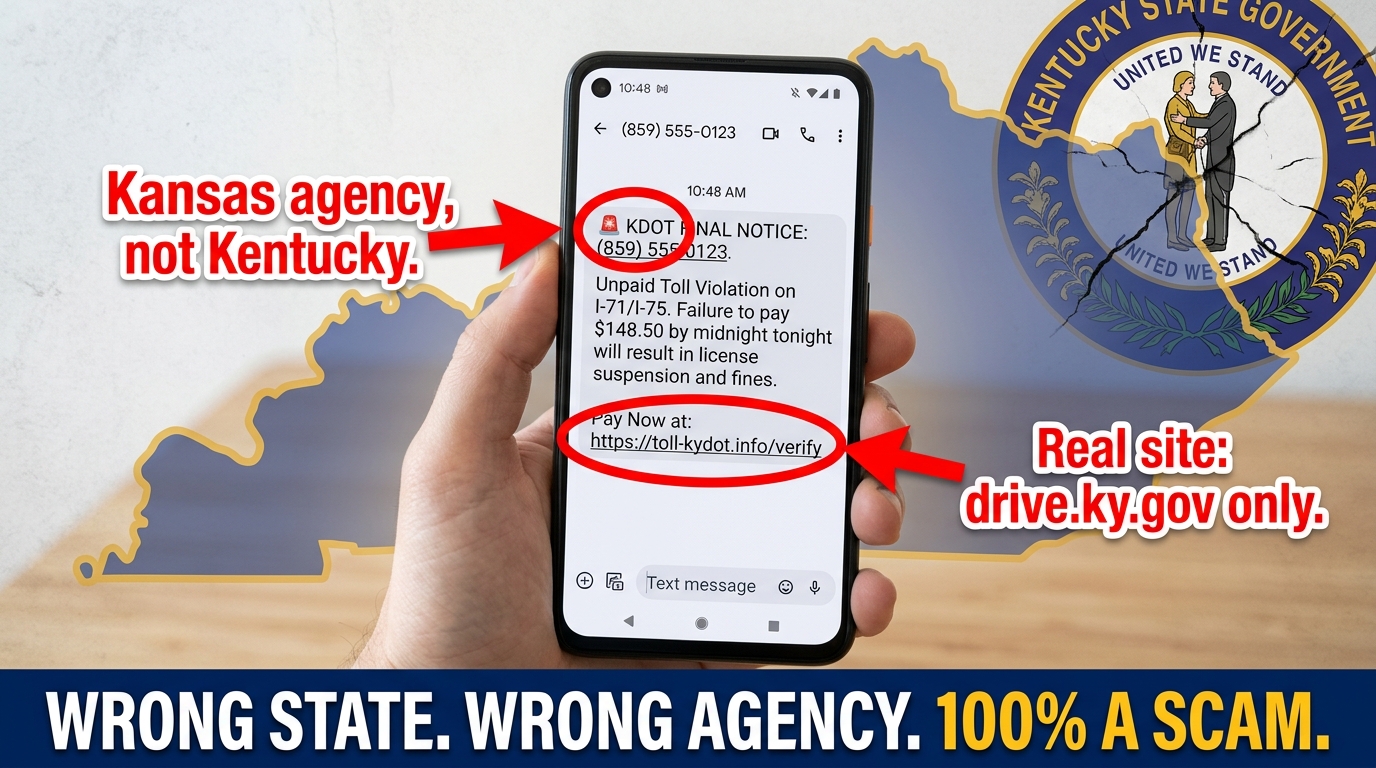

Kentuckians Are Being Targeted by a Growing Government Impersonation Scam
The Kentucky transportation cabinet scam is an active SMS phishing scheme where fraudsters send fake text messages pretending to be the Kentucky Transportation Cabinet (KYTC), threatening residents with suspended driving privileges or unpaid fines unless they click a link and pay immediately.
Here's what you need to know right now:
- It's a scam. KYTC does not send text messages to collect fees or notify you of violations — ever.
- Don't click any links in texts claiming to be from KYTC, a tolling agency, or a "DMV."
- Red flag terms: If the text says "KDOT," "DMV," or "DOT," it's not from Kentucky's real transportation agency.
- The official website for Kentucky motor vehicle and driver services is drive.ky.gov — any variation with hyphens or the word "pay" is fraudulent.
- Report it by forwarding the text to 7726 (SPAM) and filing a complaint at ic3.gov, reportfraud.ftc.gov, or ag.ky.gov.
Multiple waves of these scam texts have hit Kentucky residents — first as fake unpaid traffic ticket warnings, then evolving into fake toll violation notices. Governor Andy Beshear has publicly warned about the scheme, and KYTC has been actively working to take down the fraudulent websites behind it.
The stakes are real. If you click the link and enter your personal or payment information, you could face identity theft and financial fraud.
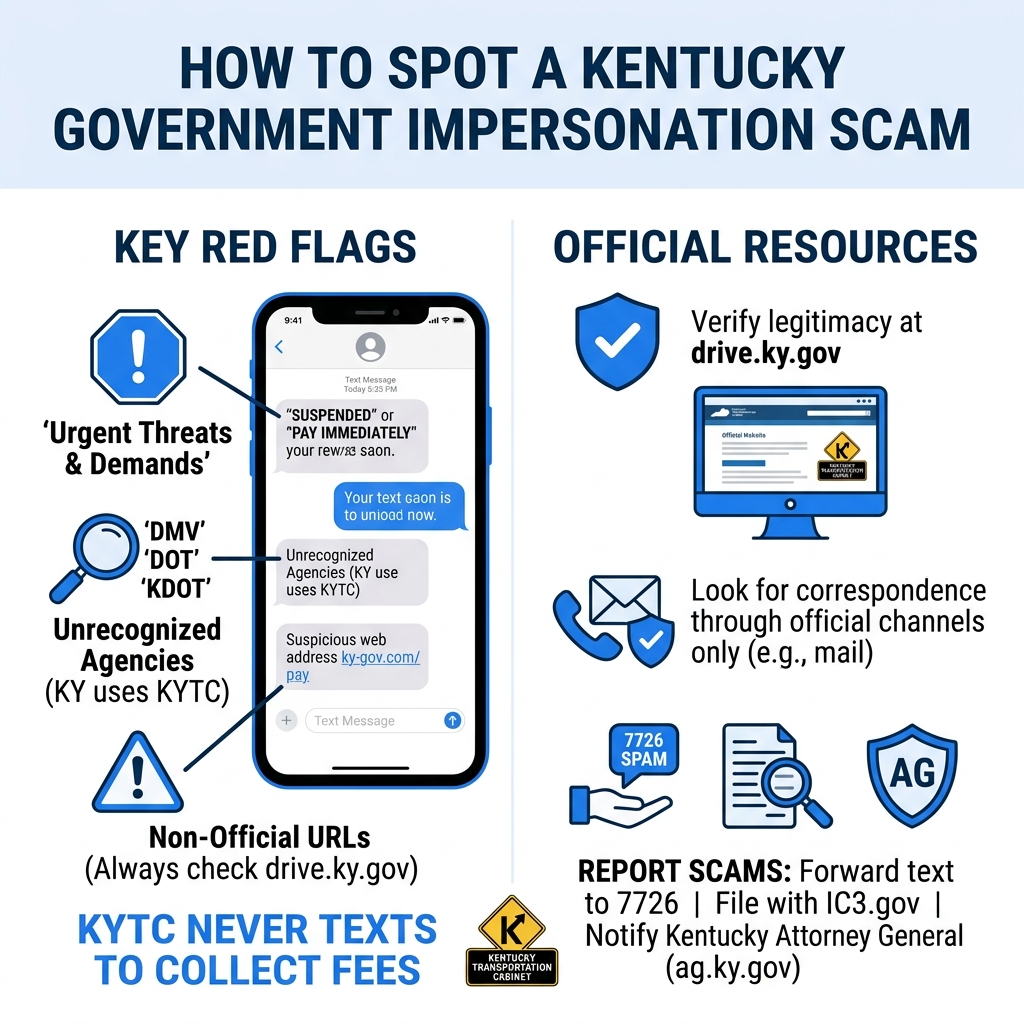
How to Identify a Kentucky Transportation Cabinet Scam
Identifying a Kentucky transportation cabinet scam starts with a healthy dose of skepticism. Government agencies almost never initiate contact via text message, especially when it involves money. We’ve seen these messages flood the phones of Kentuckians, and while they might look official at a glance, they are riddled with errors that a real state agency would never make.
The first rule of thumb: if a text message asks you to click a link to pay a fine, it’s a trap. These "smishing" (SMS phishing) attacks rely on creating a sense of urgency. They want you to panic about your driver's license being suspended so that you don't take the time to look for the obvious red flags. This is very similar to the traffic-compliance-department-scam seen in other states, where generic-sounding departments are used to scare drivers into paying fake fines.
Red Flags in Kentucky Transportation Cabinet Scam Terminology
One of the easiest ways to spot a fake is by looking at the names used in the message. Scammers often use "cookie-cutter" templates that they send to thousands of people across different states. Because of this, they often get the specific agency names wrong.
- "KDOT": This stands for the Kansas Department of Transportation. Kentucky uses KYTC. If you see a "K" followed by "DOT," hit delete.
- "DMV": While many people colloquially call the licensing office the "DMV," Kentucky actually uses the term Driver Licensing Regional Offices. The state does not refer to itself as the "Kentucky DMV" in official text alerts.
- "DOT": Using the generic "Department of Transportation" or "DOT" is a classic sign of a broad scam.
- Threatening Language: Real government notices about license suspensions are sent via official mail. A text saying "Your driving privileges will be suspended in 24 hours" is a scare tactic designed to make you click without thinking.
Website Mimicry and URL Variations
The scammers are getting clever with their links. They often use URLs that look almost like the real thing. They might use "ky-gov.com" instead of "ky.gov," or "drive-ky.gov" instead of the official drive.ky.gov.
Watch out for these common tricks:
- Subtle Hyphens: Adding a dash where there shouldn't be one (e.g., drive-ky-gov).
- "Pay" Additions: Including the word "pay" in the URL to make it seem like a dedicated payment portal.
- Wrong Extensions: Using .org, .net, or .com instead of the official government .gov extension.
Always remember that the Official KYTC website is the only place you should ever enter information regarding your vehicle or license.
Common Tactics: From Unpaid Tickets to Toll Violations
The Kentucky transportation cabinet scam isn't a static threat; it evolves. When people started catching on to the "unpaid traffic ticket" version, the scammers pivoted to something else: toll violations. This evolution is a common trend in cybercrime. We've documented how the outstanding-traffic-ticket-scam-that-fine-is-a-trap works, and the Kentucky version follows the same playbook.
Initially, residents reported receiving texts about "unpaid infractions" that supposedly happened months ago. More recently, the focus has shifted toward tolling. This is particularly effective because many people travel across state lines or use bridges that require tolls, making the claim of an "unpaid toll" feel plausible. However, just like the parking-violation-scam-text-that-fine-is-stealing-your-card, these are just lures to get your credit card number.
The Shift to Toll-Based Phishing
Tolling scams are particularly nasty because they often impersonate specific local systems. In Kentucky, scammers have been known to mimic the look and feel of RiverLink or other regional tolling authorities. They send a message claiming you have an outstanding balance and that a late fee will be applied if you don't pay within the next few hours.
This tactic is identical to the txdot-scam-text-txtag-only-texts-from-one-number that hit Texas drivers. The goal is the same: to get you to a fake website that looks like a payment portal but is actually a data-harvesting machine.
Impersonating the Office of Highway Safety
Another variation involves messages appearing to come from the "Office of Highway Safety" or specific "driver licensing offices." These messages might claim there is a problem with your REAL ID application or that your registration needs immediate renewal.
By using these more specific sub-agencies, scammers hope to sound more legitimate. We've seen similar patterns with the flhsmv-scam-text-what-florida-drivers-must-know, where scammers use the exact name of a state's motor vehicle department to gain trust. In Kentucky, the KYTC has confirmed that they simply do not communicate this way.
Protecting Your Identity: Official KYTC Channels vs. Fraudulent Sites
Protecting your Personal Identifiable Information (PII) is our top priority at Tempo Mail USA. When you click a link in a Kentucky transportation cabinet scam text, you aren't just risking a few dollars for a fake fine; you are handing over your name, address, driver's license number, and potentially your social security number and banking details.
To help you stay safe, we've put together a comparison of how the real state agency operates versus how the scammers operate.
| Feature | Official KYTC (drive.ky.gov) | Scam Text / Fraudulent Site |
|---|---|---|
| Initial Contact | Official U.S. Mail | Unsolicited SMS/Text Message |
| Website URL | drive.ky.gov | drive-ky.gov, kytc-pay.com, etc. |
| Agency Name | KYTC / Transportation Cabinet | KDOT, DMV, DOT, Traffic Dept |
| Payment Method | Secure, verified portals | Suspicious links requiring immediate card entry |
| Tone | Informational and formal | Urgent, threatening, or alarmist |
The illinois-dot-text-scam-idot-will-never-text-you and the scdmv-scam-a-traffic-reporter-got-one prove that these criminals don't care who you are—they just want your data.
Verifying Motor Vehicle and Driver Services
The only official portal for all things related to your vehicle and license in the Bluegrass State is drive.ky.gov. If you ever have a doubt about a notice you received, go to that URL manually by typing it into your browser. Do not click a link from a text to get there.
Kentucky officials have been very clear: KYTC does not collect traffic ticket fees via text. If you owe a fine for a speeding ticket or a parking violation, that process is handled through the court system or local municipalities, not through a text message from the Transportation Cabinet. This is a key distinction, much like how the mn-dmv-scam-text-minnesota-has-no-dmv was easily debunked because the state doesn't even have an agency with that name.
State Agency Response to the Kentucky Transportation Cabinet Scam
The state of Kentucky isn't taking this sitting down. Governor Andy Beshear and the KYTC have issued multiple public safety alerts to warn residents. The Cabinet is also working behind the scenes with federal authorities and internet service providers to identify and take down the fraudulent websites as soon as they appear.
However, as soon as one site is taken down, scammers often launch another under a slightly different name. This is why public awareness is the most effective defense. If you receive one of these messages, you should Report the scam to the FBI’s IC3 immediately. This helps federal investigators track the patterns and potentially find the people behind these large-scale phishing operations.
What to Do If You Receive a Kentucky Transportation Cabinet Scam Text
If your phone pings and you see a message about an unpaid Kentucky toll or a "DMV violation," your first instinct might be to fix the problem. Stop. The best thing you can do is nothing—at least, don't click anything.
Here is our recommended protocol for handling a suspicious text:
- Do Not Click: Clicking the link can trigger a malware download or lead you to a site designed to steal your info.
- Do Not Reply: Replying "STOP" or "Who is this?" lets the scammer know your phone number is active, which will lead to even more scam texts in the future.
- Take a Screenshot: This is useful for reporting the scam to authorities.
- Delete the Message: Once you've reported it, get it off your phone so you don't accidentally click it later.
If you have already clicked the link and entered your information, you need to act fast. Report fraud to the FTC and contact your financial institutions immediately.
Reporting to Authorities and Mobile Providers
Reporting these texts is a crucial step in stopping the Kentucky transportation cabinet scam.
- Forward to 7726: This is a universal "SPAM" hotline for almost all major mobile carriers (AT&T, Verizon, T-Mobile). Copy the text and forward it to the number 7726. Your carrier will use this data to block the sender and the malicious links.
- Kentucky Office of the Attorney General: The AG's office tracks these scams to protect Kentucky consumers. You can find Identity theft guidance from ag.ky.gov if you believe your PII has been compromised.
Steps for Victims of the Kentucky Transportation Cabinet Scam
If you fell for the scam, don't be ashamed—these messages are designed to be deceptive. Follow these steps to minimize the damage:
- Bank Notification: Call your bank or credit card issuer. Tell them you provided your info to a phishing site. They can cancel your cards and issue new ones.
- Credit Monitoring: Place a fraud alert or a credit freeze on your files with the three major credit bureaus (Equifax, Experian, and TransUnion). This prevents scammers from opening new accounts in your name.
- FBI Reporting: File a report at ic3.gov. This is the central hub for internet crime and helps the FBI build cases against international scam rings.
- Identity Theft Recovery: If your Social Security number was involved, visit IdentityTheft.gov (run by the FTC) to create a personalized recovery plan.
Frequently Asked Questions about the Kentucky Transportation Cabinet Scam
Does KYTC send text messages for traffic tickets?
No. The Kentucky Transportation Cabinet does not send text notifications for traffic violations, nor do they collect fees or fines via SMS. All official notifications regarding your driving record or vehicle registration are sent through the United States Postal Service.
What is the official website for Kentucky driver services?
The only official website is drive.ky.gov. You should always check the address bar of your browser to ensure you are on a .gov site. Avoid any site that includes hyphens (like drive-ky.gov) or words like "pay" (like kytc-pay-fine.com).
How can I report a Kentucky Transportation Cabinet scam message?
You should forward the message to 7726 to alert your mobile provider. Additionally, file a report with the Federal Trade Commission at reportfraud.ftc.gov and notify the Kentucky Attorney General’s office.
Conclusion
Staying safe in the digital age requires constant vigilance. The Kentucky transportation cabinet scam is just one example of how criminals use the names of trusted agencies to steal from hard-working people. By knowing the red flags—like the use of "KDOT" or "DMV"—and sticking to official channels like drive.ky.gov, you can protect yourself from these predatory tactics.
At Tempo Mail USA, we believe that your privacy is your most valuable asset. One of the best ways to keep your real identity safe from hackers and scammers is to use a proxy for your personal information. By using temporary email aliases, you can create a secure firewall between your real life and the services you use online.
Don't let scammers get a foothold in your digital life. Be proactive, stay informed, and Protect your PII at tempomailusa.com. Together, we can keep the Bluegrass State safe from fraud.