


The DMV Scam Text Is Spreading Across the U.S. — Here's What You Need to Know
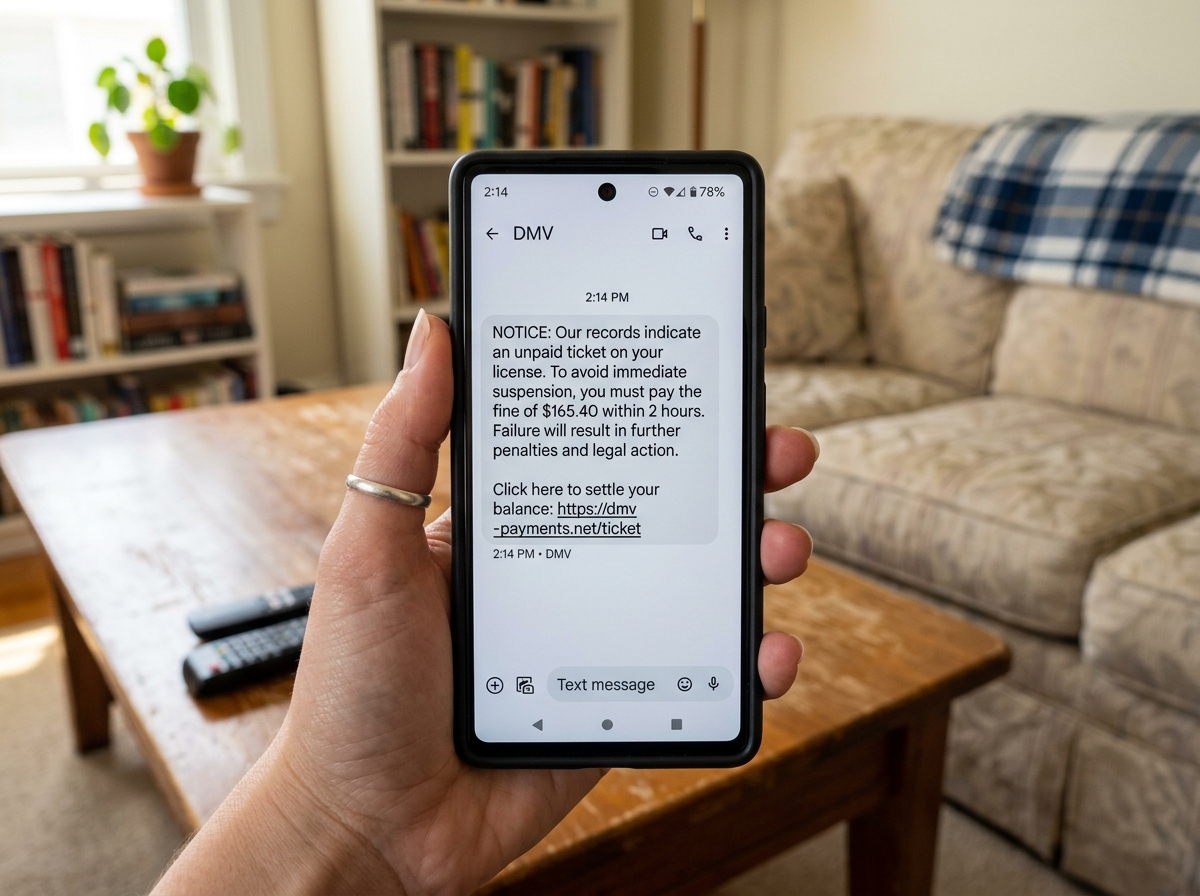
A dmv scam text is a fake message pretending to be from your state's Department of Motor Vehicles. It claims you have an unpaid ticket, toll, or violation — and threatens license suspension, fines, or even prosecution if you don't pay immediately.
Quick answer: What should you do?
- Do not click any links in the message
- Delete the text immediately
- Verify any real concerns at your state's official DMV website
- Report it to the FTC at ReportFraud.ftc.gov
No U.S. state DMV sends enforcement notices or payment demands by text. Ever. If you got one, it's a scam.
These messages have been reported in at least 14 states, including Maine, Michigan, Alabama, Rhode Island, and North Carolina. They follow a familiar pattern — urgent language, a looming deadline, and a link to a fake payment page designed to steal your personal and financial information.
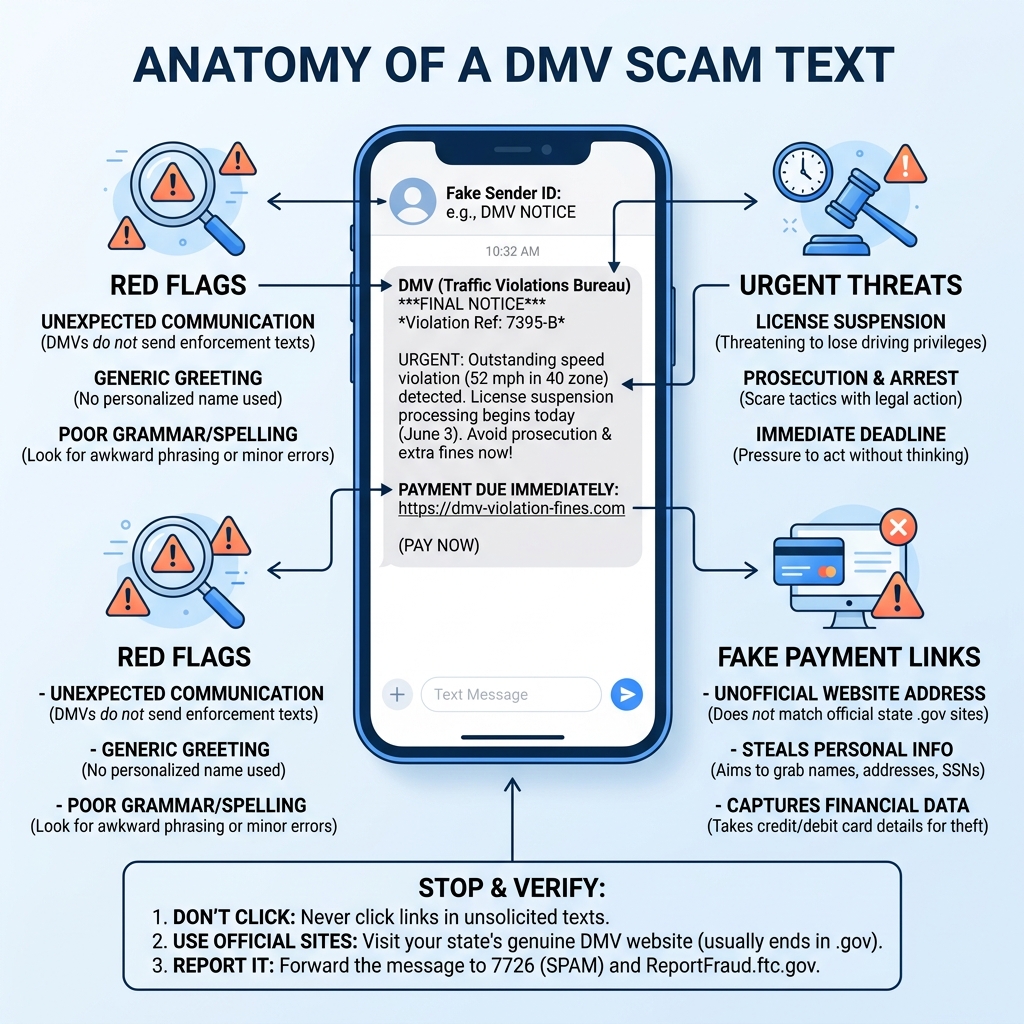
One widely reported example read: "Department of Motor Vehicles (DMV) Final Notice: Enforcement Penalties Begin on June 3... you still have an outstanding traffic ticket... You may be prosecuted and your credit score will be affected. Pay Now."
This is a textbook smishing attack — SMS-based phishing — and it's becoming more sophisticated every month.
How the dmv scam text works and common variations
The mechanics of a dmv scam text are designed to bypass your logical thinking by triggering a "fight or flight" response. When you receive a message claiming your driver's license is about to be suspended, your brain focuses on solving the problem quickly rather than questioning the source.
Scammers typically use "smishing" (SMS phishing) to cast a wide net, sending thousands of automated messages to random phone numbers. They don't necessarily know if you have a car or a license; they are simply playing a numbers game.
Common Variations of the Scam
We have observed several primary versions of this fraud circulating across the country:
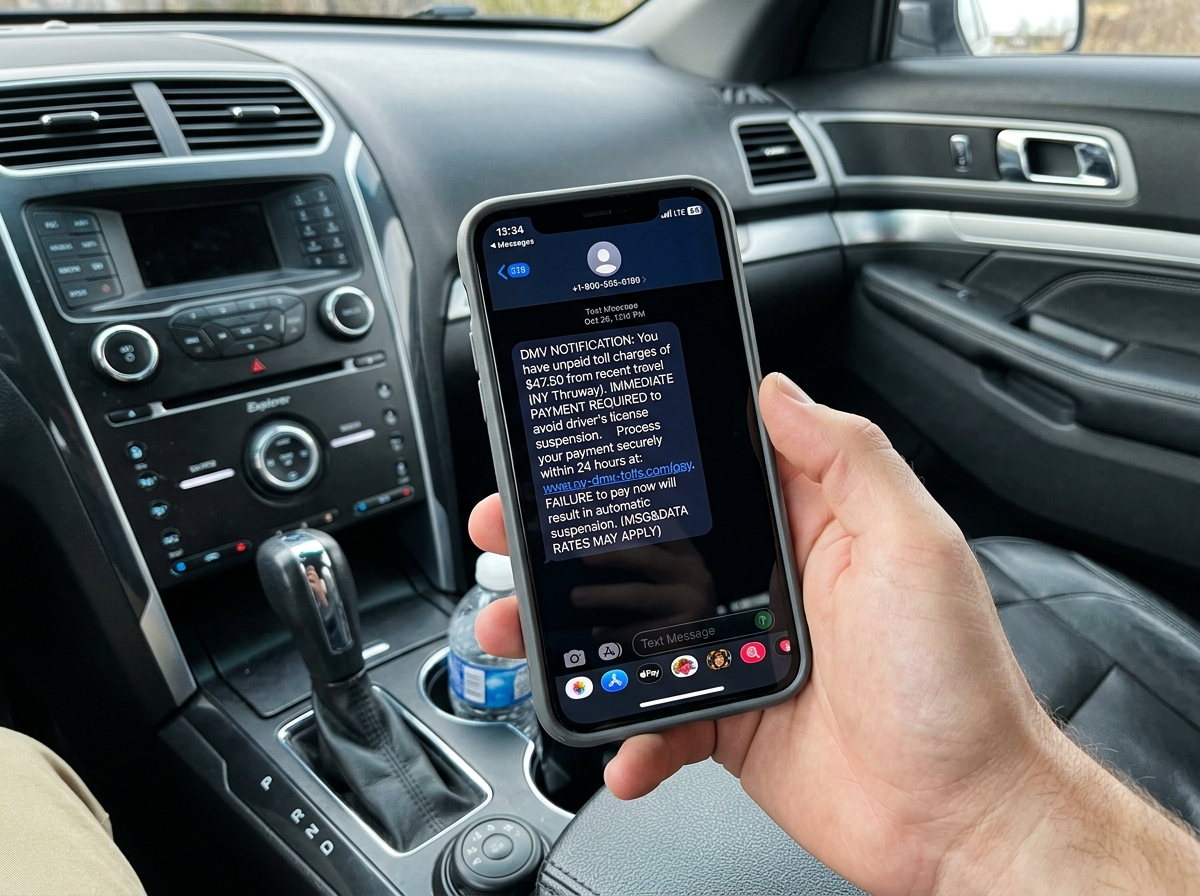
- The Unpaid Toll Scam: This variation claims you have outstanding toll charges. It often mimics the branding of local toll agencies but claims the DMV is handling the "enforcement." As noted by the California DMV, the DMV does not actually handle toll collections directly via text.
- The Overdue Traffic Ticket: You receive a "Final Notice" regarding a traffic violation. The text usually includes a specific (but fake) case number and a link to "pay the fine" to avoid a court date.
- The License Suspension Threat: This is perhaps the most aggressive version. It claims your driving privileges have already been suspended or will be within 24 hours unless you "verify your identity" or pay a "reinstatement fee."
- The Vehicle Registration Issue: Similar to the Texas DMV Text Scam, these messages claim there is a problem with your registration that requires immediate payment or personal data entry to fix.
Identifying a dmv scam text through red flags
While scammers are getting better at mimicking official language, they almost always leave "digital breadcrumbs" that reveal their true nature. If you see any of the following, it is almost certainly a dmv scam text.
- Urgent or Threatening Language: Phrases like "Immediate Action Required," "Final Notice," or "Prosecution Pending" are major red flags. Real government agencies communicate these types of serious legal matters through official mail, not a casual text message.
- Suspicious Links: Look closely at the URL. A legitimate state agency link will almost always end in
.gov. Scammers use look-alike domains likedmv-payment-portal.comor shortened links likebit.ly/pay-dmv. As we've warned in our DMV Text Scam 2026 guide, if the link doesn't go directly to your state's official.govsite, do not click it. - Bad Grammar and Punctuation: Many of these scams originate from overseas. You might notice "tortured syntax," odd capitalization, or spelling errors that would never pass through a government communications office.
- Out-of-Country or Unusual Area Codes: If you live in Colorado but receive a DMV alert from a 212 (New York) or an international area code, it’s a scam.
- Requests for Sensitive Info via Text: The DMV will never ask for your Social Security Number, credit card details, or banking information through a text message.
Geographic scope of the dmv scam text
This is not a localized problem; it is a nationwide epidemic. Official warnings have been issued in at least 14 states. In Maine, Michigan, Alabama, Rhode Island, and North Carolina, residents have reported a surge in these messages.
Even media professionals aren't immune—a traffic reporter recently shared their experience with a fraudulent SCDMV text, proving that anyone can be targeted. In Arizona, the Motor Vehicle Division (MVD) had to clarify that they do not text for payments, noting that checking your actual status at an office usually takes only about 12 minutes—much safer than clicking a random link.
Official DMV policies and verification methods
To protect yourself, you must understand how the "real" DMV operates. Government agencies are bound by strict privacy and communication protocols.
The Golden Rule: No U.S. state DMV initiates contact via unsolicited text messages to demand payment or threaten legal action.
If the DMV needs to contact you regarding a serious matter like a license suspension or an unpaid fine, they will send a formal letter via the U.S. Postal Service to the address they have on file. Some states offer "opt-in" text alerts for things like appointment reminders or registration renewal notices, but these will never ask for payment via a link in the text.
How to Verify Your Record Safely
If a dmv scam text makes you nervous, do not use the contact information provided in the message. Instead, use these verified channels:
- Arizona: Log in to your secure account at azmvdnow.gov to see outstanding payments.
- Colorado: Visit dmv.colorado.gov or call (303) 205-5600 directly.
- California: Use the "Service Advisor" on the official portal or call 800-777-0133.
- Other States: Search for your state's official website (ensure it ends in
.gov) or use a trusted directory to find the correct department for your state.
Official Communication vs. Scam Texts
| Feature | Official DMV Communication | DMV Scam Text |
|---|---|---|
| Primary Method | U.S. Mail (Paper Letter) | SMS / Text Message |
| Link Destination | Always ends in .gov | Often .com, .net, or shortened URLs |
| Payment Request | Through secure portal or in-person | Direct link to "Pay Now" |
| Tone | Formal and procedural | Urgent, threatening, or scary |
| Personal Info | Never asks for SSN via text | Asks for SSN, CC#, or Bank info |
What to do if you receive or click a suspicious link
If you receive a dmv scam text, your first instinct might be to reply "STOP" or "NO." Do not do this. Replying to a scammer confirms that your phone number is active and monitored by a real person, which will only lead to more spam.
If you just received the text:
- Stop: Do not click any links or download any attachments.
- Report: Use your phone's built-in "Report Junk" or "Block Sender" feature. You can also forward the message to 7726 (SPAM), which alerts your carrier to the fraudulent activity.
- Delete: Once reported, delete the message to avoid accidental clicks later.
- Verify: If you are genuinely worried about a ticket, go to the official state website manually by typing the address into your browser. As we've noted regarding Louisiana and Utah scams, clicking the link is the primary goal of the scammer.
Reporting a dmv scam text to federal authorities
Reporting these scams is crucial for helping law enforcement track down the criminal networks behind them.
- FTC: File a report at ReportFraud.ftc.gov. This helps the Federal Trade Commission build cases against scammers.
- FBI: Submit a complaint to the Internet Crime Complaint Center at www.ic3.gov. Be sure to include the phone number that sent the text and the URL of the fake website.
- State Authorities: Many states, like Illinois, have specific warnings. The Illinois DOT will never text you for payment.
Recovery steps for compromised information
If you have already clicked a link and entered your information, you need to act fast. Scammers can use your data for identity theft or to drain your bank accounts.
- Change Passwords: Immediately change the passwords for your email, banking, and government accounts.
- Enable MFA: Turn on Multi-Factor Authentication (MFA) on every account that supports it. This adds a "firewall" that prevents scammers from logging in even if they have your password.
- Monitor Accounts: Check your bank and credit card statements daily for the next few months. Look for small "test" transactions.
- Freeze Your Credit: Contact the three major credit bureaus (Equifax, Experian, and TransUnion) to freeze your credit. This prevents scammers from opening new lines of credit in your name.
- Scan for Malware: If you downloaded anything from the link, run a full antivirus scan on your device.
- Specialized Advice: If you're dealing with specific threats like the Maryland MVA "Pay or Be Arrested" scam, contact local law enforcement immediately.
Frequently Asked Questions about DMV Scams
Does the DMV ever text about unpaid tickets?
No. While some DMVs may send text reminders for appointments you have already scheduled, they do not use text messages to notify you of violations, fines, or unpaid tickets. These notices are legally required to be sent via official mail to ensure they reach the registered owner of the vehicle.
How can I verify my real driving record?
The only safe way to verify your record is through your state's official website (ending in .gov) or by visiting a DMV office in person. Many states now offer secure digital portals where you can view your points, tickets, and registration status for free or a small official fee.
What are the most common dmv scam text threats?
The most common threats include:
- Immediate suspension of your driver's license.
- A 35% "late fee" surcharge if you don't pay within hours.
- Threats of criminal prosecution or arrest warrants.
- Claims that your credit score will be "permanently damaged."
Conclusion
The rise of the dmv scam text is a reminder that our personal information is constantly under fire. Scammers rely on fear and urgency to steal your hard-earned money and your identity. By staying vigilant and remembering that the DMV will never text you for payment, you can stay one step ahead of these criminals.
At Tempo Mail USA, we believe in providing a proactive defense for your digital life. One reason these scammers have your number or email is that your real PII (Personally Identifiable Information) has likely been leaked or sold from a service you signed up for in the past.
Our service provides secure temporary email aliases that act as a privacy proxy—a firewall for your real identity. By using a temporary alias when signing up for non-essential services, you keep your primary contact information out of the hands of data brokers and, ultimately, out of the hands of scammers.
Stay safe, stay private, and never click that link! For more tips on protecting your digital footprint, visit Tempo Mail USA.