



Spam calls — unwanted automated or scam calls — have grown more frequent and more convincing. A few trends explain why: large data leaks, a thriving market for contact lists, and cheaper, smarter calling tools that let scammers scale their reach. This article breaks down the main reasons your phone might start ringing off the hook, the technology behind modern vishing and spoofing attacks, how your own habits can make the problem worse, and a practical, layered plan to cut the noise. We’ll walk through fast actions you can take right now, medium-term fixes (apps and carrier features), and longer-term privacy moves like using disposable contact channels. Along the way you’ll learn how to spot common scams and how to report them so you and others stay safer.
What Are the Main Reasons for the Sudden Increase in Spam Calls?
Spam call volume jumps when two things happen together: more exposed contact data to build lists, and cheaper ways to place huge numbers of calls. Breaches and sold lists feed the supply of phone numbers, while autodialers, caller-ID spoofing and cloud voice platforms handle delivery at scale. Knowing which cause is at work helps you decide what you can control and which defenses to rely on. Below we map the primary causes to how numbers get exposed and what that typically looks like.
Different root causes expose phone numbers through distinct pathways and each has measurable downstream effects.
| Root Cause | How It Exposes Phone Numbers | Impact / Evidence |
|---|---|---|
| Data breaches | Leaked account records may include phone fields or allow name/email-to-phone matching | Feeds targeted lists used by spam operators; recent breaches often leak contact fields |
| Data brokers | Collect public and purchased records, then sell cross-referenced contact lists | Ongoing resale spreads numbers widely and re-activates old entries |
| Public posting & forms | Numbers posted on social sites, classifieds, or forms get scraped | Automated scrapers and marketplaces capture and redistribute public numbers fast |
| List-matching & enrichment | Email or name identifiers are matched to phones using public records and commercial datasets | Correlation turns partial leaks (like an email) into complete contact profiles |
In short, most spikes trace back to data flowing into secondary markets or getting re-linked across datasets — which primes the calling infrastructure described next.
How Do Data Breaches Lead to More Spam Calls?
When a service suffers a breach, exposed records often include contact fields or identifiers that can be tied to phone numbers. Even if a leaked file only has emails, attackers and brokers can cross-reference other sources to find matching phone numbers, turning a partial leak into a usable calling list. That lets scammers send more personalized scripts, which raise response rates and skirt filters. Think of the chain as breach → correlation → call list: one cracked dataset can ripple across many campaigns.
Those lists are then bought, sold, and re-used, so reducing how often you expose any stable identifier lowers the chances you’ll appear in future lists. Next we’ll look at how brokers and darker marketplaces move those lists around.
What Role Do Data Brokers and the Dark Web Play in Phone Number Exposure?
Data brokers gather records from public filings, commercial partners, and purchased sources, normalize them, and sell access to segmented contact lists. On less-regulated marketplaces — including parts of the dark web — harvested lists are traded in batches, often tagged with location, age range, or purchase history to increase call effectiveness. Because these markets lack transparency and strong enforcement, a number that shows up in one list often spreads across many buyers and campaigns. Practically, shrinking your public footprint and opting out of broker lists whenever possible reduces the risk of entering these pipelines.
Cutting broker exposure takes both account hygiene and selective use of disposable contact channels — the behavior-focused controls that follow.
How Does Technology Fuel the Surge in Robocalls and Scam Calls?
Three linked tech advances power today's spam calling: massive autodialers that place calls cheaply, caller-ID spoofing that hides origins and boosts pickup rates, and AI-driven voice tools that personalize messages and automate social engineering. Together they drop the cost per call and improve deception, making large campaigns profitable and harder to stop. Understanding these tools clarifies which defenses will work and which will only slow attackers briefly. Below are the main technological enablers and how they change spammer behavior.
Key technologies enabling current spam call growth include autodialers, spoofing mechanisms, and AI voice tools:
- Autodialers and cloud-based call farms let operators place massive volumes of calls with minimal hardware.
- Caller ID spoofing forges call metadata so the incoming number looks local or familiar, increasing answer rates.
- AI voice cloning and automated script generation let attackers craft convincing vishing interactions and run them at scale.
Because these tools make campaigns more targeted and credible, your defenses need to pair good habits with technical filters.
What Is Caller ID Spoofing and How Does It Deceive Callers?
Caller ID spoofing falsifies the number shown on your phone so a call looks like it’s from a bank, government office, or a local neighbor. It exploits weak trust signals in the phone network and is used deliberately to lower suspicion and increase engagement. To spot spoofing, watch for context errors (an urgent request from an unexpected source), never share codes or payments over the line, and always verify by calling official numbers you find independently. Because spoofing targets human trust, verification habits and caller-screening tools are key defenses.
Spotting spoofed calls fast cuts your risk of vishing; the section below explains how AI voice cloning increases that threat.
How Are AI and Voice Cloning Used in Modern Spam Calls?
Attackers now use AI-generated voices and voice-cloning tools to mimic known voices or produce realistic synthetic speech for scam scripts. They can stitch together personalized messages using public details, which raises perceived legitimacy and lowers skepticism. Look for small telltale signs — subtle audio glitches, unusual sentence rhythm, or pressure to move the conversation off-platform or hand over verification codes — and when those appear, hang up and verify independently. Effective defenses include carrier screening, personal vigilance, and reporting so patterns can be detected at scale.
Distinguishing real human speech from sophisticated synthetic voices is a growing research challenge — and an active area of defenses.
Detecting AI Voice Clones: Safeguarding Against Sophisticated Spam Calls
The rise of voice-activated systems and increasingly realistic AI-generated voices creates new security risks. Even with progress in automatic speech recognition and natural language processing, reliable speaker authentication needs stronger defenses. This paper evaluates deep learning approaches to tell human speech apart from AI-generated clones and highlights directions for practical detection.
Real-Time AI Voice Clone Detection: A Deep Learning Approach to Safeguard Authenticity, T Hayajneh, 2024
Because AI tools are used by attackers and defenders alike, your own choices — what you answer, where you share contact details — have a direct effect on who calls you and how persistent they are.
How Can Your Actions Affect the Volume of Spam Calls You Receive?
Your behavior — answering unknown numbers, sharing your phone on signups, or posting it publicly — changes how often spammers target you. Picking up or interacting signals that the number is active, increasing its resale value. By contrast, avoiding engagement and limiting where you give your number reduces that signal and lowers repeat contacts. Every time you add your phone to a third-party form or profile without protections, you raise the chance of scraping or brokered matching. Being intentional about who gets your number and using disposable channels for risky situations noticeably reduces downstream calls.
Below are straightforward behavior-focused actions to cut your exposure.
- Don’t answer or engage with suspicious unknown calls: Let unfamiliar numbers go to voicemail, and avoid following prompts or confirming details.
- Limit where you share your primary phone number: Use sign-up alternatives, masked numbers, or disposable contacts for marketplaces and one-off services.
- Audit app and account privacy settings regularly: Turn off unnecessary sharing and remove public phone listings from profiles.
These steps reduce the engagement signal harvesters use to prioritize numbers, and they set up the case for disposable channels as a core defensive tactic. Next — does answering unknown calls actually increase future spam?
Does Answering Unknown Numbers Increase Spam Call Frequency?
Yes. Answering can raise future spam because it confirms the line is live and may flag the number for resale. Interactive traps like “press 1 to stop” are dangerous — any response can validate a human respondent and boost the number’s value. If you pick up a suspicious call, don’t give personal details, end it quickly, and save the number for reporting instead of continuing the exchange. Keeping a simple log of repeated callers helps when filing complaints with carriers or regulators and builds evidence for action.
Cutting engagement lowers your visibility to automated harvesters. Another big exposure path is sharing numbers online, covered next.
How Does Sharing Your Phone Number Online Lead to More Spam?
Posting your number in public forums, classifieds, or social media lets scraping bots and opportunistic harvesters collect it in bulk. Even private forms can leak numbers through partner sharing or weak vendor privacy. Integrations and data-sharing agreements often move contact fields behind the scenes, so a single signup can create multiple exposures. To reduce leakage, prefer masked contact options, limit public listings, and use disposable contact channels for one-off verifications or marketplace transactions. Fewer places for your primary number to appear means fewer ways for spammers to find and validate it.
TempoMailUSA offers free, private temporary email addresses (disposable inboxes) with no signup, automatic deletion, minimal data retention, and a privacy-first design. Our blog explains privacy topics like Gmail updates, OTP fraud surges, and new privacy laws. Use a disposable email to protect your main address and stop it from feeding broader correlation chains — and learn about future tools we’re building, like an AI spam-email checker.
This privacy-first approach interrupts correlation chains; next we outline a layered set of tools you can use immediately and over time.
What Are Effective Strategies to Stop Unwanted Spam Calls?
Stopping spam calls works best as a layered strategy: immediate call handling, device and app filters, carrier protections, legal reporting, and long-term privacy hygiene to shrink your exposure. Quick steps reduce annoyance right away; medium-term measures like trusted apps and carrier filtering cut delivery; long-term habits keep you off lists. Below are practical actions to start with and a simple comparison of common defenses.
Start with these quick steps to lower call volume:
- Block and label repeat numbers on your phone: Use built-in blocking to stop persistent offenders.
- Enable carrier or device spam filtering: Turn on spam protection or silence unknown callers to route likely robocalls away.
- Install a reputable call-blocking app: Pick apps that combine network intelligence with privacy-preserving practices to reduce false positives.
These quick moves cut immediate noise and generate data carriers and apps can use to spot patterns, which complements longer-term privacy habits.
| Solution | How it Works | Effectiveness / Limitations |
|---|---|---|
| Device built-in filters | OS heuristics silence unknown or likely spam calls | Good basic protection; may miss sophisticated spoofed or highly targeted calls |
| Carrier-level blocking (STIR/SHAKEN aware) | Network verification that reduces spoofed numbers and blocks illegal traffic | Strong for spoof prevention but less effective against legal or overseas routes |
| Call-blocking apps (network-based) | Use shared blacklists and metadata analysis to block probable spam | Effective at scale but can require subscription and raise privacy trade-offs |
| Privacy hygiene (temporary emails, masked numbers) | Reduces data available for matching and resale | Preventative and durable, but requires habit changes and discipline |
Which Call Blocking Apps and Tools Are Most Effective?
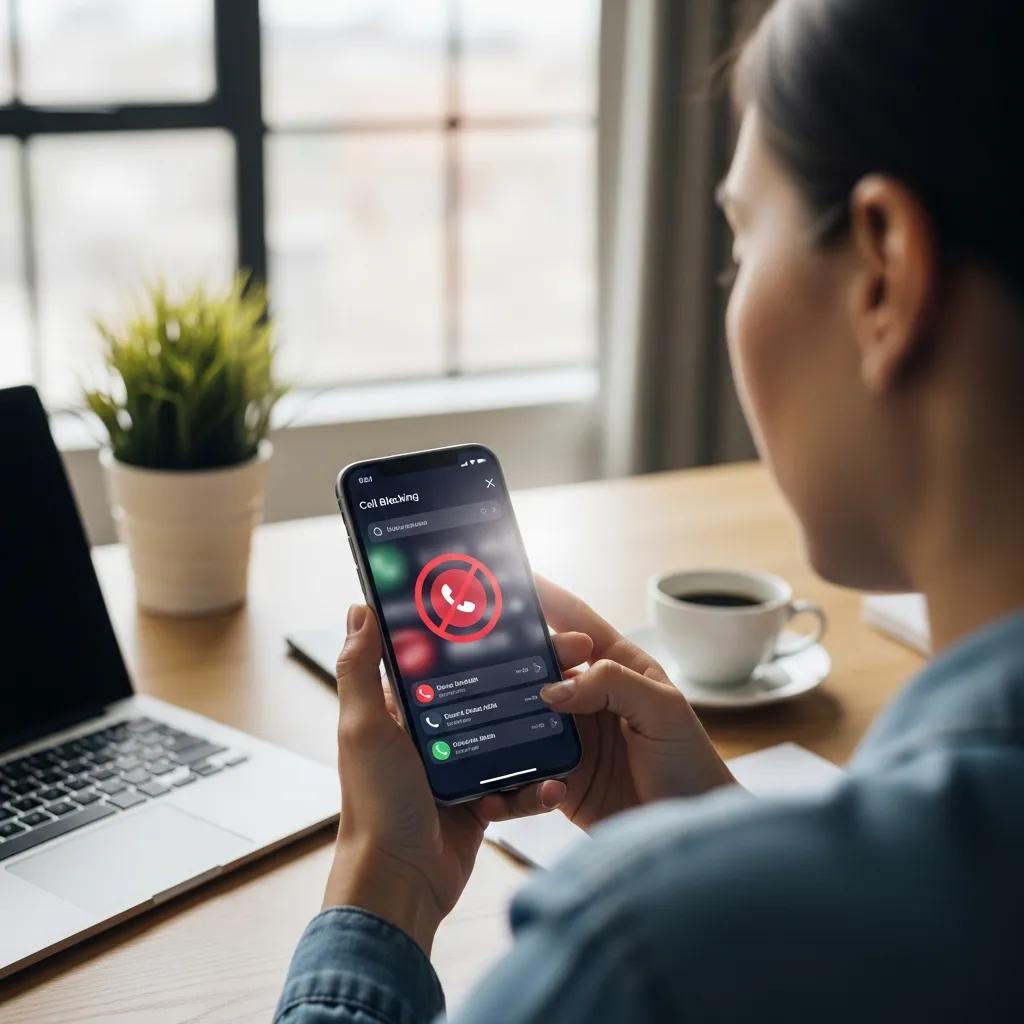
Good solutions fall into three groups: device-level filters (iOS/Android), carrier filtering that blocks abusive routes, and third-party apps that combine user reports with network intelligence. For most people, enabling “silence unknown callers” and turning on carrier spam protection gives strong baseline coverage with little setup. Third-party apps add community-sourced blacklists and finer control but check privacy settings and possible subscription costs. Configure filters to allow known contacts while sending unknowns to voicemail, and review blocked logs occasionally to recover missed legitimate calls.
Robust protocols like STIR/SHAKEN play an important role in authenticating calls and reducing spoofing — a point reinforced by recent analyses.
STIR/SHAKEN Protocol: Combating Robocall Scams
The robocall crisis has led to millions of victims and billions in losses. To fight back, regulators have pushed for STIR/SHAKEN — a framework that authenticates VoIP calls and helps carriers identify spoofed traffic. Widespread adoption can cut illegal robocalls, though implementation and cross-border routing still leave gaps.
An analysis of applying stir/shaken to prevent robocalls, 2021
Which mix you choose depends on how often you get targeted calls and how comfortable you are with false positives. The Do Not Call registry helps too — but it has limits, which we cover next.
How Does the National Do Not Call Registry Help and What Are Its Limitations?
The National Do Not Call Registry gives you a legal opt-out from many telemarketing calls and can reduce legitimate marketing over time. But it won’t stop illegal robocallers, spoofed numbers, or overseas operations that ignore enforcement — and regulatory action can be slow. Use the registry alongside technical filters and reporting tools so agencies and carriers can act on repeat offenders. Layering legal opt-outs with device and behavior defenses gives the most durable reduction in unwanted contact.
No single fix is perfect; combining privacy hygiene, reporting, and technical filtering delivers the best results.
How Can Temporary Email Services Like TempoMailUSA Help Prevent Spam Calls?
Temporary email services break the chain that lets spammers turn leaked emails into phone matches. Disposable addresses reduce the number of persistent identifiers tied to your profile. Use a temporary inbox for one-off signups, verifications, or classifieds to avoid seeding your primary email into databases and broker pipelines that later enable phone matching. These addresses are especially useful for short interactions — trials, listings, or any place you suspect data resale. The table below links disposable-email features to the user benefits that lower call-exposure risk.
Temporary email features translate directly into privacy outcomes.
| Feature | Property | User Benefit |
|---|---|---|
| No signup required | Low identity linkage | Quick protection without creating a persistent identifier |
| Automatic deletion | Short-lived inboxes | Limits the window for harvesting and resale |
| Minimal data retention | Less stored personal data | Fewer traces for brokers to correlate to your phone number |
Disposable emails interrupt correlation chains and make it harder for brokers to stitch together profiles that include your phone number, which reduces future spam risk.
TempoMailUSA offers free, secure temporary email addresses with no signup, automatic deletion, and minimal retention — designed with privacy first. Our blog covers topics like Gmail privacy updates, OTP fraud surges, and new privacy rules. The goal: protect your main email to limit broader data exposure, while offering tools that cut the raw data attackers rely on — and to support future features like an AI spam-email checker.
How to use a temporary email effectively: create a disposable address for single-use verifications, don’t forward personal mail into it, and discard the address when you’re done. That prevents the disposable from linking back to your main identity and avoids creating long-lived entries for brokers to resell.
How Does Protecting Your Email Reduce Phone Number Exposure?
Email addresses are often the primary identifier services use, and when they leak or are sold, brokers can match that email to phone numbers via cross-referenced datasets, subscriptions, or public profiles. Protect your primary email with strong passwords, unique addresses for different services, and disposable inboxes for risky signups to reduce the number of stable identifiers attackers can use. For instance, a temporary address for a marketplace listing keeps your permanent contact out of capture tools and makes scraping much less effective. Reducing identifier reuse is a reliable long-term defense against list-driven spam.
Fewer stable identifiers mean attackers rely on weaker signals, which lowers targeting accuracy and call volume.
What Future AI Tools Can Enhance Spam Call Protection?
AI defenses are improving: real-time pattern analysis, voice-anomaly detection, and dynamic risk scoring can help flag coordinated vishing campaigns and cloned voices faster. Defensive systems can hold suspicious calls, auto-verify claims against trusted databases, or surface alerts for human review while respecting privacy. Still, it’s an arms race — attackers also use AI to improve scams — so pairing privacy hygiene (like disposable emails) with AI scoring and human checks provides the best protection. Reducing the raw data attackers feed their models strengthens the impact of defensive AI.
As detection tech matures, combining it with lower identifier leakage builds a more resilient posture against evolving spam tactics.
What Are Common Phone Scams and How Can You Identify Them?
Common scams include government impersonation (tax or benefits), bank impostors, tech-support fraud, prize or romance scams, and payment diversion schemes asking for gift cards or cryptocurrency. Each relies on social-engineering patterns like urgency, secrecy, or pressure to move the conversation off-platform. Knowing the usual red flags — sudden requests for money, insistence on remote access, or demands for verification codes — helps you triage calls quickly. Below is a brief list of typical scam categories and why they work.
- Government impostor calls: Use threats or deadlines to force payments or panic.
- Tech-support scams: Claim your device is compromised and ask for remote access or payment to “fix” it.
- Prize/romance scams: Build trust (or excitement) to extract money or personal details.
These scams rely on emotional pressure and rushed decisions. Slow down, verify independently, and refuse off-channel requests.
What Are Typical Scam Call Patterns to Watch For?
Scammers create urgency — act now or face consequences — to short-circuit critical thinking. They prefer irreversible payment methods (gift cards, wire transfers, crypto) and will ask for one-time codes or remote-access approval that let them take over accounts. They may also reference partial personal data to seem legitimate. When you see these patterns, hang up and verify using a trusted phone number or official website.
How Do You Report Spam Calls to Authorities Like the FTC and FCC?
Reporting helps regulators and carriers spot large campaigns and target enforcement, though investigations can take time. Collect basic evidence — call time, the number shown, a short transcript of the interaction, and whether you gave information or payment — and submit that via agency reporting pages or your carrier’s complaint tools. Aggregated reports help prioritize takedowns and blocking. Keep a simple log of repeat offenders and include those patterns when you file complaints to make investigations clearer.
Accurate reporting, combined with blocking and good privacy hygiene, reduces the operational space for persistent spam networks.
Frequently Asked Questions
What should I do if I accidentally answered a spam call?
If you accidentally pick up a spam call, hang up immediately and don’t share personal information. Block the number on your phone to prevent repeats and consider reporting it to your carrier or the relevant authorities — that helps build evidence against large campaigns.
Can spam calls lead to identity theft?
Yes. If you reveal sensitive details — Social Security numbers, bank logins, or one-time verification codes — scammers can use them to steal accounts or identities. Stay cautious and never give personal information to unexpected callers. If you suspect a compromise, change passwords, alert your bank, and monitor accounts for unusual activity.
Are there specific times when spam calls are more frequent?
Spam calls often spike during business hours or early evening when people are likelier to answer. Certain seasons, like tax time or major holidays, also bring themed scams. Being aware of these patterns can make you more likely to screen unknown calls.
How can I educate others about spam calls?
Share clear tips on social media, discuss them in community groups, or run a short walkthrough with friends and family. Explain common red flags, the importance of not sharing personal data, how to use call-blocking tools, and how to report suspicious calls. Simple, repeated reminders help reduce overall vulnerability.
What legal actions can be taken against spam callers?
You can report spam callers to the Federal Trade Commission (FTC) or the Federal Communications Commission (FCC). Those agencies can impose fines or take enforcement actions against violators. In some cases, individuals may pursue civil suits if they’ve suffered measurable harm. Keep detailed records of calls to support any legal or regulatory complaints.
How do I know if a call is a scam before answering?
It’s often hard to be certain before you pick up. Watch for unfamiliar numbers, odd area codes, or numbers that mimic businesses. Let unknown calls go to voicemail and screen them before calling back. If a caller pressures you for money or personal info, treat the call as suspicious.
What are the best practices for protecting my phone number?
Don’t publish your number publicly. Use disposable numbers for online sign-ups and transactions when possible. Regularly review app and account privacy settings to limit sharing. Register with the National Do Not Call Registry for fewer telemarketing calls, and combine these habits with technical filters and reporting to cut exposure.
Conclusion
Understanding why spam calls increase — from leaked data to spoofing and AI — gives you the power to act. Use layered defenses: block repeat offenders, enable device and carrier filters, report suspicious numbers, and adopt disposable contact channels to reduce your long-term exposure. Stay alert for common scam patterns and verify claims independently. Start with a few practical steps today and you’ll quickly reclaim control of your phone privacy.