

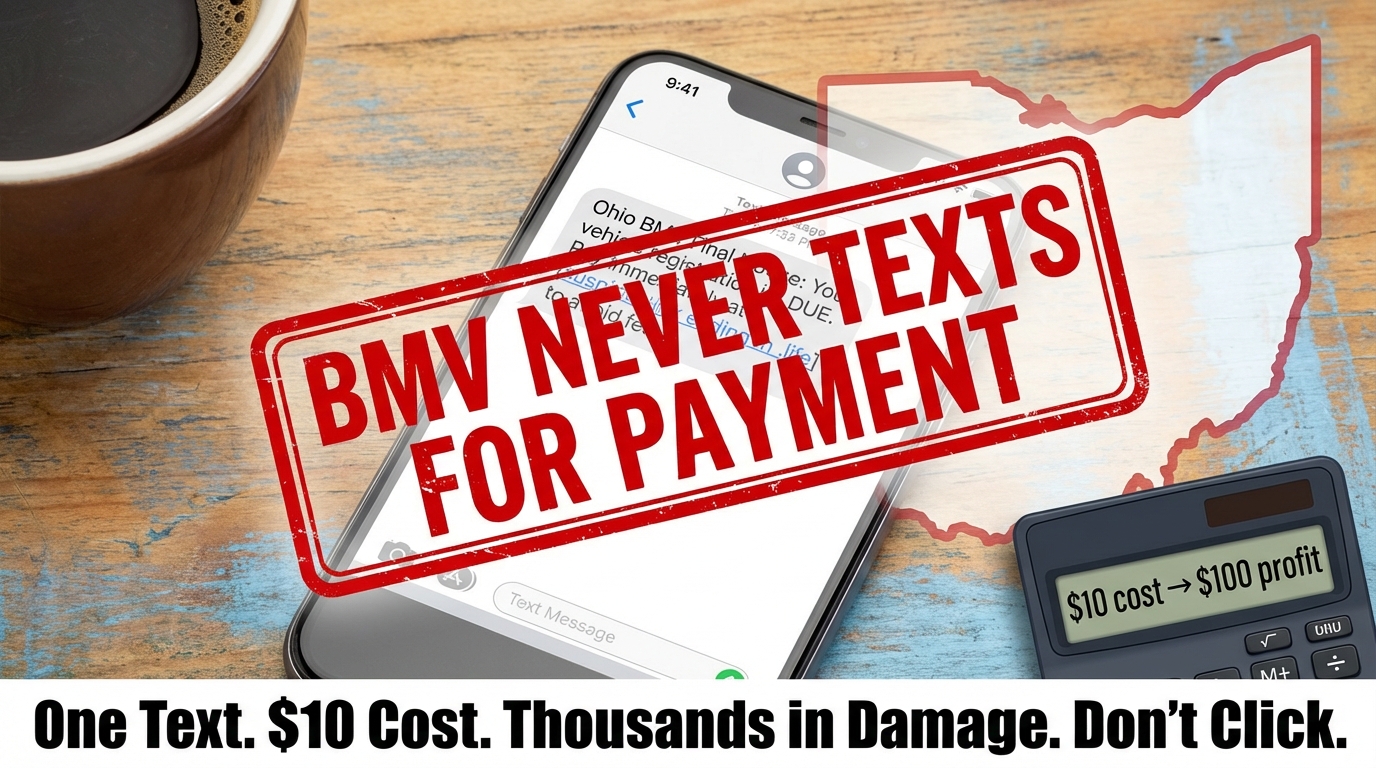

Ohio Residents Are Being Targeted by Fake BMV Texts — Here's What You Need to Know
If you received an Ohio BMV scam text, here is the short answer:
It is a scam. Delete it. Do not click any links.
| Question | Answer |
|---|---|
| What is it? | A fake text pretending to be the Ohio Bureau of Motor Vehicles |
| What does it claim? | Outstanding tickets, unpaid fines, or threatened license suspension |
| What does it want? | Your personal info or payment via a suspicious link |
| Is it real? | No — the Ohio BMV never sends unsolicited texts demanding payment |
| What should you do? | Delete the text and report it at reportfraud.ftc.gov |
Scammers have been sending fake text messages to Ohio residents for years — and the problem keeps coming back. The Ohio BMV issued alerts on multiple occasions, including as recently as March 2026, warning that these texts are part of a nationwide phishing campaign.
The messages look urgent. They claim you owe money, that your license is about to be suspended, or that your BMV profile needs an immediate update. They pressure you to click a link right now.
But here is the thing: the Ohio BMV will never text you to demand payment or personal information. Full stop.
The economics of this scam are simple and alarming. Sending a thousand texts can cost a scammer as little as $10. If even a tiny fraction of a million recipients hand over $100 or their personal details, the scammer profits enormously — with very little effort.
This is why these scams keep coming back. They work on enough people to be worth it.
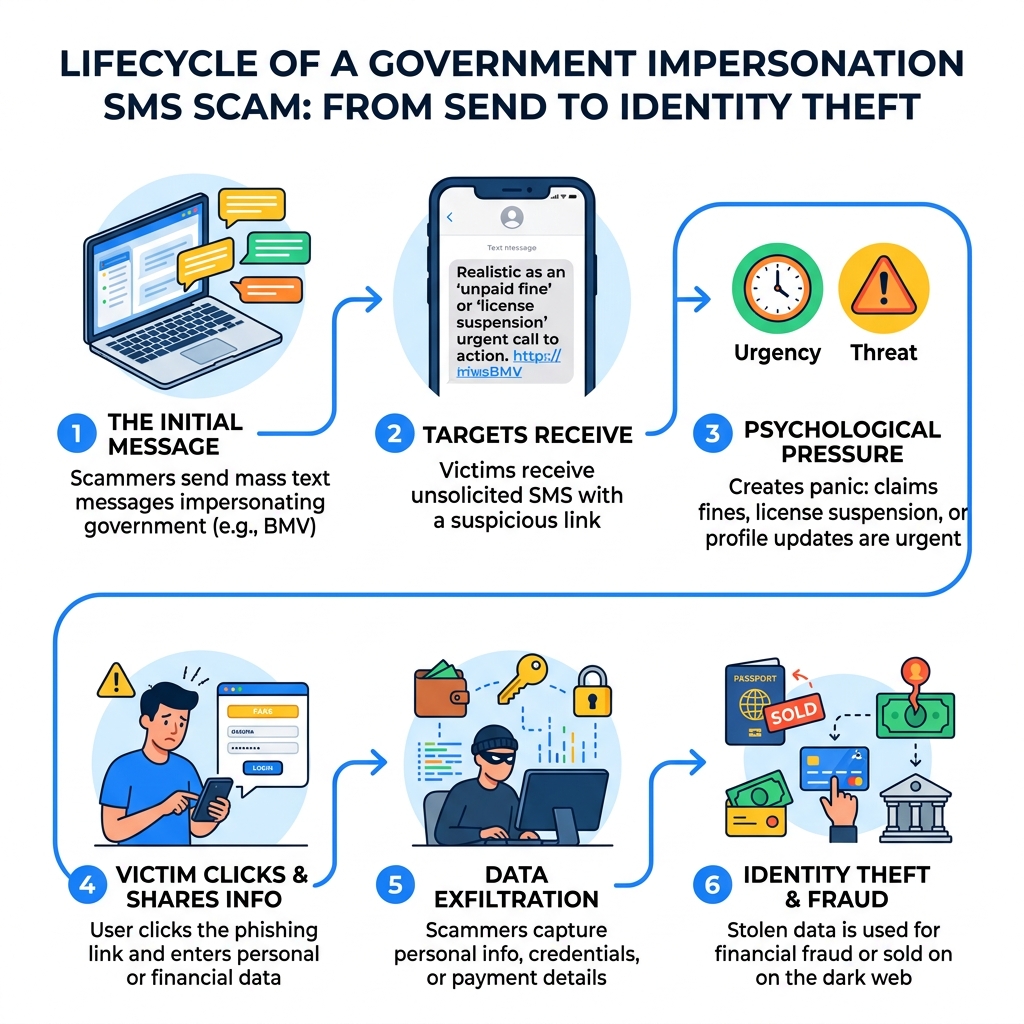
How to Identify an Ohio BMV scam text
Identifying a fraudulent message starts with understanding how the real Bureau of Motor Vehicles (BMV) operates. In Ohio, official business regarding your driver’s license, vehicle registration, or outstanding fines is almost exclusively handled through the U.S. Mail or in person at a deputy registrar location.
When you receive an Ohio BMV scam text, it usually arrives out of the blue. This is known as "smishing" (SMS phishing). These messages are designed to bypass your logical defenses by triggering a "fight or flight" response. You might see the official-looking BMV logo or a header that says "STATE OF OHIO," but don't let the branding fool you. Scammers are experts at "spoofing" or mimicking the visual identity of government agencies to gain your trust.
One of the biggest giveaways is the language used in the message. Real government agencies are generally bureaucratic and formal; they don't use high-pressure sales tactics. If the text says you must pay "within the next 30 minutes" or face "immediate arrest," it is a scam. This sense of artificial urgency is a hallmark of the DMV Text Scam 2026 - Do Not Click That Link Until You Read This which has been seen across the country.
Furthermore, these texts are often part of a broad national phishing campaign. Scammers use automated software to blast these messages to thousands of area codes at once. They don't actually know if you have a car or even a valid license; they are simply playing a numbers game, hoping a small percentage of recipients will be worried enough to click.
Red Flags and Suspicious Domains to Watch For
The most definitive way to spot an Ohio BMV scam text is to look at the link provided. Government agencies in the United States use specific domain extensions. If the link doesn't end in .gov, you should treat it as a threat.
Scammers often register "disorienting" URLs that look somewhat plausible at a quick glance but are technically unrelated to the State of Ohio. We have seen domains ending in .life, .me, .net, or even random strings of characters like "org-cwsbx.life."
| Feature | Official Ohio BMV | Ohio BMV Scam Text |
|---|---|---|
| Domain Extension | .gov (e.g., bmv.ohio.gov) | .life, .me, .com, .link, .info |
| Contact Method | Physical Mail / In-Person | Unsolicited SMS / Text |
| Tone | Formal, Educational | Urgent, Threatening, Alarming |
| Payment Request | Secure Portal / Check by Mail | Clickable Link to "Pay Now" |
| Personal Info | Verified via SSN/DOB in person | Asks for ID upload or full PII via text link |
Another major red flag is the presence of QR codes. While some businesses use them for menus or check-ins, the Ohio BMV has explicitly warned residents not to scan QR codes sent via text. These codes can lead you to "spoofed" websites that look identical to the real BMV portal but are actually designed to record your keystrokes and steal your identity.
As we mentioned earlier, the economics of these scams are what make them so persistent. A scammer might pay only a penny per text. If they send out 1,000 texts, it costs them $10. If just one person falls for it and pays a "fine" of $100, the scammer has already made a 1,000% profit. This low barrier to entry is why you might see similar reports like the SC DMV Scam Text - SCDMV Never Texts appearing in other states simultaneously.
Common Claims in an Ohio BMV scam text
To get you to click, scammers use a variety of "hooks." These are the most common lies found in an Ohio BMV scam text:
- Outstanding Traffic or Parking Tickets: This is the most frequent claim. The text will say you have an unpaid violation and that you must pay immediately to avoid a "permanent record" or additional late fees.
- License Suspension Warnings: The message warns that your driving privileges are at risk of being revoked. According to the Traffic Ticket Suspension Scam (Bureau of Motor Vehicles) alerts, these messages often link to a site that asks for your Social Security number and credit card info to "clear" the suspension.
- Profile Updates: Some versions of the scam claim that your "OH BMV Profile" is incomplete or needs a mandatory update. They may ask you to upload a photo of your driver’s license, which gives the scammers everything they need for full-blown identity theft.
- Toll Violations: While technically separate from the BMV, scammers also impersonate the Ohio Turnpike to claim you owe unpaid tolls.
Official Statements from the Ohio BMV and Authorities
Ohio authorities have been very vocal about these threats. Registrar Charlie Norman has repeatedly emphasized that the BMV does not initiate contact via text to demand money. The Ohio Bureau of Motor Vehicles official policy is clear: they will never send you a text message requesting your personal or financial information.
Auditor of State Keith Faber has also urged diligence, noting that scammers will stop at nothing to trick Ohioans into disclosing sensitive data. The Department of Public Safety (DPS) has issued multiple "For Immediate Release" bulletins over the last several years (including June 2025 and March 2026) to combat the resurgence of these phishing attempts.
These agencies want you to know that if there is a legitimate issue with your license or registration, you will receive a formal notice in the mail. If you are ever in doubt, the safest move is to close the text and navigate directly to the official bmv.ohio.gov website by typing it into your browser yourself.
Immediate Actions for Ohio Residents
If a suspicious text lands in your inbox, your first instinct might be to reply "STOP" or ask "Who is this?" Do not do this. Replying to a scam text confirms to the sender that your phone number is active and that a real person is reading the messages. This will only lead to more spam and scam attempts in the future.
Instead, follow these steps:
- Do Not Click: Even if the link looks somewhat legitimate, do not touch it.
- Delete the Message: Once you have identified it as a scam, remove it from your phone.
- Block the Number: Use your phone’s built-in "Block Caller" feature to prevent that specific number from reaching you again.
- Verify Independently: If you are genuinely worried about a ticket, call the Ohio BMV at their official number (844-644-6268) or visit a local deputy registrar.
Sometimes, even tech-savvy people get caught off guard. As noted in the SCDMV Scam - A Traffic Reporter Got One story, these texts can be convincing enough to fool almost anyone if they arrive at the right (or wrong) time.
Reporting an Ohio BMV scam text to Authorities
Reporting these scams helps authorities track the frequency of attacks and shut down the fraudulent websites the scammers use.
- Federal Trade Commission (FTC): This is the primary place to report any phishing or smishing attempt. Visit reportfraud.ftc.gov to file a report. The data collected here helps the FTC build cases against scam networks.
- Ohio Attorney General: You can report scam attempts to the Ohio Attorney General’s Office. They provide resources for victims and can investigate local fraud.
- Local Police: If you have actually lost money or provided your Social Security number to a scammer, you must contact your local police right away to file a report. This is a necessary step if you need to dispute charges or place a fraud alert on your credit.
Frequently Asked Questions
Does the Ohio BMV ever text residents about unpaid tickets?
No. The Ohio BMV does not send unsolicited text messages to residents regarding unpaid tickets, fines, or fees. Official notifications regarding your driving record are sent via the U.S. Postal Service. While some government services may offer opt-in text alerts for appointment reminders, they will never use these channels to demand immediate payment or sensitive personal data.
What should I do if I already clicked the link?
If you clicked the link but didn't enter any information, you should still be cautious. Some malicious sites can trigger "drive-by" downloads of malware. If you did enter your credit card or Social Security information:
- Contact your bank or credit card issuer immediately to freeze your accounts.
- Change the passwords for your email and banking accounts.
- File a report with your local police department.
- Visit IdentityTheft.gov to create a recovery plan.
Why am I receiving these texts now?
These scams often run in cycles. Scammers may use lists of phone numbers obtained from previous data breaches or simply use "war dialing" software to text every number in a specific area code. There is often a spike in these messages around tax season or during periods of high travel, as people are more likely to believe they might have a "forgotten" fine or toll.
Conclusion
The Ohio BMV scam text is a persistent threat, but it is one that you can easily defeat with a little bit of knowledge. By recognizing the red flags—such as urgent language, suspicious .life or .me domains, and unsolicited demands for money—you can protect yourself and your family from identity theft.
At Tempo Mail USA, we believe that your primary personal information should be guarded like a fortress. One of the best ways to stay safe in the digital age is to reduce your "data footprint." When you sign up for services or interact with organizations online, using a temporary email or a privacy proxy can act as a firewall, ensuring that your real PII (Personally Identifiable Information) never falls into the hands of scammers in the first place.
Stay vigilant, Ohio. If you want to learn more about protecting your digital identity and keeping your inbox clean from scammers, visit us at https://tempomailusa.com/.