

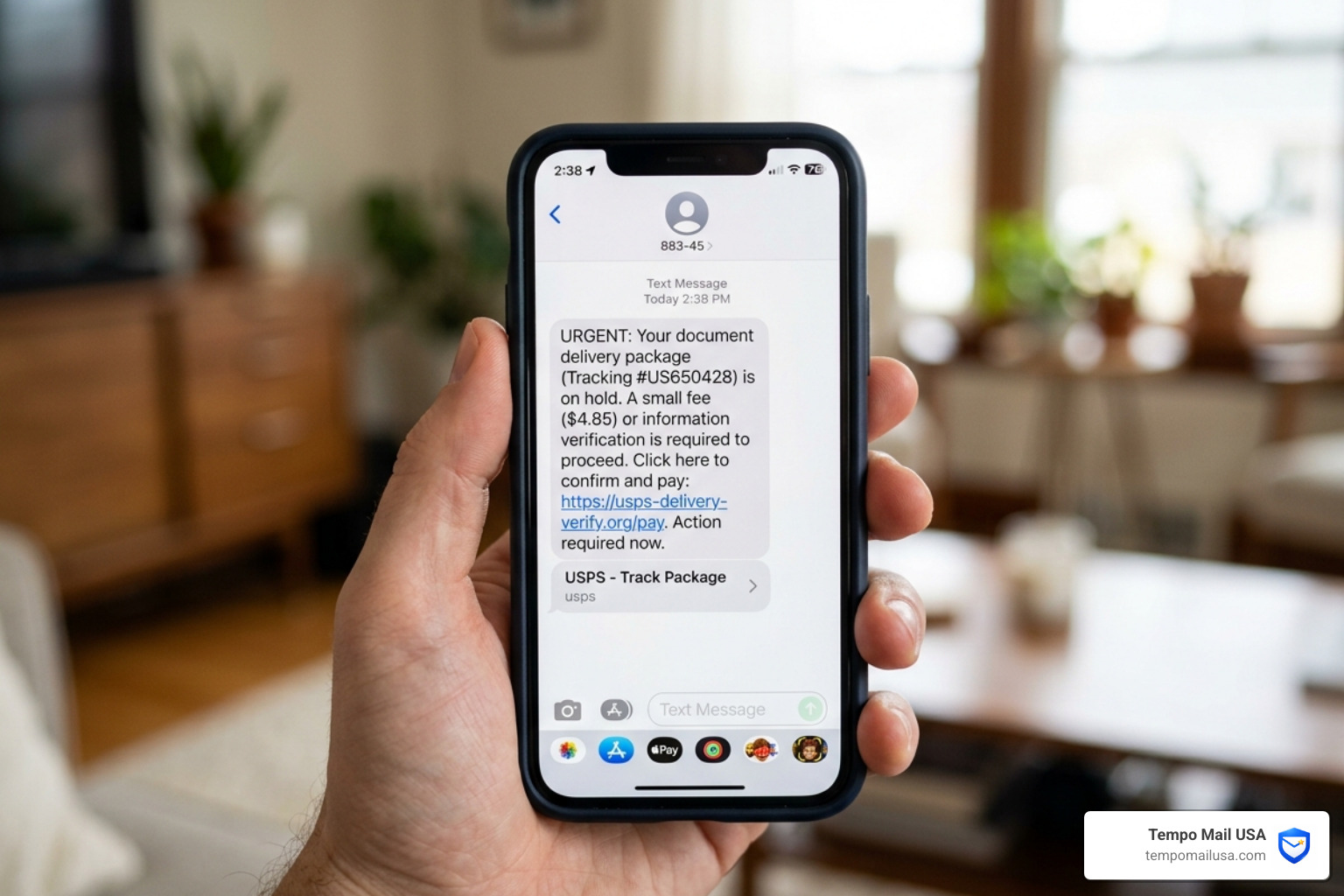

Document Delivery Services Scams Are Surging — Here's What You Need to Know Fast
Document Delivery Services Scam How to Verify and Avoid Fraud is one of the fastest-growing fraud categories in 2026, and if you've landed here after receiving a suspicious text, email, or missed delivery notice, you're right to be cautious.
Quick answer — how to verify and avoid document delivery scams:
- Never click links in unsolicited delivery notifications — go directly to the carrier's official website instead
- Check the sender's domain carefully — legitimate carriers like USPS, FedEx, and UPS use official domains, not random strings or lookalike URLs
- USPS only sends tracking texts via 5-digit short codes — and only after you've opted in; it never sends unsolicited links or requests payment
- Legitimate document delivery services never ask for fees, personal info, or payment via text or email
- If something feels off, hang up or delete the message — then verify independently using a number or website you find yourself
- Report suspicious messages to spam@uspis.gov, forward to 7726, or file with the FTC at ftc.gov
Here's the uncomfortable truth: over 85% of Americans shop online, and millions of packages move through the postal system every single day. That volume creates the perfect cover for scammers. They don't need to fool everyone — just enough people who are distracted, busy, or waiting on a real delivery.
Document delivery scams go beyond the typical "your package is on hold" text. They've evolved into a sophisticated category of fraud that can impersonate legal couriers, government agencies, notary services, and even official document authentication platforms. The psychological hook is powerful — a fake notice referencing a court summons, a legal filing, or a secure document requiring your signature triggers a very different kind of urgency than a delayed Amazon order.
Many users now rely on secure platforms, identity theft protection services, and advanced privacy tools to avoid the financial and data-related risks these scams create. And with good reason — clicking the wrong link doesn't just expose your address. It can hand scammers your email credentials, banking details, and enough personal information to impersonate you entirely.
The scam landscape in April 2026 is more technically sophisticated than ever, with fraudsters deploying cloned government websites, QR code traps, and fake document verification portals that look almost indistinguishable from the real thing.
This guide breaks down exactly how these scams work, who's most at risk, and — most importantly — how to protect yourself before you become a statistic.
Understanding the Document Delivery Services Scam: How to Verify and Avoid Fraud
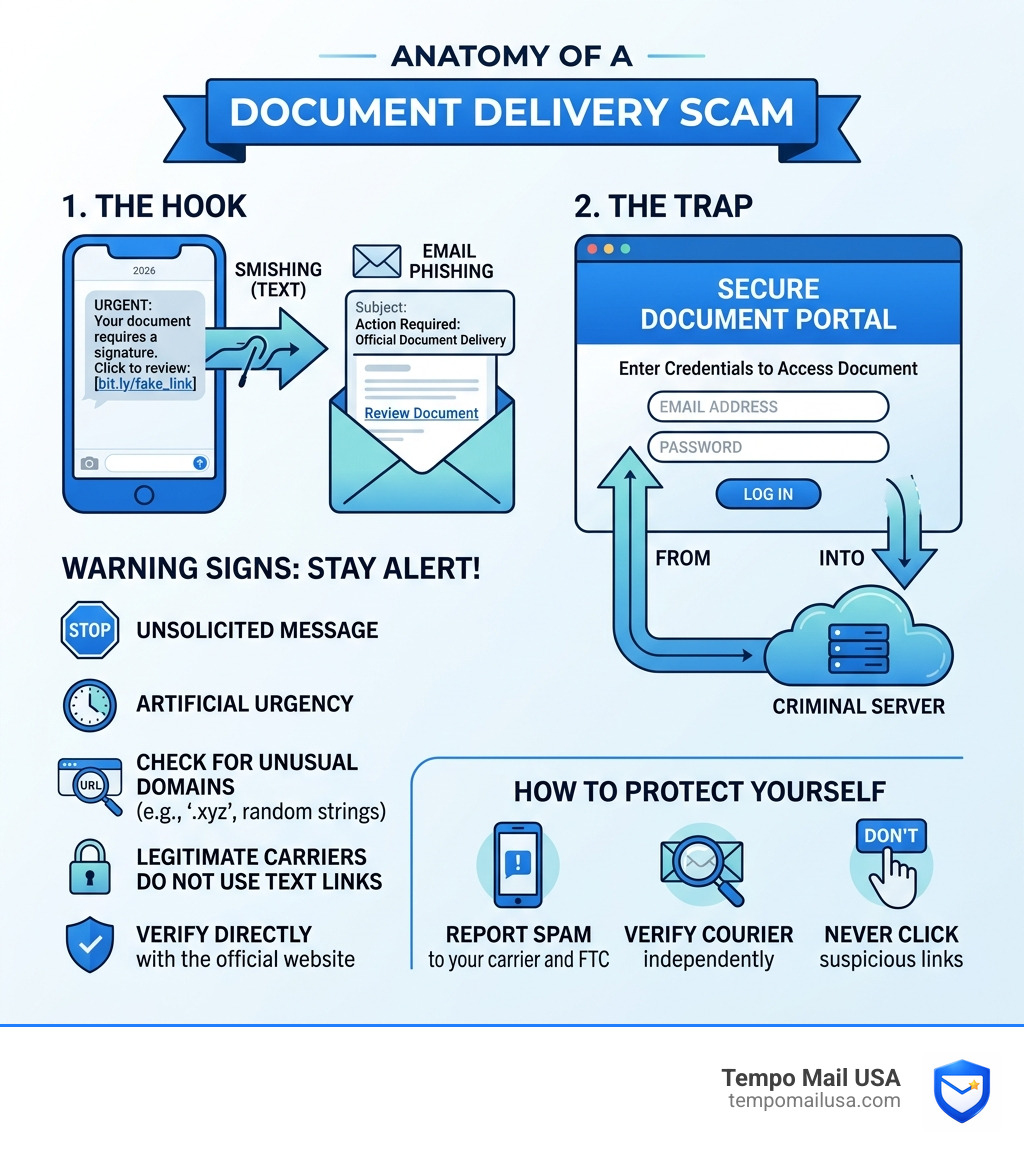
To beat a scammer, we have to understand their playbook. A Document Delivery Services Scam How to Verify and Avoid Fraud typically begins with a "hook"—an unsolicited email or text message claiming that a sensitive document is waiting for your review. In 2026, these are often branded as "SecureDocs" or "Official Legal Correspondence."
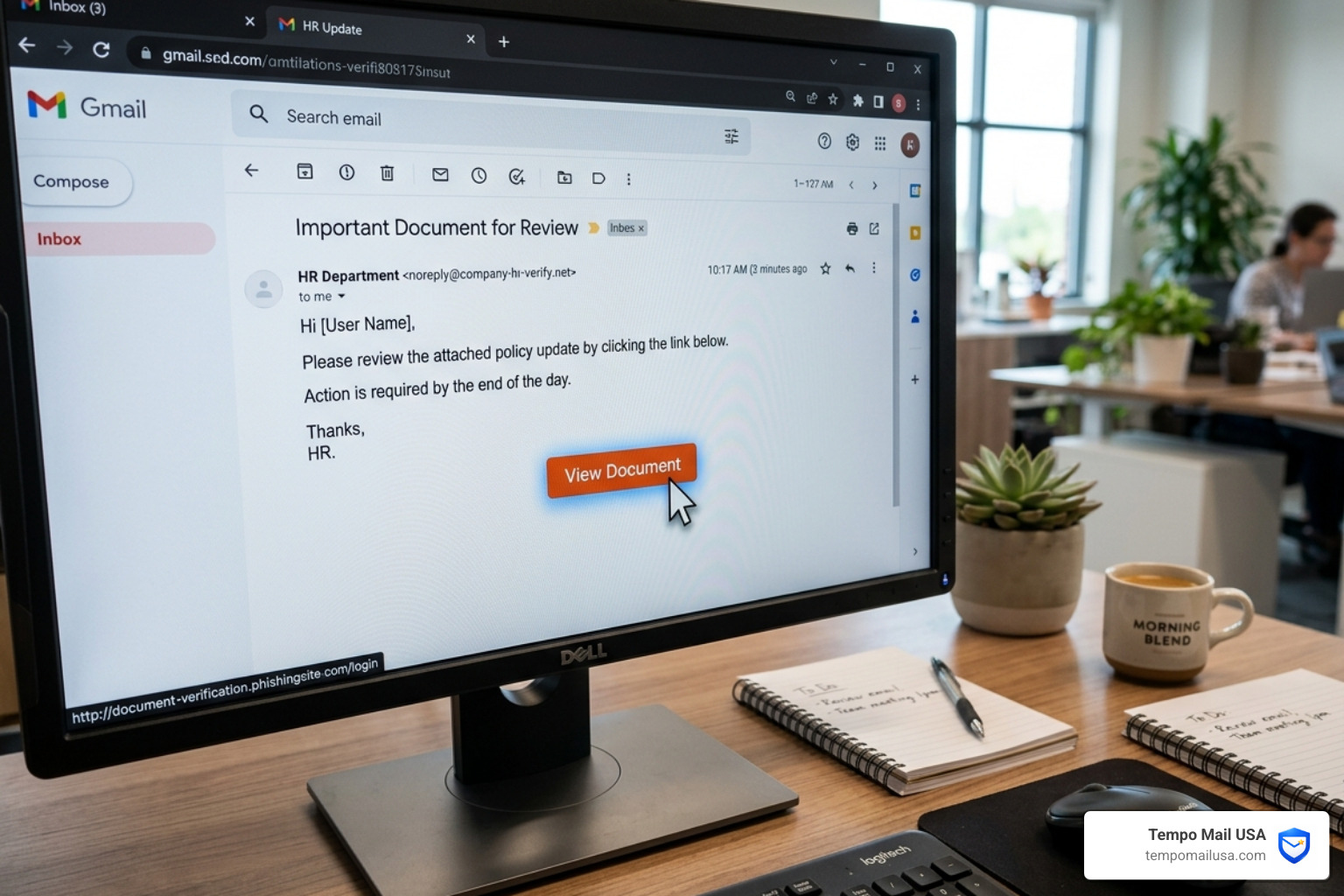
The primary goal isn't just to steal a few dollars for a "redelivery fee." It is often a sophisticated phishing scam designed to harvest your Personally Identifiable Information (PII) or account credentials. For instance, the SecureDocs Document Delivery Email Scam uses a fake "Review Document" link. When clicked, it takes you to a pixel-perfect replica of a Gmail or Yahoo login page. If you enter your password, the scammers now have the "keys to your kingdom," allowing them to reset bank passwords, access private chats, and even distribute malware to your contacts.

Identifying a Document Delivery Services Scam How to Verify and Avoid Fraud in Smishing
"Smishing"—or SMS phishing—is the mobile-first version of this fraud. We've seen a massive spike in texts claiming to be from the USPS or state agencies. Scammers love impersonating the government because it carries an air of authority that demands a quick response.
A common red flag is the sender's number. Legitimate USPS tracking updates only use 5-digit short codes and are only sent if you specifically opted in via a tracking number you already have. If you get a text from a random 10-digit number with a link like "usps-delivery-update.com," it's a scam. This mirrors other regional frauds like the Indiana BMV Text Scam or the FLHSMV Scam Text, where drivers are threatened with license suspension unless they click a link to "verify documents."
High-Tech Tactics: QR Codes and Cloned Portals
As we move through 2026, scammers have gotten tech-savvy. They are now weaponizing QR codes. You might receive a physical "missed delivery" slip on your door with a QR code to "schedule redelivery." Scanning this code can lead to a "cloned portal"—a website that looks exactly like a government or FedEx site but exists solely to capture your credit card data.
We are also seeing a rise in Apostille scams. These target people needing international document authentication. Fraudsters offer "instant digital apostilles" for a low fee, which is impossible since these documents require government verification. They even provide fake QR codes on the forged documents that lead to their own fake verification websites to "prove" the document is real.
How to Choose the Right Verification Method
When you receive a notification, your first instinct shouldn't be to click—it should be to verify. The best defense is a "manual" approach. If a text says your UPS package is held, don't use their link. Open your browser, go to UPS.com, and type in your tracking number manually.
| Feature | Legitimate Notification | Fraudulent Scam |
|---|---|---|
| Sender Address | Official domain (e.g., @fedex.com) | Random or lookalike (e.g., @fedx-support.net) |
| Greeting | Often includes your name or specific order ID | Generic ("Dear Customer" or "User") |
| Urgency | Standard status update | Threatening ("Final notice," "Account suspension") |
| Payment Request | Rare; usually handled at checkout | Demands "redelivery fee" or "customs tariff" |
| Links | Leads to official, secure (.gov or .com) sites | Shortened URLs or strange domains |
One of the most effective ways to spot a fake email is to hover your mouse over any buttons or links without clicking. This reveals the true destination URL in the bottom corner of your browser. If the button says "View Document" but the link points to a string of random characters, delete it immediately. If you suspect you're being targeted, you can learn more about how to outsmart phishing attacks.
Verifying Official Government Communications
Government agencies like the U.S. Copyright Office or the Department of Commerce have very specific ways of communicating. They will never demand payment via gift cards, Zelle, or cryptocurrency.
For example, Copyright scams often involve emails claiming you’ve committed "infringement" and must pay a fine via a provided link. In reality, the Copyright Office does not sue people or demand "settlement fees" via email. Always check that the sender’s email ends in a strict .gov domain. If it ends in .com, .net, or .org, it is not an official federal communication.
Legal Risks and Financial Consequences of Delivery Fraud
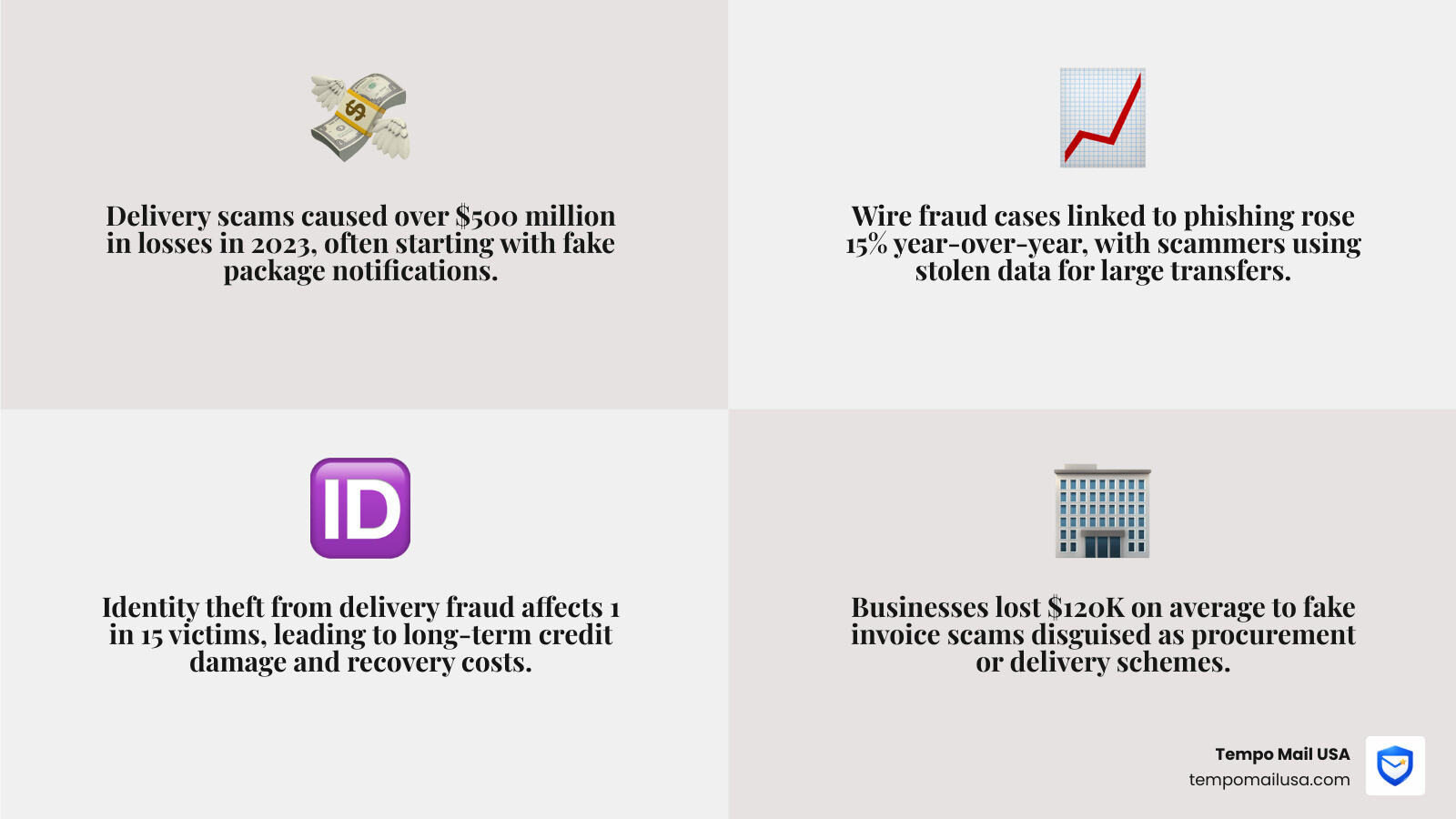
Falling for a Document Delivery Services Scam How to Verify and Avoid Fraud carries heavy consequences. Beyond the immediate loss of a "delivery fee," these scams are often the gateway to wire fraud, where scammers use your harvested info to trick you into transferring large sums of money.
If you have lost significant funds, you may need to consult a financial fraud recovery attorney. In many cases, the FBI’s Internet Crime Complaint Center (IC3) will launch a wire fraud investigation if the theft is part of a larger organized ring.
Protecting Your Business from a Document Delivery Services Scam How to Verify and Avoid Fraud
Businesses are high-value targets. Scammers often use "Procurement Schemes," sending fake Request for Quotes (RFQs) or Purchase Orders (POs) that look like they are from government agencies. They might "order" $50,000 worth of laptops to be delivered to a "secure document facility," which is actually just a rented warehouse the scammers use to intercept the goods before shipping them overseas.
To protect your company, implement business identity theft protection. Be especially wary of fake invoice scams, which often accompany these fraudulent delivery notices. Always verify the delivery address; if a "government agency" asks for delivery to a residential address or a generic storage unit, it’s a massive red flag.
Proactive Defense: Reporting and Security Tools
If you encounter a scam, reporting it is the only way to help authorities shut down the infrastructure behind it.
- For USPS scams: Email a screenshot to
spam@uspis.gov. - For general smishing: Forward the text to 7726 (which spells "SPAM").
- For financial loss: Report to the IC3.gov portal.
Many people wonder about the cost of identity theft protection and whether it's worth it. In 2026, having a layer of defense between your PII and the internet is no longer optional. While services like Zelle are convenient, they rarely offer refunds for scams once you've authorized the payment—you can read more about Zelle's refund rules here.
Recovery Steps After a Security Breach
If you’ve already clicked a link or entered your info, don't panic—act fast:
- Change Your Passwords: Start with your email, then your bank. Use a password manager to create unique, complex passwords for every site.
- Enable 2FA: Two-factor authentication is your best friend. Even if a scammer has your password, they can't get in without that second code.
- Monitor Your Credit: Set up a credit freeze or alert with the big three bureaus (Equifax, Experian, TransUnion).
- Secure Your Accounts: If you use PayPal, be aware of common phishing tactics and check your recent activity.
- Prevent SIM Swapping: Call your mobile provider and add a PIN to your account to ensure SIM swap fraud prevention.
Frequently Asked Questions about Document Delivery Scams
How can I tell if a USPS delivery text is legitimate?
Legitimate USPS tracking updates only come from 5-digit short codes and only if you have opted in; they never contain links to external websites or requests for payment. If you receive a text from a full phone number or one that requires you to "pay a fee to release your package," it is a scam.
What should I do if I clicked a link in a suspicious delivery email?
Immediately disconnect your device from the internet to stop any potential data exfiltration. Scan your device with reputable antivirus software to check for malware. Next, change your account passwords from a different, "clean" device, and contact your financial institution if you provided any credit card or banking details.
Are there specific laws that protect victims of document delivery fraud?
While specific "document delivery" laws are rare, these crimes are prosecuted under broader statutes like the Fraud Act or federal wire fraud laws. In the UK, the Fraud Act 2006 is often used, while in the US, the FBI and FTC handle these under interstate commerce and wire fraud regulations. Victims should always report incidents to the FBI's IC3 or the FTC to build a legal paper trail.
Conclusion
The world of 2026 is hyper-connected, and while that makes life easier, it also makes us more accessible to bad actors. Protecting your digital footprint is about more than just a strong password; it's about controlling who has access to your real identity.
To maintain long-term privacy and shield your personal data from these evolving threats, using a service like Tempo Mail USA provides a secure alias generation system that acts as a PII firewall. By using a temporary email proxy, you ensure your real identity remains protected during online interactions, making it much harder for scammers to link a fraudulent delivery notice to your actual inbox.
Stay vigilant, verify every "urgent" notice, and treat your personal information like the currency it is.