


The Real Cost for Identity Theft Protection (And What You Actually Get)
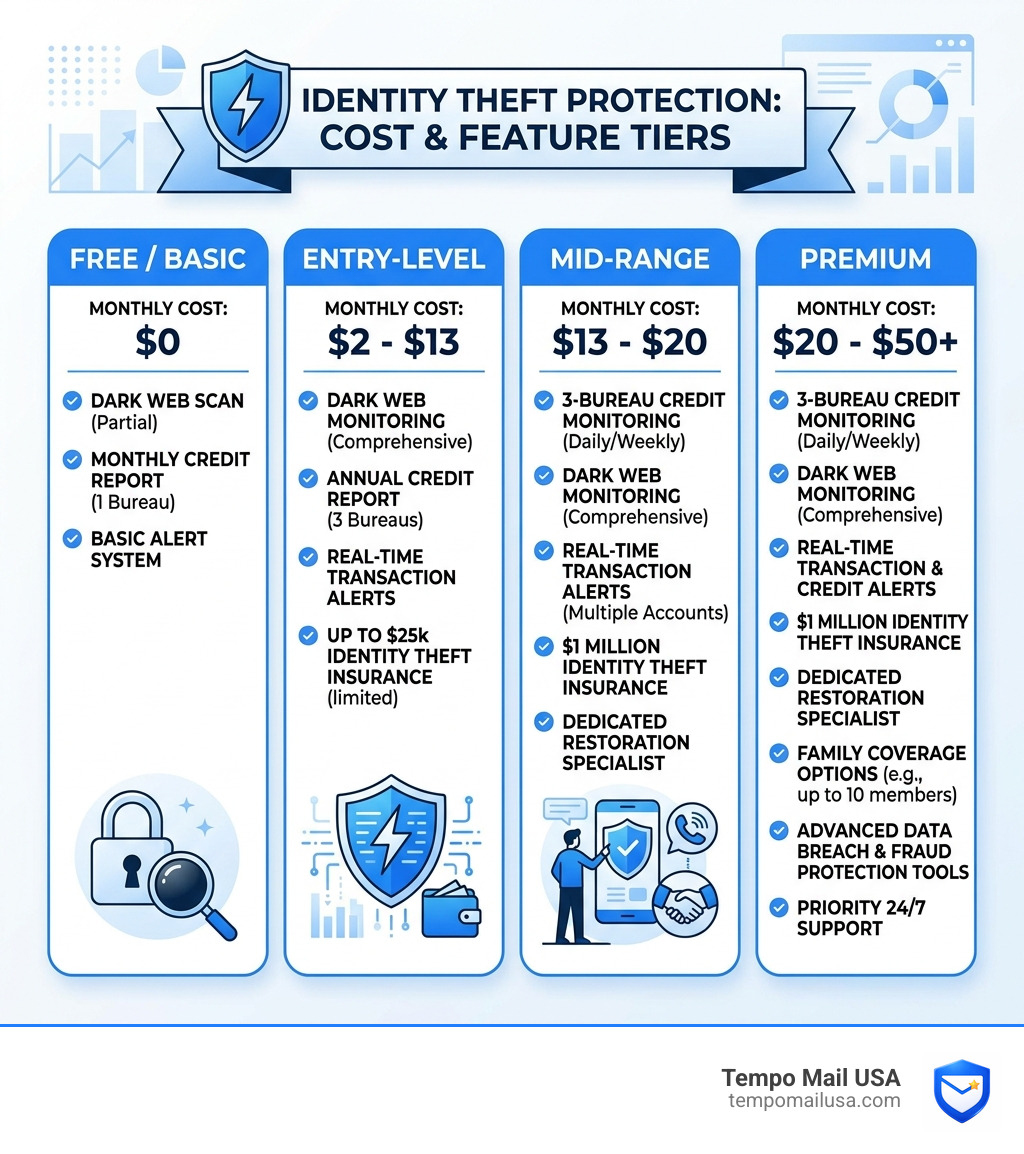
The cost for identity theft protection ranges from free to over $35 per month, depending on the plan and features included. Here's a quick breakdown:
| Plan Type | Typical Monthly Cost |
|---|---|
| Free / Basic | $0 (limited features) |
| Individual entry-level | $2.19 - $12.49 |
| Individual mid-range | $13 - $20 |
| Individual premium | $20 - $35+ |
| Family plans | $20 - $50+ |
Americans lost $43 billion to identity fraud in 2023, according to data from the Federal Trade Commission. Online scam losses more than quadrupled between 2020 and 2024. Yet most people have no idea what they're actually paying for — or whether they're overpaying.
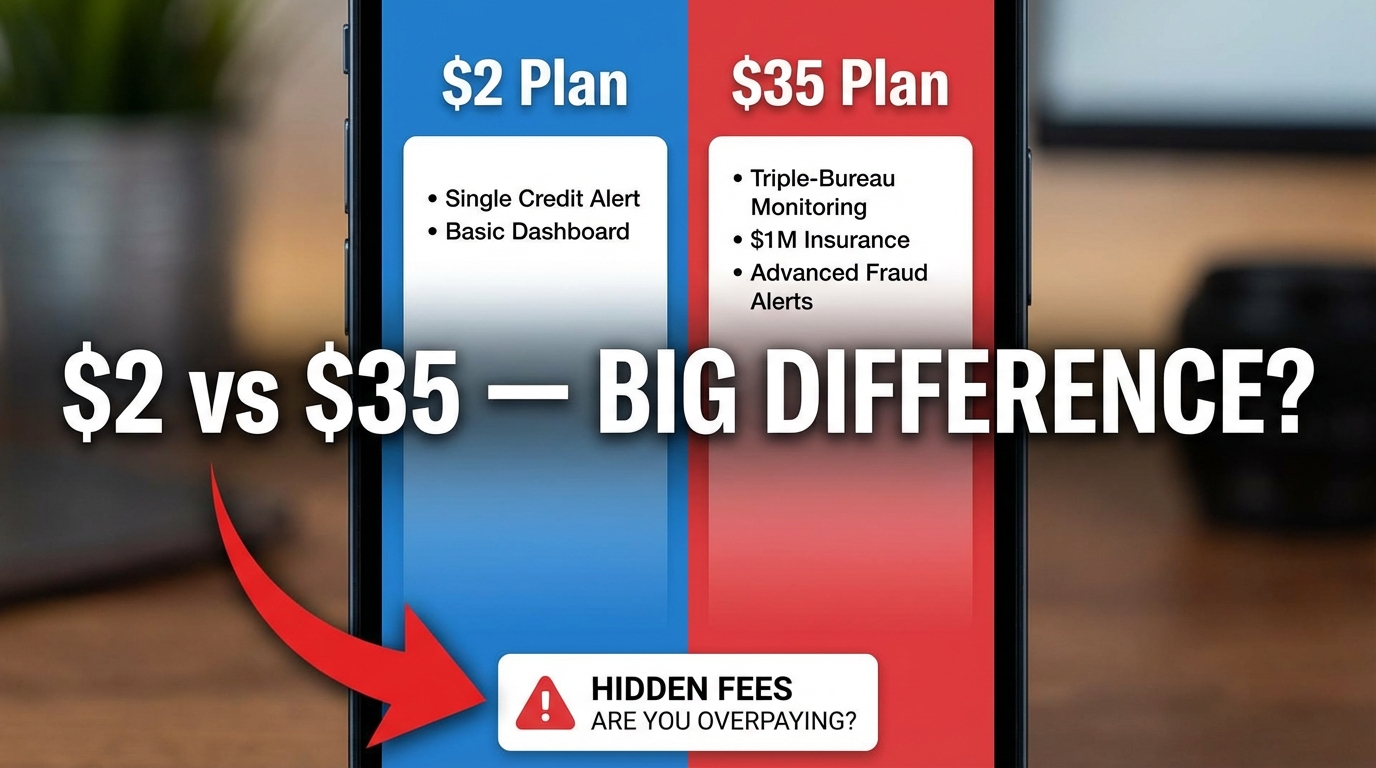
Identity theft protection services vary wildly in price. Some plans cost as little as $2.19 a month. Others run past $35. And the difference between them isn't always obvious from the marketing.
Are you getting triple-bureau credit monitoring? A $1 million insurance policy? Real human restoration help? Or just a dark web scan and a dashboard?
This guide breaks down exactly what you pay at each price tier, which features are worth it, and where the hidden costs tend to hide — so you can make a smart decision without getting overcharged.
Understanding the Market Cost for Identity Theft Protection
When we look at the landscape of identity theft protection services, we see a market that has matured into a multi-tiered subscription industry. The days of simple credit pings are over. Today, you are paying for a sophisticated digital perimeter.
The typical cost for identity theft protection for an individual averages between $14 and $16 per month. However, entry-level plans from budget-friendly providers can start as low as $2.19 per month (with a two-year commitment), while premium offerings from established industry leaders can climb above $35 monthly.
For those looking to protect a household, family plans generally fall between $20 and $30 per month, though high-end "Ultimate" tiers can reach $50 or more. These often provide the best "per-head" value, covering two adults and up to ten children.
Monthly vs. Annual Subscription Models
We always recommend looking at the "annualized" cost. Most providers offer a significant discount—often around 17% to 25%—if you pay for a full year upfront. For example, a typical high-tier plan might drop from a $29.99 monthly rate to an effective $25.00 per month when billed annually.
However, users must remain vigilant regarding renewal hikes. Many "first-year" promotional discounts are aggressive, sometimes slashing 50% off the standard rate. Once that introductory period ends, your credit card may be hit with a "sticker shock" renewal. It is vital to track these dates to ensure your data privacy compliance strategy remains cost-effective.
More info about identity theft trends
Factors Influencing the Cost for Identity Theft Protection
What exactly are you paying for? The price fluctuates based on four primary pillars:
- Credit Bureau Scope: Basic plans usually monitor one bureau. Premium plans provide triple-bureau monitoring (covering all three major national bureaus), which is the gold standard for credit monitoring software.
- Cybersecurity Insurance Limits: Coverage typically starts at $1 million, but top-tier plans offer up to $3 million in cybersecurity insurance for stolen funds and legal fees.
- Specialized Monitoring: Features like home title monitoring, social media takeover alerts, and "Buy Now Pay Later" (BNPL) tracking add significant overhead to the monthly premium.
- Identity Restoration: The inclusion of 24/7 "white-glove" restoration specialists—real humans who handle the paperwork to reclaim your identity—is a major price driver.
Hidden Fees and Long-Term Cost for Identity Theft Protection
Beyond the monthly sub, watch out for "add-ons." Some services charge extra for enterprise VPN solutions or advanced malware protection that others include for free. Additionally, many "free trials" require credit card info upfront and transition automatically into a $24.99/month subscription if not canceled.
We also see "cancellation hurdles" in the industry, where some providers require a phone call to a retention agent rather than a simple "click-to-cancel" button. Always verify the money-back guarantee period; a 60-day window is the industry standard for annual plans.
Premium Features and Cybersecurity Insurance Value

If you are paying more than $20 a month, you should expect more than just alerts. You are investing in a safety net. The most valuable component of high-end identity theft protection services is the insurance policy. While many think they are paying for the "app," they are actually paying for the $1 million (or more) in cybersecurity insurance that covers:
- Stolen funds reimbursement (from 401ks, HSAs, and savings).
- Legal fees for defense against fraudulent claims.
- Lost wages while you spend time at the DMV or bank.
- Expert private investigators to clear your name.
Best Identity Theft Protection USA: Top Services Compared
Advanced Credit Monitoring Software and Triple-Bureau Access
Cheap plans are often reactive; premium credit monitoring software is proactive. High-cost plans offer real-time alerts the second a credit inquiry is made. They also provide "Credit Locks"—a feature that lets you freeze your credit reports with a single toggle in an app. This prevents payday loan fraud and unauthorized credit card openings before they happen.
Enterprise VPN Solutions and Advanced Malware Protection Bundles
To justify higher costs, many providers now bundle "full-stack" security. This includes enterprise VPN solutions to encrypt your public Wi-Fi traffic and advanced malware protection to stop keyloggers from stealing your passwords. Some even offer secure cloud storage for business documents, ensuring your sensitive PDFs (like tax returns or passports) are encrypted and stored away from your local hard drive.
Preventing Phishing with Disposable Email Infrastructure
While paid monitoring is a great "Plan B," the ultimate "Plan A" is preventing your data from leaking in the first place. This is where we believe every user needs a "Privacy Firewall."
At tempomailusa.com, we provide essential disposable email infrastructure that acts as an identity proxy. Most identity theft begins with a simple phishing email or a data breach at a minor website where you used your real email address. By using our temporary email utility, you ensure that your real PII (Personally Identifiable Information) is never exposed to third-party databases.
Our service offers:
- Secure Identity Proxying: Use a "burner" email for signups, keeping your primary inbox (and your identity) hidden.
- Data Privacy Compliance: Instantly block tracking pixels and malicious data payloads that hackers use to profile you.
- Anonymous Browsing: Shield your real identity from data brokers who sell your info to the highest bidder.
Integrating a tool like tempomailusa.com into your daily routine is a critical component of any comprehensive identity theft protection services strategy. It’s the difference between monitoring a fire and never letting the match be lit.
Strategic Investment in Data Privacy Compliance
For businesses and high-net-worth individuals, data privacy compliance isn't just a word; it's a financial necessity. Investing in a premium protection stack helps mitigate the risk of "Synthetic Identity Theft," where hackers combine real and fake data to create entirely new personas using your SSN.
Scaling Protection with Family and Business Plans
Family plans offer massive ROI. For instance, a comprehensive family plan covers up to five adults and unlimited children for around $32–$50 per month. This includes "Child Credit Freezes," which are essential because children’s SSNs are often clean slates for fraudsters. Protecting the entire household under one umbrella ensures that a breach of one family member doesn't lead to a domino effect across shared bank accounts.
The ROI of Professional Identity Restoration
The "Cost of Theft" is often cited by the Bureau of Justice Statistics as roughly $1,160 per victim. However, the time cost is much higher—often exceeding 200 hours of labor to fix the damage. When you pay for premium identity theft protection services, you are buying back those 200 hours. Professional restoration specialists act as your power of attorney, calling banks and government agencies so you don't have to.
Frequently Asked Questions about Identity Protection Costs
What is the average monthly cost for identity theft protection services?
Individual plans typically range from $10 to $25 per month, while comprehensive family plans covering multiple adults and children average between $20 and $40 per month depending on the depth of credit monitoring software included. Entry-level "monitoring-only" plans can be found for as little as $2.19, but these usually lack insurance and restoration support.
Does cybersecurity insurance cover ransomware and social engineering?
Premium plans often include cybersecurity insurance that covers out-of-pocket expenses, legal fees, and stolen funds up to $1 million, with some advanced tiers extending coverage to ransomware payments and home title fraud. However, "social engineering" (where you willingly send money to a scammer) is often limited to smaller reimbursement caps, such as $5,000.
Is the cost for identity theft protection worth it compared to free monitoring?
While free tools provide basic alerts, paid identity theft protection services offer proactive dark web scanning, $1 million in cybersecurity insurance, and professional restoration specialists who handle the hundreds of hours required to recover a stolen identity. Free tools tell you that you've been robbed; paid tools help you get your money back.
How do disposable email services contribute to robust identity theft protection?
Disposable email services, like tempomailusa.com, create an essential layer of defense by preventing your primary email from being exposed to phishing attempts, spam, and data breaches. This proactive measure significantly reduces your attack surface, enhancing overall data privacy compliance and safeguarding your personal information from potential identity theft by ensuring your "real" data is never in the hacker's hands to begin with.
Conclusion
Achieving financial peace of mind in 2026 requires a proactive defense. While the cost for identity theft protection can seem high, it is a fraction of the cost of a total financial wipeout. By combining a premium security stack—complete with credit monitoring software and cybersecurity insurance—with the identity-masking power of tempomailusa.com, you create an impenetrable barrier against digital predators. Don't wait for the alert; build your firewall today.