



Understanding the Burnslim Scam Threat
The burnslim scam has become a serious concern for consumers seeking weight loss solutions, with numerous reports of fraudulent billing, fake celebrity endorsements, and dangerous hidden ingredients. If you're wondering whether Burnslim is legitimate, here's what you need to know right now:
Key Warning Signs of the Burnslim Scam:
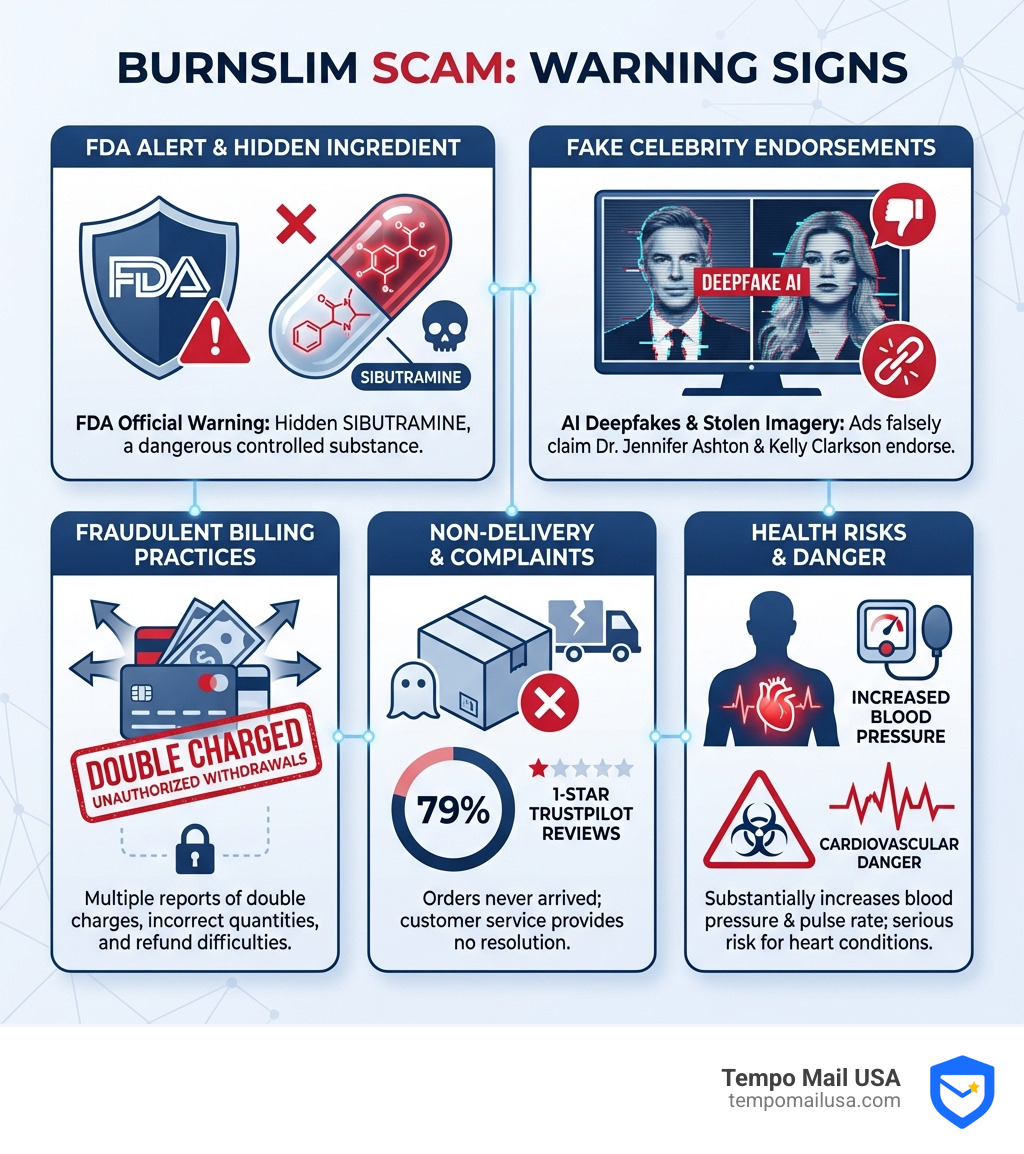
- FDA Warning Issued: The FDA officially warned consumers not to use Lipo 8 Burn Slim due to hidden sibutramine, a dangerous controlled substance
- Fake Celebrity Endorsements: Ads falsely claiming Dr. Jennifer Ashton and Kelly Clarkson endorse Burnslim use AI deepfakes and stolen imagery
- Billing Fraud: Multiple customers report being double-charged, receiving incorrect quantities, or facing refund difficulties
- Non-Delivery Issues: Users ordered products that never arrived, with customer service providing no resolution
- Trustpilot Rating: 2.3 out of 5 stars with 79% one-star reviews citing scam experiences
The Burnslim scam operates through multiple deceptive tactics. One customer reported: "I ordered 6 bottles, was charged for 12, received only 3 bottles that were thrown at their door." Another stated they "BELIEVE THAT THIS IS A SCAM AND PEOPLE DO NOT PURCHASE THE JUNK" after losing $300 with no product delivery.
Health risks are equally concerning. The FDA found that Lipo 8 Burn Slim contains sibutramine, which can substantially increase blood pressure and pulse rate, posing serious risks for people with heart conditions.
This guide will help you understand the full scope of the Burnslim scam, protect your personal information when shopping online, and take action if you've been affected.
The FDA Warning: Is Lipo 8 Burn Slim Safe?
When we talk about products like Burn Slim, our first stop should always be official health regulatory bodies. And what we found regarding Lipo 8 Burn Slim is a stark warning directly from the U.S. Food and Drug Administration (FDA). On July 8, 2014, the FDA issued a public notification advising consumers not to purchase or use Lipo 8 Burn Slim capsules. This wasn't a casual recommendation; it was a serious alert based on a troubling finding.
The product, often promoted for weight loss, was found to contain sibutramine. If that name doesn't ring a bell, it should. Sibutramine is a controlled substance that was removed from the market in October 2010 due to significant safety concerns. Its presence in an "all-natural" weight-loss supplement is not only deceptive but extremely dangerous.
So, what exactly is Lipo 8 Burn Slim advertised to do? Like many weight loss supplements, it claims to help users shed pounds, often through promises of boosting metabolism and suppressing appetite. However, the FDA's findings completely overshadow any advertised benefits, making its safety highly questionable. The official stance of the FDA is clear: avoid this product. This directly answers our question about the FDA's official position on Lipo 8 Burn Slim.
The risks associated with sibutramine are severe. It's known to substantially increase blood pressure and/or pulse rate. For individuals with a history of cardiovascular issues such as coronary artery disease, congestive heart failure, arrhythmias, or stroke, taking a product with hidden sibutramine could be life-threatening. Furthermore, sibutramine can interact in dangerous ways with other medications, potentially leading to unforeseen and severe health complications. This is why the FDA explicitly warns consumers.
It's a classic tactic of the burnslim scam and similar fraudulent products: marketing themselves as "all natural" to lull consumers into a false sense of security, while secretly including powerful, often banned, pharmaceutical ingredients. The FDA, unfortunately, cannot test every single dietary supplement on the market, which means consumers must exercise extreme caution.
You can read the full FDA notification here: Public Notification: Lipo 8 Burn Slim Capsules Contain Hidden Drug Ingredient.
Hidden Ingredients and Health Risks
Let's dive a bit deeper into why sibutramine, the hidden ingredient in Lipo 8 Burn Slim, is such a major red flag. As we mentioned, it's a controlled substance, meaning its distribution and use are strictly regulated due to its potential for abuse or harm. Its removal from the market wasn't a minor tweak; it was a full ban for safety reasons.
The dangers of sibutramine are primarily cardiovascular. Imagine a product that secretly puts your heart under immense strain, increasing your blood pressure and heart rate without your knowledge. For someone with an undiagnosed heart condition, or even someone seemingly healthy, this could trigger a heart attack or stroke. The risk isn't just theoretical; it's significant for patients with pre-existing conditions like coronary artery disease, congestive heart failure, arrhythmias, or a history of stroke.
Beyond these immediate cardiovascular threats, sibutramine also poses a risk through drug interactions. Many people take daily medications for various conditions - blood pressure, diabetes, depression, and more. When sibutramine is secretly introduced into their system, it can interact with these medications in ways that are unpredictable and, in some cases, life-threatening. This hidden danger makes Lipo 8 Burn Slim a serious risk for unsuspecting users.
We often see products like Lipo 8 Burn Slim marketed with vague claims of natural weight loss, but the reality is far more sinister. The lack of transparency about such a potent and dangerous ingredient is a hallmark of a burnslim scam. While consumers often look to reviews for guidance, such as those found on platforms like Burn Slim Reviews Consumer Reports, these reviews typically focus on perceived effectiveness or customer service, not hidden pharmaceutical components that only laboratory analysis can reveal. This underscores the critical importance of official warnings from bodies like the FDA over anecdotal evidence when it comes to product safety.
Investigating the Burnslim Scam: Marketing Tactics and Fake Endorsements
Beyond the alarming hidden ingredients, a significant part of the burnslim scam revolves around its deceptive marketing tactics. These aren't just minor exaggerations; we're talking about outright fabrication designed to mislead consumers and exploit their trust. The most prominent example involves the fraudulent use of celebrity endorsements.
One name that frequently pops up in connection with Burnslim's misleading ads is Dr. Jennifer Ashton. She is a highly respected medical professional, and her image and voice have been shamelessly co-opted by those behind the Burnslim scam. Our research clearly shows that Dr. Jennifer Ashton has never endorsed or been affiliated with any 'Burnslim' weight-loss product. Despite this, countless ads linking her name to Burnslim are fake, often utilizing sophisticated AI deepfakes or misleading promotional videos to create a false sense of credibility. It's a cunning trick, preying on the public's trust in medical experts.
Another infamous marketing ploy mentioned by frustrated consumers is the "jello trick" video. One reviewer described a 40-minute video as unclear and misleading because it promised a "jello trick" for weight loss, but the Burnslim product itself turned out to be capsules, with no jello insight. This kind of misrepresentation highlights the lengths to which these scammers will go to hook potential customers. Such tactics are designed to bypass critical thinking, much like how phishing emails try to trick you into clicking malicious links. Understanding how these scams operate can help you identify them, just as learning from a Quick Guide: How to Spot Phishing Emails protects your inbox.
These aggressive online marketing tactics, characterized by bold promises without any solid scientific backing, are a clear indicator of a fraudulent operation. They rely on creating a sense of urgency and false hope, often making exaggerated claims that sound too good to be true - because they usually are.
The Truth Behind the Burnslim Scam and Celebrity Claims
Let's pull back the curtain even further on the celebrity endorsement aspect of the burnslim scam. The misuse of public figures' images and voices is a disturbing trend in deceptive marketing. It's not just Dr. Jennifer Ashton; other celebrities like Kelly Clarkson have also been falsely associated with these products. One customer review explicitly mentions that the celebrity endorsement (Kelly Clarkson) was misleading, as her weight loss was attributed to genuine lifestyle changes, not a magic pill like Burnslim. We've also seen generalized mentions of figures like Dr. Oz being exploited in similar health product scams, even if not directly linked to Burnslim in our immediate research. This pattern of fake endorsements is a hallmark of the broader scam landscape.
These deceptive marketing efforts often use AI-generated voices, manipulated images, or completely fabricated testimonials to create convincing, yet utterly false, narratives. The goal is simple: leverage the perceived authority or aspirational image of a celebrity to sell an unproven, and potentially dangerous, product. There is no credible clinical evidence or independent verification supporting Burnslim's claims of effectiveness, and certainly no legitimate celebrity endorsement. This stark reality contrasts sharply with the aggressive, misleading advertisements.
Customer reviews and complaints, which we'll dig into more deeply soon, consistently reveal skepticism about these exaggerated promises and low-trust sales practices. For example, on platforms like Burn Slim Reviews & Complaints, consumers frequently express frustration and distrust regarding these marketing ploys. It's a clear warning that when a product relies on such blatant falsehoods, its legitimacy is severely compromised.
Identifying a Burnslim Scam Through Aggressive Billing
Perhaps one of the most infuriating aspects of the burnslim scam for consumers is the aggressive and often fraudulent billing practices. We've seen numerous reports that paint a picture of a company not just selling a dubious product, but actively engaging in financial misconduct.
The most common complaint is being double-charged for orders. Imagine placing an order for a weight-loss supplement, only to find your bank account debited twice for the same purchase. This happened to multiple customers. One reviewer reported being charged twice for an order and, after cancelling, is still waiting for a refund of $479.59, with the associated website reportedly no longer existing. Another customer was charged twice for a product they hadn't even received, and their credit card company had to block the transaction due to suspected fraud.
Beyond double charging, there are reports of customers being charged for more items than they ordered, or receiving fewer items than they paid for. One particularly egregious account describes a customer who ordered 6 bottles, was charged for 12, but only received 3 bottles that were left at their door. The company then offered only a 50% discount for the missing items, adding insult to injury. Such practices are not just poor customer service; they are indicators of a deliberate scheme to defraud.
The difficulties in obtaining refunds are also a major concern. Customers report being offered only partial refunds (for example, 75% of the purchase price) even when the product was never received or was returned. In some cases, the credited amount was even less than agreed upon. When a company makes it nearly impossible to get your money back, it's a strong sign of a burnslim scam. We've seen customers forced to involve their credit card companies to dispute charges or block continuous, unauthorized withdrawals from their accounts - a critical step, much like how you might Stop PayPal Spam: How to Effectively Report Email Scams to protect your financial information. These issues highlight the importance of vigilance against such aggressive billing, which can be as insidious as the scams warned about in articles like Beware of Webroot Scam Emails: Protect Your Inbox Now!.
Consumer Experiences: Reviews and Complaints
If you want to truly understand the legitimacy of a product like Burn Slim, listening to actual customer experiences is crucial. And what we hear from consumers about the burnslim scam is overwhelmingly negative, painting a grim picture of dissatisfaction and distrust. While the company might advertise significant weight loss, the reality reported by users is often quite different.
Here's a comparison of advertised claims versus the stark reality of customer complaints:
| Advertised Weight Loss Claims | Verified Customer Complaints/Reality |
|---|---|
| Boosts metabolism for rapid fat burning | Limited or no weight loss reported by many users; one user lost 3 lbs after one bottle, another 12 lbs in two months (an outlier). |
| Suppresses appetite and curbs cravings | No noticeable effect on appetite for many; some reported feeling more in control but results vary greatly. |
| Aids in thermogenesis for improved calorie burning | No scientific backing or independent verification for these claims; perceived effects are anecdotal and inconsistent. |
| All-natural ingredients for safe weight loss | FDA found hidden, dangerous sibutramine (a controlled substance) in Lipo 8 Burn Slim. |
| Easy to use, straightforward instructions | Customers reported unclear instructions, conflicting dosage information, and missing expected ingredients (for example, Turmeric). |
| Reliable customer service and product delivery | Widespread complaints of non-delivery, incorrect quantities, double charging, unauthorized withdrawals, inaccessible websites, and extreme difficulty obtaining refunds. |
| Endorsed by reputable figures like Dr. Jennifer Ashton | Celebrity endorsements are fake, using AI deepfakes and misleading tactics; Dr. Ashton has no affiliation. |
Looking at Trustpilot ratings, the numbers speak volumes. For "Burn Slim Reviews Consumer Reports" (specifically on the Australian Trustpilot site), the product holds a dismal 2.3 out of 5 stars based on 14 reviews, with a staggering 79% of reviews being 1-star. This indicates a profound level of customer dissatisfaction. Another page, "Burnslim Dr. Jennifer Ashton," has a 3.3 out of 5, but with only 7 reviews, it's less representative, and even then, the sentiment is far from glowing.
Many reviews explicitly state, "I BELIEVE THAT THIS IS A SCAM AND PEOPLE DO NOT PURCHASE THE JUNK." Customers report ordering products and never receiving them, with some losing hundreds of dollars. For instance, one customer ordered Burn Slim on 12/27/25 and by 1/27/26 had not received it, losing $300 after multiple unsuccessful attempts to get assistance from support. These stories of non-delivery and financial loss are rampant, reinforcing the perception of a widespread burnslim scam.
Are there any credible clinical studies or independent verification supporting Burn Slim's claims? Our research indicates no. The absence of such evidence, coupled with the FDA's warning about hidden ingredients, makes any claims of effectiveness highly suspect. Trustpilot, which aggregates these reviews, uses technology to screen for fake reviews but explicitly states it does not fact-check individual claims. This means while the volume of negative reviews is telling, the individual stories are still consumer opinions, but they align strongly with the red flags of a scam.
Common Complaints Regarding Customer Service
The customer service experience reported by Burn Slim users is another major red flag, often driving home the perception of a burnslim scam. It's not just about a product failing to deliver; it's about a company failing its customers at every turn.
One of the most frustrating complaints is website accessibility. After placing an order, some customers found the company's website either inaccessible or non-existent, making it impossible to track orders, contact support, or initiate returns. Imagine being charged for a product and then having no way to reach the seller - it's a classic tactic to evade responsibility. This kind of digital vanishing act is reminiscent of warnings we might see about dubious online marketplaces, much like the questions raised in Is Temu a Scam Site? Uncover the Truth Today.
Then there's the issue of refunds. Customers who managed to get in touch often faced immense difficulties. They reported being offered only partial refunds (for example, 75% of the purchase price) for products they wanted to return, and even then, the credited amount could be less than agreed upon. This isn't just bad business; it's a way to retain as much of the money as possible.
We also encountered reports of unsolicited products. One customer, for example, ordered 6 bottles but was later sent an additional 6 bottles they didn't ask for - and then asked to pay for their return. This is not only an inconvenience but a sneaky way to try and make customers pay for unwanted items. Multiple reviews express deep frustration with customer service, citing misleading information and a complete lack of assistance, often forcing customers to involve their credit card companies to resolve billing disputes. When a company's customer service is designed to obstruct rather than assist, it's a strong indicator of a scam operation.
How to Protect Yourself from Fraudulent Supplements
Given the widespread issues with the burnslim scam and similar fraudulent products, it's vital for us as consumers to know how to protect ourselves. Vigilance and proactive measures are our best defense.
First and foremost, if you believe you have experienced adverse effects from Burn Slim or any other dietary supplement, your health is paramount. We encourage you to report these adverse events or side effects to the FDA's MedWatch program. This program is crucial for collecting information that helps the FDA identify and address safety issues with marketed products. Your report could prevent others from experiencing harm.
If you suspect you've been scammed financially – whether through overcharging, non-delivery, or refusal of refunds – there are concrete steps you can take. Contacting your credit card company immediately to dispute the charges is often the most effective first line of defense. Many credit card companies offer consumer protection against fraudulent transactions. Additionally, you can report the fraud to the Federal Trade Commission (FTC). They have a robust system for collecting complaints and investigating fraudulent business practices. Here's how to do it: How to Report Fraud to FTC: The Right Way.
The FDA also advises consumers to be extremely cautious of any dietary supplements, especially those promoted for weight loss, sexual improvement, or bodybuilding, that are claimed to be "all natural." As we've seen with Lipo 8 Burn Slim, this claim often masks the presence of dangerous, hidden drug ingredients. Always verify information, look for credible scientific backing, and be skeptical of bold promises that seem too good to be true. Tools like an AI Scam Checker can also help you quickly assess the trustworthiness of websites or offers before you engage.
Safeguarding Your Personal Information Online
Protecting your Personally Identifiable Information (PII) is more important than ever, especially when dealing with online transactions or potentially fraudulent websites like those associated with the burnslim scam. Every piece of information you share online, from your email address to your credit card details, can be a vulnerability.
We know that scammers thrive on gaining access to your data. Understanding The Hidden Dangers of Sharing Your Email Online is a crucial first step. When you engage with suspicious websites or respond to misleading ads, you risk exposing your email to spam, phishing attempts, and even more serious identity theft. Protecting your email is a fundamental part of Email Hacking Prevention: Safeguard Valuable Asset.
One effective strategy to minimize your exposure to such risks is to use temporary email addresses or email aliases when interacting with new or untrusted online services. This creates a "firewall" between your primary email (and thus your PII) and potentially malicious entities. Using a Temporary Email: Spam Protection - A Smart Way to Stay Secure can prevent your real inbox from being flooded with spam, phishing attempts, and unwanted marketing, safeguarding your privacy and reducing your digital footprint. This practice helps to ensure that even if a shady website associated with a scam like Burnslim gets hold of an email address, it's not the one tied to your most sensitive personal information.
Frequently Asked Questions about Burnslim
Let's quickly address some of the most pressing questions consumers have about Burnslim and the associated scams.
Does Burn Slim contain dangerous ingredients?
Yes, a product identified as Lipo 8 Burn Slim was found by the FDA to contain sibutramine, a dangerous controlled substance that was removed from the market due to significant health risks. Sibutramine can substantially increase blood pressure and pulse rate, posing a serious threat to individuals with cardiovascular issues or a history of stroke. Its presence is undeclared, making the product highly unsafe and fraudulent. This is a critical warning sign that goes beyond typical concerns about online scams, delving into direct physical harm, much like how a phishing scam can directly compromise your digital security, as explored in What is a Phishing Scam? Protect Yourself.
Has Dr. Jennifer Ashton endorsed Burn Slim?
No, Dr. Jennifer Ashton has never endorsed or been affiliated with any 'Burnslim' weight-loss product. Any ads linking her name to Burnslim are fake, part of scam marketing tactics that misuse her image and voice, often through AI deepfakes or misleading promotional videos. Such deceptive practices are designed to lend false credibility to a dubious product. It's crucial to be aware of how AI can be misused in marketing, and we encourage you to stay informed on how to Protect Yourself: News and Updates on AI Email and other digital scams.
What should I do if I was overcharged by Burn Slim?
If you believe you have been overcharged, double-charged, or subjected to unauthorized withdrawals by Burn Slim, act immediately. Your first step should be to contact your bank or credit card company to dispute the charges and potentially block any future transactions. Many consumers have successfully recovered funds this way. Additionally, consider reporting the fraudulent activity to the Better Business Bureau (BBB) and the Federal Trade Commission (FTC). Document all your interactions with the company, including dates, times, and names, as this will be helpful for your dispute. For quick communication with these entities, a tool like an AI Email Reply Generator - Free, Instant Email Assistant could help you draft clear and concise correspondence.
Conclusion
The evidence against Burnslim, particularly Lipo 8 Burn Slim, paints a clear and troubling picture of a widespread burnslim scam. From the FDA's urgent warning about dangerous hidden ingredients like sibutramine to the rampant reports of fraudulent billing, fake celebrity endorsements, and abysmal customer service, the product's legitimacy is not just questionable—it's actively debunked. Consumers seeking genuine weight loss solutions should steer clear of Burnslim and be wary of any product employing similar deceptive tactics.
We've learned that relying on bold, unsubstantiated claims and fake endorsements can lead to not only financial loss but also significant health risks. The stories from numerous customers on review platforms serve as a powerful testament to the dangers of falling for such scams.
In an age where online scams are increasingly sophisticated, protecting your personal information is as crucial as protecting your wallet and your health. When navigating the digital marketplace, especially for products advertised with sensational claims, consider building a "firewall" around your Personally Identifiable Information (PII). Services that provide identity proxying, like secure email aliases, are invaluable tools in this fight. They help you maintain your privacy and cybersecurity by creating a buffer between your true identity and potentially malicious online entities.
Staying informed, exercising skepticism, and utilizing tools that improve your digital privacy are your strongest defenses against the changing landscape of online fraud. For more insights on safeguarding your digital footprint and ensuring your online interactions remain secure, visit our resources on Email Privacy and Cybersecurity.