

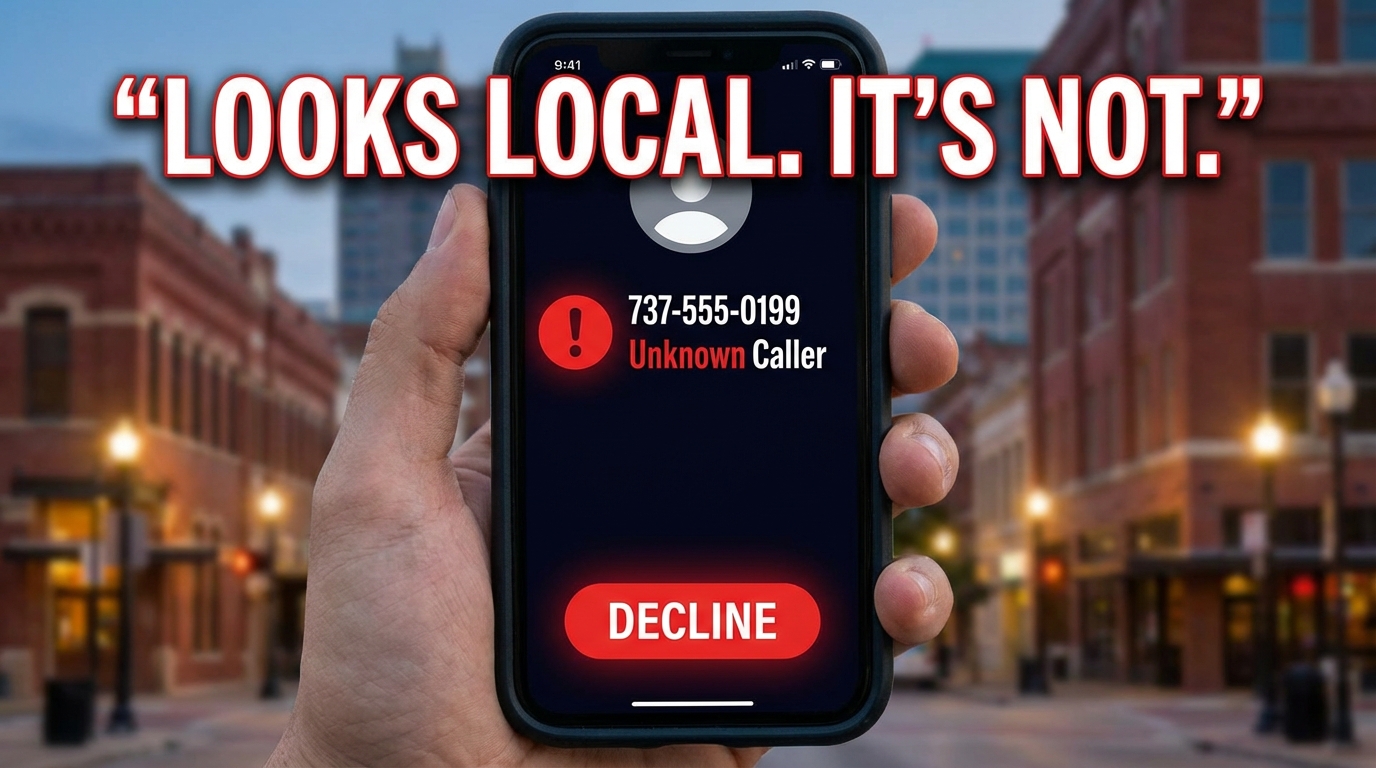

That Call from a 737 Number? It Might Be a Scam
The 737 area code scam is one of the most reported phone fraud problems in Texas right now. If you just got a call from a 737 number and something felt off, here's the quick answer:
Is a 737 area code call a scam?
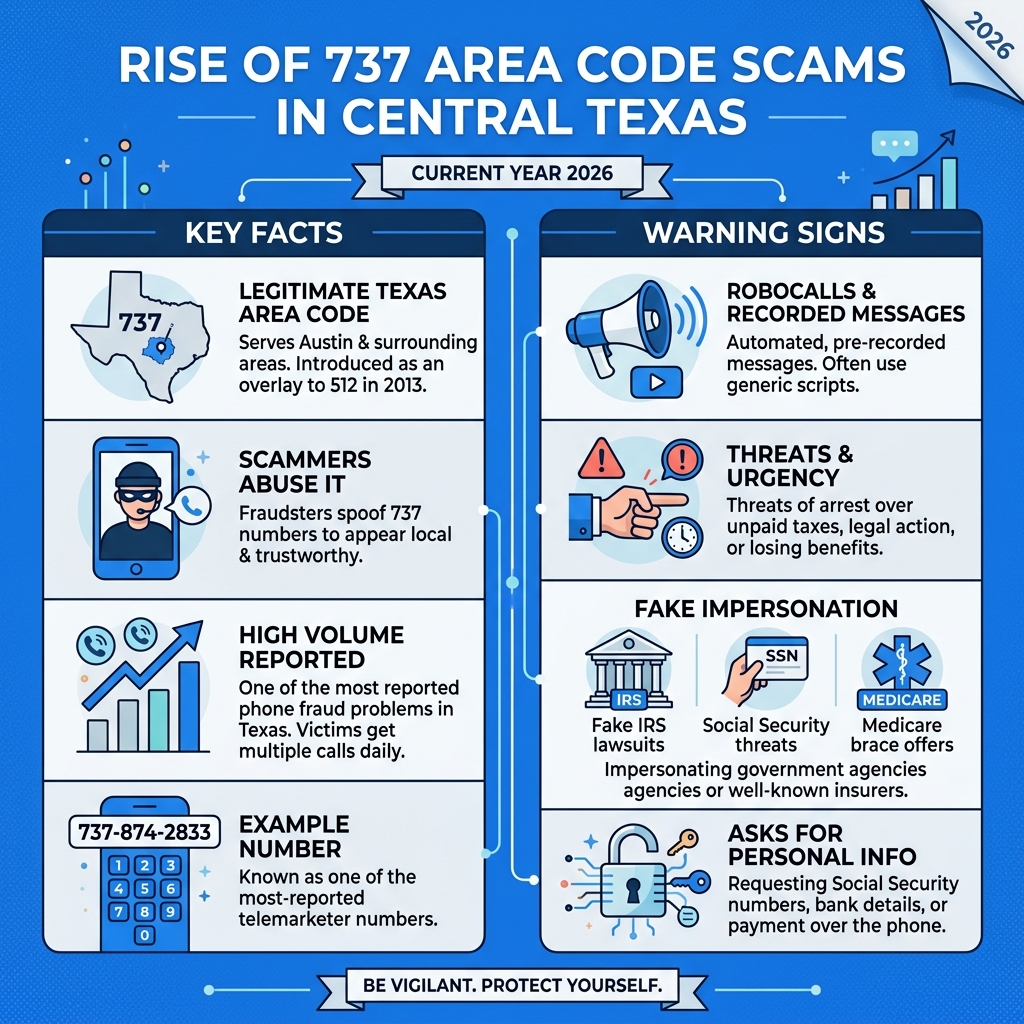
- It might be. Area code 737 is a real, legitimate Texas area code serving Austin and nearby cities.
- But scammers heavily abuse it by faking 737 numbers to look like local calls.
- Common scams include fake IRS lawsuits, Social Security threats, Medicare brace offers, and insurance impersonation.
- If the call was a robocall, made threats, or asked for personal info — treat it as a scam.
Austin, Texas is a booming tech hub. When its original area code (512) ran out of available numbers in 2013, the 737 overlay was introduced. That gave the region millions of new phone numbers — and unfortunately, scammers noticed.
Today, fraudsters use 737 numbers to look local. A call that appears to come from your own area code feels familiar and trustworthy. That's the trap. Victims report calls threatening arrest over unpaid taxes, fake Medicare benefits, and even impersonation of major health insurers — sometimes 4 to 5 times per day.
One particularly notorious example is 737-874-2833, known as one of the most-reported telemarketer numbers in the U.S. — it literally spells "RESTRICTED" on a phone keypad.
This guide breaks down exactly how these scams work, which numbers to watch out for, and how to protect yourself.
Understanding the 737 Area Code and Its Origins
To understand why the 737 area code scam has become such a headache, we first need to look at where this code actually comes from. Area code 737 isn't some "burner" code from a foreign country; it’s a legitimate part of the North American Numbering Plan.
It serves the state of Texas, specifically the Austin metropolitan area and several surrounding counties. If you live in or do business with people in Round Rock, San Marcos, or Georgetown, you’ve likely seen this code on your screen. It operates in the Central Time Zone (UTC-6), which means scammers often time their calls to hit during standard business hours to seem more professional.
The history of 737 is actually a story of growth. For decades, the 512 area code covered all of Central Texas. However, as Austin transformed into a massive technology and music hub (hosting world-renowned events like SXSW), the demand for phone numbers skyrocketed. By the early 2010s, 512 was nearly exhausted.
On July 1, 2013, the 737 area code was officially implemented as an "overlay." This meant that existing 512 numbers stayed the same, but new lines were assigned the 737 code. Because it covers the same geographic footprint as 512, it is often used by the same tech companies, healthcare providers, and government offices that make Austin famous. You can learn more about the specifics of this region in this guide to Area Code 737: Location, Time Zone, Scams & How to Block.
Why the 737 Area Code Scam is So Effective
If the code is legitimate, why is it so heavily associated with fraud? The answer lies in a psychological trick called "neighbor spoofing."
Scammers know that we are far less likely to answer a call from an unknown 1-800 number or a code from a state halfway across the country. However, if we see a 737 number, we assume it’s a local business, a neighbor, or perhaps a call from a local clinic. This local trust is the cornerstone of the 737 area code scam.
When you answer one of these calls, even if you hang up immediately, you might be doing yourself a disservice. By picking up, you confirm to the scammer’s automated system that your line is "active." This lands your number on what industry experts call "sucker lists." These lists are sold and traded among fraudsters, leading to an exponential increase in the number of spam calls you receive.
We’ve seen reports of scammers manipulating Caller ID to make it look like they are calling from a local doctor's office or even a state agency. This caller ID manipulation is incredibly sophisticated. To help you distinguish between a real neighbor and a fraudster, we’ve put together a quick comparison:
Legitimate 737 Business Calls vs. Scam Indicators
| Feature | Legitimate 737 Call | 737 Area Code Scam Indicator |
|---|---|---|
| Caller ID | Usually displays a clear business name. | Often displays just the number or "Potential Spam." |
| Initial Interaction | A live person introduces themselves and their company. | A recorded message (robocall) or a long silence before a person speaks. |
| Tone | Professional, helpful, and willing to provide a callback number. | Aggressive, urgent, or threatening (e.g., "You will be arrested"). |
| Requests | Verifies identity using standard procedures. | Demands immediate payment via gift cards, wire transfers, or crypto. |
| Persistence | Follows up if necessary, but respects "Do Not Call" requests. | Calls multiple times a day (3-6 times) even after being blocked. |
For more on how these local-looking scams compare to others across the country, check out our analysis of the Area Code 332 Scam: Is a 332 Call Safe or Fraud?.
Common 737 Area Code Scam Tactics and Numbers
Scammers using the 737 code aren't just making random "hello" calls. They use specific, high-pressure scripts designed to steal money or sensitive personal information. According to data from Area Code 737 Scams & Spam Calls (2026 Update), several specific numbers have been flagged for extreme activity.

One of the most bizarre and persistent numbers is 737-874-2833. If you look at your telephone keypad, the numbers 8-7-4-2-8-3-3 spell out the word "RESTRICTED." This is a deliberate trick used by telemarketers and scammers to hide their identity while making it look like an official "Restricted" call on your screen. Because the 874 prefix isn't actually a standard dialable code in the 737 area, calling this number back usually results in a "call cannot be completed" message.
Other frequently reported numbers include:
- 737-372-2049: Identified as a high-frequency robocaller. You can see more details on the 737-372-2049 Robocaller Warning.
- 737-786-7173: Often used for "Medical Alert" scams targeting seniors. Check the 737-786-7173 Phone Scam Alert for transcripts.
- 737-932-7286: Known for severe activity, often involving automated messages that attempt to harvest "Yes" or "No" responses from victims.
- 737-204-2511: Frequently associated with fake legal proceedings and Social Security threats.
Identifying a 737 Area Code Scam Robocall
A robocall is any call where you answer and hear a recorded message instead of a live person. While some robocalls are legal (like school closing alerts or pharmacy reminders), most unsolicited 737 robocalls are part of a phishing attempt.
These calls often use high-pressure tactics. You might hear a voice claiming that your Social Security number has been suspended due to "suspicious activity" or that the IRS is filing a lawsuit against you. These are classic hallmarks of a phishing scam. If you're unfamiliar with how these digital traps work, we recommend reading What is a Phishing Scam? Protect Yourself.
The goal is to scare you into pressing "1" to speak with an "agent." Once you do, a live scammer will try to extract your date of birth, address, or bank details.
Impersonated Industries in 737 Area Code Scam Calls
Scammers love to hide behind the reputation of trusted organizations. In the Austin area, they frequently impersonate:
- The Social Security Administration (SSA): They claim your benefits are at risk. The SSA will never threaten you with arrest over the phone.
- The Internal Revenue Service (IRS): They demand immediate payment for "back taxes." The IRS always initiates contact via U.S. Mail.
- Healthcare Providers (Humana, Medicare): Seniors are frequently targeted with "Medicare Brace" scams. Fraudsters call 4-5 times a day offering "free" medical equipment to get insurance information.
- Financial Institutions (Bank of America): Some victims report receiving a spoofed 737 call just seconds after hanging up with their actual bank, making the scam feel like a legitimate follow-up.
- Texas Board of Nursing (BON): Scammers have even spoofed state agency numbers to target nursing professionals, claiming there are issues with their licenses.
This tactic of using a famous area code to lend credibility is similar to what we've seen with the 212 Area Code Scam: That Manhattan Call Stole.
How to Protect Yourself and Report 737 Fraud
Stopping the 737 area code scam requires a combination of technology and good old-fashioned skepticism. We always recommend a multi-layered defense.
First, register your number on the National Do Not Call Registry (donotcall.gov). While this won't stop illegal scammers who ignore the law, it helps you identify that any "sales" call you do receive is likely a scam because legitimate companies would have screened you out.
Second, use the tools built into your smartphone. Most modern iPhones and Android devices have "Silence Unknown Callers" features. This sends any number not in your contacts directly to voicemail. If it’s a real person from Austin, they’ll leave a message. If it’s a robocall, they usually won't.
If you receive a suspicious text message from a 737 number, you can report it by forwarding the message to 7726 (which spells "SPAM"). This alerts your carrier to the fraudulent activity. For more detailed steps on handling digital fraud, see our guide on How to Report Phishing Email in USA.
Reporting these calls is vital. When you report a scam to the FTC, you help authorities track patterns and eventually shut down the infrastructure these criminals use. You can find out the specific process in our article on How to Report Fraud to FTC - The Right Way.
Steps to Take After a 737 Area Code Scam Interaction
If you’ve already interacted with a suspicious 737 caller, don't panic, but do act quickly:
- Hang Up Immediately: The longer you stay on the line, the more information they can gather (including recording your voice).
- Do Not Call Back: Many 737 numbers are "non-dialable" or set up to charge high fees for return calls.
- Verify Independently: If a caller claims to be from Bank of America or Humana, hang up and call the official number on the back of your ID card or the company's official website.
- Block the Number: Use your phone’s "Block this Caller" feature immediately.
- Monitor Your Accounts: If you shared any info, keep a close eye on your bank statements and consider a credit freeze.
Frequently Asked Questions about 737 Area Code Scams
Is every call from a 737 number a scam?
Absolutely not. Area code 737 is the legitimate home for thousands of Austin residents and businesses. From tech startups to local taco shops, many wonderful people use 737 numbers. The key is to look for the "red flags" like threats, robocall recordings, or requests for personal data.
Why does 737-874-2833 show up as "RESTRICTED"?
As we mentioned earlier, this is a clever keypad trick. The numbers 874-2833 spell out "RESTRICTED." Scammers use this specific number because it looks official on a Caller ID, even though it’s just a telemarketing line. It’s a way for them to hide their true identity while appearing important.
How do I stop 737 robocalls permanently?
While it’s hard to stop 100% of calls forever, you can significantly reduce them by using third-party blocking apps and carrier-level protection (like T-Mobile’s Scam Shield or AT&T ActiveArmor). Staying vigilant about which numbers you share online is also key. You can check the status of active robocallers on pages like the 737-932-7286 Robocaller Warning.
Conclusion
The 737 area code scam is a perfect example of how fraudsters exploit our local trust. By using a legitimate Texas code, they bypass our initial defenses and attempt to steal our hard-earned money and private information.
At Tempo Mail USA, we believe that privacy is your best defense. Just as scammers use fake phone numbers to hide their identity, you can use our services to create a "firewall" for your digital life. By using temporary email aliases and shielding your primary contact information, you reduce the chances of your data ending up on those "sucker lists" that scammers use to find their next victim.
Stay vigilant, don't trust every local number you see, and always verify before you share. For more tips on protecting your identity and keeping your data secure, visit us at https://tempomailusa.com. Together, we can make the digital world a little safer—one blocked call at a time.