

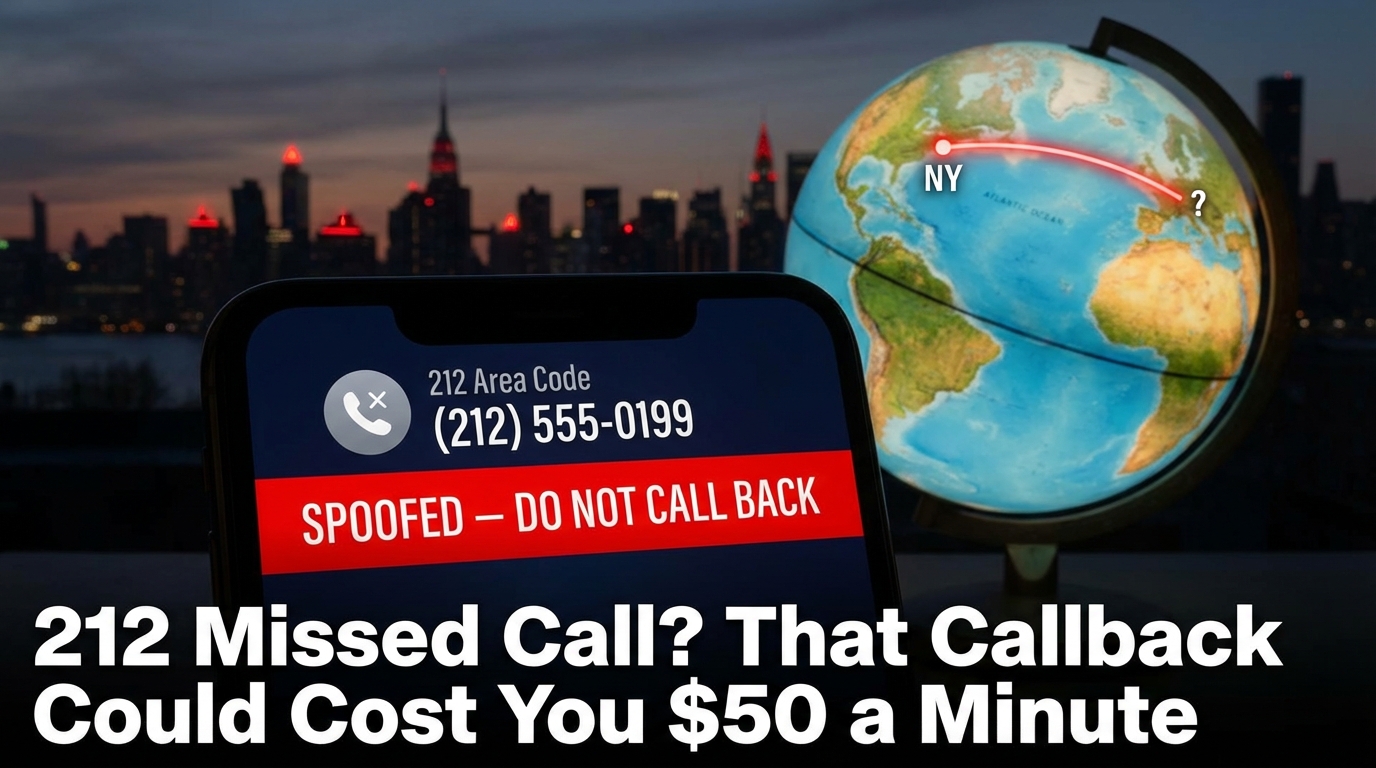

The 212 Area Code Scam: What You Need to Know Right Now
A 212 area code scam is a phone fraud where criminals use New York City's prestigious Manhattan area code — either legitimately or through caller ID spoofing — to trick you into answering, sharing personal information, or calling back a premium-rate number.
Quick answers:
- Is a 212 call always a scam? No. Legitimate Manhattan businesses and residents use 212. But scammers exploit it heavily.
- Why 212? The area code carries prestige and looks local to millions of New Yorkers, so more people pick up.
- Most common 212 scams: Chinese consulate robocalls, fake Apple iCloud breach alerts, SSN suspension threats, and fake FTC lottery wins.
- What to do: Don't call back. Don't press any numbers. Block and report to the FTC.
Your phone lights up. A 212 number. New York City. Feels important, right?
That's exactly what scammers are counting on.
The 212 area code has served Manhattan since 1947. It's one of the most recognized — and most trusted — area codes in the country. Scammers know this. Using cheap VoIP technology, they can make any call appear to come from a 212 number, no matter where in the world they're actually calling from.
The result? Millions of spoofed calls every year, targeting people across the U.S. with everything from fake government threats to phony prize winnings.
One bank's risk management team put it plainly when warning their customers: calls arriving from 212 numbers in a foreign language with music playing in the background are almost certainly a scam — and not a new one. A nearly identical scheme stole $3 million from New York City consumers back in 2018 alone.
If your personal information ends up in the wrong hands after one of these calls, the damage can go far beyond a single phone call.
What is the 212 Area Code and Why Do Scammers Use It?
To understand why the 212 area code scam is so effective, we have to look at the history of Manhattan. Established on January 1, 1947, 212 was one of the original 86 area codes in the North American Numbering Plan. Back then, it covered all five NYC boroughs. Today, it is almost exclusively Manhattan, making it a "status symbol" area code.
Because 212 numbers are in such high demand and short supply, they carry a certain weight. When we see a 212 number, we think of high-powered law firms, major financial institutions, or established New York residents. Scammers leverage this "prestige factor" to bypass our natural skepticism.
Neighbor Spoofing and VoIP Technology
Modern scammers don't actually need to be in New York to use a 212 number. They use Voice over Internet Protocol (VoIP) technology to manipulate their caller ID. This is called "neighbor spoofing." By showing a local or recognizable area code, they increase their answer rates significantly. If you live in or near New York, you’re much more likely to answer a 212 call than one from an unknown international code.
It is worth noting that while 212 is the "gold standard" for NYC spoofing, scammers are also moving into newer Manhattan codes. For instance, you might want to read about whether an area code 332 scam is a 332 call safe or fraud to see how these tactics are evolving. For a deeper look at the psychology behind these calls, check out this guide on Decoding the 212 Area Code.
Common Types of 212 Area Code Scam Tactics
Scammers are creative, but most 212 area code scam attempts fall into a few predictable categories.
The "One-Ring" or Wangiri Tactic
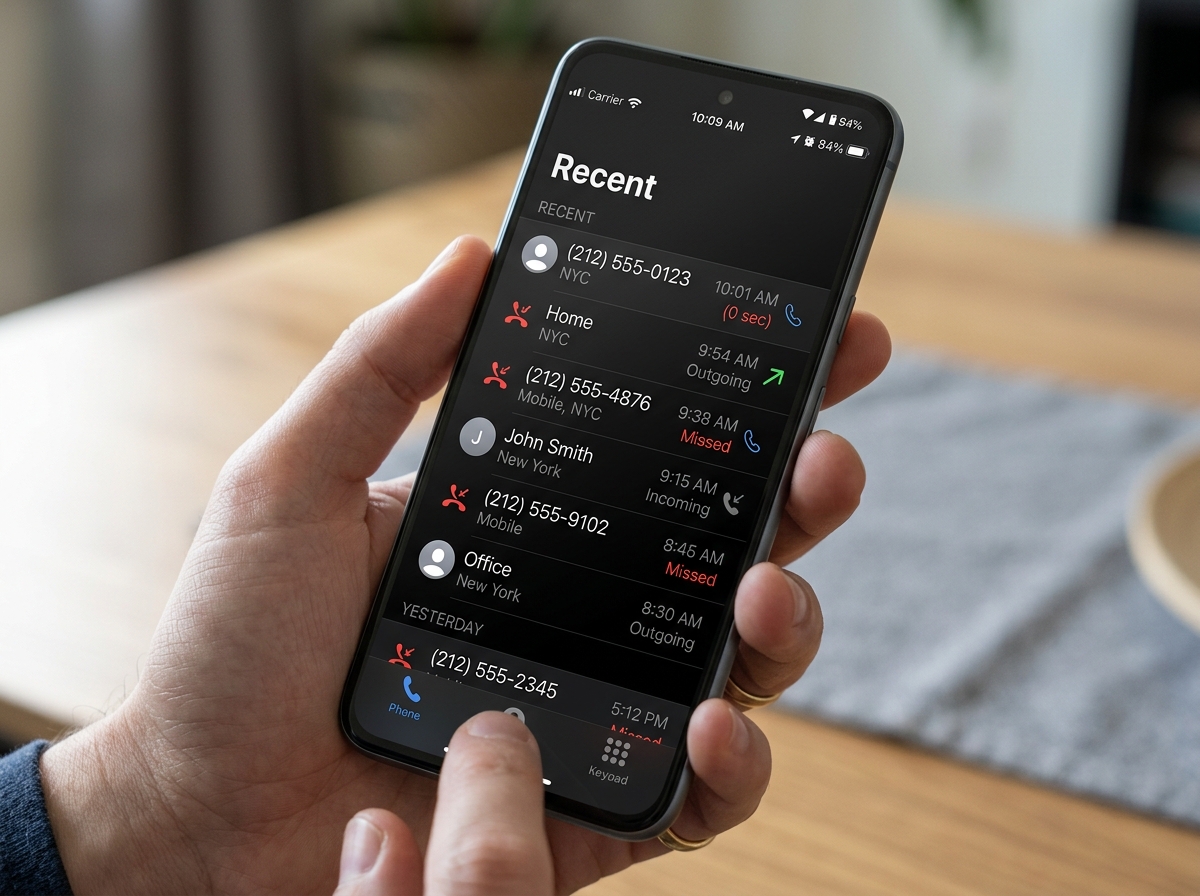
This is one of the most common — and annoying — tactics. Your phone rings once and then stops. The goal is to pique your curiosity. You see a missed call from a 212 Manhattan number and think, "Was that a recruiter? My bank? A long-lost friend?"
When you call back, you aren't connected to New York. Instead, you are routed to an international premium-rate number (often in countries like Morocco, which uses the +212 country code). These calls can cost between $10 and $50 per minute. The longer they keep you on the line with recorded music or "please hold" messages, the more they make. You can learn more about this specific confusion in this article on Country Code 212 Scam Calls and Texts.
Chinese Consulate Robocalls
This variant is particularly heartless. Victims receive a call in Mandarin Chinese, often with music in the background. The caller claims to be from the Chinese Consulate or an embassy, stating there is a problem with a package, a legal issue, or a credit card problem in China. They pressure the victim to provide personal data or wire money to "resolve" the issue. In 2018, this specific scam stole $3 million from New York City residents.
If you see a call labeled as "Potential Spam," it’s often because carriers have flagged these high-volume automated patterns. You can what does potential spam call mean get the facts here to understand how your phone tries to protect you.
High-Profile 212 Area Code Scam Examples
- Apple iCloud Breach: Scammers spoof the actual phone number of the Apple Store on 5th Avenue in NYC. They leave voicemails claiming your iCloud account has been breached and urge you to call a toll-free number or visit a fake support site.
- Social Security Number (SSN) Suspension: A robocall claims your SSN has been suspended due to "fraudulent activity" in Texas or at the border. They demand you "verify" your number to reactivate it.
- FTC Lottery Fraud: You receive a call claiming you've won a massive lottery (often hundreds of thousands of dollars) but must pay a "processing fee" or "tax" via wire transfer or gift cards to claim it. The FTC never calls to award prizes.
- Amazon Rewards Text: While often a text, these "smishing" attempts use 212 numbers to claim you have a $150 bonus waiting. The link leads to a phishing site designed to steal your Amazon login.
If you are an iPhone user seeing these pop up constantly, we have a guide on how to stop spam calls on iphone that can help you clean up your call log.
Steps to Take if You Receive a 212 Area Code Scam Call
If you get a suspicious call, follow these steps:
- Don't Call Back: If it’s important, they will leave a legitimate voicemail. Calling back a "one-ring" scammer is a guaranteed way to lose money.
- Don't Press Numbers: Robocalls often say "Press 1 to speak to an agent." Doing this confirms your number is active, which will only lead to more calls.
- Block the Number: Use your phone’s internal settings to block the caller immediately.
- Report It: You should report these calls to the Federal Communications Commission (FCC) Block and Report page.
Scammers often impersonate tax authorities as well. If you're being hounded by tax-related calls, see our advice on how to stop us tax consultants spam calls effective solutions.
How to Identify and Protect Yourself from a 212 Area Code Scam
Identifying a 212 area code scam is easier when you know the red flags. Scammers rely on emotion — usually fear or excitement — to make you act without thinking.
Key Red Flags to Watch For
- Urgency: "Your account will be closed in one hour!" or "A warrant has been issued for your arrest!"
- Payment Demands: If they ask for payment via gift cards, wire transfers (like Western Union), or cryptocurrency, it is 100% a scam. Legitimate agencies like the IRS or SSA do not accept iTunes gift cards.
- Requests for Remote Access: No legitimate tech support (like Apple or Microsoft) will cold-call you and ask to "dial into" your computer.
- Vague Greetings: "Dear Customer" or "I am calling from the legal department."
Proactive Protection
We recommend letting unknown 212 calls go to voicemail. If it’s a real doctor’s office or a business you actually deal with, they will leave a detailed message. You can also use a reverse phone lookup service or simply Google the number; often, these numbers are already flagged on community forums.
For those who want a technical "set it and forget it" solution, you can block spam calls easily best free app for iphone users by using third-party apps that maintain massive databases of known scam numbers. Additionally, always report fraudulent activity to the Federal Trade Commission (FTC) Block and Report portal.
The Risks and Financial Dangers of Engaging with Scammers
Engaging with a 212 area code scam isn't just a waste of time; it’s a significant security risk.
Financial Loss
The most immediate danger is your wallet. Between premium-rate callback fees and direct extortion (like the lottery or consulate scams), victims can lose thousands. One reported case involved an elderly couple losing $31,000 to a fake lottery scam.
Identity Theft
Phishing is the gateway to identity theft. According to the Verizon Data Breach Investigations Report, phishing attacks account for over 36% of all data breaches. When you give a "212 Apple Support" agent your login, or a "Social Security" agent your SSN, you are handing over the keys to your digital life.
Increased Targeting
Once you answer a scam call or, worse, engage with the caller, your number is marked as "active" or a "live prospect." This data is sold on the dark web to other criminal networks, leading to an explosion of spam calls and texts. This is how a single phone call can turn into a months-long barrage of toll scam text million lost here s how to stay safe messages and fraudulent alerts.
Frequently Asked Questions about 212 Area Code Scams
Is every call from a 212 number a scam?
Absolutely not. 212 is a legitimate area code for Manhattan. Millions of real people and businesses use it every day. If you are expecting a call from a New York-based bank, hospital, or company, it may very well be legitimate. The key is to verify. If a caller claims to be from Chase Bank, hang up and call the number on the back of your card.
Why am I getting so many 212 area code scam calls lately?
There are a few reasons:
- Neighbor Spoofing: If you have a New York-adjacent number, scammers use 212 to look local.
- Data Breaches: Your number was likely leaked in a corporate data breach and added to a "robocall" list.
- The "Prestige" Factor: Scammers have found that 212 numbers have higher "open rates" than other codes, so they use them more frequently.
What should I do if I already gave my information to a 212 scammer?
If you've shared sensitive data:
- Contact your bank: Freeze your accounts and request new cards if you shared financial info.
- Change Passwords: Especially for your email and Apple/Google accounts. Use Multi-Factor Authentication (MFA).
- Place a Credit Freeze: Contact Equifax, Experian, and TransUnion to prevent scammers from opening new lines of credit in your name.
- Report the Fraud: File a report with the FTC and your local police department.
Conclusion
The 212 area code scam works because it exploits our trust in a legendary piece of New York City identity. But Manhattan prestige shouldn't be a mask for criminal activity. By staying vigilant, letting unknown calls go to voicemail, and never sharing personal information over the phone, you can protect yourself from these sophisticated predators.
At Tempo Mail USA, we believe that privacy is your best defense. Scammers can't call you or phish you if they don't have your real information. Our service provides secure email aliases that act as a PII firewall, shielding your personal identity from the services you sign up for online. When you protect your data at the source, you stop the cycle of breaches that lead to these scam calls in the first place.
Stay safe, stay skeptical, and keep your personal data under lock and key.
For more information on protecting your digital footprint, visit us at https://tempomailusa.com.