

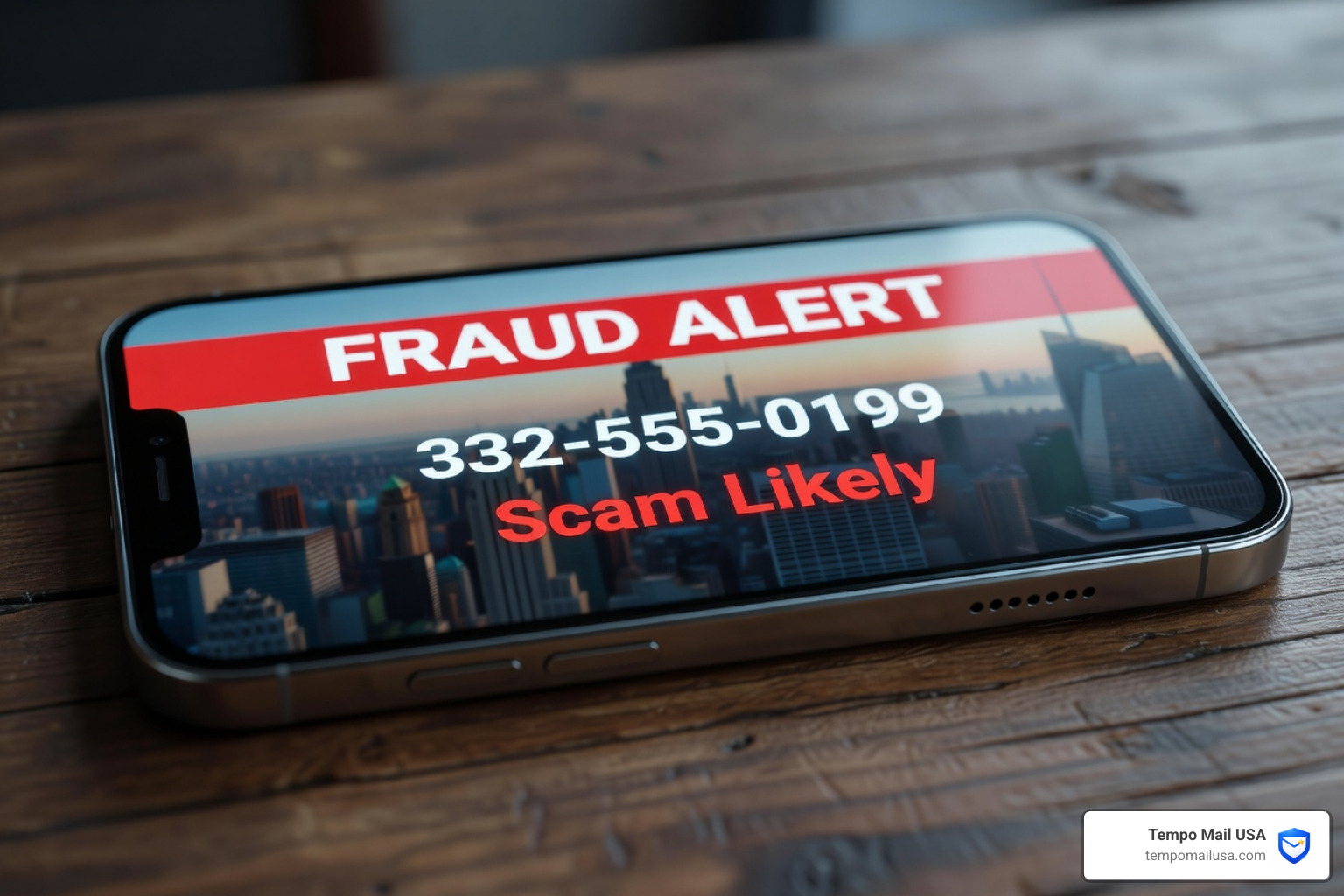

Is the 332 Area Code a Scam? Direct Answer
Yes, the area code 332 scam is a fraudulent practice where scammers spoof New York City phone numbers to trick victims into answering phishing calls or robocalls. While 332 is a legitimate NYC area code, it is frequently exploited by fraudsters to appear trustworthy.
Quick Facts:
- 332 is a legitimate NYC area code covering Manhattan, Brooklyn, Queens, the Bronx, and Staten Island
- Scammers actively use 332 numbers to impersonate local New York calls and trick people into answering
- Common scam types: IRS impersonation, fake package delivery texts, tech support fraud, and Social Security scams
- High-risk prefixes reported to the FCC/FTC: 332-287 (66 complaints), 332-265 (20 complaints), 332-244 (20 complaints)
- What to do: Don't call back unknown 332 numbers, block the number, and report it to the FTC at ReportFraud.ftc.gov
Around 60 million Americans reported a phone scam in 2021, and area code 332 consistently appears on lists of top domestic scam area codes — alongside 347, 646, and others.
Why does this matter? Scammers choose 332 deliberately. A New York City number feels familiar and trustworthy, so people are more likely to pick up. That's the whole trick.
The good news: once you know the warning signs, these scams are easy to spot and avoid.
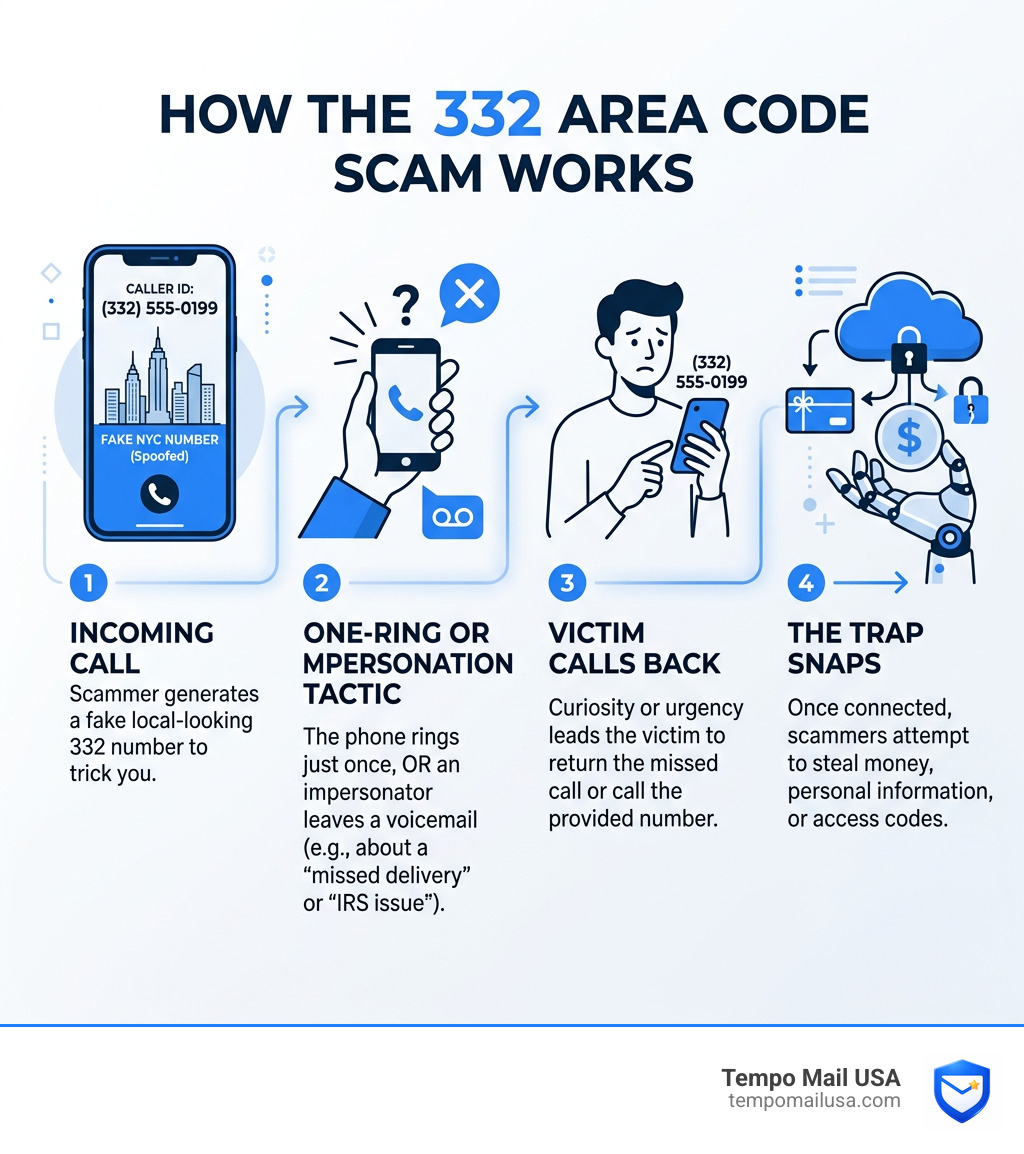
What is the 332 Area Code? Location and Legitimacy
Area code 332 is a legitimate telephone area code serving Manhattan, New York City. It was officially launched in 2017 as an "overlay" for the 212, 646, and 917 codes.
For decades, the 212 area code was the ultimate status symbol in New York. When 212 ran out of numbers, the city added 646 and 917. Eventually, even those were exhausted by the sheer volume of smartphones, pagers, and business lines in the city. Enter 332. It covers the same geographic footprint as the legendary 212, meaning it serves the heart of New York City: Manhattan, including neighborhoods like the Upper West Side, Midtown, and East Harlem.
Because it is a New York City code, it carries a sense of prestige and legitimacy. When a 332 number pops up on your caller ID, your brain often thinks, "Oh, this must be a business or a person from New York." Scammers know this. They use a technique called "spoofing" to make their calls appear as if they are coming from a 332 number, even if the caller is actually sitting in a basement halfway across the world.
According to warnings from Don't answer phone calls from these area codes, 332 is now frequently listed alongside other high-risk domestic codes.
| Area Code | Primary Location | Status | Scam Risk Level |
|---|---|---|---|
| 212 | Manhattan, NYC | Original | Moderate |
| 646 | Manhattan, NYC | Overlay | High |
| 332 | Manhattan, NYC | Overlay | Very High |
| 347 | NYC Boroughs | Overlay | High |
Why Scammers Target the 332 Area Code
You might wonder why a scammer would pick 332 over a random code from a smaller town. There are several strategic reasons:
- The "Newer Code" Advantage: Because 332 is newer than 212 or 646, many people don't immediately recognize it as a New York code, but it still looks "official" enough to pique curiosity.
- Local Trust: If you live in or near the tri-state area, you are much more likely to answer a local call than one from an unknown international location.
- High-Income Association: Manhattan is one of the wealthiest areas in the world. Scammers often target these area codes hoping to find victims with higher credit limits or larger bank accounts.
- Higher Answer Rates: Statistics show that people are significantly more likely to pick up a call from a domestic area code that follows the North American Numbering Plan (NANP) format than an obviously international one.
Common 332 Area Code Scam Tactics to Watch For
Scammers use 332 numbers for several specific types of fraud. Here are the most common tactics used in the area code 332 scam:
The One-Ring Scam
This is one of the most dangerous versions of the area code 332 scam. Your phone rings once and then stops. The goal is to make you curious enough to call back. If you do, you might be connected to a high-cost international "premium" line. You’ll be charged a hefty connection fee plus astronomical per-minute rates. The Federal Communications Commission guide on one-ring scams warns that these charges can appear on your bill as "premium services" or "toll calls."
Government Impersonation (IRS, SSA)
We’ve all heard these: "This is the IRS. You owe back taxes and a warrant has been issued for your arrest." Or, "Your Social Security number has been suspended due to fraudulent activity." These callers use the 332 area code to look like they are calling from a government office in a major city. Remember: the IRS and Social Security Administration never call to threaten you or demand payment via gift cards or wire transfers.
The "Package Delivery" Text Scam
This is a massive trend right now. You receive a text from a 332 number saying there’s an issue with your FedEx, UPS, or USPS delivery. It usually includes a link like "bit.ly/your-package-here." Clicking that link leads to a phishing site designed to steal your credit card info under the guise of a small "redelivery fee."
If you're getting bombarded with these, you aren't alone. You can learn more about identifying these specific types of "service" scams in our guide on how-to-identify-spectrum-scam-calls.
High-Risk 332 Phone Numbers and Prefixes
Based on recent data from the FTC and FCC, certain prefixes within the 332 area code have seen a massive spike in complaints. If you see a call from these prefixes, proceed with extreme caution:
- Prefix 332-287: This is currently the most active "spam" prefix, with 66 reported fraudulent numbers as of mid-2024.
- Prefix 332-378: Another high-activity prefix with numerous reports of robocalls.
- Prefix 332-265 & 332-244: Both have over 20 unique complaints filed with federal agencies.
Specific numbers that have been flagged by thousands of users include:
- 332-204-2902 (Often associated with "Card Member Services" scams)
- 332-330-3360 (A known robocaller that often leaves silent or garbled voicemails)
- 332-230-4202 (Linked to fake insurance and health plan offers)
If you find yourself asking, "Why am I suddenly a target?" you can check out our deep dive on discover-why-am-i-getting-so-many-spam-calls-recently.
How to Identify and Block 332 Area Code Scams
To protect yourself from the area code 332 scam, look for these specific red flags and follow these blocking steps:
Red Flags of a 332 Scam Call
- The "Robo-Voice": If there is a long pause after you say "Hello," or if the voice sounds unnaturally smooth and mechanical, it’s a robocall.
- Extreme Urgency: "Act now or your account will be closed!" Scammers want to panic you so you don't think clearly.
- Requests for Personal Info: No legitimate bank or government agency will call you out of the blue and ask for your full Social Security number or password.
- Unusual Payment Methods: If they ask for payment via Bitcoin, wire transfer, or Apple Gift Cards, it is 100% a scam.
Steps to Block 332 Scam Calls
- Use Your Phone's Built-in Tools: On both iPhone and Android, you can go to your recent calls, tap the "i" or three dots next to the 332 number, and select "Block this Caller."
- Silence Unknown Callers: You can set your phone to automatically send any number not in your contacts straight to voicemail.
- Carrier Blocking: Most major carriers (Verizon, AT&T, T-Mobile) have free apps that identify "Potential Spam" on your screen.
- Third-Party Apps: There are several highly effective apps designed specifically to kill robocalls before they ring. For a list of the best ones, see our post on stop-spam-calls-now-top-free-blocker-app-for-android-users.
If you're confused about what those "Potential Spam" labels actually mean, we've got you covered in what-does-potential-spam-call-mean-get-the-facts. You can also find more technical solutions in our guide on how-to-stop-spectrum-spam-calls-5-methods.
Reporting an Area Code 332 Scam to Authorities
Don't just delete the call — report it! Reporting helps the FCC and FTC track down the "gateway providers" that allow these scammers to access the U.S. phone network.
- The FCC: You can file a complaint with the FCC regarding any unwanted calls or spoofed numbers.
- The FTC: If you've actually lost money or shared personal info, tap or click here to report to the FTC.
- 7726 (SPAM): This is a universal code. Copy the scammer's phone number and text it to 7726. This alerts your carrier to the fraudulent number so they can investigate and block it for everyone.
Frequently Asked Questions about 332 Scams
Is every call from a 332 number a scam?
No! As we mentioned, 332 is a perfectly legitimate area code for New York City. Thousands of legitimate businesses, doctors' offices, and residents use 332 numbers every day. If you are expecting a call from someone in Manhattan, it might be a 332 number. The key is to be wary of unsolicited calls. If you don't recognize the number, let it go to voicemail. A real person or business will leave a message.
What happens if I call back a 332 number?
If it's a "one-ring" scam, calling back could result in immediate charges on your phone bill. These scammers use "traffic pumping" techniques where they receive a portion of the long-distance or premium fees you pay to make the call. If you see a mysterious charge on your bill after calling back a 332 number, contact your phone provider immediately to dispute the charge.
How can I tell if a 332 text is fake?
Look for "red flag" language. Legitimate companies like FedEx or the USPS will never text you from a random 10-digit number asking you to click a link to "update your address" or "pay a fee." They use official "short codes" (usually 5 or 6 digits). For more tips, check out the FTC's guide on How to Recognize and Report Spam Text Messages.
Conclusion
The area code 332 scam is a perfect example of how scammers exploit our trust in local geography to get a foot in the door. By masquerading as a prestigious New York City caller, they hope to bypass your natural defenses.
At Tempo Mail USA, we believe that the best defense is a proactive offense. Scammers can't call you if they don't have your real number, and they can't phish you if they don't have your real email address. This is why we advocate for using privacy tools that act as a firewall between you and the world.
If you're wondering why your phone has been blowing up lately, you might find the answer in our article why-am-i-getting-so-many-spam-calls.
Stay vigilant, don't call back unknown numbers, and keep your personal data under lock and key. For more tips on protecting your digital identity, visit us at https://tempomailusa.com.