

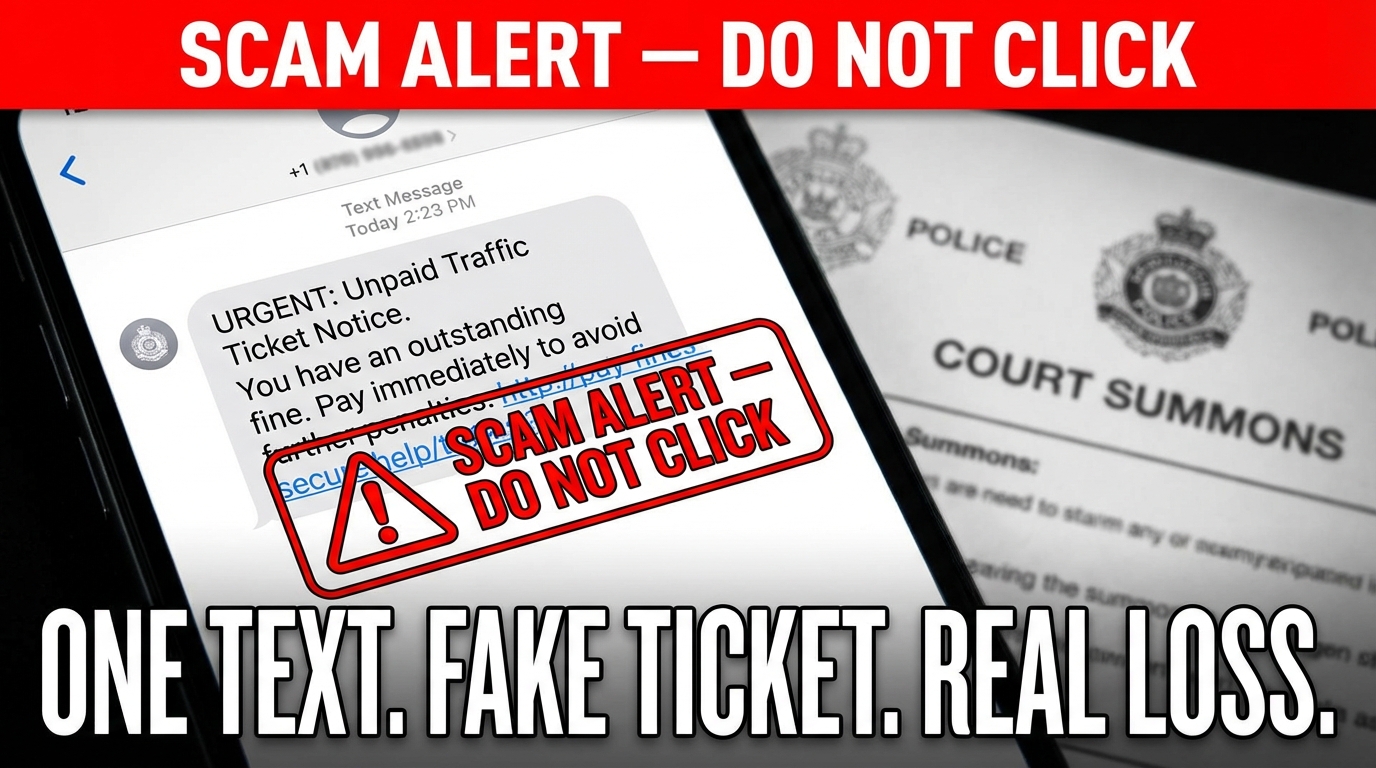

That Text About an Unpaid Traffic Ticket Is Almost Certainly a Scam
If you just got a text claiming you owe money for an unpaid traffic ticket, here's the short answer:
It's a scam. Do not click the link.
Here's how to tell at a glance:
- Legitimate government agencies do not send unsolicited payment demands via text message
- Real citations arrive by U.S. mail — not SMS
- Official links always end in .gov — scam links often use domains like
.helpor other impostors - Courts and DMVs do not threaten immediate license suspension, extra fees, or credit score damage via text
The traffic citation text scam — also called "smishing" (SMS phishing) — is spreading fast across the U.S., and government agencies in states from Texas to Hawaii are sounding the alarm.
The scam works like this: you get a text pretending to be from your state's DMV, Department of Transportation, or local court. It claims you have an unpaid traffic fine. It threatens scary consequences — a 30-day license suspension, an extra 35% fee, legal proceedings, even damage to your credit score. Then it pushes you to click a link and pay immediately.
"Scammers are getting more sophisticated, designing notices to scare people into fast action," North Carolina Attorney General Jeff Jackson has warned.
The goal is simple: panic you into clicking. Once you do, they're after your personal information, your payment details, or both.
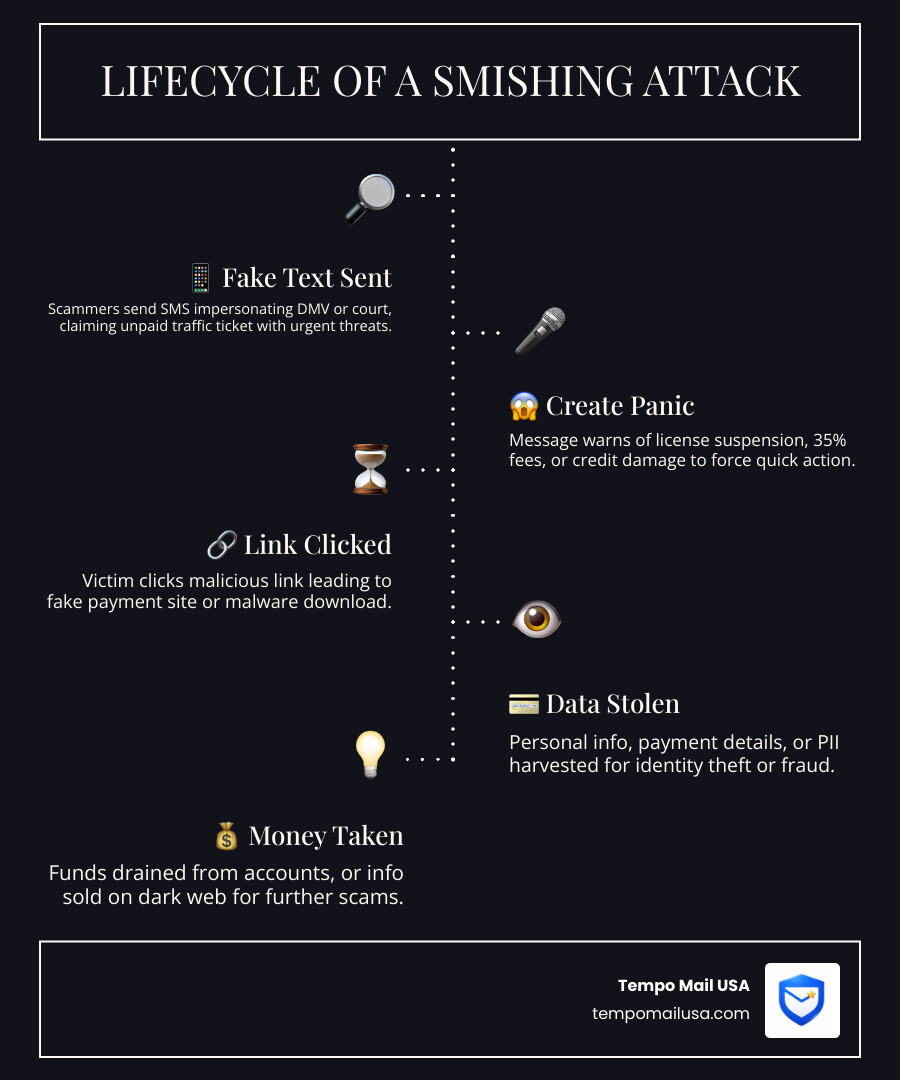
Anatomy of the traffic citation text scam
The traffic citation text scam is a textbook example of "smishing," a form of phishing that uses SMS messages to bypass traditional email filters. By impersonating trusted entities like the DMV or state judiciary, scammers exploit the high open rates of text messages to deliver malicious payloads or harvest Personally Identifiable Information (PII).
According to a Consumer Alert from the FTC, these messages often claim an "overdue ticket" or "outstanding violation" requires immediate attention. To create a sense of extreme urgency, the texts frequently threaten a 35% service fee or immediate license suspension if the link isn't clicked within hours. This psychological pressure is designed to make you bypass your natural skepticism.
Identifying the traffic citation text scam Red Flags
Spotting these fraudulent messages requires a keen eye for technical inconsistencies. Scammers often use non-U.S. phone prefixes or spoofed numbers that don't match government communication protocols. Another major red flag is the use of non-governmental top-level domains. While official sites end in .gov, scammers utilize .help, .org, or scrambled strings like govovy.help.
As noted in our guide on Tx Dmv Scam Text Explained How It Works Red Flags, you should look for "random big words and weird phrases" like "immutable credential endorsement." Real government agencies communicate in plain, bureaucratic English, not pseudo-legal jargon intended to intimidate.
Official Verification vs. the traffic citation text scam
Verification is your best defense. If you receive a suspicious message, navigate directly to an official portal like Hawaii’s eCourt Kokua or your local Clerk of Court website. Never use the link provided in the text.
Official agencies, such as the Texas DMV, have clarified that they are not law enforcement agencies and do not even issue traffic tickets—those come from police or state troopers. For more on verifying these claims, see our Texas Dmv Scam Alert Fake Text Messages How To Stay Safe resource. Remember: if it doesn't arrive via U.S. Mail, it's likely a fraudulent attempt to compromise your digital identity.
Advanced Malware Protection and Identity Theft Protection Services
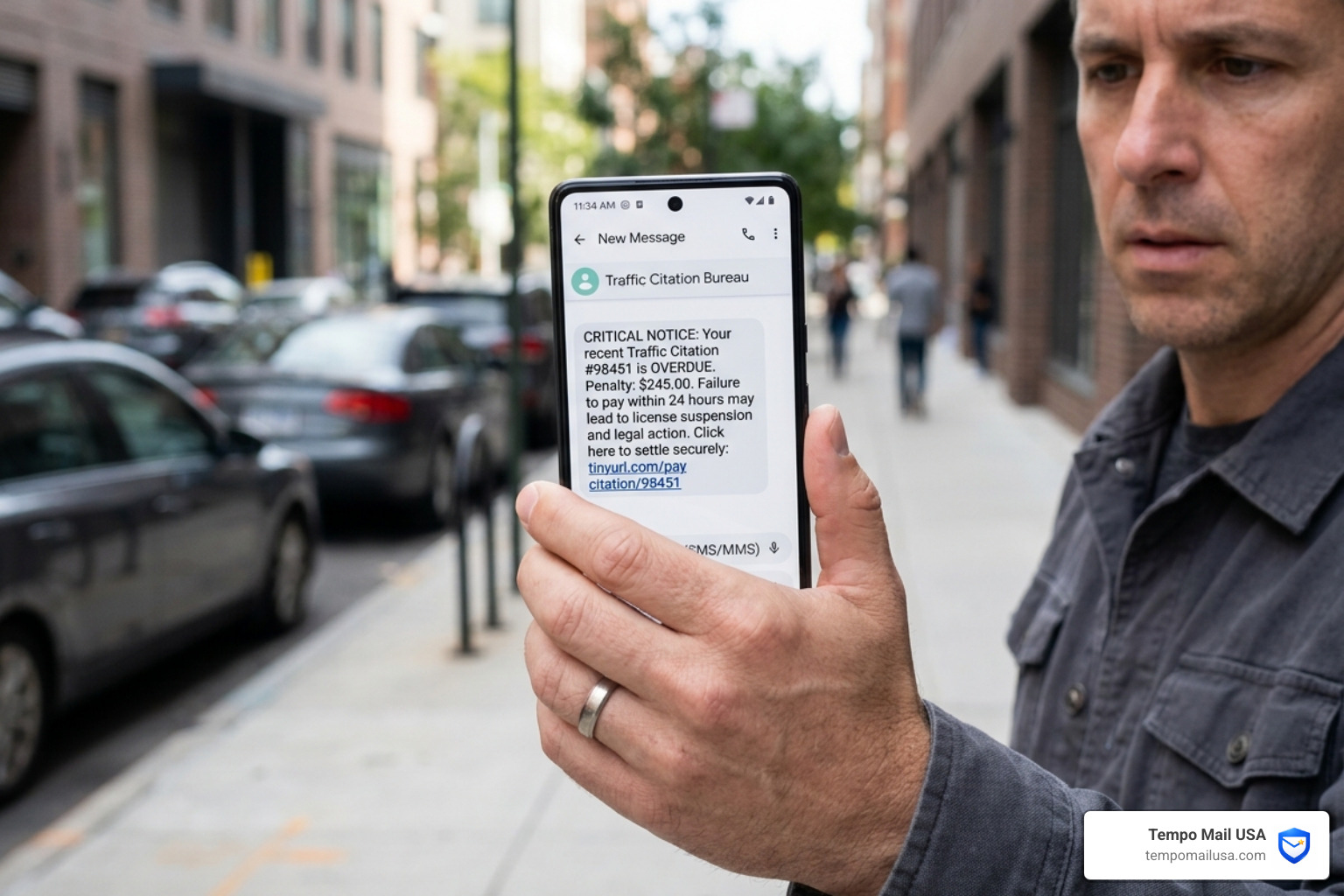
In the modern threat landscape, a single click on a traffic citation text scam link can lead to a full-scale compromise of your financial life. This is why identity theft protection services and credit monitoring software have become essential tools for the average driver. These services monitor the dark web for your PII and alert you the moment your Social Security number or credit card details appear in a breach.
For businesses, the stakes are even higher. Cybersecurity insurance policies often require employees to undergo training to recognize smishing, as these attacks can serve as entry points for ransomware. Without advanced malware protection, a mobile device used for work could inadvertently grant a hacker access to a corporate network.
| Feature | Official Government Notice | Traffic Citation Text Scam |
|---|---|---|
| Delivery Method | U.S. Postal Service (Mail) | SMS / Text Message |
| URL Domain | Ends in .gov | .help, .top, .link, .xyz |
| Payment Method | Official portal or check | Urgent link / Credit card entry |
| Threat Level | Standard legal timelines | Immediate "Final Notice" / Suspension |
As reported by FOX 26 Houston, police are seeing a viral surge in these messages. Protecting yourself requires a multi-layered defense strategy that includes both software, such as NordVPN, and proactive digital hygiene.
Mitigating Risks of the traffic citation text scam
If you have already interacted with a suspicious link, the clock is ticking. You must immediately contact your financial institutions to freeze your accounts and issue new cards. Implementing multi-factor authentication (MFA) across all sensitive accounts is no longer optional; it is a critical barrier against unauthorized access.
Our analysis of how the Dmv Scam Text Alert Fake Messages Spreading Across The Us shows that scammers often use the harvested data to attempt password resets on banking and email accounts. Changing your passwords to complex, unique strings and using a password manager is the first step in reclaiming your digital perimeter.
Preventing Phishing with Disposable Email Infrastructure
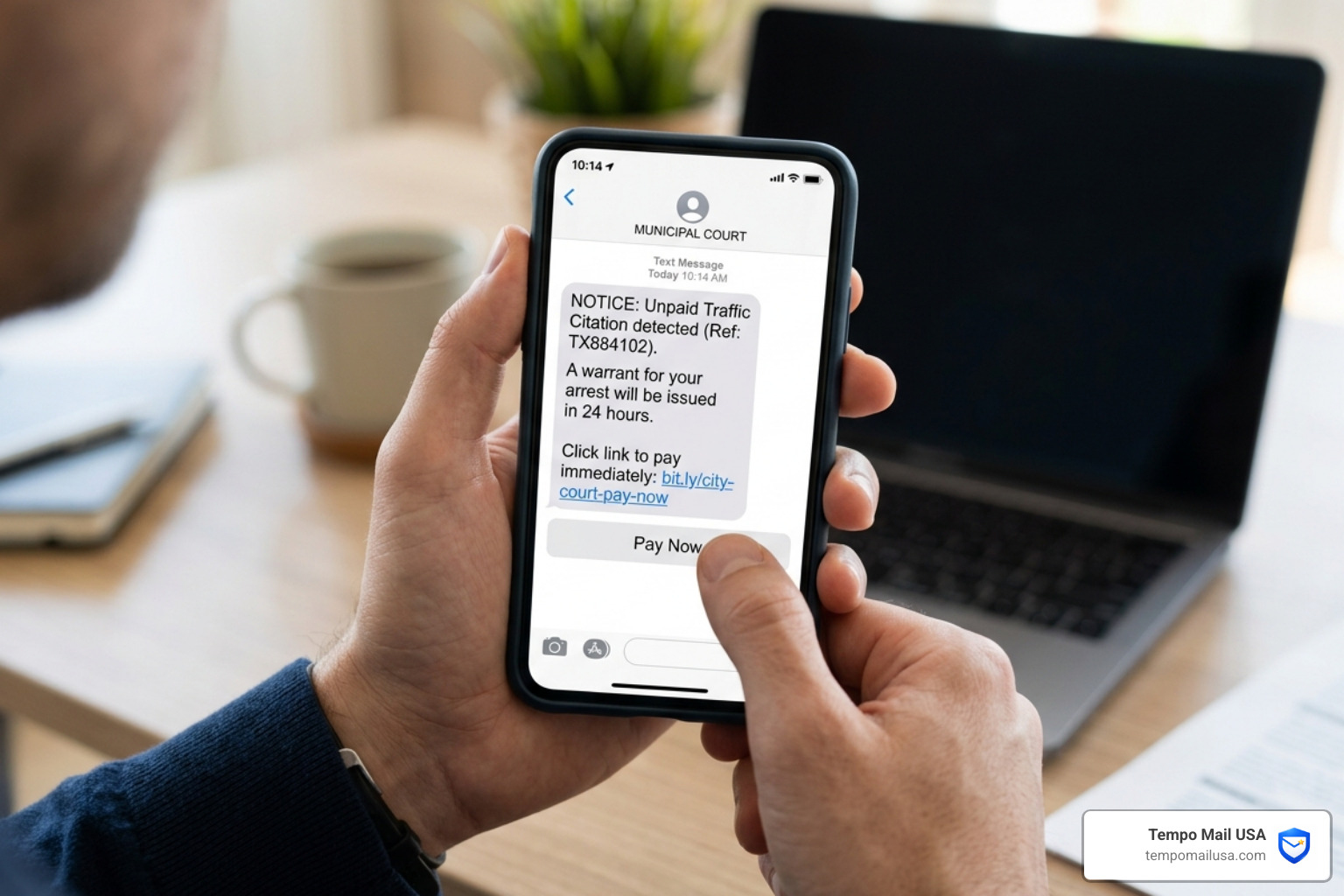
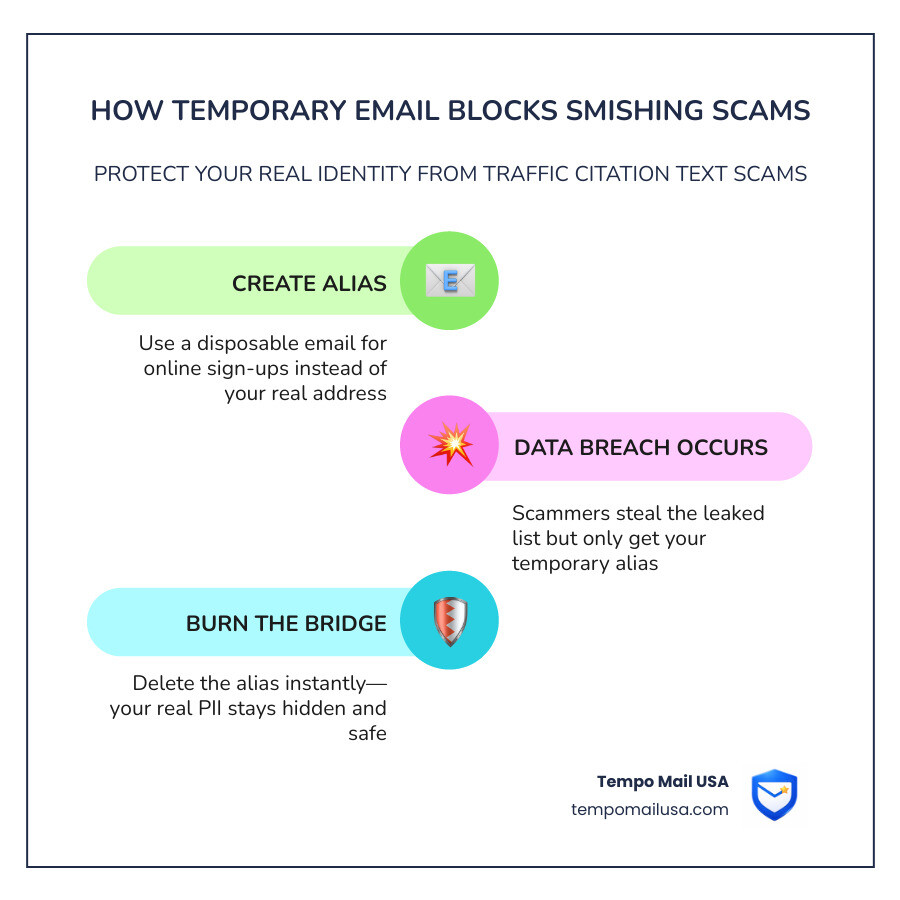
The most effective way to stop the traffic citation text scam and similar phishing attempts is to prevent scammers from obtaining your real contact information in the first place. This is where Tempo Mail USA provides a "PII firewall." By using temporary email aliases and identity proxying, we allow you to interact with online services without ever exposing your permanent, private data.
When you sign up for a service, use a temporary alias from tempomailusa.com. If that service is breached—a common way scammers get your phone number and email—the hackers only get a disposable alias that you can delete instantly. This effectively "burns" the bridge between the scammer and your real identity.
In the context of the Ezpass Scam Text 60000 Reports And Counting, we see that data leaks from third-party aggregators fuel these SMS campaigns. By adopting a "disposable-first" mindset, you ensure that your real phone number and email remain off the "sucker lists" used by international fraud rings. Protect your identity with Tempo Mail USA and turn your PII into a moving target that scammers can't hit.
Enterprise VPN Solutions and Data Privacy Compliance for Drivers
For professionals who spend significant time on the road, enterprise VPN solutions like NordVPN are vital for maintaining data privacy compliance. Many traffic citation text scam variants use tracking pixels within their links to confirm that your phone number is active, which then triggers a flood of more aggressive spam. A VPN masks your IP address and encrypts your data, making it harder for these malicious links to "phone home" with your device metadata.
Furthermore, secure cloud storage for business ensures that even if your mobile device is compromised via a smishing link, your sensitive documents remain encrypted and inaccessible to the attacker. As we noted regarding the Nj Mvc Scam Text Alert Fake Messages Targeting Drivers, scammers are increasingly targeting specific regions with high-income demographics, making robust encryption a financial necessity.
Security Checklist for Drivers:
- Never click links in unsolicited texts claiming to be from the DMV or DOT.
- Always use a temporary email from Tempo Mail USA for parking apps or toll accounts.
- Enable "Filter Unknown Senders" on your smartphone settings.
- Report scam texts by forwarding them to 7726 (SPAM).
- Audit your credit report monthly using credit monitoring software.
Cybersecurity FAQ
How can I verify if a traffic ticket is legitimate?
To verify a citation, ignore the text and contact your local Clerk of Court or the agency that allegedly issued the ticket (e.g., Highway Patrol or local Police) directly. Use official phone numbers found on .gov websites. Most states also offer online search portals where you can look up citations by your driver's license number or license plate.
What should I do if I clicked a link in a scam text?
If you clicked a link, immediately disconnect from the internet to stop any potential malware from communicating with a command-and-control server. Change your primary account passwords (email, banking, social media) from a different, clean device. Contact your bank to alert them of potential fraud and run a scan using advanced malware protection software on your phone.
Where do I report traffic citation smishing?
You should report the scam to the Federal Trade Commission (FTC) at reportfraud.ftc.gov and the FBI’s Internet Crime Complaint Center (IC3) at ic3.gov. Additionally, forward the scam text to 7726 (which spells SPAM on most keypads) so your mobile carrier can block the sender's number across their network.
How do identity theft protection services help?
Identity theft protection services provide proactive monitoring of your financial identity. They scan billions of data points, including dark web forums and public records, to see if your PII is being traded. If a scammer tries to open a new line of credit in your name using data stolen from a traffic citation text scam, these services provide real-time alerts and insurance to help restore your identity.
Conclusion
The traffic citation text scam is a sophisticated threat that preys on our desire to be law-abiding citizens. By combining psychological manipulation with technical spoofing, scammers have created a highly effective way to steal money and PII. However, by maintaining strict cybersecurity hygiene—such as verifying notices through official channels and using Tempo Mail USA to proxy your identity—you can render these attacks powerless. Stay vigilant, protect your data, and remember: the DMV will never text you a demand for money.