

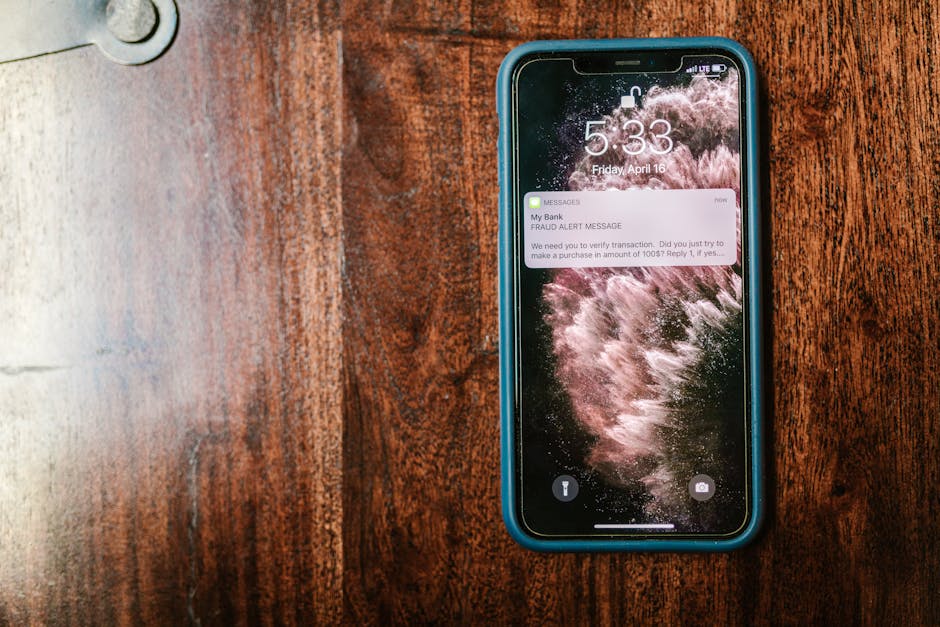

Tennessee DMV Scam Texts Are Spreading Fast — Here's What You Need to Know
Tennessee DMV scam texts are fraudulent SMS messages sent to Tennessee residents, falsely claiming to be from a "Tennessee Department of Vehicles." They threaten fines, license suspension, or registration cancellation unless you click a link and pay immediately.
Quick answer — what to do right now:
- Do NOT click any links in the message
- Do NOT provide personal or financial information
- Do NOT respond to the text
- Report and delete the message using your phone's "report junk" option
- Report to the FTC at reportfraud.ftc.gov or to the FBI at ic3.gov
These scam texts have already been spotted across multiple Tennessee counties, including Shelbyville, Sumner, Weakley, Cumberland, Montgomery, and Marshall. State agencies like the Tennessee Department of Safety and Homeland Security (TDOSHS) and the Tennessee Highway Patrol (THP) have both issued formal warnings.
The messages are easy to mistake for real alerts — especially when you're in a hurry. They use urgent language, fake legal codes, and links to websites designed to look official.
But here's the thing: Tennessee's real DMV agency will never text you about unpaid fines or threatened suspensions. Full stop.
One example message circulating reads something like: "Department of Motor Vehicles Final Notice: Enforcement Penalties Begin on June 3. Our records show you still have an outstanding traffic ticket... Pay Now." The pressure is deliberate. Scammers want you to panic and act fast before you think clearly.
This is a form of smishing — SMS-based phishing — and it's part of a growing national wave that mirrors the widely reported fake unpaid toll text scams.
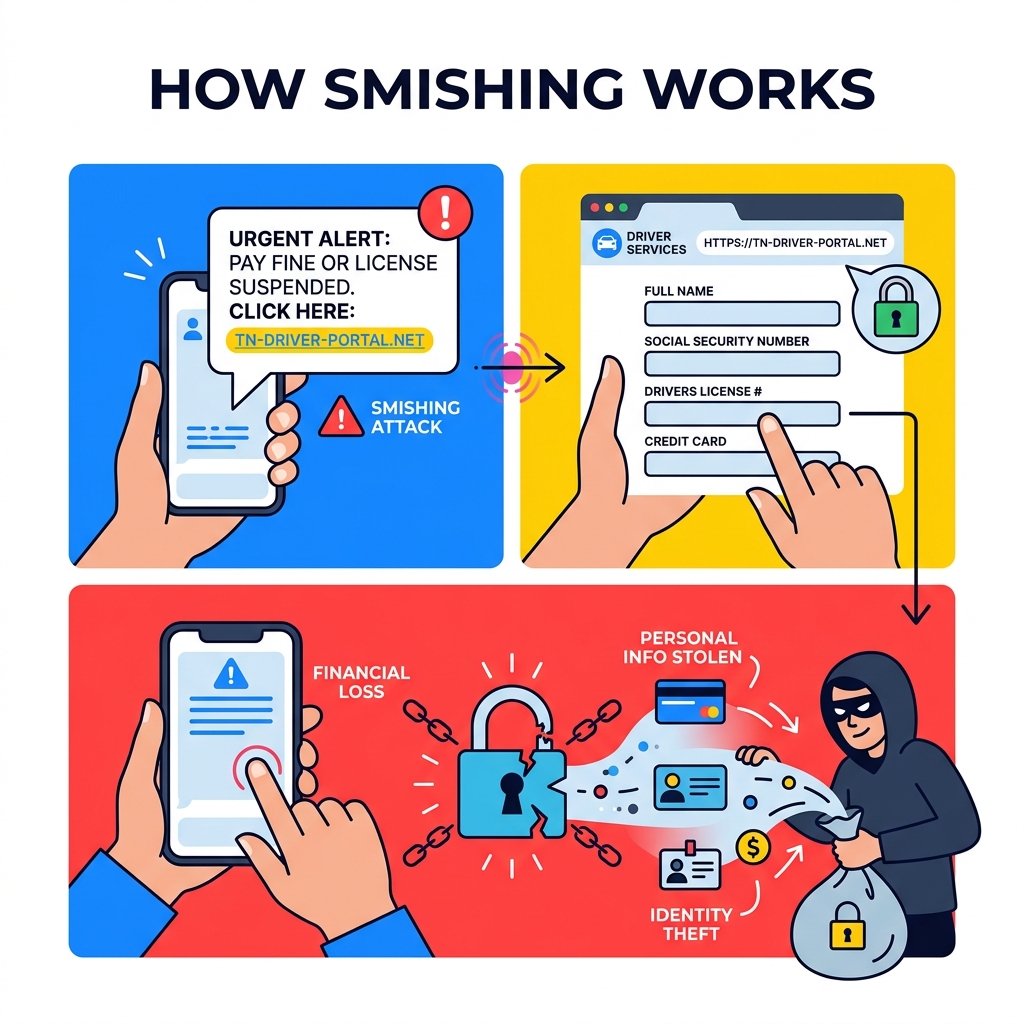
Anatomy of the Tennessee DMV scam text
To protect ourselves, we first need to understand exactly what these messages look like. Scammers aren't just sending random texts; they are crafting highly specific "lures" designed to bypass our natural skepticism.
When you receive a Tennessee DMV scam text, it often contains several distinct elements designed to mimic authority. The first major red flag is the agency name itself. Many of these texts claim to be from the "Tennessee Department of Vehicles." While that sounds official, it is actually a fake name. In Tennessee, driver services are handled by the Tennessee Department of Safety and Homeland Security (TDOSHS) or referred to locally as the Department of Motor Vehicles (DMV).
Another hallmark of this scam is the use of international or random phone numbers. Official government communications typically come from verified short codes or established domestic lines. If you see a "Final Notice" regarding your Tennessee driver's license coming from a country code you don't recognize, you can be 100% certain it’s a fraud.
Scammers also love to use "pseudo-legalese" to sound intimidating. Many reports indicate the texts cite a fake code, such as "North Tennessee State Administrative Code 15C-16.003." They might even include a specific date, like June 8, claiming that penalties will escalate if payment isn't received by then. This creates a false sense of urgency, a classic social engineering tactic.

Comparing Legitimate TN DMV Communications vs. Scam Texts
| Feature | Legitimate TN DMV (TDOSHS) | Tennessee DMV Scam Text |
|---|---|---|
| Primary Contact Method | Official mail sent to your registered address | Unsolicited SMS/Text message |
| Sender ID | Verified government domains (@tn.gov) | International or random phone numbers |
| Language | Formal, instructional, and verifiable | Urgent, threatening, and full of "final notices" |
| Links | Links to .gov websites | Shortened links (bit.ly) or fake .com/.org sites |
| Payment Request | Through official portals or in-person | Requests immediate payment via text link |
This tactic isn't unique to the Volunteer State. We've seen similar patterns in the Georgia DMV Scam Text: The Fake Agency alerts, where scammers used almost identical language to target drivers across state lines.
How the Tennessee DMV scam text targets drivers
The psychology behind the Tennessee DMV scam text is simple: fear. By threatening your ability to drive, scammers are hitting you where it hurts. For most of us, our car is our lifeline to work, school, and family.
The messages typically focus on three primary threats:
- Unpaid Traffic Tickets: Claiming you have an "outstanding" fine that has gone ignored.
- License Suspension: Warning that your driving privileges are about to be revoked.
- Registration Cancellation: Threatening to invalidate your vehicle's legal standing.
These are high-stakes issues. When a text pops up saying your license is at risk, your brain's "fight or flight" response kicks in. Scammers count on this biological reaction to override your logical thinking. They want you to click that link immediately to "fix" the problem. This is a textbook example of social engineering—manipulating people into performing actions or divulsing confidential information.
We've seen this play out in other regions as well, such as the Michigan SOS Scam Text: They Called It the DMV Dead campaign, which used similar high-pressure tactics to trick residents into visiting fraudulent websites.
Identifying a Tennessee DMV scam text from real alerts
So, how does the real state of Tennessee actually talk to you? It’s much more old-school than a random text message.
The TDOSHS and the Tennessee Highway Patrol (THP) have been very clear: they do not send text messages regarding overdue traffic fines, fees, payments, or license suspensions. If there is a legitimate issue with your driving record, the state will contact you via official mail sent to the address listed on your driver's license.
If you are ever in doubt, the best course of action is to verify the information yourself through official channels. Never use the contact information provided in a suspicious text. Instead, go directly to the official tn.gov website or visit a local driver services center in person.
Just as we recommend in our guide on how to Report USPS Scam Emails: Protect Yourself from Fraud, the key is to stop, think, and verify. If an agency doesn't usually text you, they haven't suddenly decided to start doing so with a "Final Notice."
Official Warnings and Red Flags
Local law enforcement agencies across Tennessee have been working overtime to spread the word about this wave of fraud. From the Shelbyville Police Department to the Clarksville PD and the Sumner County Sheriff’s Office, the message is unanimous: this is a scam.
The Tennessee Department of Safety and Homeland Security (TDOSHS) issued a formal alert stating that these messages are "not legitimate" and are designed to mimic their official website to steal personal and financial information.
One of the biggest red flags identified by the Clarksville Police Department is the sender's address. While some messages come from international phone numbers, others originate from random, unofficial email addresses rather than government domains. A real email from a Tennessee state employee will always end in @tn.gov. If the "DMV" is emailing you from a Gmail or Outlook account, it’s a scam.
The FBI’s IC3 report highlights that these types of impersonation scams contribute to billions of dollars in losses annually. In fact, phishing and smishing are among the most common ways that identity theft begins.
It is also worth noting that this scam is a "cousin" to the unpaid toll scams we've seen recently. As noted in our article on the TxDOT Scam Text: TXTag Only Texts from One Number, scammers often recycle the same templates, simply swapping out "Tolls" for "DMV" or "Traffic Tickets" depending on what they think will be more effective in a particular state.
Risks and Protective Measures
The risks of engaging with a Tennessee DMV scam text are significant. It’s not just about a fake "fine"—it’s about your entire digital identity.
When you click a link in one of these texts, you are usually taken to a "spoofed" website. These sites are designed to look exactly like the official TDOSHS payment portal. Once there, you might be asked to enter:
- Your full name and date of birth
- Your driver's license number
- Your Social Security number
- Your credit or debit card information
Providing this data can lead to immediate financial loss and long-term identity theft. According to the Verizon Data Breach Investigations Report, phishing (including smishing) accounts for over 36% of all data breaches. Once a scammer has your PII (Personally Identifiable Information), they can open new credit lines, drain bank accounts, or even sell your data on the dark web.
To protect yourself, we recommend the following steps:
- Enable Multi-Factor Authentication (MFA): According to Microsoft, MFA can prevent over 99% of account compromise attacks. Even if a scammer gets your password, they won't be able to get into your accounts without that second code.
- Monitor Your Accounts: Regularly check your bank and credit card statements for any unauthorized charges.
- Use Security Tools: Many modern smartphones have built-in "Report Junk" features. Use them! This helps telecommunications providers identify and block scam numbers for everyone.
- Stay Informed: Awareness is your best defense. Knowing the signs of a scam makes you much less likely to fall for one. This applies to phone calls too—check out our guide on How to Identify Spectrum Scam Calls for more tips on spotting fraudulent "official" callers.
Frequently Asked Questions about TN DMV Scams
Is the Tennessee DMV actually called the 'Department of Vehicles'?
No. This is one of the most obvious red flags. While people often use "DMV" as a shorthand, the official state agency is the Tennessee Department of Safety and Homeland Security (TDOSHS). The scam texts often use "Tennessee Department of Vehicles" or "TN Dept of Vehicles," which are not real agency names. If the name of the agency is wrong, the message is fake.
What should I do if I clicked a link in a Tennessee DMV scam text?
If you've already clicked a link or, worse, provided information, don't panic—but act quickly:
- Contact your bank: If you entered credit card info, call your financial institution immediately to freeze your card and report fraudulent activity.
- Change your passwords: If you used a password on the fake site that you use elsewhere, change it immediately across all accounts.
- Scan for malware: Sometimes these links can trigger "drive-by" downloads of malicious software. Run a security scan on your phone.
- Place a fraud alert: Contact one of the three major credit bureaus (Equifax, Experian, or TransUnion) to place a free fraud alert on your credit report.
Where can I report these fraudulent messages?
Reporting is crucial to stopping these scammers. You should report the Tennessee DMV scam text to:
- The FTC: Visit reportfraud.ftc.gov.
- The FBI: Use the Internet Crime Complaint Center at ic3.gov.
- The BBB: Use the BBB Scam Tracker.
- Your Phone Provider: Forward the scam text to 7726 (SPAM). This is a free service used by most major carriers to flag and block scam numbers.
Conclusion
The rise of the Tennessee DMV scam text is a reminder that scammers are constantly finding new ways to exploit our trust in government institutions. By using fear, urgency, and fake legal codes, they hope to catch us off guard. However, by staying informed and recognizing the red flags—like incorrect agency names and unofficial contact methods—we can keep our personal information safe.
At Tempo Mail USA, we believe in a proactive approach to privacy. Our service provides temporary email aliases that act as a "PII firewall," shielding your real identity from the web. While we can't stop a scammer from texting your phone number, we can help ensure that your primary email address stays out of the data breaches that scammers use to find their victims in the first place.
By compartmentalizing your digital life and using secure aliases, you reduce your "attack surface" and make it much harder for fraudsters to target you. Stay vigilant, Tennessee!
Protect your inbox and your identity today at https://tempomailusa.com.