

Temp Email for Walmart Signup: The Phone Opens the Door, the Inbox Holds the Receipts — and the 90-Day Return Outlives Any Disposable Address
A temp email signs you up for Walmart. That sentence is true, and it is also almost entirely beside the point, because Walmart is the one signup in this series where the email field is not the gate. The phone number is. Walmart asks for both on the same form, verifies the phone by text before the account exists at all, and only then sends the email a confirmation message. A disposable address sails through the part of the form that does not matter and then has to survive everything that does: the order confirmations, the delivery notices, the pickup emails, the ninety-day return window, the Walmart+ trial renewal, and the password reset that goes to email and nowhere else.
That ordering is what makes Walmart different from every other store in this series. Shein wanted the email and stopped there. Amazon let you choose email or phone and verified whichever you picked. Walmart wants both, in a fixed order, and it remembers the phone number long after you have forgotten the inbox. If you are reaching for a temp email because you want to keep your real address out of one more database, Walmart will let you do it — and then quietly make you regret it the first time something goes wrong with an order.
The form asks for two things and verifies the phone first
Walmart's account-creation screen lists five fields: first name, last name, email address, mobile phone number, and password. The password needs at least eight characters, with upper and lower case plus a number or a special character. Nothing about the form looks unusual until you submit it. Then Walmart texts a six-digit code to the number you entered, and the button you have to press is labelled "Verify number and create account." The account does not exist until that code is typed in. Only after the phone is verified does the verification email arrive in the inbox you entered.
Read that sequence again, because it inverts the assumption most temp-email guides make. The usual story is that the email is the identity and the phone is optional backup. At Walmart the phone is the identity and the email is the mailbox. You can put any address you like in the email field, including a disposable one, and Walmart will accept the format and move on — the friction lives entirely in the SMS step. There is no card required to create the account and no Prime-style paid tier standing between you and the store. The account is free, the phone is mandatory, and the email is verified second, as a formality.
Compare that with the two nearest posts in this series and the gap is obvious. Shein asked for an email and a password and sent a six-digit code to the inbox, and that was the whole signup. Amazon let you register with an email or a phone number and verified whichever one you chose, and only asked for the other one later, in specific situations. Walmart asks for both up front and verifies the phone before the account is created. That is a deliberate design choice, not an oversight, and it tells you where the company's trust sits: a phone number is harder to mint by the thousand than an email address, and Walmart has roughly 280 million customers a week across more than 10,900 stores in 19 countries to protect from the fraud that follows disposable identities.
One number, one account, and a 45-day memory
The phone rule has two edges that catch people who have never read Walmart's help pages. First, one number, one account. A mobile number can be linked to only one Walmart account at a time — not one per email, not one per household, one, full stop. If your number is already on an account, even an old one you forgot about, the new signup stalls. Second, the 45-day lockout. If a number has received a Walmart one-time code within the past 45 days, it cannot be used to create a new account at all. After the 45 days pass, using the number for a new account removes it from the old one.
These are not edge cases. They are the normal consequences of treating a phone number as the account's anchor. A family sharing one number across two accounts will hit the first rule. Anyone who burned their number on a throwaway account last month and wants a fresh one today will hit the second. And anyone planning to use a virtual or rental number for the SMS step should know that the number stays attached to the account for its life — it is the thing Walmart reaches for when the account needs verifying again, and a number you no longer control is a locked door with no spare key.
The practical result is that the temp email is the easy half of a hard signup. You can generate a disposable address in seconds, but you still need a real, reachable, currently-unattached phone number that has not seen a Walmart code in six weeks. If you do not have one, the temp email buys you nothing. If you do have one, the temp email is the least important thing on the form.
The inbox still runs everything after signup
Getting past the phone check is the easy part. Staying a Walmart customer is an email job. Every order you place sets off a chain of messages to the registered address: the order confirmation with the order number, the shipping notification with the tracking link, the delivery confirmation, and — for the grocery and pickup orders that are now a large share of Walmart's business — the ready-for-pickup email and any substitution notices when an item is out of stock. Walmart offers pickup and delivery at more than 8,400 locations globally, and the pickup flow is email-driven: the message telling you the order is ready, with the pickup window and the check-in instructions, goes to the inbox, not to the phone.
That matters because the inbox is also where the account proves itself. The order number in the confirmation email is the reference for every return, every refund enquiry, and every "where is my order" conversation with support. Lose the inbox and you lose the paper trail for every purchase attached to the account. Walmart's website keeps a Purchase History page, and you can log in and look at it — but logging in after a forgotten password requires the reset code, and the reset code goes to the email. The phone that got you in cannot get you back in. That asymmetry is the whole story of this post, and it is worth stating plainly: the phone opens the door once, and the email holds the keys forever after.
Ninety days against ten minutes: the return window
Here is where the disposable inbox stops being a privacy tool and starts being a liability with a price tag. Walmart's standard return window is ninety days from purchase or delivery for most general merchandise sold and shipped by Walmart. Ninety days. A temp inbox lasts ten minutes, or an hour if you picked a generous provider. The gap between those two numbers is the entire risk, and it is not a theoretical one — returns are the normal case at a store this size, not the exception.
The windows are not uniform, and the short ones are the ones that hurt:
| Item type | Return window |
|---|---|
| Most general merchandise | 90 days from purchase or receipt |
| Consumer electronics, PCs, vacuums | 30 days |
| Most Marketplace items | 30 days, or the seller's own policy |
| Wireless phones | 14 days |
| Major appliances | 2 days after accepted delivery |
| Holiday purchases, Oct 1–Dec 31 | Returnable until January 31 |
Start the return from inside your account under Purchase History, and the refund goes back to the original payment method: credit and debit card refunds typically take up to seven to ten business days, while a refund to a Walmart gift card or Walmart Balance usually lands within three hours. Without a receipt or order number, the fallback is a government photo ID and a gift-card refund if the return is approved — a worse outcome that starts from the same missing piece of paper, the order confirmation that went to an inbox that no longer exists.
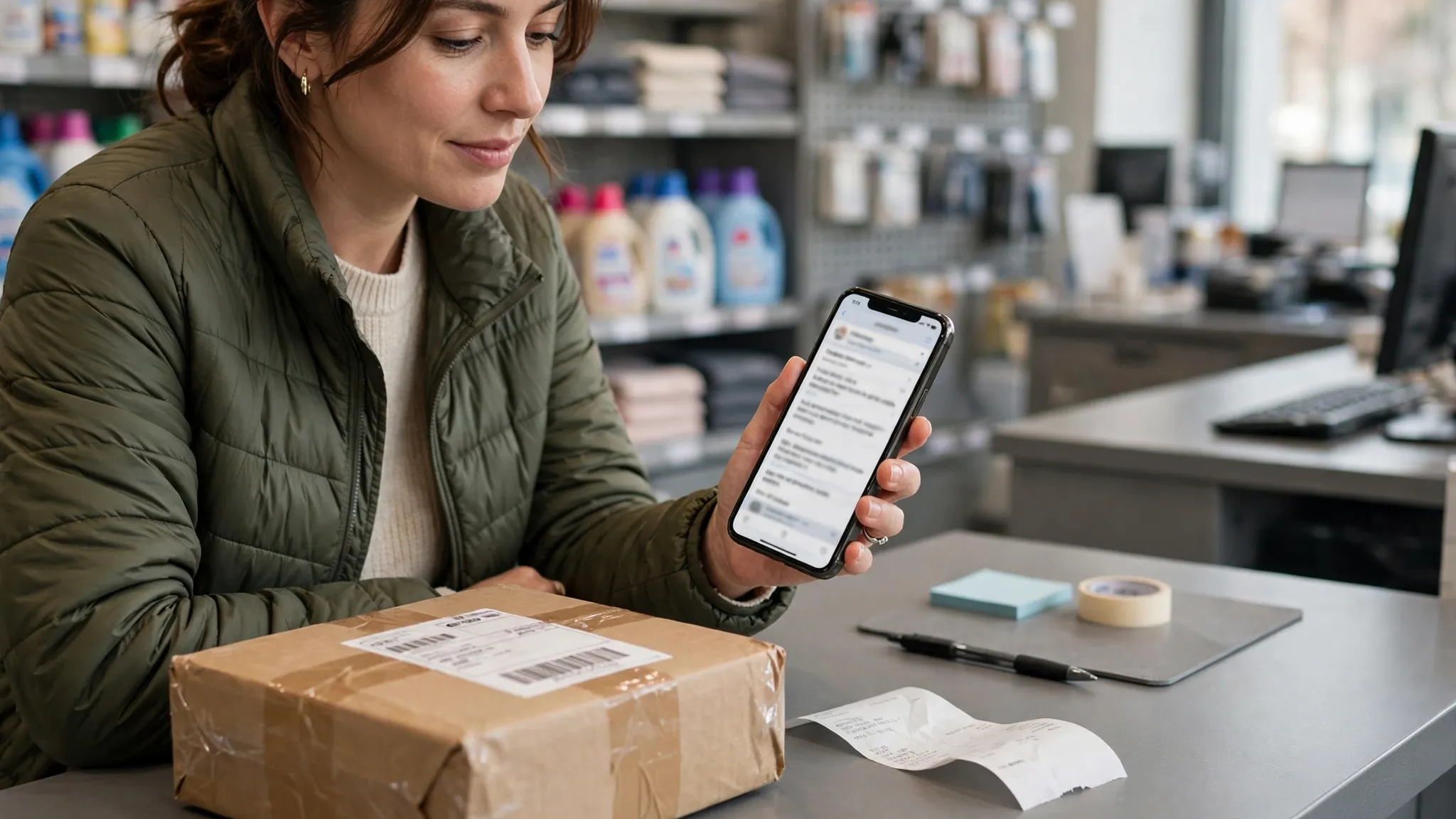
The return also has a clock that runs in the other direction. The Temu post in this series found the same shape of problem on the marketplace side: an order that takes a week to arrive, sits in your home while you decide, and takes another week to go back, with every step confirmed by email. Walmart is the domestic version of the same pattern, except the window is three times longer and the store is the one you actually shop at every week. A disposable address that worked perfectly on signup day is a dead letter by the time the toaster breaks in week six.
The $1 trial that bills $98 a year
Walmart+ is the other place the inbox quietly becomes a billing record. The membership costs $12.95 a month or $98 a year, with a 30-day trial for $1 for new members, and it converts to a paid plan automatically unless you cancel. The discounted Assist and Student rates are $49 a year or $6.47 a month. The bundle includes free delivery from stores, free shipping with no order minimum, fuel discounts, and a choice of Paramount+ or Peacock. Since October 20, 2026, Walmart also sells it bundled with Sam's Club Plus for $120 a year.
Two facts about the trial deserve more attention than they usually get. First, only one trial is allowed per customer, so the disposable-address trick of signing up again for another free month does not work — the account, the card, and the phone number all tie back to the same person. Second, Walmart's terms say membership fees are non-refundable, with no proration for unused time. Cancel the annual plan in month three and the remaining nine months stay paid for. The trial confirmation, the renewal reminder, and the cancellation confirmation all go to the registered email. A temp inbox that expires on day two leaves you with a $1 trial that becomes a $12.95 monthly charge on day thirty-one, and the email that would have warned you about it went to an address that no longer exists.
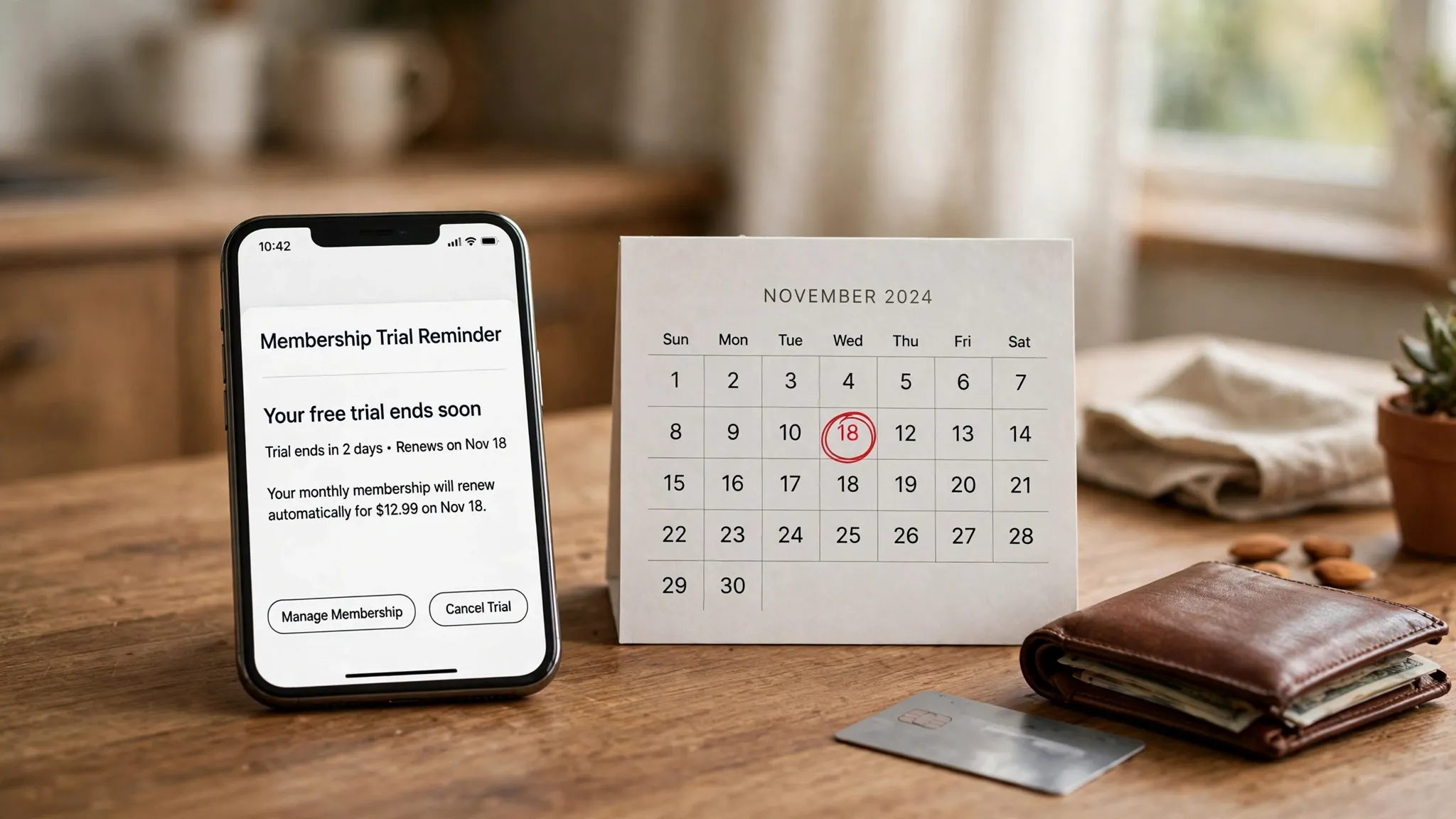
That is not a hypothetical failure mode. It is the single most common paid-subscription complaint in existence: the trial that converted because the reminder went somewhere the customer never looked. A temp email does not cause the charge — the auto-renewal does — but it removes the one warning system that would have prevented it. If you take the trial, set a calendar reminder on the day you sign up, in a calendar you actually check, and treat the $1 as the price of a decision you have to make in thirty days rather than a free month.
The password reset that only goes to email
The sharpest version of the trap is the password reset. Walmart's own help pages say it plainly: reset codes go to email only, not to your phone, and they expire after 30 minutes. If you lose access to the email address linked to your account, the documented remedy is to create a new account. Not to verify by phone, not to answer security questions, not to show ID in a store — to start over.
Think about what starting over costs at Walmart. The new account has no order history, so no returns on anything bought under the old one. No Walmart+ membership, no saved addresses, no prescription history at the pharmacy, no grocery lists, no pickup preferences. The phone number that anchored the old account has to be freed first, which runs straight into the one-number-one-account rule and possibly the 45-day lockout. And the old account still exists, with your card on file, unreachable behind an inbox you let expire.
Where a temp email actually fits at Walmart
None of this means a temp email is useless at Walmart. It means the use has to match the tool, and the tool is a short-lived inbox, not a second identity. Three uses hold up. Checking prices and stock at your local store without creating an account at all needs no email, and a temp address is fine for the one-off stock alert. A same-day pickup order you collect within hours, where the only emails are the confirmation and the ready notice, can work — as long as you collect it the same day and never need to return anything. And testing whether Walmart delivers to a new address is a legitimate one-off that a disposable inbox handles cleanly.
What does not hold up is anything with a tail. A grocery account you order from weekly. A Walmart+ trial. An electronics purchase inside its 30-day return window. A Marketplace order from a third-party seller, where the seller's own 30-day policy and the messaging channel both run through the registered email. The eBay post in this series priced the same risk on the marketplace side: a message thread with a seller, a return label, and a refund decision, all living in an inbox with an expiry date. Walmart's Marketplace is smaller than eBay's, but the shape of the loss is identical.
The setup that keeps the privacy without the loss
The honest answer to the Walmart signup question is not "never use a temp email" and it is not "use one freely." It is to match the address to the account's lifespan, the same rule that runs through every post in this series. A Walmart account is a long-lived thing: ninety-day returns, a subscription that renews monthly, a password reset that only goes to email. It needs an address that will still exist in ninety days.
The setup that actually works is boring, and that is why it works. Use a permanent email alias for the account — a Gmail address with a plus tag, or a forwarding alias from a service like Apple's Hide My Email or SimpleLogin — so Walmart gets an address that is unique to it but forwards into an inbox you control. Keep the phone number real and stable, because it is the anchor for the account and the only thing that verifies you at signup. Turn on two-step verification with an authenticator app rather than SMS where Walmart offers it, so the second factor does not depend on the same number. The Etsy post in this series landed on the same conclusion from the marketplace side: the alias gives you the privacy a disposable address promises, without the expiry date that makes the promise a lie. You get a different address per store, a kill switch per store, and an inbox that is still there when the toaster breaks in week six.
Walmart is the biggest retailer in the world, serving about 280 million customers a week, and its signup form is honest about what it wants: a real phone number, verified by text, and an email address it will use for the next ninety days and beyond. Give it a disposable address and it will take it without complaint. The complaint comes later, by email, to an inbox that is already gone.
Frequently asked questions
Can I sign up for Walmart with a temp email?
Yes, for the email field. Walmart's form accepts any valid-format email address, and the verification email will arrive in a disposable inbox. But the signup also requires a real mobile number, verified by a six-digit SMS code before the account is created, and the phone is the part you cannot fake. A temp email gets you past the email field; it does not get you past the signup.
Does Walmart block disposable email addresses?
Walmart publishes no disposable-domain blocklist, and the email field is not where the friction lives — the SMS verification is. That does not make a disposable address safe to use. The risk is not rejection at signup, it is losing the account later: order confirmations, return labels, refund notices, trial reminders, and password resets all go to the registered email, and Walmart's own guidance says to create a new account if you lose access to it.
Do I need a phone number to create a Walmart account?
Yes. Walmart requires a valid mobile number for all new accounts, and texts a one-time code to it before the account exists. One number can be linked to only one account at a time, and a number that received a Walmart code within the past 45 days cannot be used to create a new account. There is no way to complete signup with email alone.
What happens to my Walmart orders if my temp email expires?
You lose the paper trail. The order confirmation, shipping and delivery notices, pickup-ready email, and any refund notification all went to that address, and the password reset code that would let you back into the account goes there too. You can still log in if you remember the password, but the moment you need a reset, a return label, or a refund status, the account is effectively locked behind an inbox that no longer exists.
Can I use a temp email for the Walmart+ free trial?
The form will accept it, but it is a bad idea. The trial costs $1 for 30 days and then auto-renews at $12.95 a month or $98 a year, with no refunds on membership fees. The trial confirmation, the renewal reminder, and the cancellation confirmation all go to the registered email. If that inbox expires, the charge that converts the trial is the one email you most needed to see, and it is the one you will miss.
What should I use instead of a temp email for Walmart?
A permanent email alias. A Gmail plus-tag address or a forwarding alias from Apple Hide My Email or SimpleLogin gives Walmart a unique address that forwards into an inbox you actually control, so you can cut it off per store without losing the account. Pair it with your real phone number and an authenticator app for two-step verification, and you keep the privacy a disposable address promises without the expiry date that breaks it.
Need a disposable temporary email?
Protect your real inbox from spam and promotional clutter instantly and free.
Received a suspicious email, text, or charge alert?
Verify whether the sender domain is disposable, spoofed, or unverified before clicking links.