
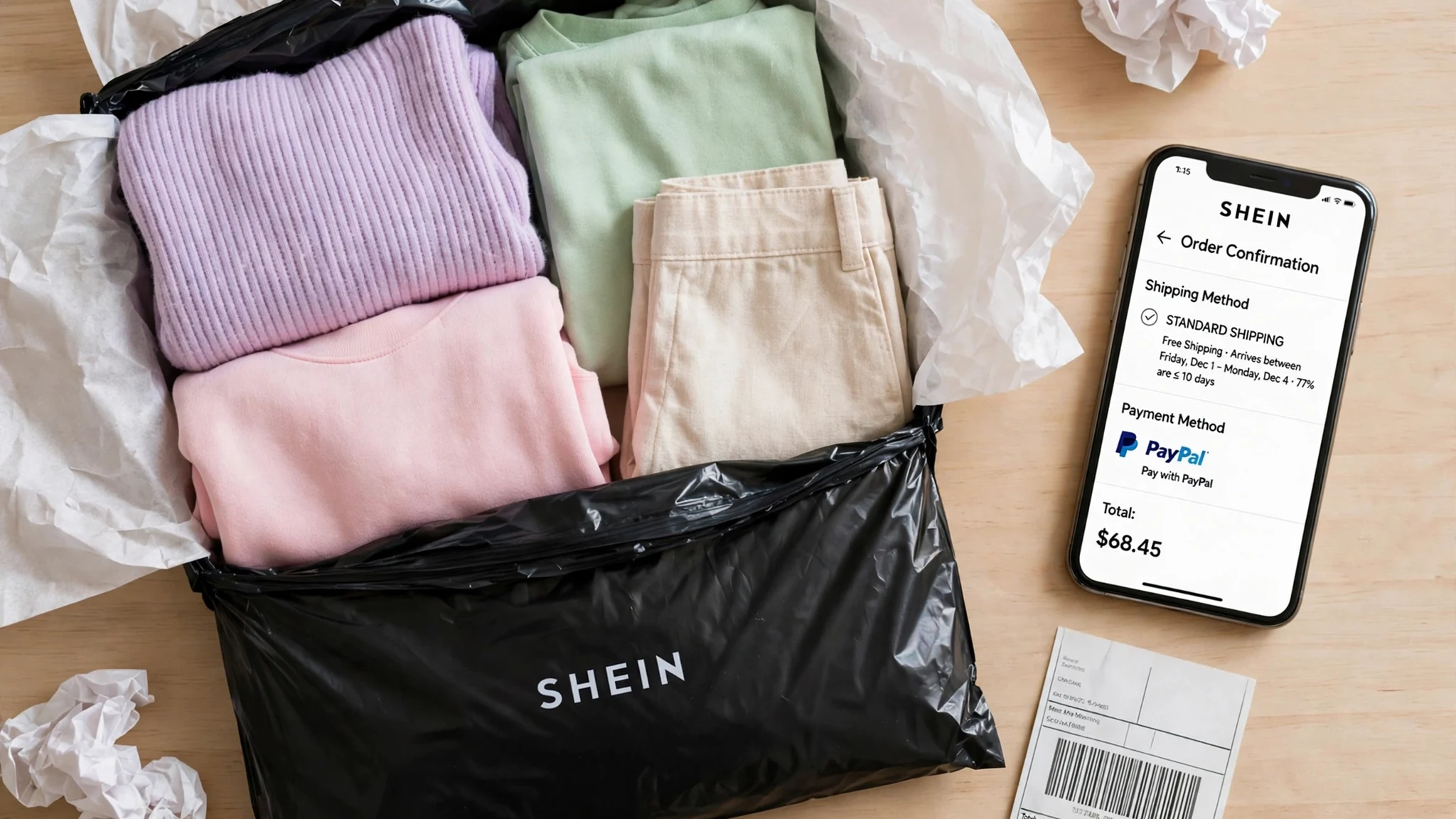
Temp Email for Shein Signup: The Verification Code Arrives in Seconds — Then Your Inbox Becomes Your Order, Your Return, and Your Refund
A temp email signs you up for Shein in about two minutes, and that is the whole of what it does. Shein asks for an email address and a password, sends a six-digit verification code to that inbox, and lets you in. There is no phone call, no ID upload, no selfie. It is the easiest signup in this whole series, and that ease is exactly what makes the disposable address dangerous here — because the account you just opened is not a login. It is an order pipeline, and every step of that pipeline runs through the email address you typed in.
Shein is not a streaming trial you can abandon or a social profile you can rebuild. It is a store where the average customer placed four orders in 2025, where the return window is thirty days, where refunds take a week to process, and where the return label itself is generated inside your account and sent to your inbox. The email address is the receipt, the tracking number, the return label, and the refund notice, all in one place. A disposable inbox receives the first of those messages beautifully and then stops existing, right when the other four are due.
The year Shein stopped being cheap and quiet
Shein spent years as a set of leaked numbers and guesses. Then it filed for its Hong Kong listing, and for the first time the real figures went public. Net revenue was $41.8 billion in 2025, up 8% from $38.7 billion in 2024, on 273 million active customers who placed 1.078 billion orders — about four orders per customer. The United States contributed $10.1 billion of that, 24.1% of the total, down from 29.4% in 2023. The company listed in Hong Kong on September 1, 2026, at a valuation of about $26.3 billion, a long way from the $100 billion peak of 2022.
The American decline has a date on it: May 2, 2025, when the de minimis exemption ended and parcels under $800 stopped entering the United States duty-free. Shein disclosed tariff rates between 10% and 87.5% on its China-origin goods sold into the US, and the numbers followed: US revenue fell 14.3% in the first quarter of 2026 to $2.04 billion, and roughly 10% across the first half of the year. Prices rose, delivery slowed — Shein publishes that 77.1% of its US standard orders arrive within seven business days — and the whole proposition of the store changed. It is still cheap, but it is no longer the frictionless bargain it was in 2024, and the account now carries more money per order, more returns per customer, and more reasons for the refund to matter.
That is the context the temp-email question lives in now. When a dress cost $9 and arrived in five days, a lost account was a shrug. When the same order costs more, takes a week, and might need to go back, the account is a financial record with a thirty-day return window attached — and the email address is the only key to it.
The Temu post in this series covered the other half of the same tariff story: the same de minimis shock, the same price rises, the same shift from impulse buying to orders you actually track. Shein is the fashion version of that pattern, with one difference that matters: Temu sells you everything, while Shein sells you clothes you will probably try on, decide about, and send back. The return rate is the whole story, and the return runs on email.
The signup itself: two minutes, one code, no phone call
Shein asks for the least of any major store in this series. An email address, a password, and a six-digit verification code that arrives in the inbox within a minute. You can also sign up with Google, Facebook, or Apple, but the email path is the default, and it asks for nothing else — no phone number at signup, no address until you place your first order, no payment method until checkout.
Compare that with the last two posts in this series and the gap is obvious. Coinbase wanted a phone SMS code, a government ID, a selfie, and a Social Security number after the email. Uber wanted the phone before anything else. Shein wants the email and stops there, which is why the temp-mail guides that list Shein as "works with temp email" are technically right. The verification code arrives in a disposable inbox without trouble, and the account opens.
But the signup screen is the only screen where the email is just an email. The moment you place an order, Shein starts treating that address as the account's nervous system. There is no second channel. Shein does not text you your tracking number, it does not call you about a refund, and its customer service verifies you by the order numbers and shipping address tied to the account. The address you typed in to get a six-digit code is now the address that receives every message the store will ever send you about your money.
The receipt chain: five emails that run your order
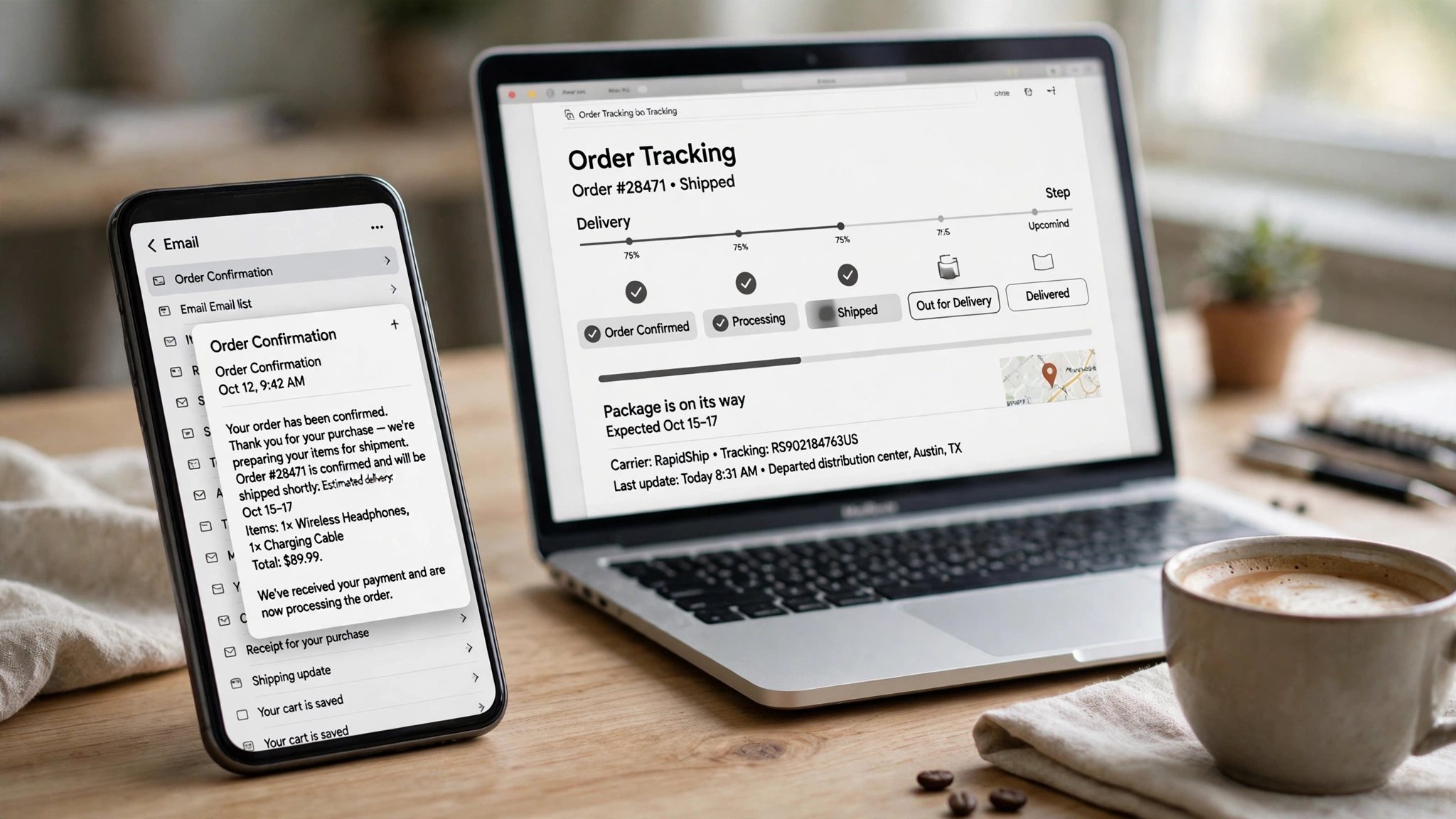
Here is what actually arrives in a Shein inbox after signup, in the order it arrives. The order confirmation, with the order number and the item list, lands the moment you pay. The shipping notification follows when the parcel leaves the warehouse, with a tracking number and a delivery estimate. The delivery confirmation arrives when the parcel lands. If anything goes back, the return confirmation and the QR code or label arrive by email. And when the refund is processed, the notification that the money is on its way — to your Shein Wallet or your original payment method — arrives by email too.
Five messages, and each one does a job nothing else in the account can do. The order number in the confirmation email is what customer service asks for when anything goes wrong; the guides for changing a Shein email note that support verifies identity using your last few order numbers and shipping address, which means the order numbers are the backup key to the account. The tracking number in the shipping email is the only way to know where a parcel is once it leaves Shein, since the app's tracking is a mirror of the same carrier data. The return QR code is the physical thing you show at the drop-off point. The refund notification is the only proof the money is moving, and it matters because refunds take five to seven business days to process after Shein receives and inspects the return — a week in which the only signal you get is that email.
Amazon runs the same pattern, and the Amazon post in this series made the same point: the inbox is the receipt drawer, and a store that ships physical goods to your door cannot function without one. The difference is scale and speed. An Amazon order arrives in two days and the receipt chain is over quickly. A Shein order takes up to a week to arrive, sits in your home while you decide, and may take another week to go back. The chain is longer, the gaps between messages are wider, and the inbox has to survive all of it.
The return-label trap
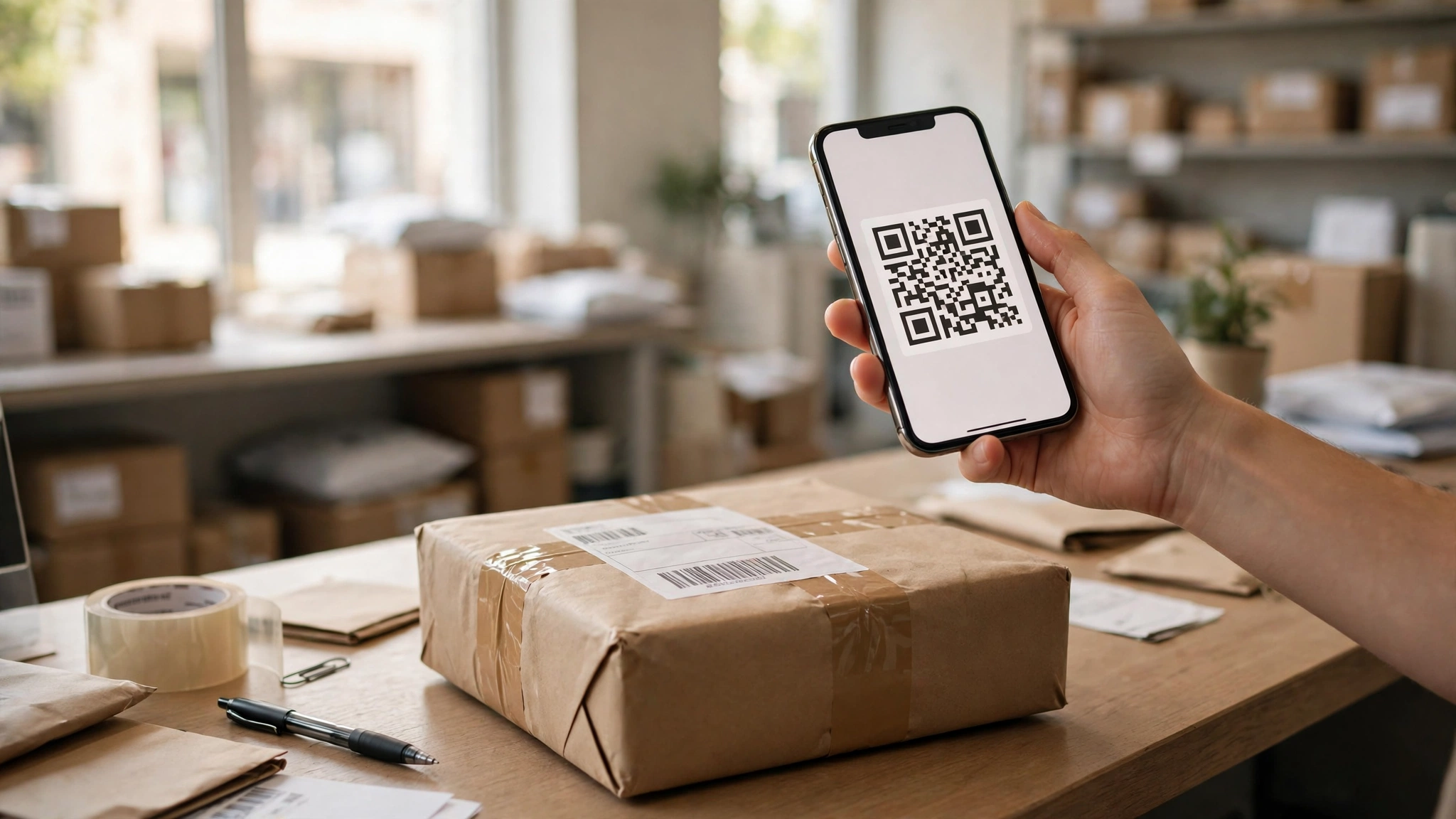
This is where the disposable inbox stops being a theoretical problem and becomes a specific, documented one. Shein gives you thirty days from the delivery date to start most returns, and the return starts inside your account: log in, open My Orders, open the order, tap Return Item, pick the items and a reason, and submit. What comes back is a QR code for a Happy Returns or USPS drop-off, or a printable label. The first return on an order is free. Additional returns from the same order cost $6.99, deducted from the refund. Non-returnable categories include bodysuits, lingerie, underwear, jewelry, accessories, cosmetics, pet products, and clearance items.
Now run that flow with an inbox that expired two weeks after signup. The parcel arrives on day six. You try it on day nine and it does not fit. You open the app on day ten to start the return — and you are logged out, because the session expired, or you are on a new phone, or the app asks you to confirm the sign-in. The password reset goes to the address on the account. That address no longer exists. You cannot get in, and you cannot get the return label, because the label lives behind the login.
The support pages for this exact situation are blunt about what happens next. The reset link goes to the registered email, and without access to that email there is no clean way back in. Customer service can verify identity using order numbers and a shipping address, but that means a support conversation — by chat or by email to the support team — while the thirty-day window keeps ticking. Real users have hit this wall and written about it publicly: locked out of a Shein account, unable to reach the return label, with the parcel sitting at home and the deadline approaching. It is the most ordinary failure mode in this whole series, and it needs no hacker, no breach, and no fraud. It needs a login screen and an inbox that stopped existing.
The refund side is worse, because the money has a second trap built in. When Shein processes a refund, it goes to your Shein Wallet or your original payment method, depending on what you chose. Wallet credit typically appears within 24 hours of processing; a refund to the original payment method takes another one to ten business days for the bank to post. And Wallet balances cannot be withdrawn. They can only be spent on a future Shein purchase, which means a refund that lands in the Wallet of an account you cannot open is not a refund at all. It is a store credit locked inside a login you lost.
The eBay post found the same shape of problem on the marketplace side: returns and refunds that route through the registered email, with the account as the only place the label and the refund notice live. Shein is the purer version, because there is no seller to message and no second account to fall back on. The store is the counterparty, the email is the channel, and the label is behind the login.
The money test: what a dead inbox costs
Shein is a store, so the failure modes are priced in dollars and days rather than in account takeovers. Here is the honest accounting.
| What breaks | What Shein sends | With a dead inbox |
|---|---|---|
| Order tracking | Shipping notification and delivery confirmation with the tracking number | You cannot prove where the parcel is, or when to expect it |
| Return within 30 days | Return QR code or label, generated inside the account | No login, no label, and the window keeps ticking |
| Refund of $30 to $80 | Refund notification; Wallet credit in 24 hours, card refund in 1 to 10 business days | You never learn the refund processed, and Wallet credit is locked inside the account |
| Password reset | Reset link to the registered email | No way back in without a support verification using order numbers |
| Security alert | New sign-in alert to the registered email | Someone else signs in and you never find out |
| Chargeback or dispute | Dispute notices and refund decisions by email | You miss the dispute window and the decision is made without you |
The row that should worry you most is the last one, because it is the one people never plan for. Shein states plainly that password resets and chargeback disputes both route through the registered email. A chargeback dispute has a clock on it. Miss the email and the decision happens without your evidence, and the money is gone either way — either the charge stands or the account is closed with the dispute unresolved.
The Etsy post in this series priced the same risk on the marketplace side: an inbox that holds the order record, the refund decision, and the appeal channel, all at once. Shein compresses all three into a single store account, which makes the math simpler and the loss cleaner. One dead inbox, six broken functions, and the cheapest item in the order is usually worth more than the privacy the disposable address bought you.
The coupon machine and the student discount
There is a second cost that never appears in the security guides, and it is the one Shein shoppers actually feel first. Shein runs on email marketing the way other stores run on foot traffic. The inbox on a Shein account receives discount codes, points offers, flash-sale alerts, and back-in-stock notices constantly, and the account accumulates points and coupons that live inside it. A disposable inbox does not just block the refund notice. It throws away the discount codes, the points, and the sale alerts that are the entire reason most people shop at Shein in the first place.
The student discount makes the point sharper. Shein offers student discounts through Student Beans and similar verification platforms, and that verification needs a real student email and a real identity check. A disposable address cannot pass it, and the discount it unlocks is worth more over a year of orders than the privacy of any single signup. The same logic applies to the points system: points and coupons accumulate in the account over months, and they die with the login.
This is the honest trade, stated plainly. The temp email saves your real inbox from Shein's marketing mail, and Shein's marketing mail is genuinely relentless. But it also saves you from the discount codes, the points, the sale alerts, and the student discount — the four things that make the account worth having. You are not just hiding from the spam. You are hiding from the store's entire pricing system, while still paying full price.
The alias, not the disposable address
The fix is the same one this series keeps arriving at, because it is the only one that survives contact with a real account. Use a permanent email alias: a forwarding address that receives mail at your real inbox while keeping your real address off Shein's marketing lists in its raw form and out of the next breach file. The alias receives the order confirmation, the shipping notification, the return QR code, and the refund notice, and it never expires, so the thirty-day return window and the one-to-ten-day refund wait both run inside an inbox that still exists.
Shein's own email-change flow proves the point about permanence. You can change the email on a Shein account — sign in, open Account Settings, tap Edit next to Email, type the new address, and confirm with the six-digit code Shein sends to the new inbox — but the flow assumes you can still open the old inbox, and it signs you out automatically as a security measure once the change goes through. Each Shein account requires a unique email, and you cannot move an address that is already linked to another Shein account, even a closed one. Pending orders, recent password changes, and open dispute tickets can pause the email-change option until those flags clear. The system is built for people who keep their inbox, not for people who burn it.
An alias also keeps the one genuine privacy benefit the temp email was supposed to deliver. Your primary address stays out of Shein's marketing database in its raw form, and if the alias ever starts attracting spam or appears in a breach, you can delete it and make a new one — without losing the account, the order history, the return window, or the Wallet balance. That is the trade the disposable address gets backwards: maximum privacy for the first two minutes, zero recoverability for every month after.
The verdict
Use a temp email for Shein only if you are browsing with no intention of ordering, or placing a single order you will never return and never need to track. The verification code arrives, the account opens, and you can look around. The moment you pay for something, the email address stops being a signup detail and becomes the receipt, the tracking number, the return label, and the refund notice — five messages spread across thirty days, all addressed to an inbox that expires on a timer.
A Shein account is worth keeping precisely because it accumulates things: order history, points, coupons, a student discount, a Wallet balance. Every one of those things lives behind the login, and the login lives behind the email. For a store you will order from four times a year, use your permanent address, or an alias that forwards to it forever. The temp inbox is for the two minutes before the order, and never for a minute after.
Frequently asked questions
Can I sign up for Shein with a temp email?
Yes, for the signup itself. Shein asks for an email address and a password, then sends a six-digit verification code to that inbox, and a disposable address receives it without trouble. But the account immediately becomes an order pipeline — confirmations, tracking, return labels, and refund notices all go to that address — so a temp email works for browsing only, never for an account that will place orders.
Does Shein block disposable email addresses?
Shein does not publish a disposable-domain blocklist, and the verification code generally arrives in a temp inbox. The blocklist question is beside the point: even if the address is accepted, the order tracking, the thirty-day return window, and the refund notifications all depend on an inbox that keeps existing. No published list means no guarantee either way.
What happens to my Shein order if my temp email expires?
You lose the receipt chain. The order confirmation, the shipping notification with the tracking number, the return QR code, and the refund notice all go to the registered email. Without access to that inbox you cannot reset the password, cannot generate a return label, and cannot learn whether a refund processed — and any Wallet credit from a refund is locked inside an account you cannot open.
How do Shein returns work?
You have thirty days from the delivery date to start most returns, from inside your account under My Orders. The first return on an order is free; additional returns from the same order cost $6.99, deducted from the refund. Refunds are processed within five to seven business days after Shein receives and inspects the return. Wallet credit appears within 24 hours of processing; a refund to the original payment method takes another one to ten business days. Original shipping fees are not refunded, and Wallet balances cannot be withdrawn.
Can I change the email on my Shein account later?
Yes, from Account Settings: edit the email, type the new address, and confirm with the six-digit code Shein sends to the new inbox. The change signs you out automatically. You cannot move an address already linked to another Shein account, even a closed one, and pending orders, recent password changes, or open disputes can pause the option. If you cannot open the old inbox, customer service can verify identity using your last order numbers and shipping address.
Does Shein have a student discount?
Yes, through Student Beans and similar verification platforms. The verification needs a real student email and identity check, so a disposable address cannot pass it. The discount is one of the things a temp-email account gives up along with the points, coupons, and sale alerts that live in the registered inbox.
Need a disposable temporary email?
Protect your real inbox from spam and promotional clutter instantly and free.
Received a suspicious email, text, or charge alert?
Verify whether the sender domain is disposable, spoofed, or unverified before clicking links.