
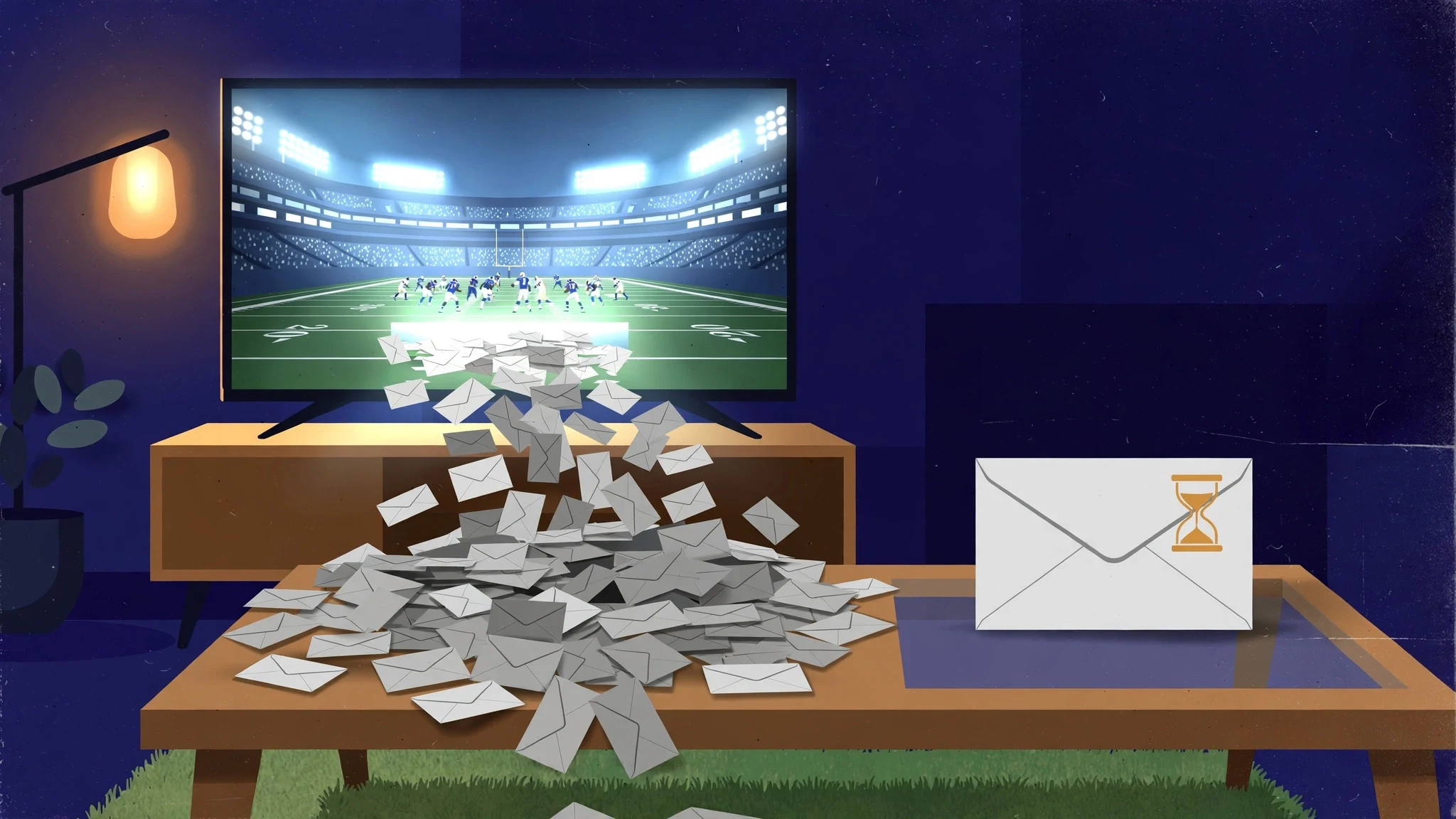
Buccaneers vs Bears Free Stream: The Scam Inbox Riding Sunday Night Football's 1M-Search Game
The most-searched thing in America this morning was a football game that was already over.
By the time I sat down to write this, "buccaneers vs bears" was sitting at number one on Google Trends in the United States — more than a million searches, up 1,000 percent, and still marked Active. Sixteen of the top twenty searches were sports matchups. The game itself had kicked off at 8:20 p.m. ET on Sunday at Soldier Field, aired on NBC, and ended with the Bears beating the Buccaneers 27–24 on a last-second field goal. Chicago moved to 6–2. Tampa Bay fell to 3–5. That was last night. The searches kept climbing all Monday morning anyway.
That gap — a finished game with a rising search count — is the whole story. People were not looking for the score. The score was everywhere. They were looking for a way to watch it again for free: the replay, the highlights, the fourth quarter they missed. And that exact search, "buccaneers vs bears free stream," is where the scam economy clocks in for its shift.
This is not a sports post. It is about what happens to your inbox when a million people all want the same free thing at the same time. I checked the search results, the legitimate ways to watch, and what the scam version looks like — because the same play runs every Sunday night, and it will run again next week with different team names.
One note before the football talk ends: the day's number-three search was "nvidia," at 500,000-plus searches, driven by the same CEO story we covered yesterday — I am not re-covering it. It matters here only because it shows how fast a trending topic becomes an inbox problem: yesterday's news is today's phishing lure.
The Game Was Free. That Is the Whole Point.
Here is the fact that makes the entire scam possible: nobody needed a shady link to watch Buccaneers vs Bears.
The game was Sunday Night Football, which means it was on NBC — free, over-the-air broadcast television. An antenna pulls it in. If you wanted to stream it, Peacock carried it with a paid plan, NFL+ carried it on phones and tablets, and Fubo and DIRECTV both offered free trials that included NBC. Those are the real options, and they were listed plainly in every "how to watch" guide published before kickoff.
So why did a million people go searching for a free stream? Because most of them assumed the opposite. The default assumption in 2026 is that anything worth watching sits behind a paywall, and that the free route must be hidden somewhere. That assumption is the scam's raw material. The scammer does not have to convince you that a free stream exists. You already believe it does. He only has to be the first result that looks like one.
My honest opinion: the "free stream" search is a confession — "I expect to be charged, and I would rather risk a strange website than pay." The sites know that. The emails know that. Everything that follows is built to exploit that one sentence.
What We Actually Found When We Searched 'Free Stream' This Morning
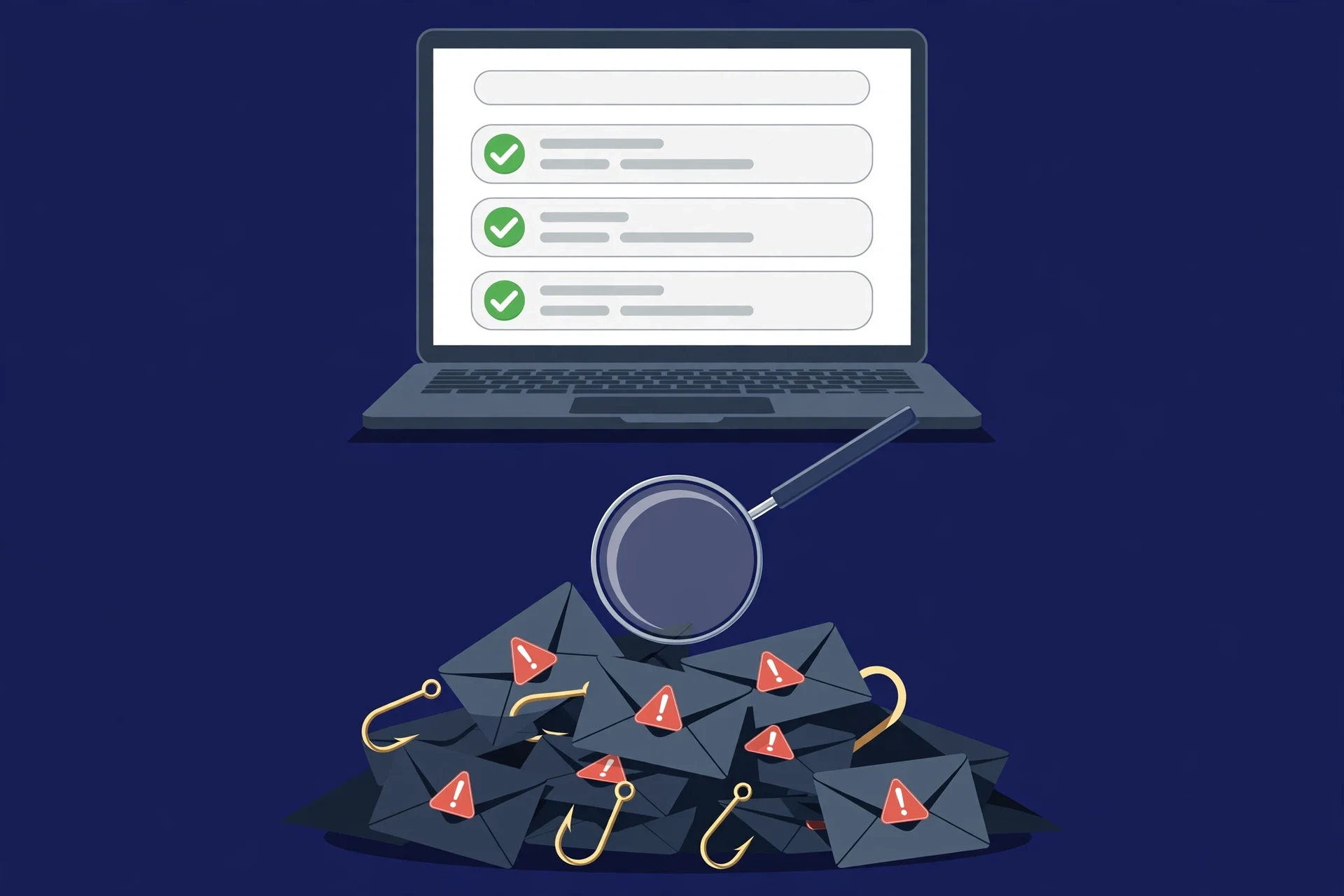
I searched the exact phrase this morning, the way a fan would: "buccaneers vs bears free stream." Here is what came back.
The top results were clean. Athlon Sports, USA Today, Fubo — legitimate outlets and the services themselves, all pointing to the same real options: NBC, Peacock, the Fubo trial, DIRECTV. No pirate site in the top results, no "watch now in HD" trap on page one. Google's first page for this query is, on this morning at least, honest.
That matters, because it tells you where the danger actually lives. It does not live in the search results. It lives in what arrives after you search.
The sequence runs like this. You search for the stream. You click a highlights site or a "full replay" page. It asks for an email address to "unlock HD" or to "create a free account" before the video plays. You type in your real address because the video is right there and the form is one field. The video never plays. But your address is now on a list of people who were actively looking for a free NFL stream on a specific Sunday night — a list that is worth money to exactly the wrong people.
That is the mechanism. No malware download, no obvious red flag — one email field, one moment of impatience. The emails that follow do not arrive today. They arrive over the next two weeks, when your guard is down and the subject line says something about a refund, a subscription, or a prize.
The Four Emails That Follow a Million-Search Game
Once your address is on that list, the same four emails show up after every big game. The team names change. The structure does not.
The first is the replay link. Subject lines like "Watch the full Bucs vs Bears replay — free HD" or "Missed the ending? Full game here." The link goes to a page that asks you to sign in with your email provider, or to "verify" your account before the video loads. That sign-in page is the theft. It is a copy of a real login page, and the credentials you type go straight to the scammer. The tell is the domain: it will not be nbc.com or peacocktv.com. It will be something close — an extra word, a different ending — and it will be in a hurry.
The second is the highlights attachment. "Bears 27–24 highlights — download the full video." Real highlights do not arrive as attachments. A video file or a zip from a stranger is not highlights; it is a delivery vehicle. Delete it without opening it.
The third is the trial that is not a trial. It looks like a real offer — a free trial for a streaming service — except it wants your card "for verification" before anything plays, and the fine print starts a paid plan the moment the game ends. The service may even be real. The trap is the timing: you signed up at 8 p.m. to watch a game, and by the time you remember the trial exists, the first charge has already landed. I will come back to this one, because it has a clean fix.
The fourth is the pivot. A few days later, the same list gets a different pitch entirely: a ticket refund, a jersey giveaway, a "you won" message tied to the game. The game is only the hook that got your address. Once they have it, they will try every subject line that has ever worked.
None of this is theoretical. Microsoft counted 7.3 billion phishing emails in a single quarter this year, and the ones that worked were tied to something the recipient was already thinking about. A million-search football game is the perfect something. We broke down Microsoft's numbers here — the short version is that almost none of those emails tried to install anything. They tried to get you to type something, click something, or hand over an address.
The 90-Second Check Before You Click Any Stream Link
You do not need security software to survive this. You need ninety seconds and a habit. Run this check on any stream link that arrives by email, text, or social post — not just the football ones.
First, read the domain out loud. Not the display name, the actual address in the link. If it says it is NBC or Peacock or the NFL, the domain should say so, exactly, with nothing added. A hyphen, an extra word, a different ending — any of those is a no.
Second, ask what "free" is asking for. A free stream that wants your email is a trade, not a gift. A free stream that wants your card number is not free. A free stream that wants you to download a player or an app you have never heard of is not a stream. Real free options for this game were an antenna, a broadcaster's own app, or a named service's trial. If the price of "free" is a credential, a card, or a download, walk away.
Third, never sign in through a link that arrived in your inbox. If a page tells you to log in to watch, close it, open the service yourself, and log in there. A real service does not care how you arrived. A fake one depends on it.
Fourth, search the sender before you trust them. Type the sender's name or domain into a search engine with the word "scam" after it. It takes ten seconds, and for the established scam operations, someone has already reported them.
Fifth, and most important: if the link came by email, treat the email as the suspect, not the link. A legitimate broadcaster does not email strangers a free replay the morning after the game. If you did not ask for it, it is not for you.
The Trial Signup Is Where Temp Mail Earns Its Keep
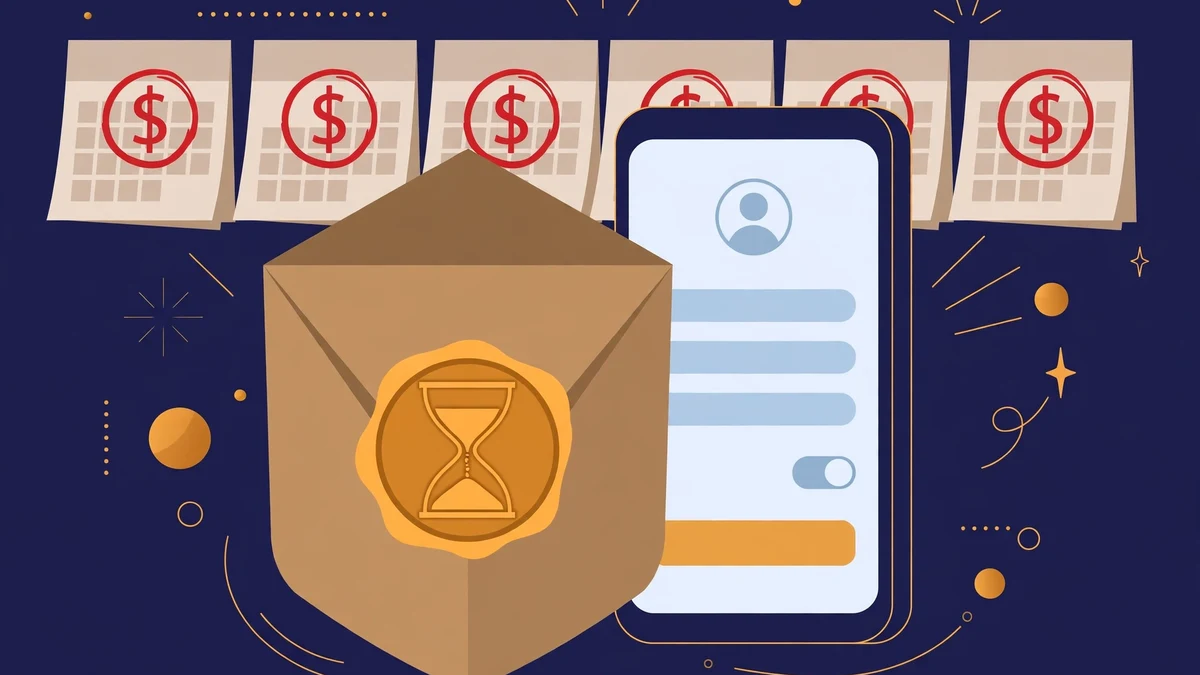
The trial trap deserves its own section, because unlike the outright scams, the free trials are real — and that is what makes them dangerous.
Fubo and DIRECTV both offered free trials that included NBC for this game. Those are legitimate products from real companies. The problem is not the trial. The problem is what you hand over to start it: your email address, and usually a card. The email address is the part that follows you. The trial ends, the subscription keeps billing until you cancel it, and the address you used becomes a permanent marketing contact — retention offers, "come back" discounts, partner promotions, and, eventually, a breach somewhere down the line that puts that address on a list you never signed up for.
The fix is boring, and that is why it works. Use a disposable address for the trial. Grab one from the temp mail tool, paste it into the signup, watch the game, and let that address die when the trial ends. The confirmation code still arrives — that is the point of a disposable inbox — and nothing about the trial touches your real address.
Two rules make this work. First, use the disposable address only for things you do not need to recover — a trial is the perfect case, because losing access to it costs nothing. Second, never use it for the account you actually want to keep. Your Peacock account, your NFL+ login, your real subscriptions live on your real email, because one day you will need a password reset, and a dead inbox cannot receive one.
A disposable address protects your inbox; it does not cancel the subscription. Set a reminder for the day before the trial ends, cancel from inside the account, and confirm the cancellation email arrives in the disposable inbox before you let it expire. That is the full system: throwaway address in, reminder set, cancellation confirmed, inbox never involved.
We ran a version of this same playbook for a different event earlier in the season. At WWE Crown Jewel, the "watch free" links were the real main event — same structure, same email-field trap, same four-email sequence afterward. The event changes. The inbox does not.
Next Sunday, the Same Trap Resets
Sunday Night Football trends every Sunday. That is not a prediction; it is the schedule. Next week there will be another matchup, another million searches, and another wave of replay links and trial offers. The names on the jerseys will change. Nothing else will.
So make the rule permanent instead of re-deciding it every week. Free broadcast first — antenna, NBC, the broadcaster's own app. A named service's trial second, with a disposable address, a reminder, and a confirmed cancellation. A random link never, no matter how good the subject line is.
And if you are the kind of person who signs up for things all year — not just football, but every deal alert and early-access list — the same rule scales. We built a whole inbox playbook for the Black Friday signup wave, and the principle is identical: the signup is the price, so decide which inbox pays it before you click.
The Bears won 27–24. The game is over. The emails it generated are just getting started. Yours do not have to be among them.
FAQ
Can I watch Sunday Night Football free, legally?
Yes. The game airs on NBC, which is free over the air with an antenna in most of the country. Streaming options that were legitimate for this game included Peacock with a paid plan, NFL+ on phones and tablets, and free trials from Fubo and DIRECTV that include NBC. The free options are named brands, not mystery links.
Is every "free stream" site a scam?
No, but the ones that matter are easy to separate. A legitimate free stream comes from the broadcaster or a named service, and it never asks you to download a player, enter card details for "verification," or sign in through a link that arrived by email. If a site asks for any of those three things, it is not a stream — it is a harvest.
Why did searches keep rising after the game ended?
Because the search was never only about the live game. A million-plus searches include the pre-game "how to watch" crowd, the in-game check-ins, and a large Monday-morning wave looking for the replay and the ending they missed. That post-game wave is exactly when the scam emails work best, because the person searching is already in a hurry.
Can I use temp mail for a free trial signup?
Yes — a trial is one of the best uses for a disposable address, because the account is temporary by design. Use it for the trial, keep your real email for accounts you need to recover, and remember that the disposable address protects your inbox, not your wallet: you still have to cancel the trial before it converts to a paid plan.
I already clicked a shady stream link. What do I do now?
Close the tab and do not download anything it offered. If you entered a password, change it now — and anywhere else you used the same one, starting with your email account. If you entered card details, call your bank; do not wait for a charge to appear. Then watch your inbox for phishing that references the game, and delete anything offering a replay, a refund, or a prize you did not enter.
Need a disposable temporary email?
Protect your real inbox from spam and promotional clutter instantly and free.
Received a suspicious email, text, or charge alert?
Verify whether the sender domain is disposable, spoofed, or unverified before clicking links.