
Temp Email for Claude Signup: It Works for the Free Trial — But the Address You Pick Is the One You Are Stuck With
Every AI tool eventually asks for the same thing: an email address. Claude is no exception. You type an address, Anthropic sends a verification link, you click it, and you are chatting with one of the strongest AI models on the market. A temporary email handles that first step without breaking a sweat. I have watched people do it in under two minutes.
Here is the part the quick-start guides leave out. With most services, the email you sign up with is a detail you can fix later. With Claude, it is closer to a decision you cannot undo. Anthropic does not currently offer a self-service way to change the email address on a Claude account, and your login itself runs through that address — every sign-in sends a fresh link to the inbox you registered with. Use a disposable address, let it expire, and you have not just lost a mailbox. You have lost the key to an account that may by then hold months of your work.
That does not make a temp email wrong for Claude. It makes the choice conditional in a way most signup guides never spell out. This post is the full version: how Claude login actually works, what the free tier really gives you, where the phone check can still stop you, what happens the day you want to pay, and the exact point where a disposable address turns from clever to costly.
The short version: yes for trying, no for keeping
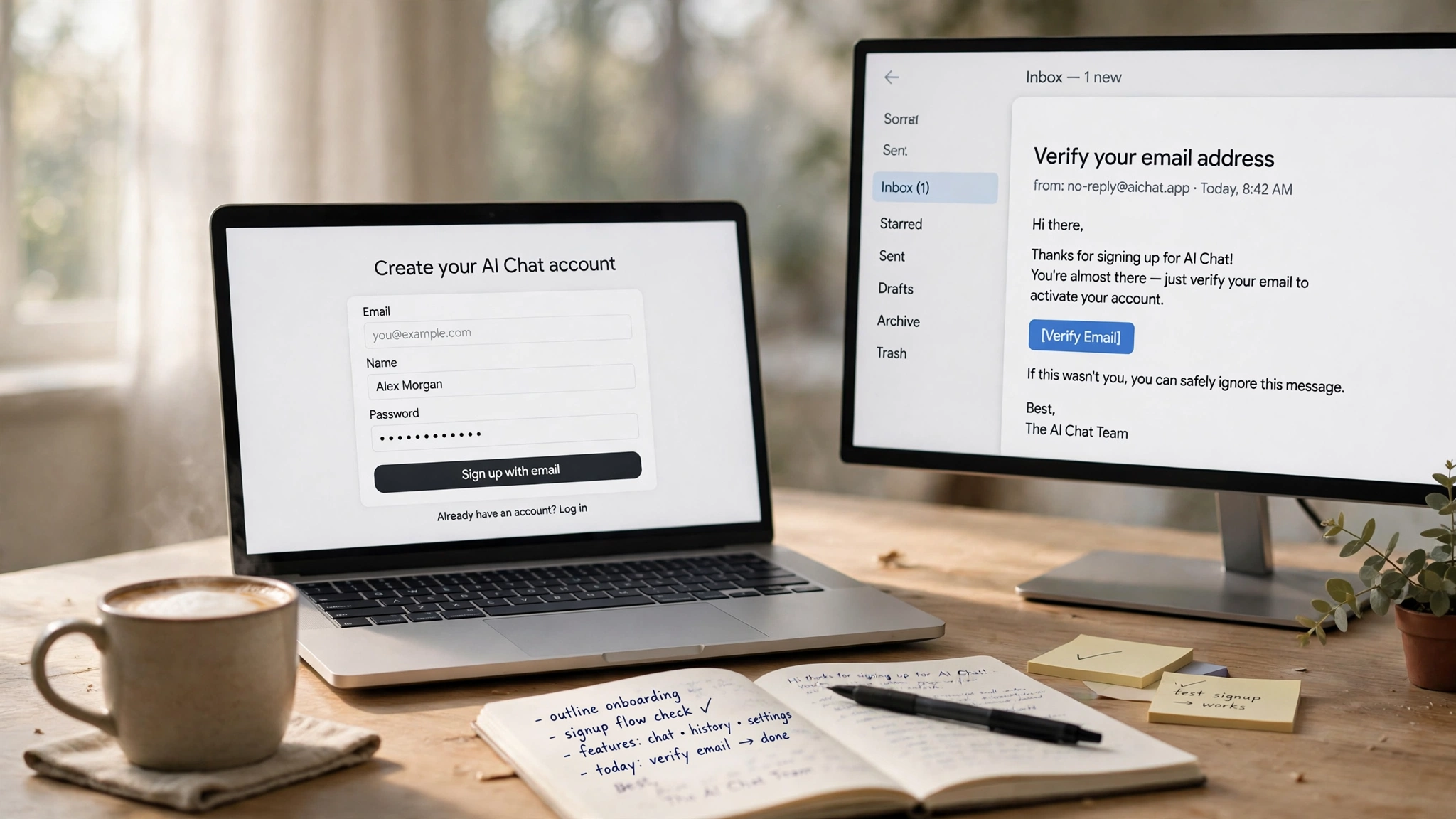
A temporary email address will get you a working Claude account. Enter the address at claude.ai, or pick the email option instead of Google sign-in, and Anthropic sends a verification link to that inbox. A working temp inbox receives it in seconds. Click the link and the account is live on the free plan, with access to Sonnet and Haiku, web search, file uploads, artifacts, and up to five projects. Nothing in that flow checks whether the inbox will still exist next week.
The honest verdict is a split one. If you are evaluating Claude — comparing it with ChatGPT for an afternoon, testing whether it writes better code or handles long documents more carefully — a temp email is the right tool. It keeps your real address out of one more company's database for a trial you may abandon by dinner. If there is any chance the account becomes the place you keep conversations, projects, and files, sign up with a permanent address you control. The cost of getting this wrong is not a failed signup. It is an account full of your work that you can no longer open, because the only way back in is an email link sent to an inbox that expired months ago.
How Claude signs you in: a link, not a password
Claude does not use a traditional password the way most accounts do. When you sign up with an email address, Anthropic emails you a login link, and clicking it signs you in. Returning to the account works the same way: enter the email, get a link, click it, you are in. There is a Google sign-in option as well, but the email path is the one most people take, and it is the one a temp email touches.
This matters more than it sounds, because it makes the registered address a living part of the account rather than a one-time contact detail. On a password-based service, losing access to the signup email is an inconvenience — you reset the password through support, or you keep logging in with the password you remember. On Claude, the inbox IS the login method. Every fresh device, every cleared browser, every new session starts with a link to that address. A temp inbox that lives for an hour or a day covers signup and then stops covering everything after it.
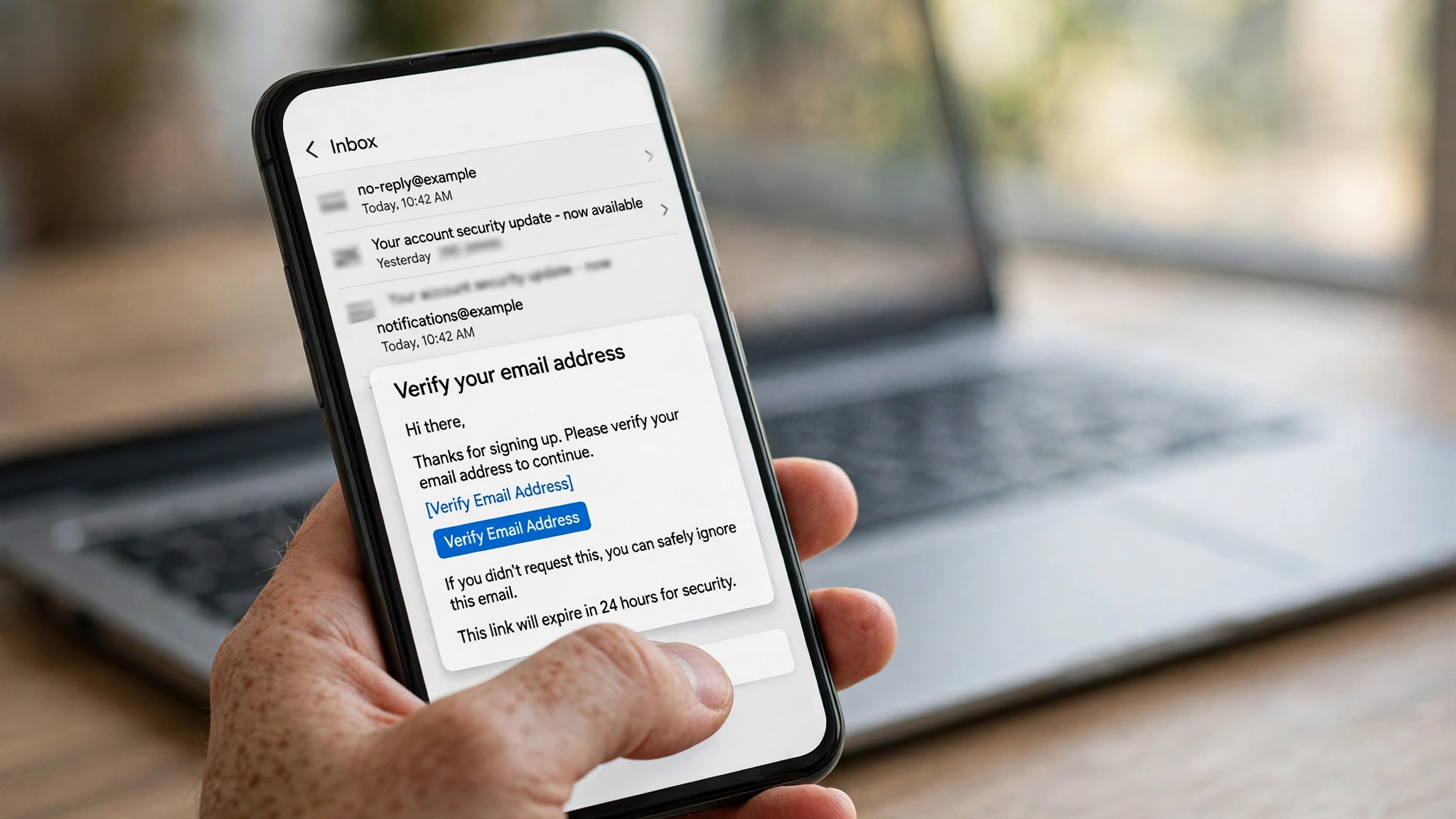
There is a second wrinkle worth knowing before you commit. Some signups trigger an additional phone verification step, depending on signals around the account — region, device, usage patterns. It is inconsistent, and that inconsistency is the point: you cannot predict whether your signup will ask for a phone number, and a disposable email does nothing to satisfy that step if it appears. I will come back to the phone check below, because it is the one gate a temp email cannot talk its way through.
The catch: you cannot change that email later
This is the fact that should decide the whole question, and it is the one almost every temp-mail guide for Claude skips. Anthropic does not currently provide a self-service option for changing the email address connected to a Claude account. There is no settings page where you swap in a new address. Once the account exists under an address, that address is the account, for practical purposes, until Anthropic says otherwise.
What no self-service change means in practice
Think about what an account accumulates. Conversations you want to search later. Projects with their own files and chat history — the free plan allows up to five. Artifacts you built, documents you uploaded, long threads where Claude learned the context of your work. All of that is tied to the address you typed in the first thirty seconds of signup, when you were least qualified to judge how much the account would matter.
The failure mode is slow and quiet. You sign up with a temp address in November to try Claude for a weekend. By February the account holds the draft of a report, a half-finished project, and a thread with three weeks of back-and-forth. Then you get a new laptop, or your browser cache clears, and Claude asks you to sign in. The link goes to an inbox that expired in November. There is no password to fall back on and no recovery address to try. The account is not deleted — it is simply unreachable, which amounts to the same thing for everything inside it.
The support route, and why you should not plan on it
The honest answer to "can Anthropic support change it for me" is: maybe, eventually, with proof of ownership, on their timetable. Support-assisted email changes exist in some form for some accounts, but they are not a documented self-service feature, they are not instant, and they are not something you should treat as a safety net when you are choosing an address. Planning to "just ask support later" is planning to spend days proving you own an account you created with an address you no longer control, for a company that has no obligation to believe you quickly.
This is the same logic that applies to any account where the email is the recovery path, only sharper. Losing the recovery address on a two-factor account is a known way to lock yourself out of your own data, and Claude's magic-link login makes the signup address the recovery address and the login method at the same time. If the account might matter in six months, give it an address that will still exist in six months. A dedicated permanent mailbox — a free Gmail or Outlook address used only for AI tools — gives you nearly all the privacy of a temp address with none of the lockout risk.
What the free tier actually gives you
One reason people reach for a temp email is the suspicion that the free tier is a teaser — a few messages, then a paywall. Claude's free plan is more generous than that, and understanding it helps you judge how long a temp-email account would even last before you hit a wall that has nothing to do with email.
Anthropic publishes no message count for any plan. What it publishes is a structure: a session-based usage limit that resets on a rolling five-hour window, plus a weekly limit on paid plans. Pro gives at least five times the free tier's usage per five-hour session. That is the whole public number system — multipliers, not counts. Any blog quoting you an exact message allowance for Claude is guessing, including the ones that sound confident about it. When I checked the pricing pages and help center in November 2026, the figures were these:
| Plan | Price | What you get |
|---|---|---|
| Free | $0 | Sonnet and Haiku, web search, files, artifacts, up to 5 projects, rolling 5-hour usage limit |
| Pro | $20 a month, or $17 a month billed annually at $200 | At least 5x Free usage per session, Opus, Claude Code, Research, weekly limit |
| Max | $100 a month | 5x Pro usage per session and per week |
| Ultra | $200 a month | 10x Pro weekly usage; verified accounts get no 5-hour limit |
Two things stand out. First, the free plan is a real product, not a demo: chat on web, desktop, and mobile, web search, file creation with code execution, memory across conversations, connectors, artifacts, and five projects. Second, the paid tiers are defined by how much you can use, not by unlocking a different product. Pro at $20 a month is where Opus and Claude Code live, and that matters for the next section, because the moment you want those, email stops being a signup detail and becomes a billing identity.
The comparison with ChatGPT is instructive. ChatGPT's signup works the same way with a temp email, and the same "try it, do not keep it" rule applies — but ChatGPT lets you change the email on your account from settings, which softens the mistake if you get it wrong. Claude does not. That single difference is why this post exists and why the advice here is stricter: with Claude, the address you pick is the address you keep.
The phone check: the wildcard that ignores your email entirely
Even if your temp address sails through signup, Claude may ask for a phone number. Multiple independent guides report that phone verification is requested on some signups depending on region and risk signals, and that it arrives without warning — you enter your email, click the link, and then a phone field appears. A disposable inbox cannot receive an SMS, and there is no email fallback for that step.
This is the same pattern I found across the whole signup series: the platforms that look email-first are often phone-first underneath. Uber's signup works the same way — the code goes to your phone, not your inbox — and the lesson transfers directly. Email was never the thing being verified. It was the thing you type while the platform verifies everything else.
What should you do if the phone check appears? Use your real number. The temptation is a virtual or VoIP number, and the results there are mixed at best: some receive codes fine, others are flagged, and a flagged number can mean the code never arrives or the account gets challenged again later. A phone number used for verification is a far smaller privacy exposure than a locked account full of your work, and unlike the email address, the phone check is usually a one-time gate rather than a permanent identity. Do not try to route around it with a public SMS-receiving site either — those numbers are shared, which means whoever holds the number next can request login codes for your account.
There is also the domain question. Anthropic, like most large platforms, keeps a blocklist of known disposable domains, and a famous temp-mail domain can be refused at the signup form with a generic error. That is how email blocklists work: a domain gets flagged the moment enough people use it for throwaway signups. If your temp address is rejected at Claude's form, that is what happened, and retrying the same domain will not fix it. A fresh or obscure temp domain usually passes. This is a minor hurdle, not a wall — but it is one more reminder that "temp email" is not one thing. Which provider and which domain you pick changes the result.
The Pro wall: the day a temp inbox stops being enough
Sooner or later, one of three things happens. You hit the free tier's five-hour limit in the middle of real work. You need Opus for a harder problem, or Claude Code for a project. Or you simply use Claude every day and want the higher limits. Any of those means Pro at $20 a month, or $17 a month if you pay $200 up front for the year, and that is where a temp inbox stops being enough in a completely different way.
Billing needs a reachable address. Receipts, payment failures, subscription confirmations, refund notices, and the "your card was declined" email that saves your account from lapsing all go to the registered inbox. Pay for Pro with a temp address and the first billing hiccup becomes a silent account loss: the card fails, the notice goes to an expired inbox, the subscription lapses, and you find out when Claude stops working. The same applies to Max at $100 and Ultra at $200 — the more you pay, the more absurd it is to route the billing relationship through an address you do not own.

This is the cleanest decision rule in the whole post. A temp email is for trying. A permanent email is for paying. If you can already see yourself paying for Pro — because the free limit annoyed you twice this week, or because you want Claude Code — skip the temp address entirely and sign up with your real inbox. The privacy you gain from a disposable address for a paid account is not worth the billing and recovery risk, and a dedicated permanent mailbox gets you the same separation without the danger.
Claude Code and the API console: a second account with stricter rules
There is one more account in this story, and it is easy to confuse with the first. Claude Code — Anthropic's coding tool — and the API console where developers buy API credits are tied to the Claude account but carry billing, usage, and API keys. The API side is a developer account with its own payment method, and it is the place where a disposable address is most clearly the wrong call. API keys, billing alerts, and usage notifications all route through the registered email, and a lost API account can mean lost credits and a billing dispute with no paper trail.
The practical rule is simple: if your Claude use involves code, API access, or anything you would expense, use a permanent address from the start. The free chat account and the developer account are not the same risk profile, and the guides that say "temp mail works for Claude" are almost always talking about the free chat tier only. They are right about that tier and silent about the rest, which is exactly how people get surprised.
The decision, made simple
Strip away the detail and the choice comes down to one question: will this account matter to you in three months? Answer that honestly and the email picks itself.
Use a temp email when you are comparing Claude with another assistant for a day, testing a single feature, or creating a throwaway account for a one-off task you will not revisit. The temp inbox covers signup and verification, the free tier gives you enough room to form a real opinion, and nothing important lives in the account when the inbox expires.
Use a permanent address when the account will hold conversations you want to search, projects with files, or anything you built with Claude that you would miss. Use one when you might pay for Pro, use Claude Code, or touch the API. And use one when the signup triggers a phone check — that is the platform telling you it already considers the account worth verifying, which is a sign you should treat it as permanent too.
My own take, after writing this whole series: Claude is the signup where I would be strictest about this. Most services let you fix a throwaway signup later. Claude makes the signup address your login method and gives you no self-service way to change it. That combination turns a thirty-second decision into a permanent one, and permanent decisions deserve a permanent address.
If you use a temp email anyway: the five-minute checklist
If you read all of that and still want a temp email for a Claude trial — fair enough, that is what temp mail is for — do it properly. Keep the temp inbox tab open until the account is confirmed and you have sent your first message. Do not close it early: the verification link expires, and a closed temp tab is a dead inbox. Use a temp provider whose inbox lives at least an hour, not ten minutes, so a slow verification email still arrives.
Do the real work of the trial while the inbox is alive. If the trial turns into something you want to keep, accept the cost honestly: there is no clean migration path for conversations and projects from a temp-email account to a permanent one. You can copy text out by hand, but you cannot move the account. Decide before you build anything worth keeping whether this is the trial account or the real one — and if it becomes the real one, start over with a permanent address while the cost is still small. Reusing the same temp address across services compounds the risk, so keep this trial isolated: one address, one service, one afternoon.
And keep a note of which temp address you used, somewhere outside the temp inbox itself. If the account ever needs support, the first thing they will ask is which email it was registered under, and "some temp address I threw away" is not an answer that gets you anywhere.
Frequently asked questions
Can I sign up for Claude with a temporary email?
Yes. Claude accepts a temp email at signup: enter the address, receive the verification link in the temp inbox, click it, and the account works on the free plan. The address may be rejected if it comes from a well-known disposable domain on Anthropic's blocklist — a fresh or obscure domain usually passes. A phone verification step may still appear regardless of the email you use.
Can I change the email on my Claude account later?
Not through self-service. Anthropic does not currently offer a settings option to change the email address on a Claude account. Support may be able to help in some cases, but it is not instant, not documented as a standard flow, and not something to rely on when choosing your signup address.
Does Claude require a phone number to sign up?
Sometimes. Phone verification is requested on some signups depending on region and risk signals. It is inconsistent — many people never see it, and some do — and a temp email does nothing to satisfy it. If it appears, use a real number you control.
Is the free plan enough to try Claude properly?
Yes. The free plan includes Sonnet and Haiku, web search, file uploads, artifacts, and up to five projects, with usage capped by a rolling five-hour session limit. Anthropic publishes no message count, so treat any exact number in a guide as a guess. If you hit the limit during real work, that is the honest signal that Pro at $20 a month is worth considering.
Should I use a temp email for Claude Pro or the API?
No. Paid plans need a reachable address for billing, receipts, and payment failures, and the API console carries keys and credits tied to the registered email. Use a permanent address you control for any Claude account connected to money, API access, or work you want to keep.
Need a disposable temporary email?
Protect your real inbox from spam and promotional clutter instantly and free.
Received a suspicious email, text, or charge alert?
Verify whether the sender domain is disposable, spoofed, or unverified before clicking links.