



Why Identity Theft Protection is Essential in the USA
The Federal Trade Commission logged over 1.1 million identity theft reports in 2024 alone. And once your information is out there, the damage can be deep. Thieves open credit cards in your name, rack up debt, and disappear. You spend months cleaning up the mess — financially and emotionally.
What makes it worse? 69% of identity theft victims get hit again. It's not a one-time problem.
The good news: a solid identity protection service acts as an early warning system. It watches the places you can't — the dark web, data broker sites, credit bureaus, and more — and alerts you fast enough to stop the worst from happening.
This guide breaks down the best options available in the USA so you can pick the right one for your situation.
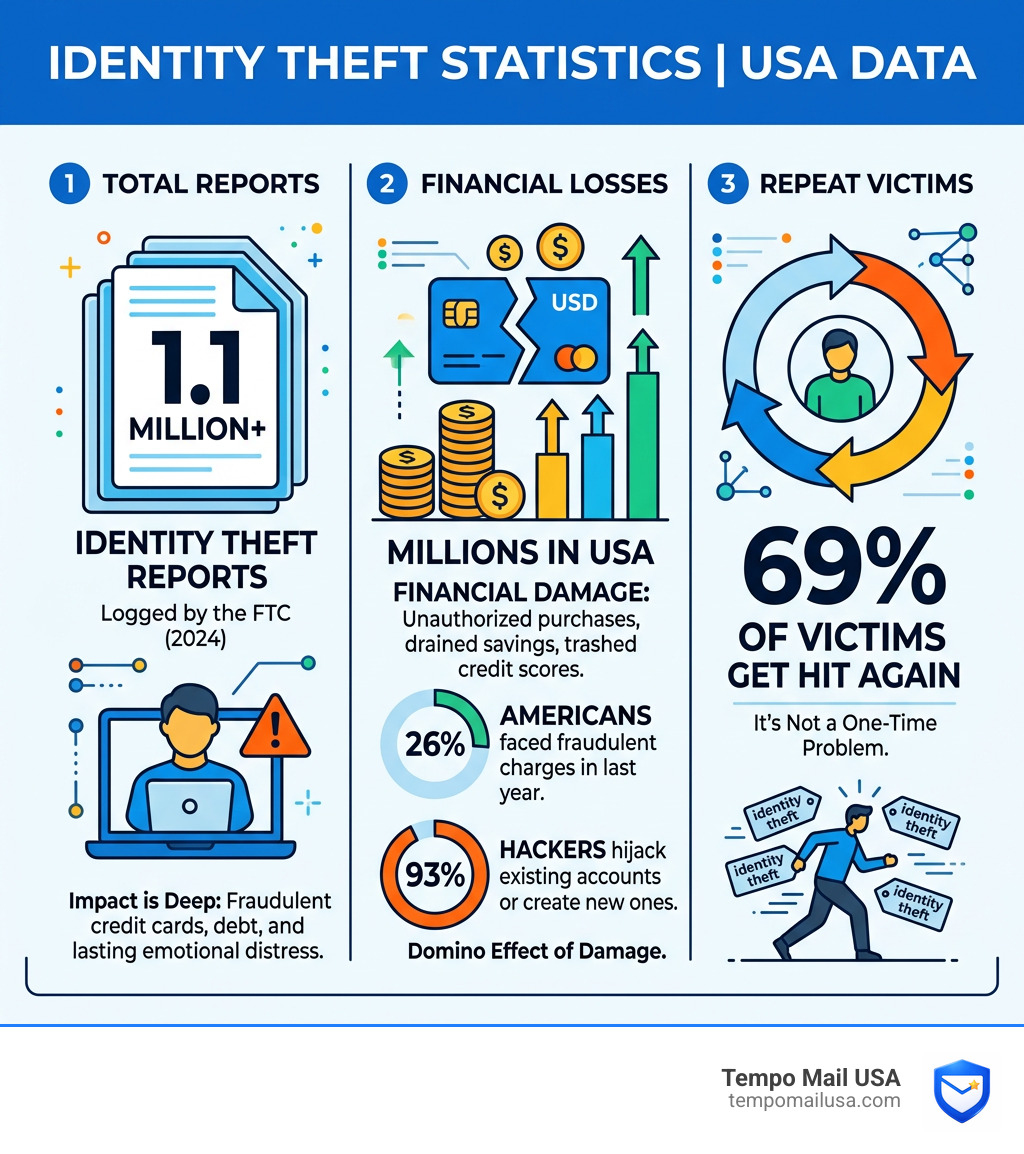
In the United States, our lives are tied to our Social Security Numbers (SSNs) and credit scores. This makes us prime targets. Did you know that 26% of Americans faced fraudulent charges on their cards in just the last year? It’s a staggering number that proves identity theft isn't a "maybe"—for many, it's a "when."
When hackers get their hands on your login credentials or account numbers, they aren't just looking to browse. Research shows they either hijack your existing accounts or create entirely new ones 93% of the time. This leads to a domino effect of financial damage: unauthorized purchases, drained savings, and a trashed credit score that can take years to repair.
Beyond the money, there is a heavy emotional toll. Victims often describe a sense of violation and persistent stress that lasts for months during the recovery process. You might not even realize you've been targeted until you see the Identity Theft Warning Signs in Email Most People Ignore, such as "verification" codes you didn't request or "order confirmations" for items you never bought. When 69% of victims are repeat targets, having a professional "watchdog" isn't just a luxury; it's a necessity for peace of mind.
Key Features of the Best Identity Theft Protection USA
When shopping for the best identity theft protection usa providers, you shouldn't just look at the price tag. You need to look under the hood. A comprehensive service should offer a "PII firewall" that monitors multiple layers of your digital life.
Here are the non-negotiables:
- Dark Web Monitoring: This scans the corners of the internet where stolen data is bought and sold. If your SSN or email shows up in a database for sale, you need to know immediately.
- Three-Bureau Credit Monitoring: Many basic plans only monitor one bureau (like TransUnion). The best services monitor Equifax, Experian, and TransUnion simultaneously. This is vital because a thief might open an account that only reports to one of the three.
- $1 Million+ Insurance: This isn't just a marketing gimmick. If your identity is stolen, this coverage helps pay for legal fees, lost wages from time taken off work to fix the issue, and sometimes even reimbursement for stolen funds.
- Application Monitoring: This goes beyond credit reports. It monitors "non-credit" networks, such as payday loan applications or utility company sign-ups, where thieves often try to use your name without triggering a traditional credit alert.

Best Identity Theft Protection USA for Families
Families face unique risks. Children are often "blank slates" for identity thieves because they have clean credit histories that go unchecked for years. A criminal can use a child's SSN to create a "synthetic identity," blending real and fake info to take out loans that won't be discovered until the child applies for their first student loan or car.
The best identity theft protection usa for families allows you to monitor up to 10 children. These plans often include social media monitoring to alert parents if a child’s information is being shared inappropriately or if they are being targeted by scammers. Learning how to Protect Personal Information Online is a family affair, and these tools make it easier to manage everyone's safety from one dashboard.
Best Identity Theft Protection USA for Seniors
Seniors are a high-value target for fraudsters. While younger people might get scammed more frequently, research shows that when seniors (70+) are targeted, they lose significantly more money. This is often due to complex financial fraud, including medical identity theft or pension poaching.
Services that offer 24/7 virtual advisors and "white-glove" restoration are best for seniors. If a senior is targeted—perhaps through a scheme similar to those seen in cases like Uncovering Mississippi Welfare Fraud—they need a dedicated agent who will handle the phone calls and paperwork for them, rather than just sending a DIY guide.
Comparing Premium vs. Basic Monitoring Plans
Choosing between a basic and premium plan usually comes down to how much of the "heavy lifting" you want the service to do.
| Feature | Basic Plan | Premium Plan |
|---|---|---|
| Credit Monitoring | 1 Bureau | 3 Bureaus |
| Restoration | Guided (DIY) | White-Glove (Full Service) |
| Specialty Monitoring | None | 401k, Home Title, & Investment |
| Insurance | Standard ($1M) | Enhanced ($2M - $3M) |
| Extras | Basic Antivirus | VPN, Password Manager, Data Removal |
Premium plans are often worth the investment if you own a home or have significant retirement assets. Home title monitoring, for example, alerts you if someone tries to fraudulently transfer your property deed into their name. White-glove restoration is another "must-have" for busy professionals; it means the company’s experts act as your limited power of attorney to fix the damage while you go about your life.
Free vs. Paid: Is Professional Monitoring Worth It?
We are all entitled to a free copy of our credit reports once a week from the three major bureaus via AnnualCreditReport.com. So, why pay for a service?
The difference is proactive vs. reactive. Checking your own report is reactive—you see the damage after it's done. Paid services provide real-time alerts. Furthermore, only 6% of Americans currently use data removal services. Without a paid service to automate the "opt-out" process from data brokers, your personal info remains easily searchable online.
Professional monitoring also includes dark web surveillance that you simply cannot do yourself. While a credit freeze is the most effective free tool you have to prevent new accounts from being opened, it won't stop someone from using your existing credit card or stealing your tax refund.
Immediate Steps for Data Breach Victims
If you’ve been caught in a major leak—like the recent National Public Data breach or the Why the Social Security Data Breach 2026 concerns—you need to act fast.
- Freeze Your Credit: Contact Equifax, Experian, and TransUnion to freeze your files. This is free and prevents anyone from opening new credit in your name.
- Visit IdentityTheft.gov: This is the official government portal to report the theft and get a personalized recovery plan.
- Place a Fraud Alert: Unlike a freeze, an alert tells businesses they must verify your identity before issuing credit.
- Change Passwords & Enable 2FA: Use a password manager to create unique, complex passwords for every account.
Frequently Asked Questions about Identity Protection
What additional cybersecurity tools come with top services?
The best identity theft protection usa providers now offer "all-in-one" digital security. This typically includes a VPN (to hide your IP address), Antivirus software (to block malware), and a Password Manager. Some services also include ad-blockers and "Browser Guards" to stop trackers from following you around the web.
How much identity theft insurance coverage do you need?
The industry standard is $1 million. This usually covers out-of-pocket expenses like notary fees, postage, and legal counsel. It can also cover lost wages if you have to take time off work to meet with authorities. Some premium plans now offer up to $3 million for families, ensuring that every member has enough coverage to fully recover.
What do real user experiences reveal about these services?
Reddit discussions and user forums highlight that "alert speed" is the most important factor. Users praise top-tier services for sending notifications within minutes of a credit inquiry. However, be wary of "shill" accounts on social media that post repetitive links to specific services. Always look for reviews from verified users who have actually gone through the restoration process.
Conclusion
Finding the best identity theft protection usa has to offer is about building a defense-in-depth strategy. While professional monitoring and insurance services provide excellent coverage, they are often "reactive"—they tell you after your data has been leaked.
At Tempo Mail USA, we believe the best way to protect your identity is to never give it away in the first place. By using our temporary email aliases, you create a "PII firewall." When a service asks for your email, you give them a Tempo Mail alias instead. If that service is breached, the hackers get a useless alias, not your real identity.
Combined with a professional monitoring service and the steps outlined in How to Remove Your Personal Information from the Internet, you can finally stop wondering "Who are you anyway?" and start feeling secure in your digital life.
Ready to shield your PII? Visit https://tempomailusa.com to start your privacy journey today.