

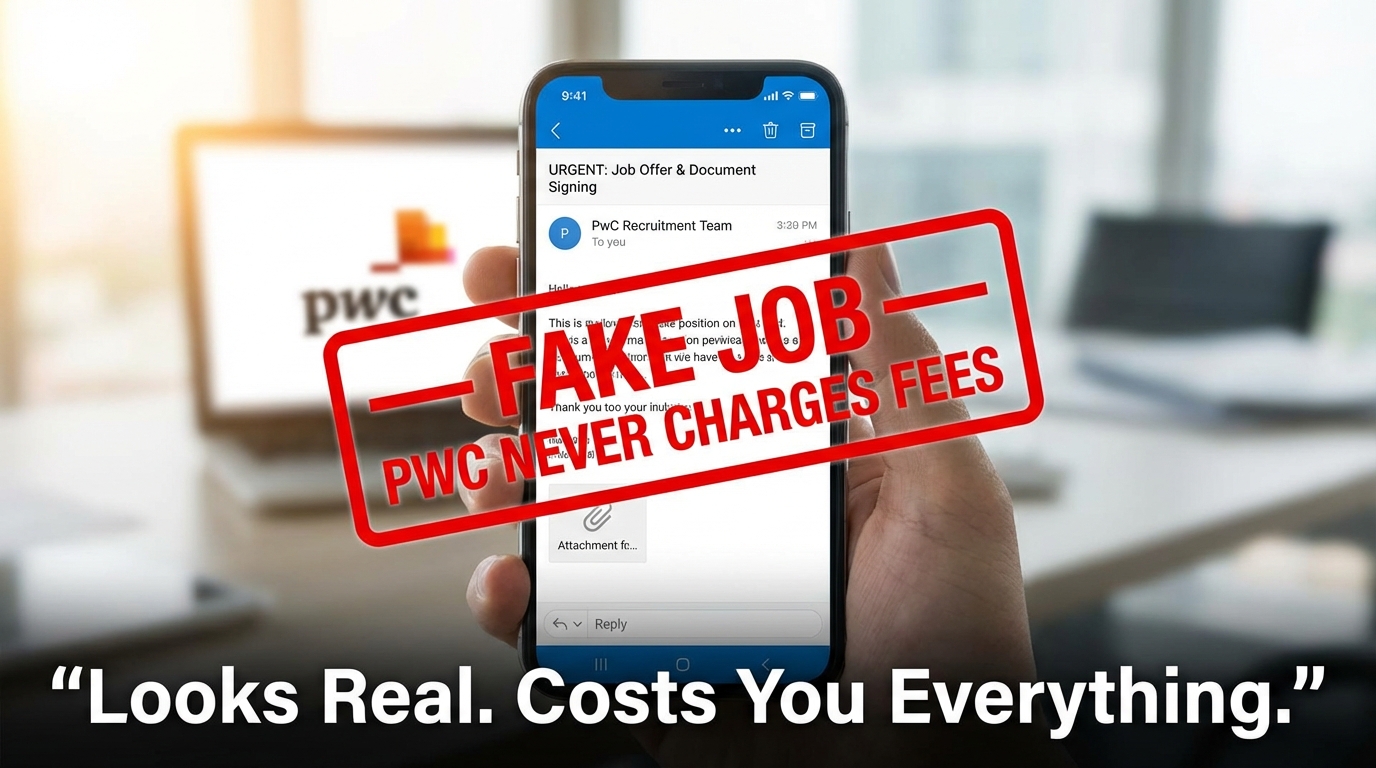

The PwC Scam Problem: What You Need to Know Before You Click, Call, or Apply
PwC scam activity falls into two very different categories — and knowing which one you're dealing with could save you money, your identity, or your job application.
Quick answer: Is this a PwC scam?
| Type | What It Looks Like | Who Is at Risk |
|---|---|---|
| Impersonation scam | Fake emails, calls, job offers, or investment pitches using PwC's name and logo | General public, job seekers, corporate finance teams |
| Internal misconduct | Regulatory fines for exam fraud, audit failures, and confidential data leaks | Investors, government, audit clients |
If you received an unsolicited call, email, or job offer claiming to be from PwC — especially one asking for money or personal data — treat it as a scam until verified.
PwC is one of the world's largest professional services firms, operating in over 150 countries. That scale makes it a prime target for fraudsters who borrow its trusted name to run phishing attacks, fake recruitment drives, and bogus investment schemes.
At the same time, PwC has faced its own serious misconduct controversies. Regulators across the US, UK, Australia, and the Netherlands have levied significant fines against the firm for failures ranging from exam cheating to leaking confidential government tax information.
Both problems — external scams and internal misconduct — have eroded public trust in the PwC brand. And for privacy-conscious people, that matters. Your personal information, financial details, and career data can all be at risk when scammers hide behind a well-known name.
Common Types of PwC Impersonation Scams
When we talk about a pwc scam, we are usually referring to external fraudsters pretending to be representatives of the firm. Because PwC (PricewaterhouseCoopers) is a global giant with over 370,000 employees, it is very easy for a scammer to hide in the crowd. They use the firm’s logo, the names of real executives, and professional-sounding language to lower your guard.
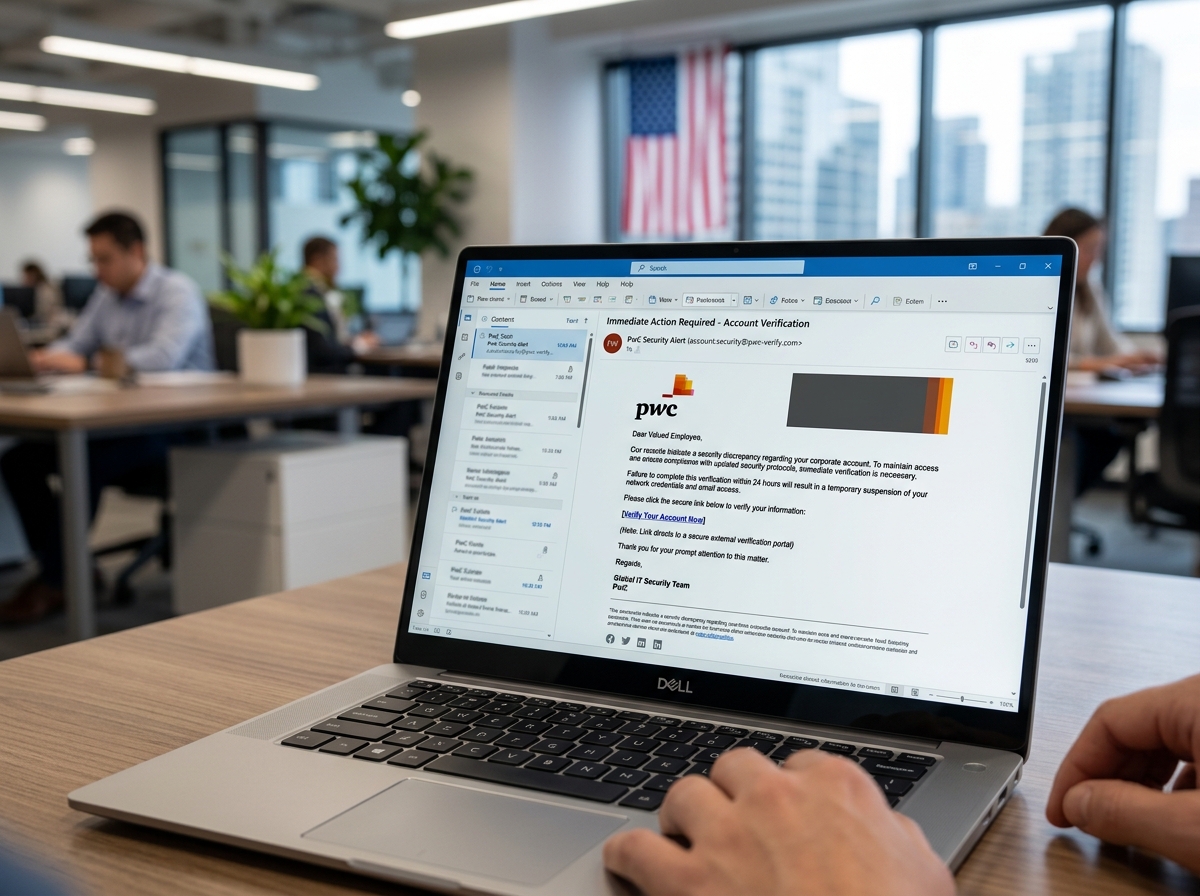
These scams aren't just one-size-fits-all. They vary by region and target:
- Phone-based Phishing (Vishing): In places like Fayetteville, customers have reported receiving calls claiming their utility or service accounts are past due. The caller directs the victim to a fraudulent number to "settle the debt" immediately.
- Investment Fraud: Official warnings from PwC Thailand and PwC Indonesia highlight a surge in fake investment schemes. Scammers use the images of PwC partners to promote "guaranteed return" investments in digital assets or securities.
- Fake Websites: Scammers often register domains that look almost identical to the real thing to host fake portals. For example, PwC Nigeria warned of a site called "pwc234.com" that was being used to defraud people through fake earning platforms.
Recruitment and Job Offer Fraud
One of the most heartless versions of the pwc scam targets job seekers. We’ve seen reports from PwC Italy about "recruitment companies" contacting candidates with high-paying job offers that don't actually exist.
The goal is usually one of two things:
- Identity Theft: They ask for your passport, social security number, and bank details under the guise of "onboarding."
- Upfront Fees: They claim you need to pay for training, equipment, or "visa processing" before you can start.
It’s important to remember that legitimate firms like PwC will never ask you for money to get a job. If you're looking for work online, you should also be wary of other platforms; for instance, you might wonder is Testerup a scam? before handing over your data to unverified sites.
Corporate and Investment Phishing
For businesses, the pwc scam often takes the form of a highly sophisticated "Business Email Compromise" (BEC). PwC UK has issued alerts regarding a two-pronged attack:
- The Fake CEO: You get an email from what looks like your own CEO (often using a generic domain like @outlook.com) saying they are working on a "strictly confidential financial operation" with PwC.
- The Fake Auditor: A follow-up email or call comes from someone pretending to be from "PwC Legal LLP" using a fake domain like pwc-ukglobal.com or pwc-office.com.
They pressure the finance team to transfer large sums of money to a "confidential" account. This is a classic Ponzi scam explained tactic—using the pressure of a "big opportunity" and a reputable name to bypass normal security checks.
Internal Misconduct and the PwC Scam Controversy
While impersonators are a massive problem, PwC has also made headlines for internal "scams" or misconduct that have drawn the ire of global regulators. These aren't just small mistakes; they are systemic failures that have resulted in millions of dollars in fines.
| Regulator | Firm Branch | Violation | Penalty |
|---|---|---|---|
| PCAOB | PwC Israel | Widespread cheating on internal training exams (2017–2022) | $2.75 Million |
| FCA | PwC UK | Failure to report fraud suspicions at London Capital & Finance | £15 Million |
| PCAOB | PwC US/Global | Exam fraud involving hundreds of professionals | $3 Million |
The issue of "exam fraud" is particularly troubling. In several countries, hundreds of PwC employees—from staff to partners—were caught sharing answers for mandatory integrity and ethics exams. When the people responsible for auditing the world's finances are caught cheating on their own ethics tests, it raises a massive red flag. This kind of systemic dishonesty is even moving into the tech space, as seen in the Ponzi scam 2026 reports involving AI deepfakes and financial fraud.
The PwC Australia Tax Scandal
Perhaps the most famous internal pwc scam is the Australian tax leak. In 2013, a PwC partner named Peter Collins was brought in by the Australian Treasury to help design new laws to prevent multinational companies from dodging taxes.
Instead of keeping those secrets, Collins shared the confidential information with at least 53 other partners at PwC. The firm then used that insider knowledge to advise 14 major companies on how to bypass the very laws Collins helped write. This "double-dipping" earned the firm roughly $2.5 million in fees but put billions in tax revenue at risk.
The Australian Taxation Office (ATO) eventually caught on, managing to block restructures that would have cost the public $180 million a year. This scandal is a prime example of why people are wary of the industry—it's a bit like the host tax preparer scam where the person you trust to handle your taxes is actually working against your best interests.
Global Regulatory Fines and Sanctions
The fallout from these internal scandals has been global. In the UK, the Financial Conduct Authority (FCA) fined PwC £15 million for its role in the London Capital & Finance (LCF) collapse. PwC auditors saw "red flags"—including aggressive behavior from LCF executives and misleading information—but failed to report their suspicions of fraud to the regulator.
When LCF finally collapsed, thousands of everyday investors lost their savings. The government and the Financial Services Compensation Scheme (FSCS) had to pay out over £170 million to victims. This highlights the "real-world" cost of audit failures: it's the public that pays the price.
How to Verify a Legitimate PwC Communication
If you receive a message from "PwC," don't panic, but don't trust it immediately either. Scammers are experts at making things look official.
To stay safe, we recommend following these verification steps:
- Check the Domain: Legitimate emails from PwC will almost always end in
@pwc.comor a localized version like@uk.pwc.com. Be extremely wary of domains like@pwc-office.com,@pwc-ukglobal.com, or emails coming from generic providers like Gmail or Outlook. - Verify via Official Channels: If someone calls you claiming to be from PwC, hang up. Look up the official number for your local PwC office on pwc.com and call them back directly.
- No "Secret" Investments: As PwC Thailand has stated, the firm does not offer investment products to the general public. If someone is inviting you to a "PwC investment group" on WhatsApp or Telegram, it is 100% a scam.
Red Flags of a PwC Scam
We’ve analyzed hundreds of scam reports, and the same patterns appear over and over. Watch out for these "danger zones":
- Urgency: "You must pay this invoice within 2 hours or your account will be suspended."
- Confidentiality: "This is a secret operation; do not tell your colleagues or family."
- Unusual Payment Methods: Requests for payment via cryptocurrency, wire transfers to offshore accounts, or gift cards.
- Social Media Solicitations: PwC partners will not DM you on Facebook or Instagram to offer you a job or a "hot" stock tip.
If a deal seems too good to be true—like a 90% discount or a guaranteed 20% monthly return—it’s likely a trap. We see this often in other sectors, such as the Haulgifted.com scam where fake legitimacy is used to lure in victims.
Consequences and Industry Impact
The combination of external pwc scam activity and internal misconduct has hit the firm hard. In Australia, the government effectively banned PwC from winning new contracts for a period, and the firm was forced to sell its entire government consulting wing for just $1 to a private equity firm (now called Scyne Advisory).
But the impact goes beyond just one firm. The "Big Four" (PwC, Deloitte, EY, and KPMG) are facing a crisis of trust. When firms that are supposed to be the "gatekeepers" of the global economy are caught in cheating scandals, it erodes the foundation of the auditing industry.
We've seen:
- Job Cuts: Hundreds of staff members have faced redundancies as clients move their business elsewhere.
- Stricter Oversight: Regulators like the PCAOB and AFM are now placing these firms under "intensive supervision."
- Client Losses: Major corporations and government bodies are reconsidering their relationships with firms that have poor integrity records.
Much like navigating the Boardsi scam, surviving in the corporate world today requires a high level of skepticism and a proactive approach to protecting your professional reputation.
Frequently Asked Questions about the PwC Scam
Does PwC ever ask for money during recruitment?
No. PwC’s official hiring policy states that they never request payments, "security deposits," or financial data (like credit card numbers) during the selection process. All job applications should be handled through their official career portal.
What was the biggest PwC scam in Australia?
The 2013 tax leak involving partner Peter Collins is considered the biggest scandal. It involved sharing confidential government secrets with 53 other partners to help corporate clients avoid taxes. This led to the resignation of the CEO and the divestment of their government consulting business.
How can I report a fake PwC email?
In the UK, you should report incidents to Action Fraud. Globally, you can contact PwC directly through the "Contact Us" forms on their official website. If you’ve shared financial info, contact your bank immediately.
Conclusion
Whether it's a sophisticated pwc scam run by overseas fraudsters or a breach of ethics within the firm itself, the lesson is the same: Verify before you trust. In an era where deepfakes and high-level impersonation are becoming the norm, your personal and professional data is your most valuable asset.
At Tempo Mail USA, we believe in providing a "PII firewall" for your digital life. By using temporary email aliases, you can shield your primary identity from scammers and service providers alike. When you're applying for jobs or interacting with corporate entities, using an alias ensures that if a database is leaked or a scammer gets hold of your contact info, your real inbox remains secure.
Stay vigilant, protect your privacy, and always double-check the source. For more tips on staying safe from corporate fraud, visit us at https://tempomailusa.com/.