



Is TesterUp a Scam? Understanding the Reality Behind the Claims
Is TesterUp a scam? Based on extensive user reviews and data analysis, TesterUp is technically a legitimate platform that does pay some users, but it operates as a high-friction reward system with significant drawbacks that make it feel scam-like for many. Here's what you need to know:
Quick Verdict:
- Not an outright scam: TesterUp does pay real money via PayPal to users who reach the threshold
- Extremely high barrier: The $70 minimum payout is unusually high compared to similar platforms
- Misleading advertising: Claims of earning "$120 per test" or "thousands of dollars" rarely reflect reality
- Time-intensive: Most users report needing weeks or months to reach payout, often requiring in-app purchases
- Common issues: Progress tracking failures, unresponsive support, and unexplained account suspensions
- Data exposure risk: Like all GPT platforms, your personal information is monetized
You've probably seen the ads: "Get paid $120 to test apps and games!" It sounds like easy money, but the reality is far more complicated. TesterUp has over 18 million testers globally and maintains ratings above 4 out of 5 stars on both Trustpilot and app stores, yet user experiences vary dramatically—from those who successfully cash out $70-$240 to those who invest weeks of time only to have their accounts suspended without explanation.
The platform is operated by German company Aestimium GmbH and functions as a Get-Paid-To (GPT) app where you earn credits by testing mobile games, completing surveys, and trying new apps. While it's not a criminal scam in the traditional sense, many users report that the system benefits the platform far more than the user, with significant risks of wasted time and data exposure.
This guide will help you understand exactly what TesterUp is, how it really works, and—most importantly for privacy-conscious users—how to protect your personal information if you decide to try it.
What is TesterUp and How Does It Claim to Work?
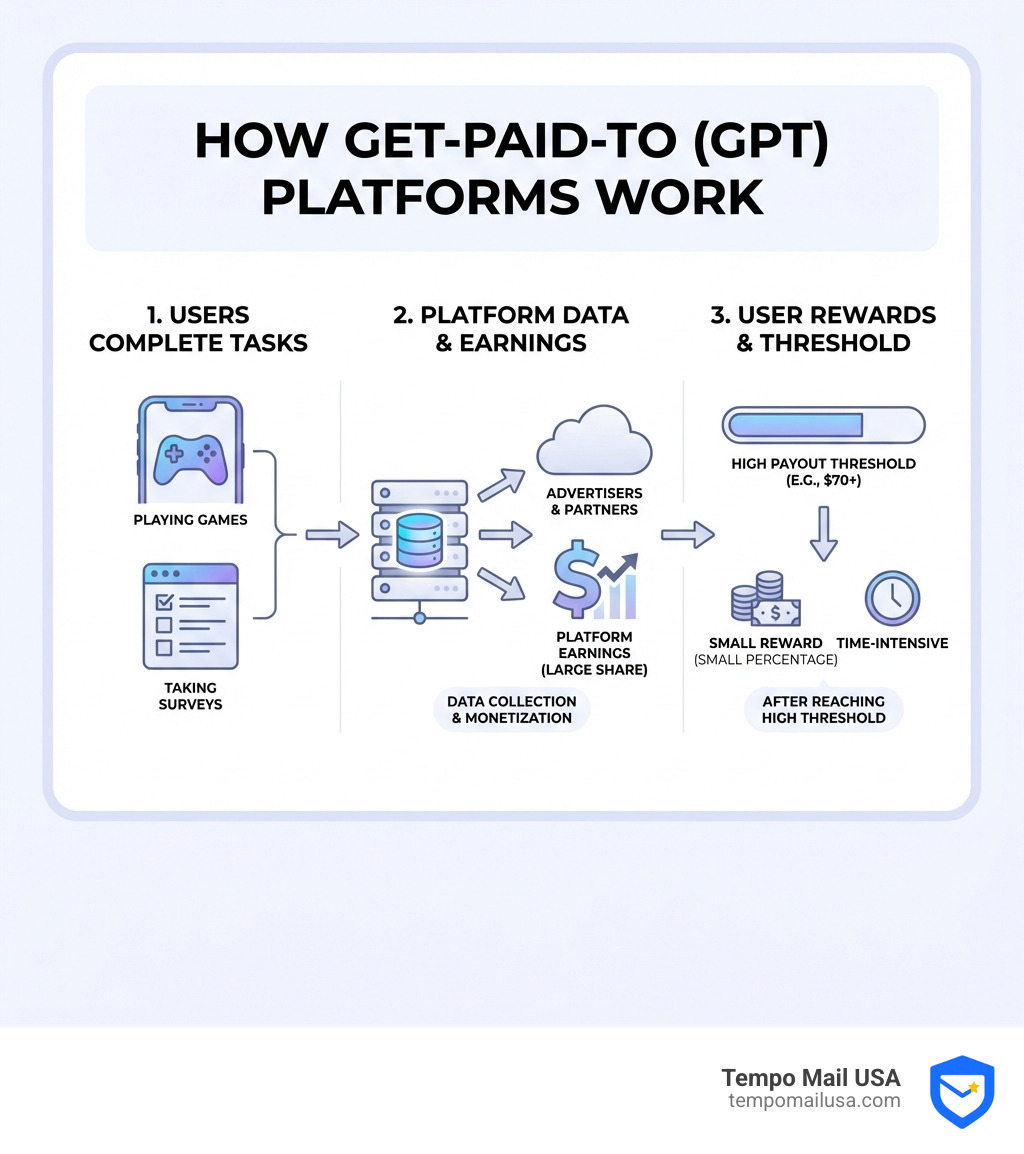
Let's start with the basics. What exactly is TesterUp? At its core, TesterUp is a website and mobile app (available for both Android and Apple devices) that acts as a bridge between users like us and companies looking for feedback on their digital products, games, and services. It falls under the umbrella of "Get-Paid-To" (GPT) apps, which promise to pay you real money for completing various tasks.
The platform is operated by a German-based company called Aestimium GmbH, which specializes in these "earn-to-play" reward models. They boast an impressive user base of over 18 million testers globally, which sounds like a lot of people getting paid to play, right?
Signing up for TesterUp is designed to be free and simple. Users provide basic information to create an account, and then they're presented with a dashboard full of "offers." These offers are the various tasks you can undertake to earn money. TesterUp’s claims about earning potential are quite enticing, with promises of up to $120 per test offer and even up to $200 for reaching the highest milestones in gaming tasks. New users are often told they'll find over 50 offers totaling more than $800 immediately after registration. It certainly paints a picture of quick and easy cash!
Primary Ways to Earn
So, how do we actually earn money on TesterUp? The platform primarily offers three types of tasks:
- Gaming Tasks: This is often the most highlighted and, for many, the most engaging way to earn. TesterUp presents a selection of mobile games across different genres—from puzzle games to world-building simulators. The goal is typically to play these games and reach specific in-game milestones or levels within a set timeframe. For instance, you might earn a certain amount for reaching level 20 in a strategy game, and more for reaching level 40. Some higher-value gaming tasks might even require you to make small in-app purchases, with the promise of a larger reward upon completion. The research indicates gaming tasks can offer rewards of up to $200, making them seem quite lucrative.
- Survey Tasks: If gaming isn't your cup of tea, TesterUp also offers opportunities to earn by completing surveys. These usually involve sharing your opinions on various products, services, or market trends. Compared to gaming, survey tasks tend to offer lower payouts, typically ranging from $1 to $10 per task, depending on their length and complexity.
- Product Testing: Beyond games and surveys, users can also be asked to test other apps, websites, or digital products and provide feedback. This could involve exploring a new app's features, identifying bugs, or evaluating user experience. Similar to surveys, these tasks generally offer smaller rewards per completion.
Payouts: The Path to Real Money
The ultimate goal for any user on a GPT platform is, of course, to get paid. TesterUp processes its cash payouts primarily through PayPal. This is a widely accepted and generally reliable method for online transactions, which is a point in TesterUp's favor.
However, here's where we hit our first significant hurdle: the minimum payout threshold. TesterUp has a notably high cash-out minimum of $70. This means you need to accumulate at least $70 in your account before you can request any payment. For comparison, many other GPT apps have minimums as low as $5 or even $0.25.
Once you reach that $70 mark, you can initiate a withdrawal. There's also a maximum payout limit of $250 per transaction, which is something to keep in mind if you happen to accumulate a larger sum.
As for payout speed, user reports are generally positive once the threshold is met. One user reported that their $70 payout took about two days to show up in their PayPal account after they had spent about a week earning it. Another author mentioned receiving $71.20 via PayPal within about a day after verification. So, if you manage to clear the $70 hurdle, the money does seem to arrive in a timely fashion.
The User Experience: Analyzing Reviews and Red Flags
When we dig into user experiences, the picture for TesterUp becomes a bit more complex. On the surface, the platform enjoys generally positive ratings. It boasts 4.1 out of 5 stars on Trustpilot, with a healthy 62% of reviewers giving it five stars. Similarly, it holds a 4.2 out of 5 stars on Google Play and 4.1 stars on Apple's App Store. These numbers suggest a legitimate and well-regarded service, right?
Indeed, many users report successful payouts and find the platform a legitimate way to earn some extra cash. We've seen reports of individuals earning $70 in about a week, and one user even claimed to have earned $240 in two separate months—$90 in the first month for 1-2 hours of daily play, and $150 in about a week during the second. The author of one review made $71.20 after about five hours of focused gameplay and testing, achieving an hourly rate of roughly $13.50. These success stories are what TesterUp highlights, and they certainly make the platform sound appealing.
However, the rosy picture quickly fades when we look at the common complaints and red flags that users frequently report. Many users encounter issues with progress tracking, where their in-game achievements or survey completions simply don't register with TesterUp, preventing them from earning their promised rewards. Poor customer support is another recurring theme; users often report ignored tickets, long wait times, and unhelpful responses when they try to resolve tracking or payment issues. Perhaps most frustrating are instances of account suspension, where users find their accounts blocked, often without clear explanation, especially when they are close to reaching the payout threshold or attempting to withdraw funds.
Reviews, especially on platforms like Trustpilot, can be influenced by various factors. Verification can help ensure real people are writing the reviews you read on Trustpilot. This process helps us trust the feedback we read, but even verified reviews show a stark contrast in experiences.
Here's a quick look at the reported Pros and Cons, based on our research:

The Biggest Red Flag: The $70 Payout Threshold
While some users successfully steer TesterUp, a significant point of contention and a major red flag for many is the high minimum payout threshold of $70. This is considerably higher than most other GPT platforms, which often allow cash-outs at $5 or even less.
What does this high threshold mean for you? It means a substantial time investment is required before you see a single cent. While one experienced reviewer reported making $71.20 in about five hours of focused gameplay, this was an exception and often required strategic task selection and sometimes even in-app purchases. For the average user, reaching $70 can take weeks, if not months, of consistent effort. Imagine playing games for dozens of hours, only to be denied a payout due to a tracking error or an arbitrary account suspension right when you're about to cash out. It's a frustrating scenario many users describe.
The need for required in-app purchases further complicates the earning process. Some of the higher-paying offers on TesterUp incentivize spending real money within the apps you're testing. For example, a task might offer $5 for a game if you make a $2.99 in-game purchase. While this might seem like a net gain, it introduces risk. What if the task doesn't track correctly after your purchase? What if your account is suspended? This can lead to a potential net loss of both time and money, making the entire endeavor feel like a gamble.
Is TesterUp a scam based on user feedback?
The verdict on whether is TesterUp a scam based purely on user feedback is, frankly, mixed. For some, particularly those who have successfully cashed out multiple times, it is a legitimate platform that delivers on its promises. They view it as a fun way to earn supplemental income.
However, a vocal segment of users, often found on forums like Reddit's r/beermoney threads, express deep frustration and label TesterUp as a scam. These users frequently report:
- Tasks not tracking progress: They invest hours into games, only to find their progress isn't recorded, making it impossible to meet the earning requirements.
- Unresponsive or unhelpful customer support: When issues arise, users struggle to get assistance, leading to lost earnings and wasted time.
- Arbitrary account suspensions: Accounts are reportedly suspended, sometimes without clear reason, especially when users are close to reaching the payout threshold. One user reported earning $70 only to be told they violated terms of service without proof, leading to account blocking.
- Misleading advertising: The high earning potential advertised rarely translates to the actual user experience, leading to feelings of deception.
These contrasting experiences create a scenario where TesterUp is legitimate for some, but feels very much like a scam for others who encounter its significant problems. It's not a black-and-white answer, but rather a spectrum of experiences.
So, Is TesterUp a Scam or a High-Friction Hustle?
When we ask the question, is TesterUp a scam, we need to define what we mean by "scam." An outright scam typically involves fraudulent practices where a service takes your money or information with no intention of delivering anything in return, or simply disappears. By this strict definition, TesterUp is not an outright scam. It is a real company (Aestimium GmbH), it does have a functioning app, and crucially, it does pay some users. Our research confirms that people have successfully reached the $70 minimum and received payments via PayPal.
However, many users describe TesterUp as a "high-friction reward system" or a "misleading business model," which feels very much like a scam. Why? Because the system is designed in a way that heavily benefits the platform more than the user. While the advertisements promise easy money and high payouts, the reality involves significant time investment, often frustrating technical glitches, and a high barrier to actually seeing any cash.
Let's break down the reality:
- It pays some users: Yes, the money is real, and the payouts happen. This prevents it from being a clear-cut fraud.
- High-friction system: The $70 minimum payout is a massive hurdle. It means you must dedicate a substantial amount of time and effort before you can withdraw anything. Many users simply give up before reaching this point, meaning all their time and effort benefit TesterUp (by providing engagement for advertisers) without any reward for the user.
- Time vs. reward: The potential hourly rate, while sometimes decent for focused users ($13.50 reported by one author), is often diluted by tasks that don't track, surveys that disqualify you halfway through, or games that become tedious. The investment of time often outweighs the eventual, often modest, reward.
- Misleading advertising: The claims of earning "$120 per test" or "thousands of dollars" are technically possible for a tiny fraction of highly strategic and persistent users, but they are not representative of the average user's experience. This creates unrealistic expectations and leads to disappointment.
So, our verdict is that TesterUp is not an outright scam, but it is a platform with significant drawbacks and a business model that can feel very scam-like due to its high friction and often misleading marketing. It's a legitimate platform that, for many, simply isn't worth the time and effort.

Your Survival Guide to 'Get-Paid-To' Platforms
If you're still considering trying TesterUp or any other 'Get-Paid-To' (GPT) platform, we've put together a survival guide to help you manage your expectations, maximize your potential earnings, and most importantly, protect yourself.
First and foremost, manage your expectations. These platforms are not "get-rich-quick" schemes, and they are not a replacement for a full-time job. At best, they offer a way to earn supplemental income, akin to finding loose change in your couch cushions. Earning $100 to $200 per month on TesterUp is considered reasonable for a strategic user willing to dedicate a few hours a week, but this requires dedication and smart choices.
Next, adopt a strategy of strategic task selection. Don't just pick the first task you see. Our research suggests that the key to maximizing earnings on TesterUp (and similar platforms) is being selective. Focus on higher-paying premium offers and games that genuinely align with your interests. It's tempting to take on every available job, but you'll likely find better results by concentrating your efforts. Always try to calculate your potential ROI (Return on Investment), especially if a task requires an in-app purchase. Is the reward significantly higher than your outlay? If not, it might not be worth the risk.
Finally, document everything. Given the frequent reports of tracking issues and unresponsive customer support, it's crucial to take screenshots of your progress, especially when you hit milestones or complete tasks. Keep a record of all your communication with support, including dates, times, and the content of your messages. This documentation can be invaluable if you encounter problems and need to dispute a missing reward or an account suspension.
How to Protect Your Identity When Testing Apps
A critical, and often overlooked, aspect of using any online platform, especially those that ask you to download apps or engage with third-party services, is data privacy. GPT platforms, including TesterUp, often monetize user data. This means your Personally Identifiable Information (PII) could be exposed or used for purposes beyond just tracking your game progress. This is a significant risk that many users aren't fully aware of when chasing small rewards.
Protecting your information should be a top priority. One highly effective way to do this is by using secure email aliases. Instead of giving out your primary email address for every sign-up, use a disposable or aliased email address. This creates a "firewall" around your real identity, preventing your main inbox from being flooded with spam or your personal data from being directly linked to numerous third-party apps. This is exactly the kind of PII protection our service at Tempo Mail USA provides, generating secure email aliases to safeguard your identity.
Furthermore, maintain app store vigilance. The app stores themselves, while generally safer than downloading directly from unknown sources, aren't perfect gatekeepers. As one article points out, many say that system is broken regarding Apple's App Store review system, suggesting that companies prioritize revenue over user well-being. This underscores the need for users to be their own first line of defense. Always be skeptical of apps making outrageous claims, read reviews (especially the negative ones), and understand that even legitimate platforms can have hidden data implications.
Frequently Asked Questions about TesterUp
We've covered a lot of ground, but let's quickly address some of the most common questions people have about TesterUp.
Does TesterUp actually pay real money?
Yes, TesterUp does actually pay real money. Our research, including personal testimonials from reviewers and many user reports, confirms that individuals have successfully reached the minimum payout threshold and received their earnings via PayPal. However, this comes with a significant caveat: you must meet the high $70 minimum payout threshold, which proves to be a substantial challenge for many users.
How much can you realistically earn on TesterUp?
Realistically, the earnings on TesterUp are highly variable and often lower than the platform's initial enticing claims. While some strategic and dedicated users report earning $100 to $200 per month, this requires significant time investment (sometimes several hours a week) and careful selection of high-value offers. For the casual user, simply reaching the $70 cash-out limit can be a long and frustrating journey, with many never getting there due to tracking issues or giving up out of boredom or frustration.
What are the main complaints about TesterUp?
The main complaints about TesterUp are consistently reported across various review platforms and user forums. These include:
- The high $70 payout threshold: This is by far the most cited complaint, as it requires a large amount of effort before any money can be withdrawn.
- Game progress not tracking correctly: Many users invest significant time in games only to find their progress doesn't register with TesterUp, invalidating their efforts.
- Unresponsive or unhelpful customer support: When users encounter problems, getting a timely and effective response from TesterUp's support team is a common struggle.
- Account suspensions: Users report having their accounts suspended, often without clear reasons or evidence of terms of service violations, particularly when they are close to cashing out.
- Misleading advertising: The discrepancy between the high earning potential advertised and the difficult reality of earning on the platform leads to widespread disappointment.
Conclusion: Is TesterUp Worth Your Time?
After thoroughly examining TesterUp, we can conclude that it is not an outright scam in the criminal sense. It is a legitimate platform operated by Aestimium GmbH that does, indeed, pay real money to some of its users via PayPal.
However, TesterUp is a deeply flawed platform with a business model that, for many, creates a "high-friction hustle" that feels remarkably like a scam. The unusually high $70 minimum payout threshold, combined with frequent reports of tracking issues, unresponsive customer support, and arbitrary account suspensions, means there's a significant risk of investing your precious time and effort for little to no reward. The alluring advertisements of earning "up to $120 per test" often create unrealistic expectations, leading to widespread user frustration and disappointment.
Whether TesterUp is "worth your time" depends on your personal tolerance for risk, your available spare time, and your expectations for supplemental income. If you enjoy playing mobile games and have an abundance of free time, you might eventually reach the payout threshold. But for most, the potential for wasted time and the frustrating user experience make it a questionable endeavor.
We believe in empowering you to make informed decisions. If you choose to engage with TesterUp or similar platforms, proceed with caution. Manage your expectations, be strategic in your task selection, and most importantly, protect your data. Using tools like secure email aliases can provide a crucial layer of privacy between these platforms and your personal information.
Before diving into any online earning opportunity, it's always wise to check its legitimacy. Check your online security with our AI scam checker for peace of mind.