


Ponzi Scams Are Back — and Bigger Than Ever in 2026
Ponzi scam 2026 is not a relic of the past. It is happening right now, to real people, in record-breaking amounts.
Here is a quick snapshot of what you need to know:
- Goliath Ventures (Florida): A $328 million crypto Ponzi scheme defrauded over 2,000 investors through fake cryptocurrency liquidity pools
- Next Level Holdings: Financier Paul Regan defrauded more than 300 investors of over $50 million using promises of guaranteed double-digit returns
- EquiAlt LLC: Raised $170 million from over 1,100 investors — many elderly — in a fraudulent real estate scheme
- London Capital & Finance: Britain's biggest Ponzi scheme stole £237 million from more than 11,000 savers
- AI and crypto are now the primary tools scammers use to make fake investments look real
State regulators conducted over 8,800 active investigations in 2024, resulting in more than $259 million in fines and restitution. Ponzi, pyramid, and promissory note schemes ranked #3 among the top investor threats going into 2026.
These are not obscure offshore operations. They are happening in Orlando. In Wisconsin. In London. And they are getting more sophisticated every year.
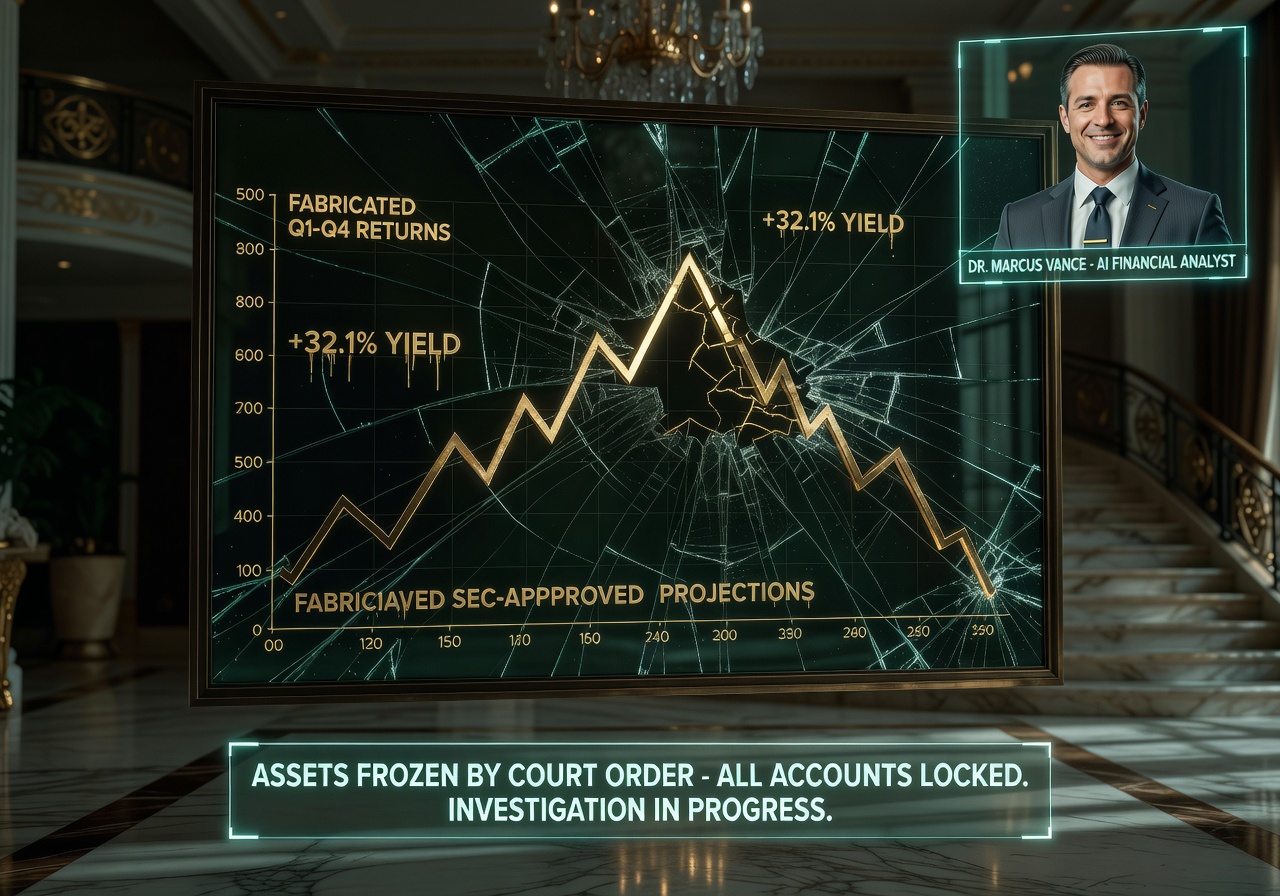
What makes 2026 different is the technology. Scammers now use deepfake videos, AI-generated trading charts, and fake crypto platforms to create an illusion of legitimacy that is genuinely hard to spot. One Florida CEO marketed himself as a "blockchain baron," bought an $8.5 million mansion with investor funds, and still managed to secure a county commissioner seat — all while the scheme was running.
The damage is real. The red flags are identifiable. And knowing what to look for is your best defense.
The Landscape of the Ponzi Scam 2026
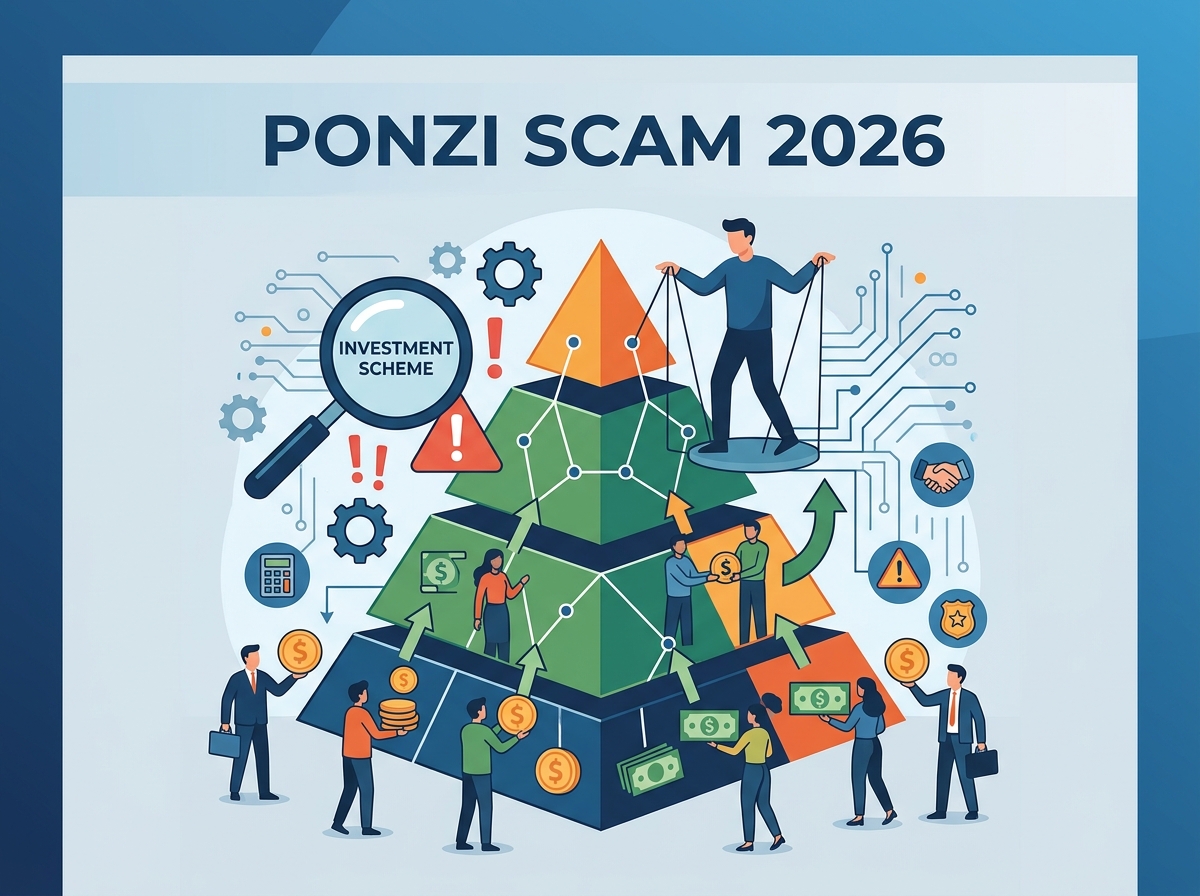
As we move through 2026, the scale of financial deception has reached a staggering peak. The traditional "rob Peter to pay Paul" strategy has been supercharged by digital assets and institutional negligence. We are seeing a wave of cases where the line between a legitimate tech startup and a criminal enterprise is intentionally blurred.
At the center of this storm is Goliath Ventures, an Apopka-based firm led by Christopher Delgado. Allegations suggest that Delgado operated a $328 million Ponzi scam 2026 by promising investors massive returns through "crypto liquidity pools." In reality, very little of that money—reportedly only $1.5 million—ever touched a functional crypto operation. Instead, the funds were allegedly used to fuel a lifestyle of $8.5 million mansions, exotic cars, and "Casino Royale" themed parties.
The fallout has extended beyond the perpetrator. A major lawsuit against JPMorgan Chase alleges the banking giant processed $253 million in suspicious transactions while ignoring blatant fraud red flags. This highlights a terrifying trend: even when the money moves through major institutions, your capital isn't always safe.
Furthermore, the SEC has been forced into emergency enforcement actions to freeze assets before they vanish into offshore accounts. We’ve also seen the collapse of operations like Next Level Holdings, where financier Paul Regan stands accused of orchestrating a $60 million fraud. By the time the dust settled, investors faced a $50 million deficit, proving that once a Ponzi scheme collapses, the "liquidity" promised is usually nothing but smoke.
High-Yield Promises in a Ponzi Scam 2026
If an investment sounds too good to be true in 2026, it almost certainly is. The hallmark of these schemes remains the "guaranteed" return. In the case of Yield Wealth Ltd and Next Level Holdings, investors were promised double-digit annual percentage yields (APY) with "zero risk." To make these lies go down smoother, fraudsters often provide fake insurance documents, claiming that your principal is protected by multi-million dollar policies that don't actually exist.
The Utah Division of Securities has issued urgent warnings regarding these high-yield notes and unregistered securities. A prime example is EquiAlt LLC, which raised over $170 million by promising safe returns from real estate. Investors, many of whom were retirees looking for stable income, were told their money was backed by property. Instead, new investor cash was simply used to pay off old investors until the pyramid crumbled.
Modern Tactics: AI and Crypto in a Ponzi Scam 2026
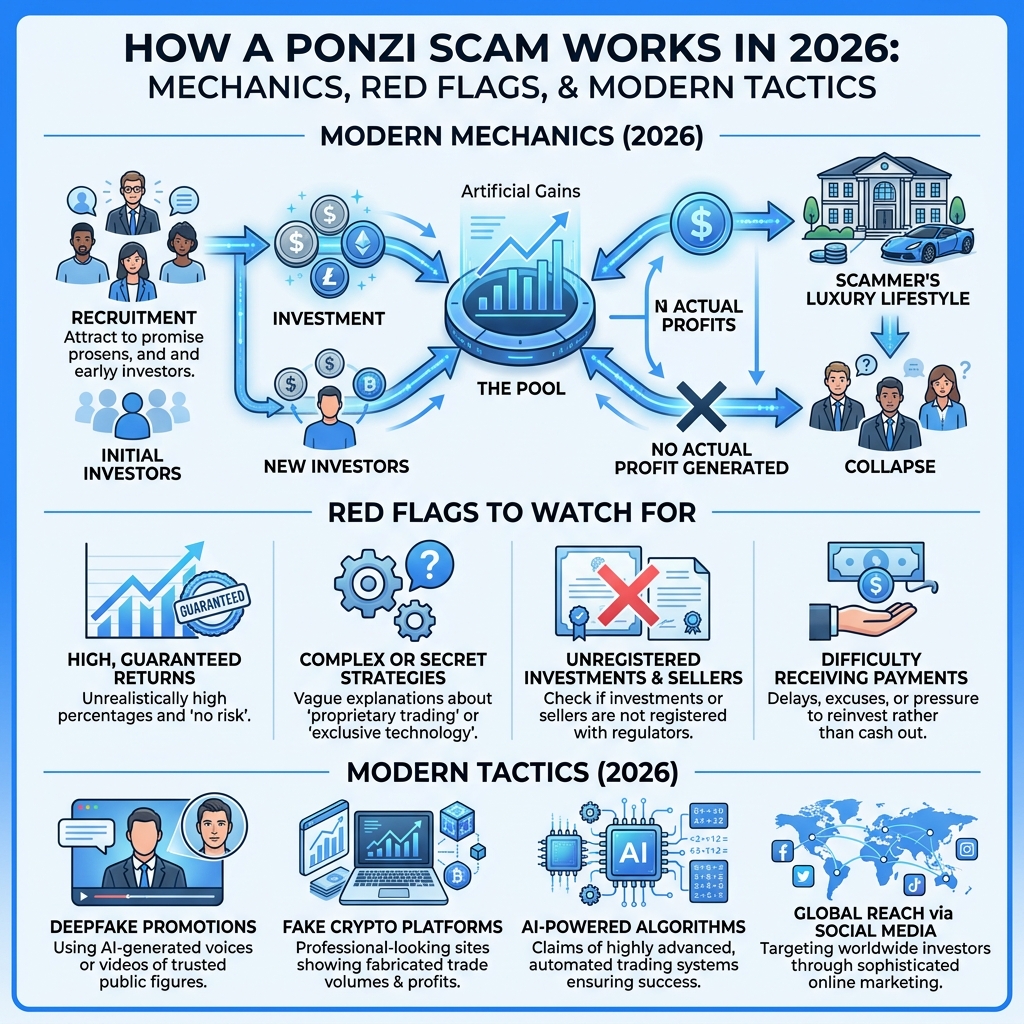
Technology has given old-school scammers a facelift. According to Montana CSI fraud alerts, nearly 22% of bad actors are now using AI to create deepfake impersonations of celebrities or financial experts to endorse their schemes.
We are also seeing the rise of "phantom trading bots." These are marketed as sophisticated AI algorithms that can predict market movements with 100% accuracy. In reality, the "profits" shown on the user's dashboard are just numbers programmed by the scammer. This often leads to "pig butchering" scams, where fraudsters build a relationship with the victim over months—sometimes via social media lures or "wrong number" texts—before convincing them to pour their life savings into a fake platform.
Red Flags and Institutional Enablers
Identifying a Ponzi scam 2026 requires us to look past the slick websites and professional-looking apps. There are specific behaviors that almost all modern Ponzi schemes share.
| Feature | Legitimate Investment | Ponzi/Fraudulent Scheme |
|---|---|---|
| Returns | Market-based, fluctuates | Guaranteed, consistently high |
| Registration | Registered with SEC/State | Unregistered securities/individuals |
| Transparency | Audited financial statements | Secretive "proprietary" strategies |
| Liquidity | Clear exit/withdrawal rules | Difficulty withdrawing funds |
| Pressure | Educational approach | High-pressure "limited time" offers |
One of the most concerning aspects of recent cases is the role of institutional enablers. Whether it's a bank processing suspicious millions or a law firm drafting misleading agreements to bypass regulations, these entities provide a veneer of respectability. For example, in the EquiAlt case, an attorney was named in a $44 million settlement for his role in the firm’s activities.
Investors must also stay alert to identity theft warning signs in their digital communications. Scammers often use phishing emails to gain access to your legitimate brokerage accounts or to harvest personal information (PII) that allows them to "spoof" your identity. When an unregistered solicitor contacts you with an urgent, high-pressure investment opportunity, it is a massive red flag.
Legal Recourse and Victim Recovery Options
If you find yourself caught in a Ponzi scam 2026, the path to recovery is often long and complex, but there are established legal routes. Class-action lawsuits are a primary tool for victims to band together and sue not just the perpetrator, but the institutions that facilitated the fraud.
In many cases, the court will appoint a "receiver"—a neutral third party tasked with seizing remaining assets and distributing them to victims. This can involve repatriating funds from overseas, such as the current efforts to recover millions from a Dubai-based office linked to the Goliath Ventures case.
It is also vital to know how to report identity theft and fraud to the FTC. Prompt reporting can sometimes lead to the freezing of accounts before the money is moved into untraceable crypto mixers. We’ve seen notable legal developments recently, such as the Wassgren settlement details involving a $44 million payout, which demonstrates that while difficult, holding enablers accountable is possible.
Frequently Asked Questions about 2026 Investment Fraud
What are the top Ponzi schemes of 2026?
The most prominent cases include Goliath Ventures (the $328 million Florida crypto fraud), the collapse of Next Level Holdings (affecting over 300 investors), and the ongoing fallout from London Capital & Finance, which remains Britain's largest Ponzi scheme with over 11,000 victims. These schemes collectively represent nearly a billion dollars in lost savings.
How do I recover money from a Ponzi scam?
Recovery typically happens through federal lawsuits and claims filed with court-appointed receivers. Victims should monitor NASAA enforcement reports for updates on state-level actions. It is crucial to file a formal complaint with your state securities regulator and the SEC as soon as you suspect fraud.
Why do Ponzi schemes still work in the AI era?
Despite our advanced technology, scammers exploit human psychology. They use AI to create "tech-driven trust" through realistic deepfakes and professional-looking spoofed websites. Furthermore, as Americans lost 43 billion to identity theft, scammers have more data than ever to craft personalized, convincing "social engineering" attacks that bypass traditional skepticism.
Conclusion
The evolution of the Ponzi scam 2026 shows us that while the technology changes, the core of the deception remains the same: the exploitation of trust. Protecting your wealth requires a "zero-trust" mindset toward unsolicited offers and a commitment to thorough due diligence.
We believe that the best way to stop a scammer is to never let them reach you in the first place. By using the best identity theft protection and practicing good digital hygiene, you can significantly reduce your risk. At Tempo Mail USA, we provide the tools to keep your personal information private. Our secure email aliases act as a PII firewall, ensuring that when you explore new services or platforms, your real identity—and your real inbox—remains shielded from those who would use your data against you.
Stay vigilant, stay skeptical, and keep your data safe. For more information on how to protect your digital footprint, visit Tempo Mail USA.