


What Happens When Someone Steals Your Identity — and How to Stop It Fast
How to report identity theft FTC is simpler than most people think. Here's the quick answer:
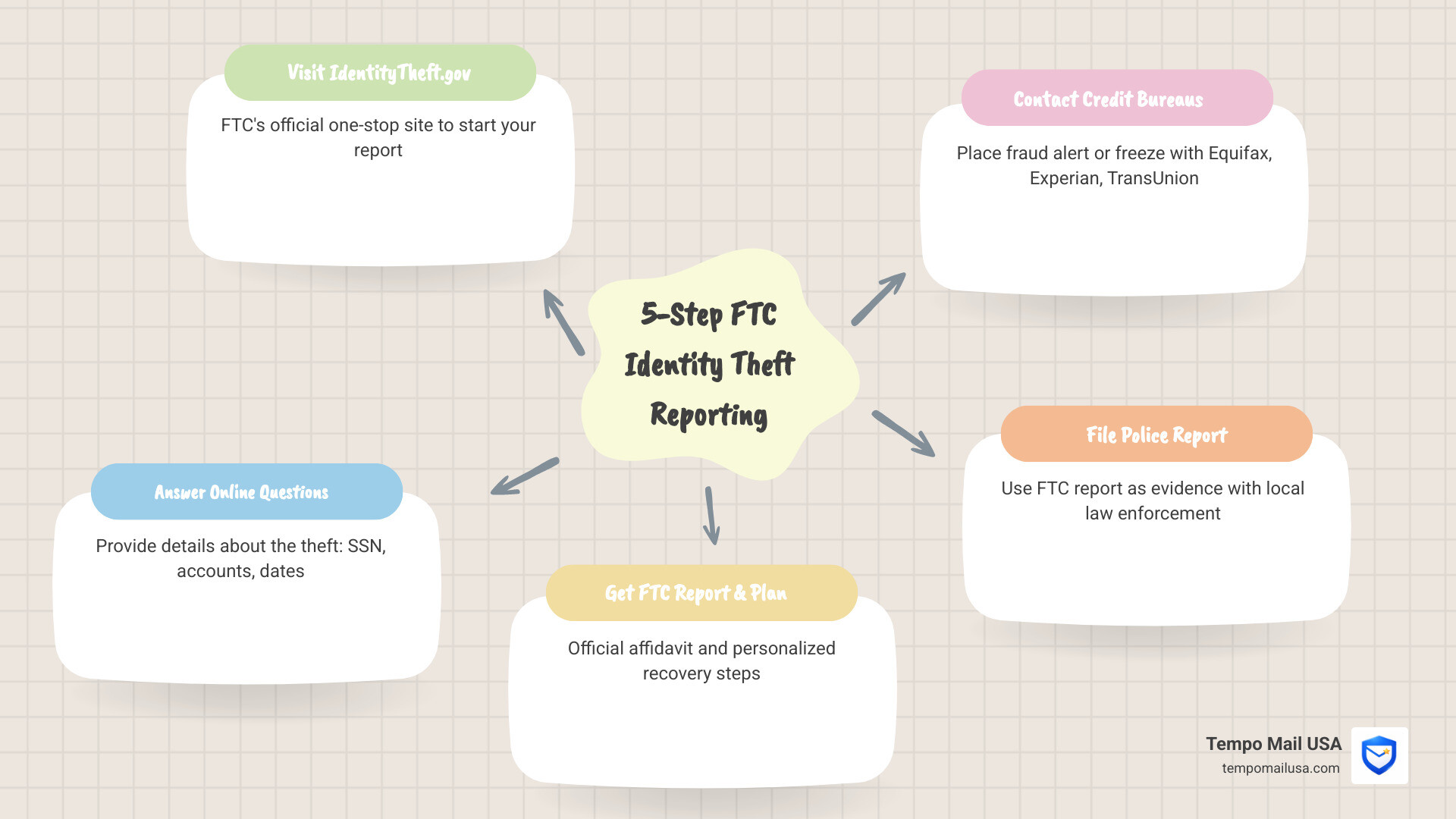
- Go to IdentityTheft.gov — the FTC's official one-stop reporting site
- Answer the online questions about what happened to you
- Get your official FTC Identity Theft Report and personalized recovery plan
- Contact the three credit bureaus (Equifax, Experian, TransUnion) to place a fraud alert or credit freeze
- File a police report if needed, using your FTC affidavit as supporting documentation
Identity theft happens when someone uses your personal or financial information without your permission. That could mean your name, Social Security number, bank account details, or credit card numbers — used to open new accounts, make purchases, or even file a tax return in your name.
The warning signs aren't always obvious right away. You might notice an unfamiliar charge on your credit card. A debt collector might call about a bill you've never seen. A business might refuse your check. By the time you realize something is wrong, the damage may already be spreading.
The good news? Recovery is very possible — especially when you act quickly and use the right official channels.
This guide walks you through exactly how to report identity theft to the FTC, protect your credit, and start taking back control.
Recognizing the Warning Signs of Identity Theft
Before we dive into the "how-to" of reporting, we need to talk about the "how-did-this-happen" and "what does it look like?" Identity theft is like a digital ghost; it often haunts your accounts for a while before you actually see it.
According to the FTC, identity theft occurs when someone misappropriates your personal or financial data. This can include your name, address, Social Security number (SSN), bank account numbers, or even medical insurance details. They might get this info through old-school methods like stealing your wallet or "dumpster diving" through your trash, or through high-tech means like phishing, ATM skimming, or intercepting data on public Wi-Fi.
Here are the red flags we should all be watching for:
- Unfamiliar Charges: You see a line item on your credit card statement for a "luxury foot massager" you definitely didn't buy. Even small, weird charges can be "test" transactions by a thief.
- Debt Collection Calls: You start getting hounded by collectors for accounts you never opened.
- Missing Mail: If your bank statements or bills stop arriving, a thief might have filed a change of address form to hide their tracks.
- Loan Denials: You have great credit, but you’re suddenly turned down for a loan or a credit card.
- Credit Report Anomalies: You check your report and see accounts, addresses, or names that aren't yours.
- Medical Bill Mysteries: You get a bill for a medical procedure you never had, or you hit your benefit limit unexpectedly.
If you notice these, don't panic, but do act. We’ve found that early detection is the best way to minimize the headache. For more details on digital red flags, check out our guide on identity theft warning signs in email.
How to Report Identity Theft FTC: The 5-Step Process
The Federal Trade Commission (FTC) is the primary government agency tasked with helping consumers handle identity theft. They’ve built a centralized hub called IdentityTheft.gov, which serves as a one-stop resource for reporting and recovery.
When we talk about how to report identity theft FTC, we are essentially talking about creating a formal record that proves to businesses and banks that you are a victim. This record is your shield.
Step 1: How to report identity theft FTC using the online assistant
The first thing you need to do is visit the IdentityTheft.gov online assistant. This is an interactive tool that asks you specific questions to understand the scope of the theft.
What information will you need? To make the process smooth, try to have the following ready:
- Your full legal name and current address.
- Your Social Security number (the FTC uses this to verify your identity).
- Details about the theft: When did you discover it? What accounts were affected?
- Evidence: If you have a fraudulent credit card statement or a letter from a debt collector, keep it handy.
The assistant will walk you through different categories, such as "someone opened a new account" or "someone used my existing account." It even covers specific issues like tax fraud or unemployment benefit theft. By answering these questions accurately, you help the FTC generate a tailored plan just for you.
Step 2: Create your official FTC Identity Theft Report
Once you finish the online interview, the site will generate two very important things: your Identity Theft Affidavit and your Recovery Plan.
The FTC Identity Theft Report is the combination of your affidavit and, if you choose to file one, a police report. This document is powerful. It gives you certain legal rights, such as:
- The ability to permanently block fraudulent info from appearing on your credit report.
- The right to stop a company from collecting debts resulting from the theft.
- The power to get copies of the documents the thief used to open accounts in your name.
Pro-Tip: Save and print your affidavit immediately! The FTC system doesn't always let you go back and retrieve it later without a lot of hassle. This document is your "golden ticket" when talking to bank fraud departments.
Step 3: Contact credit bureaus for fraud alerts and freezes
This is perhaps the most critical step for stopping future damage. You need to alert the "Big Three" credit bureaus: Equifax, Experian, and TransUnion.
There are two main tools at your disposal:
- Fraud Alert: This tells businesses they must verify your identity before issuing new credit. It lasts for one year and is free. The best part? You only have to contact one bureau, and they are legally required to notify the other two.
- Credit Freeze: This is the "nuclear option." It stops anyone (including you) from opening new credit accounts until you "unfreeze" it. It is free, but you must contact each of the three bureaus individually to set it up.
You can find the specific credit bureau contacts on the FTC website. We generally recommend a credit freeze if you know your SSN has been compromised, as it provides the strongest level of protection. For more on the differences, the CFPB has a great breakdown of fraud alerts and credit freezes.
Step 4: File a police report for identity theft
Many people ask, "Do I really need to go to the police?" The answer is: it depends.
While the FTC Identity Theft Report is usually enough for most banks and credit card companies, you should file a police report if:
- You know the person who stole your identity.
- The thief used your name in an encounter with the police (like a traffic stop or arrest).
- A creditor or bank specifically insists on a police report.
When you go to the local station, bring your FTC Affidavit, a government-issued ID, proof of your address, and any evidence of the theft. If the officer seems hesitant to take a report (it happens!), show them the "FTC Memo to Law Enforcement" which is often included in your recovery plan. This explains why the report is necessary for your recovery.
Step 5: Execute your personalized recovery plan
Now comes the "cleanup" phase. IdentityTheft.gov provides a personalized checklist and even pre-filled sample letters to help you:
- Close Fraudulent Accounts: Call the fraud department of any company where an account was opened without your permission.
- Dispute Charges: Write to the companies to remove charges you didn't make.
- Change Credentials: Update your passwords, PINs, and security questions for all your legitimate accounts.
- Record Keeping: Keep a log of everyone you speak to, the date of the call, and what was said.
In our experience, this is where many people get overwhelmed. But remember, the FTC site tracks your progress. It’s a marathon, not a sprint. While you're cleaning up your digital footprint, you might also want to look into how to remove personal info from the internet to prevent the next attack.

Handling Tax, Unemployment, and Specialized Fraud
Sometimes, identity theft isn't about credit cards. Sometimes, it’s about the government. Scammers love to use your SSN to file for tax refunds or claim unemployment benefits.
How to report identity theft FTC for tax and unemployment fraud
If you try to file your taxes and the IRS rejects your return because one has already been filed in your name, you are a victim of tax-related identity theft.
Immediate Actions:
- File IRS Form 14039: This is the Identity Theft Affidavit for the IRS. It alerts them that a fraudulent return was filed and starts the process of getting your actual refund.
- Report to the FTC: Use the tax fraud path on IdentityTheft.gov.
- State Agencies: If someone stole your unemployment benefits, you must contact your state’s unemployment insurance office immediately.
The FTC provides specific recovery steps for these situations. Often, the IRS will issue you an Identity Protection PIN (IP PIN) for future filings, which acts as a secondary password for your tax return.
Frequently Asked Questions about FTC Reporting
We get a lot of questions about the nuances of the reporting process. Here are the most common ones.
Is it illegal to file a false identity theft report with the FTC?
Yes, absolutely. Filing a false report is a federal crime. The information you provide is entered into the Consumer Sentinel Network, a secure database used by law enforcement agencies worldwide. If you intentionally provide false information, you could face heavy fines or even imprisonment. Always be 100% honest when filling out your affidavit.
How can I get help if I prefer not to report online?
While the online tool is the fastest way to get your recovery plan, the FTC understands that not everyone is comfortable with computers or may need language assistance.
- By Phone: You can call the FTC at 1-877-438-4338 (1-877-ID-THEFT).
- Language Support: If you need an interpreter, call the number above and press 3. Interpreters are available from 9:00 am to 5:00 pm ET.
- Spanish Speakers: You can visit RobodeIdentidad.gov for a full Spanish-language version of the reporting tool.
What information do I need to provide when reporting?
When you report, you are in control of how much you share, but the FTC generally requires your name and telephone number to process a report. To get a useful recovery plan, you'll want to provide:
- The date you noticed the theft.
- The types of fraud (credit card, tax, utilities).
- The names of the companies involved.
- Any contact info you have for the "subject" (the thief), if known.
The FTC's Privacy Policy explains how your data is used and shared with law enforcement to help catch the bad guys.
Conclusion: Building a "PII Firewall" for the Future
Reporting identity theft to the FTC is the first step toward recovery, but wouldn't it be better if the thief never got your information in the first place?
At Tempo Mail USA, we believe in a proactive approach to privacy. Most identity theft begins with a simple data breach or a phishing email. By using our temporary email aliases, you create a "PII Firewall." You can sign up for services, download whitepapers, or join forums without ever giving away your primary, "real" email address. If that service gets hacked, the thieves get a temporary alias that you can simply delete, keeping your true identity safe.
As you move forward, keep these protection tips in mind:
- Shred Everything: Any document with your SSN or account numbers should be shredded, not just tossed.
- Enable 2FA: Use two-factor authentication on every account that offers it.
- Monitor Your Mail: Collect your mail daily and put a hold on it when you’re on vacation via the USPS website.
- Be Skeptical: Never give out your SSN just because someone asks. Ask why they need it and how they will protect it.
Recovery takes time, but by knowing how to report identity theft FTC and using tools like IdentityTheft.gov, you are already ahead of the curve. Stay vigilant, stay private, and remember that we are here to help you shield your personal information from the start.
For more tips on staying safe online, read our deep dive into why email privacy matters and learn how to report phishing email before a scammer can do any real damage.