

Why the Domain Name Services Letter Scam Keeps Working
The domain name services letter scam is a deceptive scheme where companies send official-looking mail to domain owners, pretending to be renewal notices when they're actually solicitations to transfer your domain at inflated prices. These letters are designed to trick you into paying for services you don't need, often at rates 3-4x higher than legitimate registrars.
Quick Answer: Is It a Scam?
| Question | Answer |
|---|---|
| Is the letter legitimate? | No, it's a solicitation designed to look like a bill |
| Did I order this service? | No, they scraped your info from public WHOIS records |
| Should I pay it? | Absolutely not—shred it immediately |
| Will my domain expire if I ignore it? | No, but renew with your actual registrar |
| Is it illegal? | Technically no, but it's deceptive advertising |
If you've owned a domain name for any length of time, you've probably received one of these letters. They arrive in physical mail—not email—and they're carefully designed to create panic. The letter references your actual domain name and expiration date, making it look official. It urges you to "renew" immediately, often for a 5-year term at $265 or more.
Here's what makes this scam particularly insidious: your domain registration information is public by default. Companies like Domain Name Services, iDNS, and Domain Registry of America scrape the WHOIS database to harvest domain owner details—your name, address, phone number, and domain expiration date. They time their mailings to arrive just before your actual renewal date, hoping you'll pay without thinking.
The Better Business Bureau gives Domain Name Services an F rating, with multiple reports describing it as a "fake invoice scheme." Yet these companies continue operating because they technically include disclaimers (in tiny print) stating "this is not a bill."
In the sections below, we'll show you exactly how to identify these scam letters, what to do if you receive one, and how to protect your personal information from being exploited in the first place.

Deconstructing the Deception: What is the Domain Name Services Letter Scam?
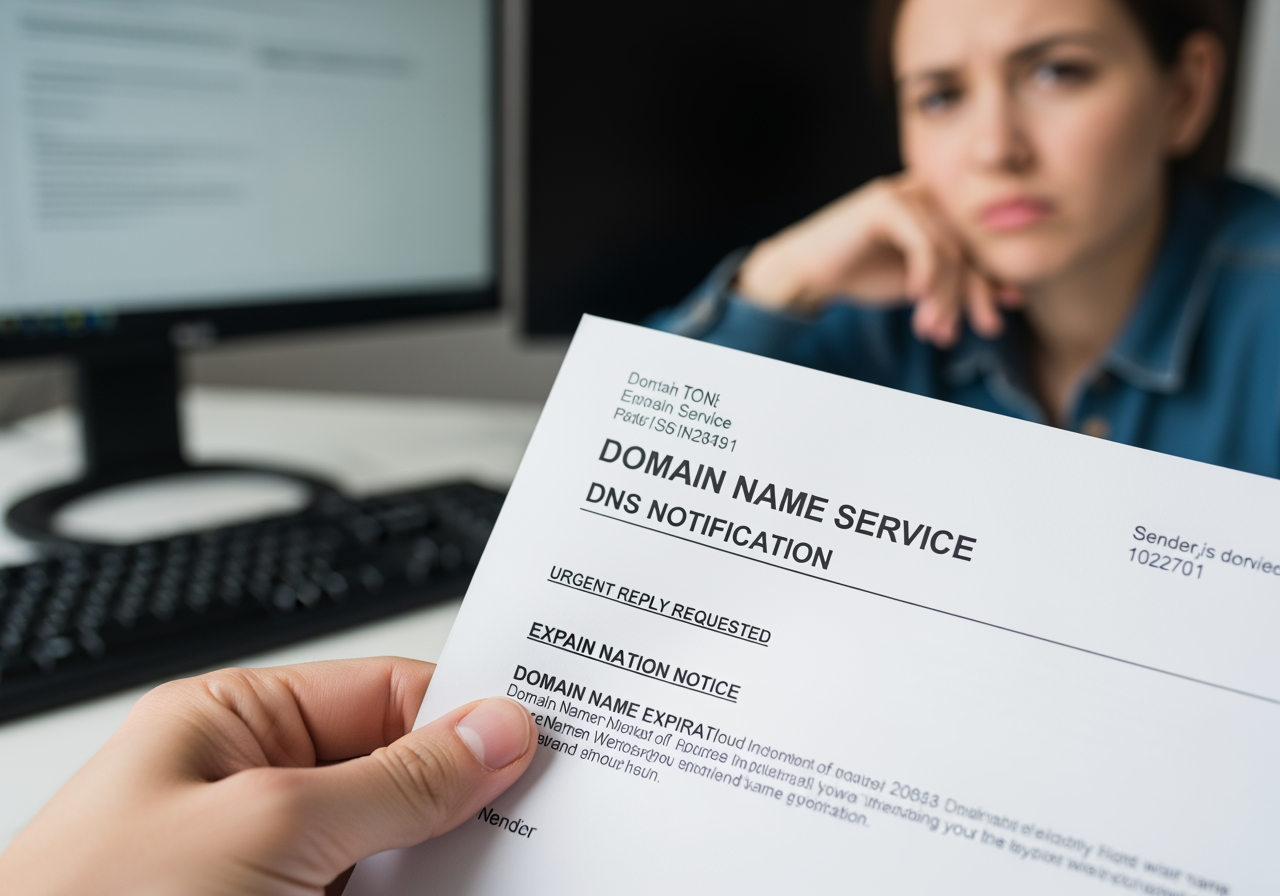
At its core, the domain name services letter scam is a classic case of domain slamming. This is a deceptive tactic where a company tries to trick domain owners into switching their domain registrar (the company where your domain name is registered) from their existing provider to theirs. They do this under the false pretense that you are simply renewing your subscription with your current registrar. The letter is crafted to look like an official "Domain Expiration Notice" or an urgent bill, creating a false sense of urgency and obligation.
Why do people receive these letters? It all boils down to the public nature of domain registration information. When you register a domain name, your contact details—name, address, phone number, and email—are typically made public in the WHOIS database. Scammers exploit this public information to send mass mailings to domain owners whose registrations are nearing their expiration dates. They hope that busy individuals or administrative staff will mistakenly pay the misleading invoice without realizing it's a solicitation from an unfamiliar company.
These letters are not a bill for services you've already received. They are a deceptive solicitation, an offer to transfer your domain registration to their service, usually at an exorbitant price. While your domain name is indeed likely coming up for renewal, as indicated in the letter, it is not registered with the company sending you the letter. The companies behind these letters are not your actual registrar; they are attempting to poach your business through misleading tactics.
For a quick refresher on what a domain name registrar does, check out this explanation: What is a domain name registrar?.
How Scammers Get Your Information
The primary way companies like Domain Name Services obtain your personal domain registration information is through the public WHOIS database. ICANN (Internet Corporation for Assigned Names and Numbers), the administrative authority for domain names, mandates that domain registrars make certain registrant information public. This includes:
- Your name or organization's name
- Your postal address
- Your phone number
- Your email address
- The domain's registration and expiration dates
Scammers use automated tools and processes to perform "data scraping" on the WHOIS database. They specifically look for domains with upcoming expiration dates. Once they have this data, they generate personalized (but fraudulent) letters that appear to be legitimate renewal notices. This allows them to reference your actual domain name and its expiration date, adding a layer of credibility to their deceptive mailings.
We understand the concern about your personal information being so easily accessible. That's why we advocate for protecting your digital identity. Learn more about how to secure your details here: Protect Your Privacy with Free Private Email Services.
Is It a Scam or Just Aggressive Marketing?
This is where the waters get a bit murky. While the domain name services letter scam is undoubtedly deceptive, companies like Domain Name Services often operate within the letter of the law by including subtle disclaimers. These disclaimers, usually in fine print, state something to the effect of "This is not a bill. This is a solicitation. You are under no obligation to pay the amount stated above unless you accept this offer."
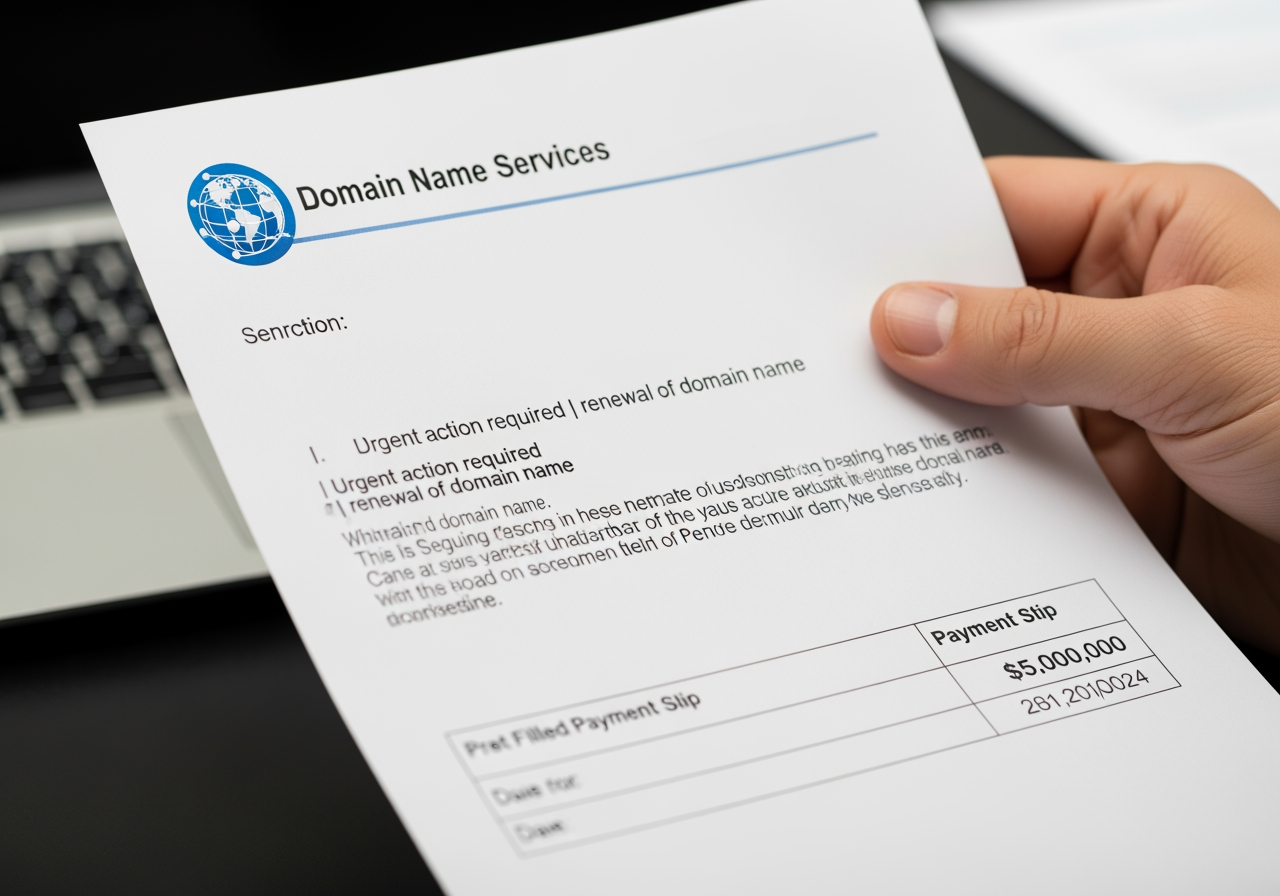
This legal loophole allows them to argue that they are engaging in aggressive marketing or a legitimate business solicitation, not outright fraud. However, their entire business model relies on creating confusion and using scare tactics to trick domain owners. The letters are carefully designed to mimic official invoices, using bold headings like "Domain Name Expiration Notice" and including payment remittance slips. They intentionally omit clear identification of themselves as a third-party solicitor, hoping recipients will skim the letter and assume it's from their current registrar.
The consumer backlash against these tactics is significant. For example, Domain Name Services has an F rating at the Better Business Bureau, accompanied by an alert stating: "BBB has received multiple reports from consumers that Internet Domain Name Services (IDNS) is engaged in a fake invoice scheme, attempting to bill businesses for the renewal of their domain name registration." Other companies operating with similar tactics include iDNS and Domain Registry of America. The fact that numerous people are successfully tricked into paying these "solicitations" highlights the deceptive nature of their practices. While technically not always illegal, we consider these tactics unethical and harmful to consumers.
You can verify their BBB rating and read consumer complaints directly: Domain Name Services has an F rating at the Better Business Bureau.
Red Flags: How to Spot a Fake Domain Renewal Notice
Recognizing a fraudulent domain renewal notice is your first line of defense against the domain name services letter scam. These deceptive letters often share common characteristics that, once you know what to look for, make them relatively easy to spot.
Here's a quick comparison of what you might see:
| Feature | Scam Letter (e.g., Domain Name Services) | Legitimate Renewal Notice (from your actual registrar) |
|---|---|---|
| Delivery Method | Almost always physical snail mail | Primarily email (from your registrar's official domain) |
| Sender Identity | Vague, generic name (e.g., "Domain Name Services") | Clearly states your known registrar (e.g., GoDaddy, Namecheap) |
| Urgency/Tone | High pressure, warns of service interruption, looks like a bill | Informative, reminder of upcoming expiration, clear renewal options |
| Pricing | Significantly inflated, often for 5-year terms (e.g., $265) | Competitive, annual or multi-year options, around $15-20/year |
| Disclaimers | Fine print stating "This is not a bill/solicitation" | Clear terms of service, no misleading disclaimers |
| Contact Info | Often limited, generic email, or no phone number | Direct support channels, specific contact numbers, official website |
Key Red Flags of a domain name services letter scam
Let's dive deeper into the specific warning signs to watch out for in a domain name services letter scam:
- Physical Mail, Not Email: Legitimate domain registrars almost exclusively communicate renewal notices via email. If you receive a letter in your physical mailbox, especially for a service you manage online, be immediately suspicious.
- Addressed to the Domain Name, Not Your Company: Many scam letters are addressed generically to "Domain Name Owner" or even directly to your domain name (e.g., "ATTN: YourDomain.com"), rather than your actual business name or personal name.
- No Phone Number or Generic Contact: A real registrar will have clear, easy-to-find contact information, including a support phone number. Scammers often provide only a generic email or mailing address, making it difficult to reach a human.
- The "This is Not a Bill" Fine Print: This is the tell-tale sign. Somewhere on the letter, usually in tiny, light-colored font at the bottom or on the back, you'll find a disclaimer stating, "This notice is not a bill. This is a solicitation. You are under no obligation to pay..." This is their legal shield.
- Unfamiliar Sender: If the company name doesn't match your known domain registrar (GoDaddy, Namecheap, Network Solutions, etc.), it's a scam trying to get you to switch.
- Urges Immediate Payment/Transfer: The language is often designed to create panic, implying that your website or email will stop working if you don't pay them immediately. They want you to act without thinking or verifying.
- Inflated Prices and Long-Term Commitments: As we'll discuss next, the prices charged by these companies are dramatically higher than market rates, and they often push for multi-year (e.g., 5-year) renewals.
Cost Comparison: Scam vs. Legitimate Renewal
One of the most glaring red flags of a domain name services letter scam is the exorbitant price they charge. These companies capitalize on your lack of awareness about typical domain renewal costs.
Let's look at the numbers:
- Scam Companies (e.g., Domain Name Services): As of 2024, they typically charge around $265 to renew a .com domain name for 5 years. This breaks down to $53 per year.
- Legitimate Registrars: The typical cost for a .com domain renewal from a reputable registrar is usually in the range of $15-$20 per year. For example, you can renew a domain name for 5 years at Namecheap for roughly $85. This is a massive difference!
Not only are the prices inflated, but these scam companies often push for longer, unnecessary commitments like a 5-year renewal. Legitimate registrars usually offer annual renewals with options for multi-year terms, but they don't force you into an overpriced long-term contract with a hidden no refund policy. The goal is to maximize their profit from your mistaken payment.
If you're considering switching registrars due to reliability issues or high costs from your current provider, we highly recommend a company like Namecheap, which offers competitive pricing and excellent service: Namecheap.
Your Action Plan: What to Do and How to Protect Yourself
Receiving a domain name services letter scam can be unsettling, but knowing how to react is crucial. The most important thing is to remain calm and follow a clear action plan.
First and foremost, if you receive one of these letters, our advice is simple: shred the letter. Do not respond to it, do not call any numbers listed, and certainly do not send them any money. It's designed to trick you, and interacting with it only confirms your address as active.
Next, take proactive steps to ensure your actual domain registration is secure. This includes verifying your legitimate registrar, enabling auto-renewal, and locking your domain to prevent unauthorized transfers.
How to Verify Your Actual Domain Registrar
If you're unsure who your real domain registrar is, don't worry, it's a common situation! Many people forget, especially if their web developer handled the initial setup. Here's how to find out:
- Check Your Records: Look through your email archives for past renewal notices or invoices related to your domain name. Search for terms like "domain renewal," "registrar," or the name of your domain.
- Contact Your Web Developer/IT Person: If someone else set up your website, they should have this information readily available.
- Use an ICANN Lookup Tool: This is the most reliable method. The ICANN lookup tool allows you to search for your domain name and find its official registration details. Towards the top of the assessment, the "registrar" field will clearly list where your domain name is registered. It will usually be one of the reputable registrars such as GoDaddy, Network Solutions, Register.com, Hover, or Namecheap.
Once you've identified your actual registrar, log into your account, confirm your domain's expiration date, and ensure your payment information is up-to-date. Make sure auto-renewal is enabled to avoid any legitimate lapse in your registration.
Protecting your online identity is paramount, and knowing your registrar is a key step. For an added layer of protection, consider services that safeguard your private information: Privacy Shield Pro: The Ultimate Protection.
Proactive Steps for Future Protection
Beyond dealing with a specific scam letter, there are several measures you can take to protect yourself from future domain name services letter scam attempts and other related threats:
- Enable WHOIS Privacy: This is perhaps the most effective step. Most legitimate registrars offer WHOIS privacy (sometimes called "domain privacy" or "private registration") as an add-on service, often for a small annual fee. This service replaces your personal contact information in the public WHOIS database with generic information from the privacy service, significantly reducing the chances of scammers harvesting your data.
- Use a Dedicated Business Email: If you're a business owner, use a professional email address for your domain registration that is monitored by a responsible party. Avoid using generic personal email addresses.
- Set Up Two-Factor Authentication (2FA): Always enable 2FA on your domain registrar account. This adds an extra layer of security, making it much harder for unauthorized individuals to access your account even if they somehow get your password.
- Educate Your Team: If you have administrative or accounting staff, make sure they are aware of these types of scams. Teach them the red flags and instruct them never to pay an unsolicited invoice without verifying it with the appropriate person (you, your web developer, or IT manager).
- Keep Meticulous Records: Maintain a clear, organized record of your domain registrar, account login details, expiration dates, and renewal costs. This makes verification quick and easy.
Using temporary email addresses can also be a smart strategy for various online sign-ups, further shielding your primary inbox and personal data: Why You Should Use Temporary Email for Safe Signups.
After the Fact: Consequences and Recovery
Falling victim to a domain name services letter scam can have unpleasant consequences, ranging from financial loss to potential disruption of your online presence. If you mistakenly pay one of these fraudulent invoices, you risk:
- Unauthorized Domain Transfer: The primary goal of these scammers is to trick you into initiating a domain transfer to their service. This means your domain would no longer be managed by your trusted registrar, potentially leading to future headaches.
- Financial Loss: You'll have paid an exorbitant fee for a service you didn't need or want, often for multiple years, with little to no chance of a refund from the scammer.
- Website Downtime and Email Disruption: An unauthorized transfer or a lapse in your actual renewal (because you thought you renewed with the scammer) could lead to your website going offline and your business email stopping. This can severely impact your operations and reputation.
- Loss of Control: Dealing with an untrustworthy "registrar" can be a nightmare. Regaining control of your domain from a scam entity can be a complex and time-consuming process.
If you believe you've been a victim of any type of fraud, including a domain name services letter scam, it's important to report it. The Federal Trade Commission (FTC) is a valuable resource: How to Report Fraud to FTC: The Right Way.
What if I Already Paid a domain name services letter scam?
If you've already sent money to one of these deceptive companies, don't panic, but act quickly.
- Contact Your Credit Card Company Immediately: If you paid by credit card, call your credit card provider and explain that you've been charged for a fraudulent service. Request a chargeback. The sooner you do this, the better your chances of recovering your money.
- Contact Your Real Domain Registrar: Inform your actual registrar about the situation. They can help you monitor your domain for any unauthorized transfer attempts. They can also advise on how to prevent the transfer from completing. A domain transfer typically requires an "AuthCode" or EPP code, which you would need to provide, and an open uping of your domain. If you haven't taken these steps, the transfer might not complete.
- Monitor Your Domain Status: Keep an eye on your domain's status through your legitimate registrar's control panel. If a transfer does go through, there's usually a 30-day transfer lock period before another transfer can occur. This gives you a window to try and transfer it back to your preferred registrar.
- Dispute the Charge: Even if the transfer completes, continue to dispute the charge with your bank or credit card company. Provide all details of the scam.
Dealing with financial fraud can be stressful. We offer resources to help you identify and report various types of scams: Stop PayPal Spam: How to Effectively Report Email Scams.
Frequently Asked Questions about Domain Name Scams
Why do I keep receiving these letters?
You keep receiving these letters because your domain's registration data, including your mailing address, is public information through the WHOIS database. Scammers actively scrape this data to send mass mailings to domain owners whose domains are nearing expiration. They target you because they know you own a domain and when it's due for renewal, making their deceptive letters seem more credible. The more domains you own, the more likely you are to receive these solicitations.
What happens if I ignore the letter and my domain expires?
Ignoring the scam letter is the correct action to take regarding the scam itself. However, it's critical that you do not confuse the scam letter with your actual domain renewal. You must still renew your domain with your actual registrar. If you fail to do so, your website and email will stop working on the expiration date. After a grace period (which varies by registrar and domain extension), your domain name could become available for public registration, and someone else could purchase it. This would mean losing your online identity and potentially all associated services.
Are these types of notices limited to domain names?
No, similar deceptive solicitation tactics are used for other services, especially those involving public records. For instance, businesses often receive misleading notices for trademark renewals and patent filings that look like official government correspondence but are actually from third-party companies trying to charge inflated fees for basic services. Always verify any unexpected invoice or renewal notice with your official service provider or the relevant government agency. To see examples of misleading notices related to trademarks, refer to the official warnings from the USPTO: See misleading notices from the USPTO.
Conclusion
The domain name services letter scam is a persistent and cunning threat designed to exploit a domain owner's lack of familiarity with renewal processes and the public nature of online registration data. We've learned that these letters are not legitimate invoices but cleverly disguised solicitations aimed at tricking you into overpriced domain transfers. From inflated costs and misleading fine print to the use of physical mail instead of email, the red flags are numerous once you know what to look for.
Vigilance is key in protecting your valuable online assets. Always verify the sender of any domain renewal notice, know your actual registrar, and never pay an unexpected bill without thorough investigation. Proactive protection, such as enabling WHOIS privacy, setting up two-factor authentication, and educating anyone who handles your business's mail, can significantly reduce your risk.
At TempoMail USA, we understand the importance of safeguarding your personal information from unwanted solicitations and scams. Our identity proxying services and secure email aliases are designed to create a "firewall" around your Personally Identifiable Information (PII), helping you maintain your privacy and secure your digital life.
Don't let scammers profit from your confusion. Take control of your domain management and protect your online identity.