


How P2P Payments, Cash, and Checks Stack Up — A Quick Comparison
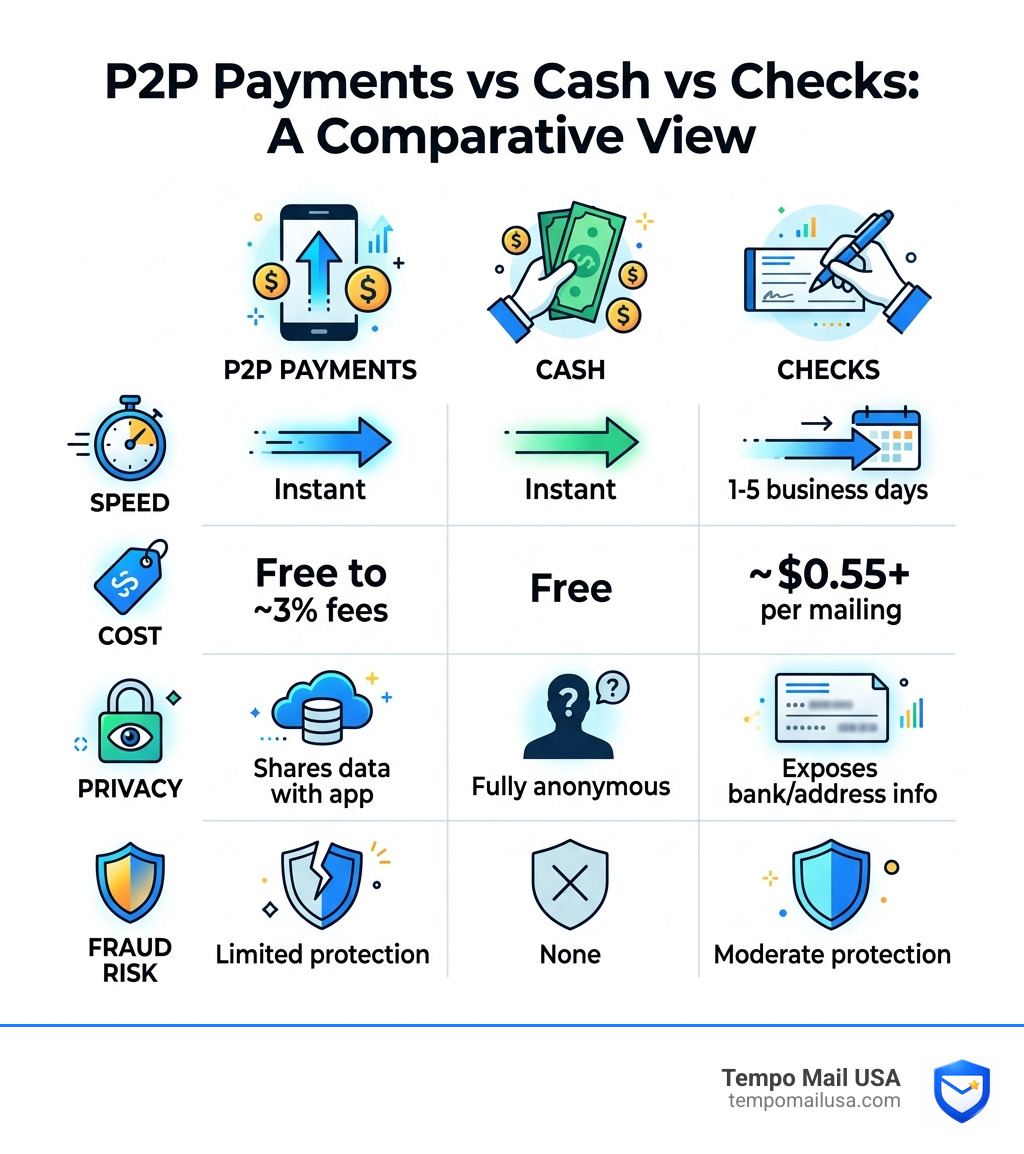
The pros and cons of p2p payments vs cash or checks come down to a few key trade-offs: speed and convenience on one side, security and reversibility on the other.
Here's a quick snapshot before we dive deeper:
| Factor | P2P Payments | Cash | Checks |
|---|---|---|---|
| Speed | Instant | Instant | 1-5 business days |
| Cost | Free to ~3% fees | Free | ~$0.55+ per mailing |
| Reversibility | Rarely reversible | Not reversible | Can be stopped |
| Privacy | Shares data with app | Fully anonymous | Exposes bank/address info |
| Fraud protection | Limited | None | Moderate |
| Record keeping | Digital trail | No record | Paper trail |
P2P apps like Venmo, Zelle, and Cash App have exploded in popularity — nearly 65% of Americans now use at least one, and over $1 trillion moved through these platforms in 2022 alone. That kind of adoption doesn't happen without real benefits.
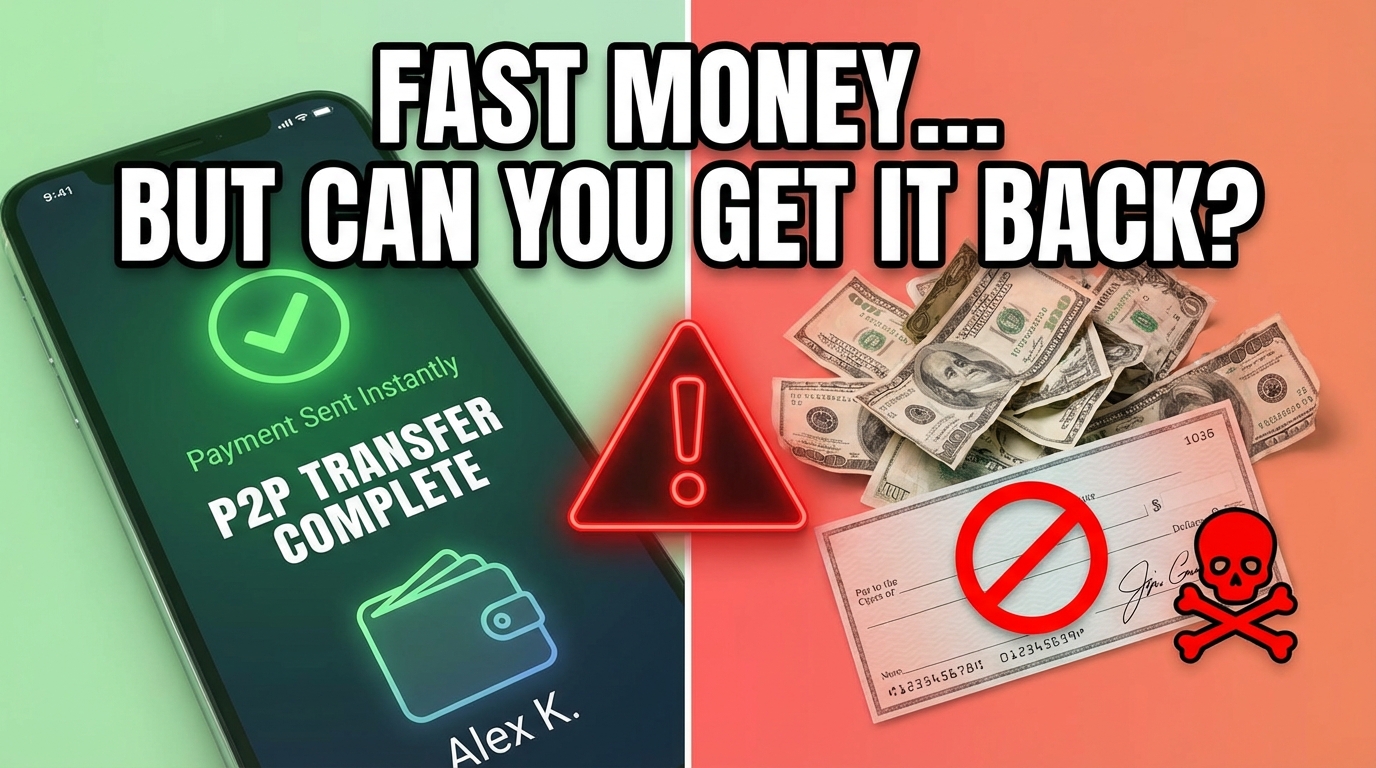
But there are real trade-offs too. Cash is anonymous and universally accepted. Checks create a paper trail and can be cancelled. P2P is fast — but once that money is gone, it's usually gone for good.
Knowing which method to use, and when, can save you money, stress, and potentially a lot of headaches.
Understanding the Pros and Cons of P2P Payments vs Cash or Checks
When we look at the pros and cons of p2p payments vs cash or checks, we are witnessing a massive shift in how value moves. Peer-to-peer (P2P) systems allow us to send money via a mobile app or email address, bypassing the traditional wait times of the banking system. However, this convenience comes with a "digital footprint" that cash simply doesn't have.
According to research, P2P networks can offer 75-90% savings on currency conversion rates by bypassing brokers, but they often carry transaction fees of 2-3% for specific services, such as using a credit card. While 65% of Americans have embraced these apps, a similar 65% are deeply concerned about the amount of personal information these financial apps collect.
For a detailed breakdown of the technical side, you can explore the Pros and Cons of Peer-to-Peer (P2P) Payment Networks: A Complete Guide.
Speed and Convenience: The Pros of P2P Payments vs Cash or Checks
The primary "pro" of P2P is undeniably speed. If you are splitting a dinner tab or paying a handyman, P2P is instant. Unlike a check, which requires a trip to the mailbox and days of bank processing, or cash, which requires a physical meeting or an ATM visit, P2P works 24/7 from your couch.
For businesses, this means better cash flow. For individuals, it means no more "I'll pay you back later" excuses. We’ve all been in that awkward spot where someone "forgot their wallet." With P2P, if they have their phone, they have their money.

Irreversibility and Scams: The Cons of P2P Payments vs Cash or Checks
The biggest "con" is the lack of a "back button." Approximately 6% of P2P users have accidentally sent money to the wrong person. Because these transfers are treated like digital cash, they are usually irreversible. If you type one wrong digit in a phone number, your money might be gone forever.
Furthermore, social engineering scams are rampant. Fraudsters may call pretending to be your bank, asking you to "reverse" a fake transaction by sending money to yourself—which actually goes to them. Unlike checks, where you can issue a "stop payment" order, P2P apps offer very little recourse once you hit "send." For more on these risks, see 11 Advantages & Disadvantages of Peer-to-Peer (P2P) Payment Apps.
Data Privacy Compliance and the Risks of Financial App Surveillance
In the modern economy, data is the new currency. When you use P2P apps, you aren't just sending money; you are sending data. These apps often collect geolocation, contact lists, and purchase habits. This is a nightmare for data privacy compliance. For businesses, this exposure can lead to targeted phishing attacks or corporate espionage if employees link personal P2P accounts to company devices.
To mitigate these risks, we recommend using enterprise VPN solutions to encrypt your traffic and credit monitoring software to watch for unauthorized accounts opened in your name. If your PII (Personally Identifiable Information) is leaked from a P2P database, you need an early warning system to prevent total identity takeover.

Beyond the Ledger: Why Businesses Need Secure Cloud Storage
While cash leaves no trail and checks leave a physical one, P2P creates a permanent digital ledger. For freelancers and small businesses, this is a double-edged sword. It makes tax preparation easier, but it also means your entire financial history is stored on a third-party server.
To protect these records, we suggest maintaining secure cloud storage for business to house exported transaction histories. Relying solely on the app’s internal history is risky; if your account is locked due to a "suspicious activity" algorithm, you lose access to your records. Proper data privacy compliance requires having independent, encrypted backups of all financial movements.
Preventing Phishing with Disposable Email Infrastructure
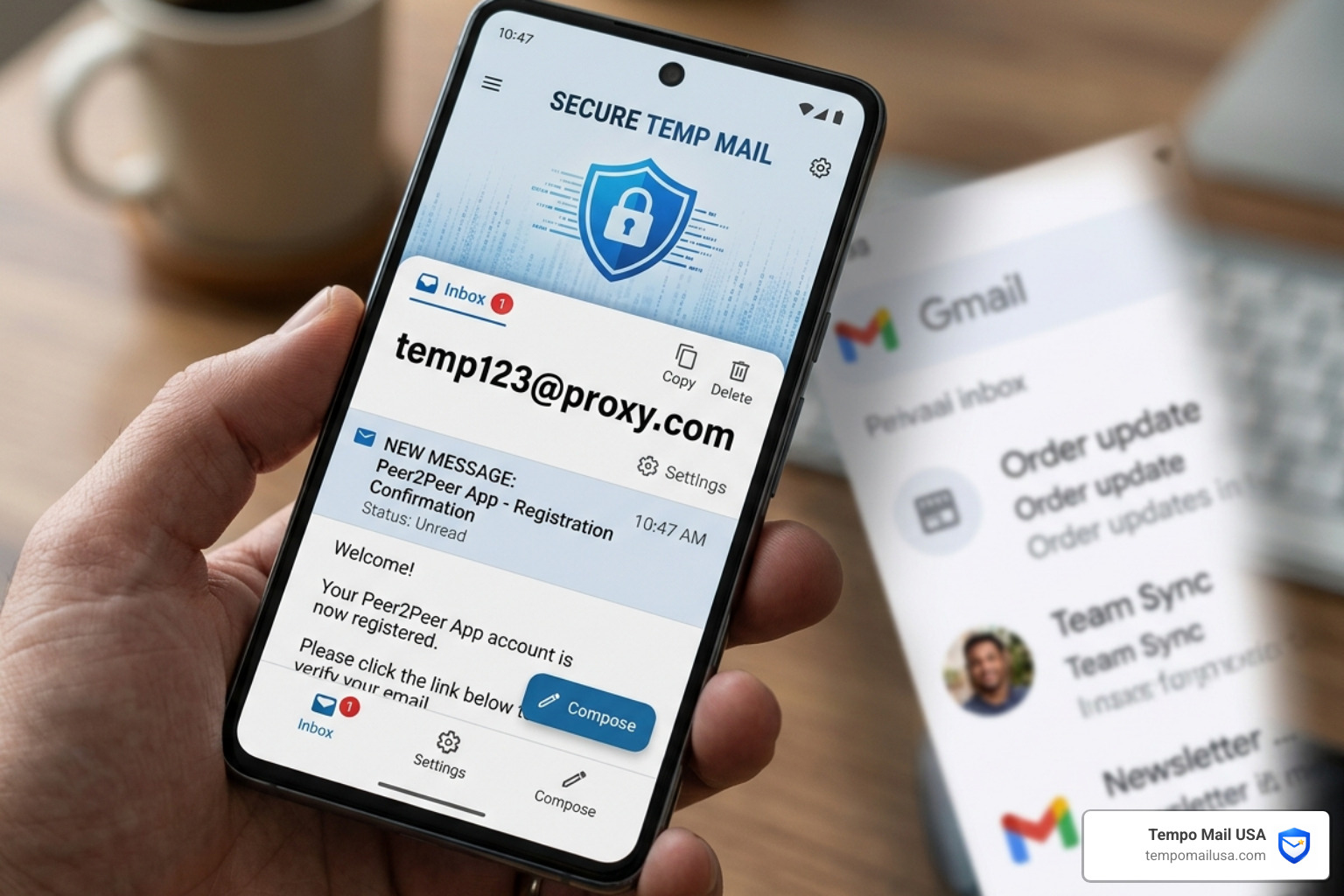
One of the most effective ways to shield your financial life is to separate your identity from the apps you use. This is where Tempo Mail USA becomes a critical part of your cybersecurity stack. By using a temporary email alias from tempomailusa.com, you create a "PII firewall."
When you register for a new P2P app or financial service, do not use your primary personal or work email. Instead, use a disposable alias. This ensures that if the app's database is breached—a common occurrence in the fintech world—the hackers only get a proxy email, not your real credentials. This simple step is a form of advanced malware protection, as it prevents targeted phishing emails from ever reaching your real inbox.
In an era where secure cloud storage for business and financial accounts are high-value targets, using a proxy service like Tempo Mail USA is the first line of defense against identity theft.
Identity Theft Protection Services: Mitigating Check and P2P Fraud
Traditional checks are surprisingly dangerous. Every time you hand a check to a stranger, you are giving them your bank account number, routing number, and home address. This is a goldmine for anyone looking to commit identity fraud. P2P apps solve this by "masking" your bank details, but they introduce the risk of account takeover via SIM swapping or password leaks.
This is why identity theft protection services are no longer optional. These services monitor the dark web for your leaked credentials and provide cybersecurity insurance to help you recover lost funds. Whether you prefer the paper trail of checks or the speed of digital apps, you must have a safety net. You can find a deeper dive into these rights in Choosing the best way to pay: Cash, credit cards, debit cards, P2P, or checks.
Security Checklist for Digital and Physical Payments
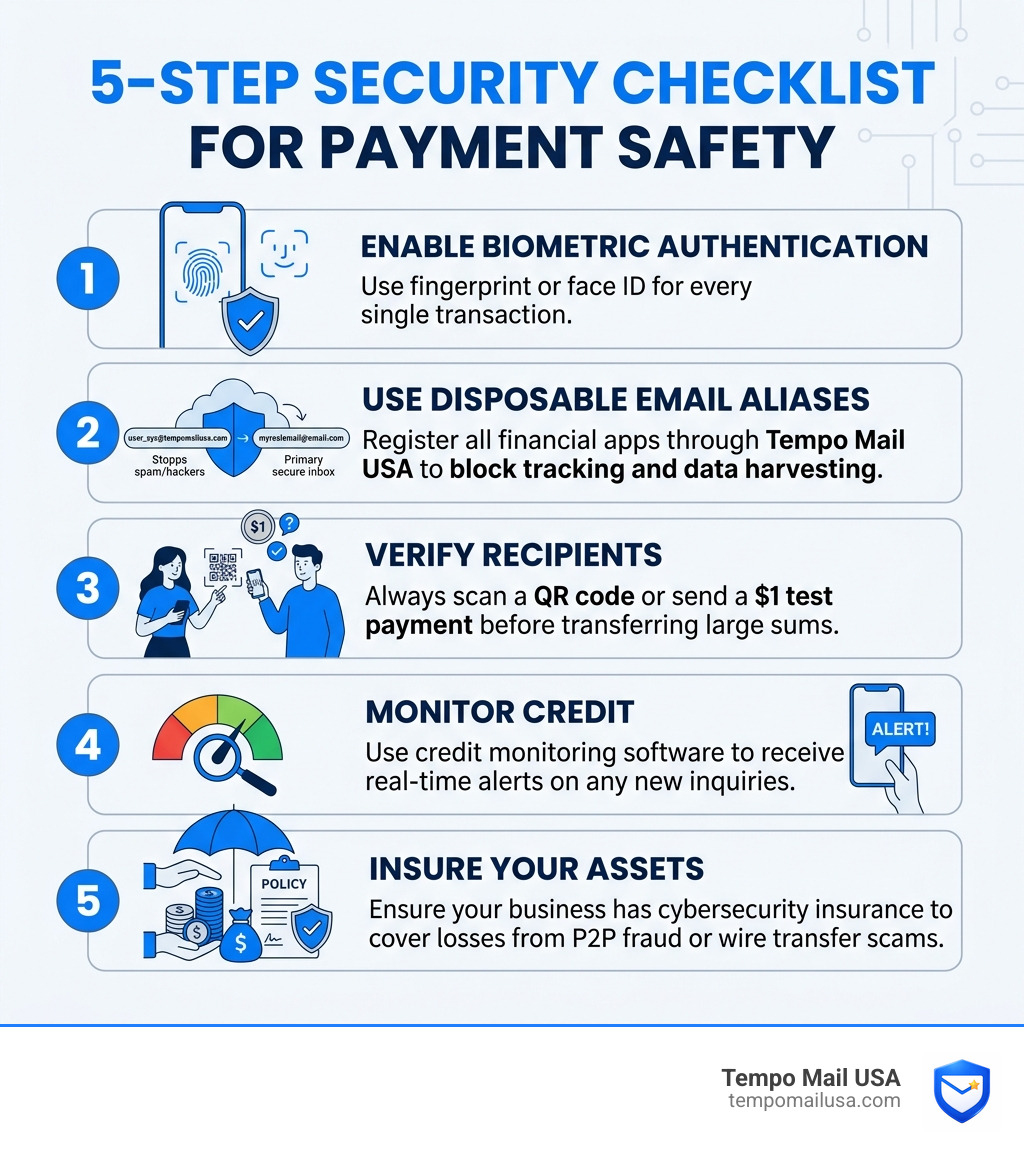
To keep your assets safe, we’ve developed this mandatory security checklist:
- Enable Biometric Authentication: Use fingerprint or face ID for every single transaction.
- Use Disposable Email Aliases: Register all financial apps through Tempo Mail USA to block tracking and data harvesting.
- Verify Recipients: Always scan a QR code or send a $1 test payment before transferring large sums.
- Monitor Credit: Use credit monitoring software to receive real-time alerts on any new inquiries.
- Insure Your Assets: Ensure your business has cybersecurity insurance to cover losses from P2P fraud or wire transfer scams.
Cybersecurity FAQ: Maximizing Payment Security
Is it safe to store money in P2P apps long-term?
No, it is generally unwise. Most P2P balances are not FDIC-insured by default. If the app provider goes bankrupt, your money could be tied up in legal proceedings for years. Always transfer your balance to a regulated bank account immediately. Furthermore, use identity theft protection services to monitor the bank accounts linked to these apps, as they are primary targets for hackers.
How do P2P scams compare to check fraud?
P2P scams are often "authorized," meaning the victim is tricked into sending the money willingly, which makes it nearly impossible to get a refund. Check fraud, conversely, often involves "unauthorized" forgeries which banks are legally required to investigate. However, P2P scams happen at the speed of light, while check fraud can take weeks to surface. Both require advanced malware protection on your devices to prevent credential theft.
What are the hidden fees in P2P vs cash?
While cash is virtually free to use, P2P apps monetize through convenience. Venmo and Cash App charge a 3% fee for credit card transfers and up to 1.75% for "instant" deposits to your bank. For a business, these fees can eat into margins significantly. Always factor these costs into your data privacy compliance and operational budget to ensure you aren't overpaying for "free" apps.
How can I protect my PII when using payment apps?
The best way to protect your PII (Personally Identifiable Information) is to minimize it. Use a temporary email from Tempo Mail USA for app registrations to ensure your real email isn't sold to brokers or leaked in a breach. Additionally, always use enterprise VPN solutions when accessing financial apps on public Wi-Fi to prevent "man-in-the-middle" attacks where hackers intercept your login credentials.
Conclusion
The pros and cons of p2p payments vs cash or checks show that while the world is moving toward digital speed, the risks are moving just as fast. We believe that financial sovereignty requires a multi-layered defense. Use P2P for convenience, but never at the expense of your privacy.
By integrating tools like Tempo Mail USA to mask your identity, employing identity theft protection services to watch your back, and carrying cybersecurity insurance, you can enjoy the benefits of modern fintech without becoming a statistic. Stay safe, stay anonymous, and always double-check that recipient handle before you hit send!