
eToro Spam Email: Real Mail vs the Clone-Firm Scam — and the 60-Second Check That Settles It
The email says your eToro account will be suspended in 24 hours unless you verify it now. Or it says a withdrawal you never made is being processed. Or a personal account manager has a guaranteed-return opportunity with your name on it. The logo looks right. The tone sounds right. And you have a real eToro account, so the message lands in the one inbox where it can actually hurt you.
Here is the problem that makes this scam work: eToro really does email you. A lot. Marketing, deposit confirmations, withdrawal notices, corporate-action votes, platform updates. So "I get mail from eToro all the time" is true, and "this one is from eToro" does not follow from it. I checked the live regulator warnings and eToro's own published safety guidance to draw the line between the real mail and the fakes — and the line turns out to be short, specific, and checkable in about a minute.
The Two Inboxes in Your Head
Start with the uncomfortable part. If you have an eToro account, your inbox already contains legitimate eToro mail, and the scammers know it. Real eToro emails include marketing newsletters, deposit and withdrawal confirmations, and notices about corporate events affecting your portfolio. Shareholder-meeting voting emails come from a specific address on the etoro.com domain, and eToro's own help pages tell you to check your spam folder for them. You can switch off most marketing mail in Notification Settings, but eToro is explicit that you cannot opt out of the important ones — deposit and withdrawal status, corporate events, and document requests stay on.
That volume is the camouflage. A fake "account suspended" email does not have to be perfect; it has to be plausible enough to sit next to ten real ones. The scammer's bet is that you will triage by feeling — this looks urgent, this looks official — instead of by checking. The whole point of this post is to replace the feeling with a check that takes less time than reading the email twice.
One more thing before the evidence: eToro is a real, regulated platform, and that matters for how you judge the mail. eToro has operated since 2007 and is regulated in the US by FINRA and the SEC, among other regulators elsewhere. The company itself is not the scam. The scam is other people borrowing its name, its logo, and your trust in it. Every claim in this article is about the impersonators, not the platform — and the strongest proof of that is that the impersonators have already been caught and named by a regulator.
The Case File: A Clone Firm Called Etoro SB Limited
On 26 May 2022, the UK's Financial Conduct Authority published a warning that is still live today. Fraudsters were contacting people pretending to be an authorised firm, using the name Etoro SB Limited and the website etorosb.com. The FCA's wording is blunt: "This firm is not authorised by us." It calls the operation a clone firm — criminals copying the details of a firm the FCA does authorise, to convince people the fake one is genuine.
The genuine firm, for the record, is ETORO (UK) LIMITED, Firm Reference Number 583263, based at One Canada Square, Canary Wharf, London. Its website is etoro.com. The clone used a lookalike name and its own domain, and the FCA warns that scammers "may mix" genuine details with false ones and "may also change their contact details over time" — which is exactly why memorising one fake domain is not a defence. The pattern is the defence.
The stakes in the FCA warning are not abstract. If you deal with a clone firm, you have no access to the Financial Ombudsman Service if you want to complain, and no protection from the Financial Services Compensation Scheme if things go wrong. In plain terms: if the money goes to a clone, it is very unlikely to come back. There is one narrow piece of good news the FCA notes — if you were tricked into paying a fraudster on or after 7 October 2024, you may be covered by reimbursement protections introduced by the Payment Systems Regulator. That date matters, and I come back to it in the recovery section.
This is not a one-off, either. eToro's own safety guide describes a May 2021 operation in which Europol and other law enforcement agencies took down an investment-fraud and money-laundering ring that had cost hundreds of victims across Europe a combined $36 million. The criminals ran fake but professional-looking trading platforms, lured victims through ads on social media and search engines, posed as experienced brokers from a fake call centre, and used manipulated software to fake profits. That is the industrial version of the email in your inbox: same playbook, bigger budget.
Four Scripts the Scammers Keep Reusing
Scam emails about eToro are not random. They recycle a small set of scripts, because the scripts work. Learn the four and you will recognise the fifth before you finish reading it.
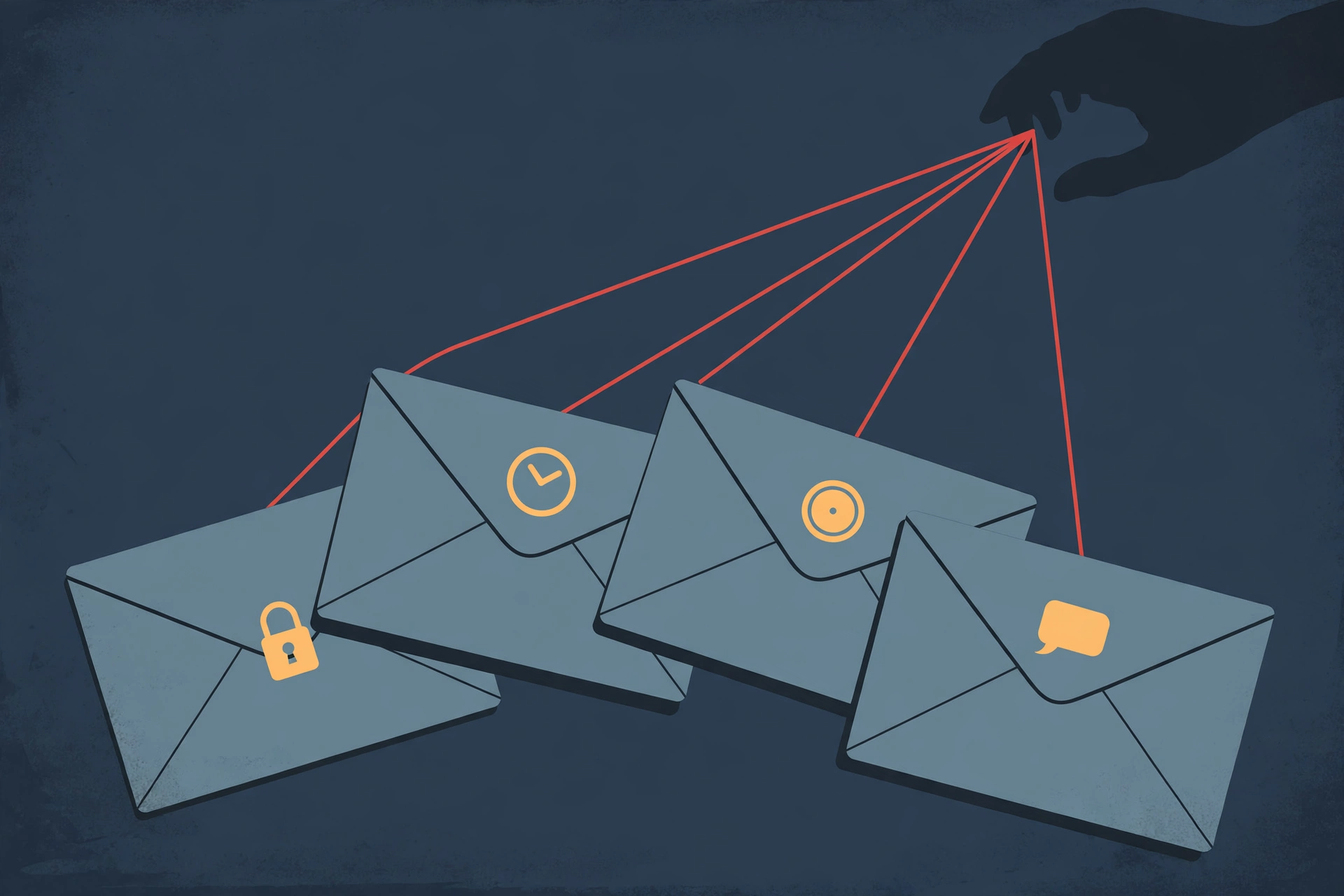
1. "Your account will be suspended." The urgency script. A verification problem, a compliance review, a document missing — resolve it within 24 hours or lose access. The deadline is the weapon: it is designed to stop you checking and start you clicking. Real compliance mail from a regulated platform does not threaten to lock you out by tomorrow morning over an email link.
2. "Your withdrawal is being processed." The confirmation-you-didn't-make script. It names an amount and a destination you do not recognise, then offers a link to "cancel" it. The link is the trap; the withdrawal is fiction. The panic it creates is the point — a person who thinks money is leaving their account clicks first and thinks second.
3. "Guaranteed returns" and the deposit bonus. The greed script. A personal account manager, a limited-time opportunity, returns no real investment can promise. eToro itself warns that its representatives will never ask you to deposit to a specific payment method or crypto wallet, and never ask you to move money to a so-called "safe account". Any email doing either of those things is not from eToro, whatever the logo says.
4. The account manager on WhatsApp or Telegram. The relationship script. eToro does have a verified WhatsApp Business account, and its representatives may use it — but only to contact clients who already have an assigned Account Manager. eToro states plainly that it will never contact you via Telegram or personal social media, and never through a third party about your account. A "manager" who finds you on Telegram was never assigned to you.
Notice what all four scripts share: they move you off the email and onto a channel the scammer controls — a link, a phone call, a chat. A real notice from a platform gives you a way to verify it independently, inside your logged-in account. A scam gives you exactly one path, and it leads to them.
The 60-Second Check That Settles Any eToro Email
You do not need to become a security analyst. Run this check on any eToro email that asks you to do anything, and do it before you click, reply, or call.
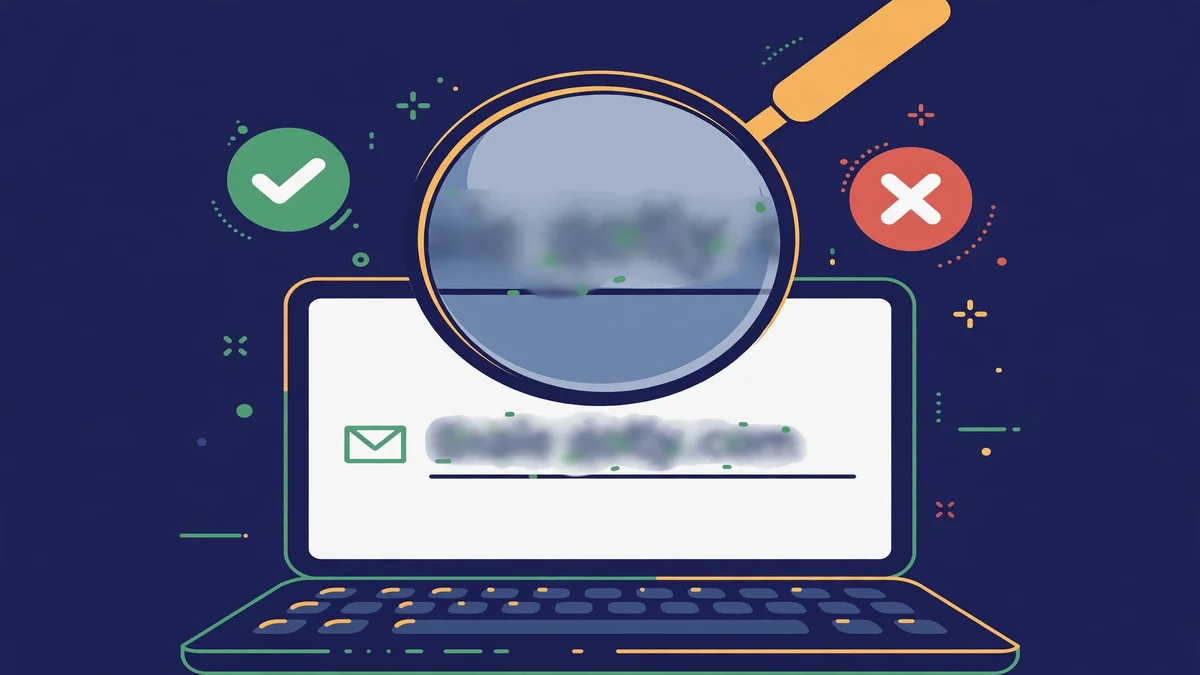
Step 1 — read the sender domain, not the display name. The display name is a costume; anyone can put "eToro" or "eToro Support" on top of any address. Expand the sender and read the part after the @. eToro states that its representatives contact you "via the authentic etoro domain with @etoro.com in the address". If the domain is anything else — a lookalike, a free-mail address, a random business domain — the email is not from eToro. We dissected the same trick in detail with a different platform in our breakdown of the Uphold scam email, where the fake breach notice arrived from cosmetics-brand domains; the domain test catches that variant in seconds.
Step 2 — hover the link, never click it. On desktop, hover and read the destination in the status bar. On mobile, long-press to preview it. The visible text can say etoro.com while the destination goes somewhere else entirely. If the link does not lead to etoro.com, do not follow it. If you need to check your account, type etoro.com into your browser yourself, or open the app you already have installed.
Step 3 — check inside your account, not inside the email. Log in the normal way and look for the thing the email claims: a suspension notice, a pending withdrawal, a message from support. If the account shows nothing, the email is describing a reality that does not exist. This is the single most reliable step in the whole check, because the scammer cannot put a fake alert inside your real account.
Step 4 — ask whether the email wants a code. eToro will never email you asking for your password, and never ask for your two-factor authentication code. If the message asks you to share, read out, or enter a code anywhere except the official login page you reached yourself, stop. The same rule applies to any verification code that arrives without you requesting one — a code you did not ask for is a signal, not an instruction, and our guide to unsolicited verification codes explains why the safest response is to ignore it and check your account directly.
Sixty seconds, four steps. If an email fails any one of them, treat it as fake and move on to the reporting steps below.
What eToro Will Never Ask You to Do
eToro publishes this list itself, and it is worth keeping somewhere you can find it, because it turns a vague suspicion into a yes-or-no test. A verified eToro representative will only contact you through the email address or phone number on your account, and only from the @etoro.com domain. A verified representative will never:
- Ask you to move your money to a so-called "safe account" or any other place
- Ask you to move your money to an alternative eToro account
- Ask you to deposit to a specific payment method or crypto wallet
- Ask you for your account password or your two-factor authentication code
- Ask you to provide your full credit card number or to send money
- Ask for credentials belonging to a non-eToro account
- Contact you via a third party about your account
That list is the whole test. If the email, call, or chat in front of you asks for any item on it, the person on the other end is not eToro. It does not matter how professional the website looks, how convincing the caller sounds, or how many real details they already know about you — scammers buy old breach data cheaply, and knowing your name or your email address proves nothing.
Two more habits from eToro's own guidance are worth adopting whether or not you have received a scam email. First, turn on two-factor authentication in your account settings if you have not already; it is the single cheapest upgrade to your account's security. Second, never enter your password after following a link in an email from an untrusted source, and never reuse the same password on another website. The first rule stops the phishing link; the second stops one leaked password from becoming every account you own.
I Clicked, or I Paid — the Next 30 Minutes
If you are reading this section because the check came too late, do not waste time on blame. Work the list in order; the first three items take minutes and they matter most.
1. Change your password from a clean route. Do not use any link in the suspicious email. Type etoro.com into your browser, log in, and change the password. If you cannot log in, use the platform's own password-reset flow, reached the same way. If you reused that password anywhere else, change it there too, starting with your email account.
2. Turn on two-factor authentication and review your account. Enable 2FA if it is off. Then check your open positions, recent withdrawals, linked payment methods, and login history for anything you do not recognise. If you see a withdrawal you did not make, contact eToro support immediately through the official site or app — not through any contact details in the suspicious message.
3. If money left your account, call your bank now. Tell the bank you were tricked into making a payment to a scam account. In the UK, the Payment Systems Regulator's reimbursement rules cover payments to fraudsters made on or after 7 October 2024 in many cases, but the claim starts with your bank, and speed helps. Do not wait to see whether the money comes back on its own; it will not.
4. Report it to the regulator and to eToro. In the UK, the FCA takes reports of clone firms on 0800 111 6768 and through its contact form; the Etoro SB Limited warning exists because people reported. Forward the suspicious email to eToro's support through the official site so their security team can act on the domain and the infrastructure behind it. Reporting is not paperwork for its own sake — it is how the next warning gets published.
5. If you entered card details, treat the card as compromised. Call the card issuer, explain what happened, and ask for the card to be replaced. Watch the account for small test charges in the days after; scammers often start with a tiny transaction to check whether a stolen card still works before attempting a larger one.
The Habit That Shrinks This Whole Problem
Here is the part most scam guides skip: the reason your address is on the scammers' list at all is usually not eToro. It is everything else you signed up for with the same address. Trading newsletters, free signal groups, demo accounts, giveaway entries, a forum account from three years ago — each one is a copy of your real address in one more database, and databases leak, get sold, and get merged. The scammers do not need to breach eToro. They need your address to appear in one list next to the word "trading".
The habit that shrinks the problem is to stop handing your real address to anything you would not trust with your bank login. A burner email — a temporary, disposable address — is the right tool for the low-trust end of that spectrum: free trials, newsletters, one-off downloads, and signups you expect to abandon. The verification code still arrives, you still get in, and when the address later shows up in a breach dump, it points at an inbox that no longer exists instead of at your real one. If you want the fuller version of the same idea, our guide to sending email anonymously covers the tools and the trade-offs.
Keep your real address for the accounts that matter — your bank, your broker, your email provider itself — and give everything else an address you can throw away. The TempMailUSA homepage generates one in a click, no signup, and the inbox lives only as long as you need it. It will not stop a scammer from emailing you; nothing can. It stops the email from reaching the address that guards your money.
FAQ
Is every eToro spam email a scam?
No. eToro sends a high volume of legitimate marketing and account mail, and some of it lands in spam because of filters, not fraud. The test is not whether the email exists; it is whether the sender domain is @etoro.com, whether the link leads to etoro.com, and whether your logged-in account shows the thing the email claims. An email that passes all three is real. One that fails any of them is not.
Does eToro send emails from addresses other than @etoro.com?
eToro's published position is that its representatives contact you via the authentic etoro.com domain. Subdomains of etoro.com, such as the voting address used for shareholder meetings, are part of that same domain. An address on a different domain — a lookalike, a free-mail provider, an unrelated business — is not eToro.
I got an eToro email but I never opened an account. Is it a scam?
Almost certainly. Scammers buy address lists and mail everyone on them; they do not check whether you are a customer first. Do not click anything in it, do not reply, and do not use its unsubscribe link — report it as phishing in your mail app and delete it. If you are curious whether an account exists in your name, check by going to etoro.com yourself, never through the email.
Can eToro contact me on WhatsApp?
Only in a narrow case: eToro has a verified WhatsApp Business account that its representatives may use to contact clients who already have an assigned Account Manager. eToro will never ask for passwords, security codes, or account details over WhatsApp, and will never contact you via Telegram or personal social media. A WhatsApp message from a "manager" you were never assigned is a scam.
What is Etoro SB Limited?
A clone firm named in a Financial Conduct Authority warning published 26 May 2022. It used the website etorosb.com and pretended to be the authorised firm ETORO (UK) LIMITED (Firm Reference Number 583263). It is not authorised by the FCA, has no connection to the real eToro, and dealing with it leaves you without Ombudsman or compensation-scheme protection.
I paid a scammer pretending to be eToro. Can I get the money back?
Maybe, and speed is your best asset. Contact your bank immediately and report that you were tricked into paying a fraudster; in the UK, Payment Systems Regulator reimbursement rules may cover payments made on or after 7 October 2024. Also report the clone to the FCA and forward the email to eToro through its official channels. Recovery is never guaranteed, which is why the 60-second check above is worth building into a habit.
The Bottom Line
An eToro spam email is usually one of two things: real marketing you can switch off in Notification Settings, or an impersonator running one of four scripts — suspension, fake withdrawal, guaranteed returns, or a fake account manager. The FCA has already named one of the impersonators, Etoro SB Limited, and eToro has already published the list of things it will never ask you to do. Between those two documents, there is no mystery left in this scam, only a check that takes a minute: the domain after the @, the destination behind the link, and the state of your account when you log in yourself. Run it every time, keep your real address away from low-trust signups, and the email in your inbox goes back to being what it should be — ignorable.
Need a disposable temporary email?
Protect your real inbox from spam and promotional clutter instantly and free.
Received a suspicious email, text, or charge alert?
Verify whether the sender domain is disposable, spoofed, or unverified before clicking links.