



Why California Fraud Investigation Matters to Every Resident
California fraud investigation is one of the most active areas of law enforcement in the state — and it affects everyone from low-income families relying on food assistance to taxpayers footing billion-dollar bills.
Here is a quick overview of what you need to know:
- Healthcare fraud: 25 Southern California defendants were charged in a single federal sweep, with over $150 million fraudulently billed to Medicare, Medicaid, and private insurers
- EBT skimming: Thieves were stealing more than $20 million a month from CalFresh and CalWorks recipients at their peak — funds meant for rent and groceries
- Unemployment fraud: California's Employment Development Department (EDD) has been labeled a "high-risk agency," with estimates suggesting tens of billions in pandemic-era payouts may have been fraudulent
- Insurance fraud: The California Department of Insurance has pursued cases ranging from fake agent commissions to wildfire disaster scams
- Tax evasion: A Bay Area scheme involving luxury vehicles like a $1.8 million McLaren dodged over $1.8 million in state taxes
California is the most populous state in the country, and that scale makes it a prime target for organized fraud. The schemes are not small. They drain public programs, harm vulnerable residents, and cost ordinary taxpayers enormous sums every year.
What makes this especially relevant right now is the political pressure layered on top of it. Federal agencies have launched new investigations into California's benefits programs, while state officials push back and tout their own enforcement wins.
This guide breaks down who is doing what, what has actually worked, and — importantly — how you can protect yourself from becoming a victim.
The Landscape of California Fraud Investigation
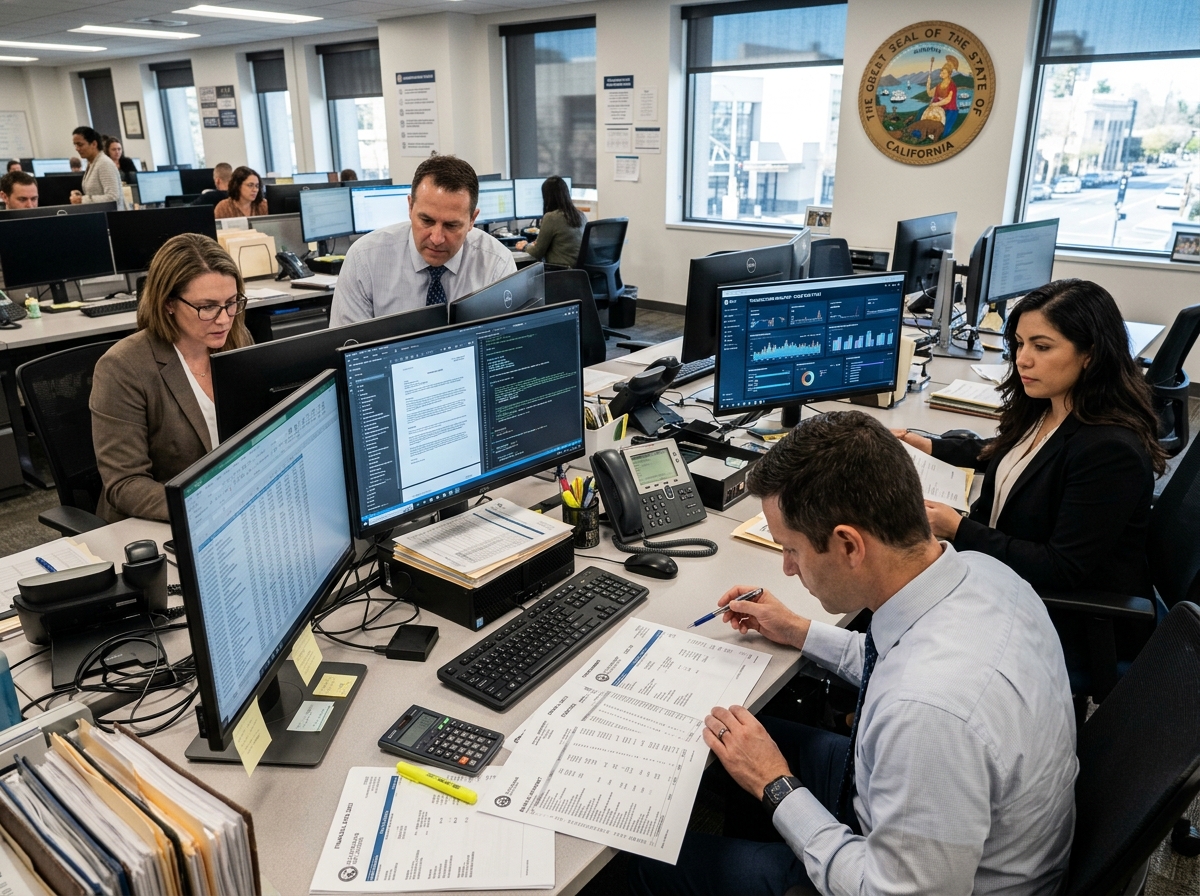
Navigating California fraud investigation feels a bit like looking through a kaleidoscope of white-collar crime. One moment you are looking at a doctor overbilling Medicare, and the next, you are seeing a sophisticated digital skimming operation at a local grocery store.
The "landscape" isn't just one thing; it is a multi-front war involving local police, state agencies like the Department of Insurance, and federal heavyweights like the Department of Justice and the Department of Labor. Because California has the nation's largest insurance market and one of the largest social safety nets in the world, the "prize" for fraudsters is massive.
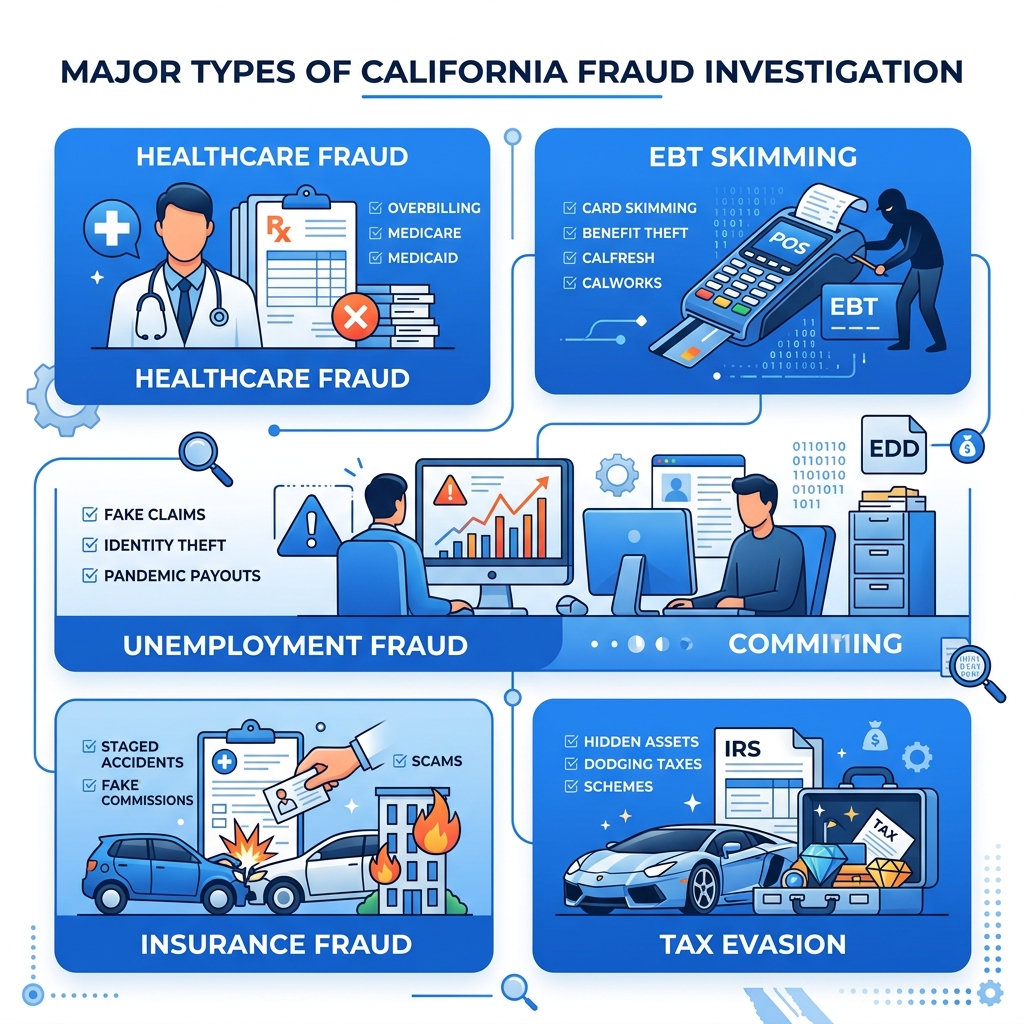
Currently, investigators are prioritizing five major areas:
- Healthcare Fraud: Large-scale billing schemes targeting government programs.
- EBT Skimming: Digital theft from low-income families.
- Unemployment Benefits: Pandemic-era fallout that continues to haunt state agencies.
- Insurance Scams: Everything from staged car accidents to life insurance commission theft.
- Tax Evasion: High-net-worth individuals hiding assets or falsifying out-of-state residency.
If you believe you’ve stumbled upon a scheme, knowing How to Report Fraud to FTC: The Right Way is a great first step in the reporting process.
Major Schemes Targeting Public Benefits
The most heartbreaking aspect of modern fraud in the Golden State involves the theft of public benefits. Programs like CalFresh (food assistance) and CalWorks (cash aid) serve millions of Californians, including some of our most vulnerable neighbors.
Thieves have moved away from traditional "welfare fraud" (where a recipient lies to get more money) and toward high-tech "skimming." They place tiny, nearly invisible devices on card readers at supermarkets. When a recipient swipes their EBT card, the device copies the data. The thieves then create duplicate cards and drain the account—often the very night the benefits are deposited.
At its worst, EBT theft was siphoning $20 million a month from these programs. While Governor Newsom touts gains against EBT theft, claiming a drop to roughly $4 million a month, local investigators warn that these numbers might be undercounted because they only reflect the thefts that victims actually report.
High-Value Healthcare and Tax Fraud
While EBT theft targets individuals, healthcare and tax fraud target the state’s coffers directly. In a massive Southern California sweep, federal prosecutors charged 25 defendants for schemes that sought over $150 million. Shockingly, 14 of those charged were doctors or medical professionals. These schemes often involve billing for services never rendered or "upcoding" simple procedures into expensive surgeries.
On the tax front, the Attorney General Bonta Exposes Bay Area Tax Evasion Scheme headline recently shook the luxury car world. A group of 14 individuals allegedly evaded over $1.8 million in California taxes by registering $20 million worth of luxury vehicles—including a Porsche 918 Spyder and a Ferrari F12TDF—out of state, despite keeping the cars in California.
Federal and State Enforcement Actions
When we talk about a California fraud investigation, we are usually talking about a team effort. The "TRUE Task Force" (Tax Recovery in the Underground Economy) is a perfect example. It brings together the Department of Justice (DOJ), the DMV, the Franchise Tax Board, and even federal partners like Homeland Security.
Key figures leading these charges include:
- Attorney General Rob Bonta: Focusing on tax evasion and corporate fraud.
- Insurance Commissioner Ricardo Lara: Overseeing the 90-year-old Investigation Division.
- U.S. Attorney’s Offices: Handling the heavy-hitting federal healthcare and wire fraud cases.
The heat is turning up, especially as the Labor Department launches investigation into California over unemployment fraud claims, signaling that federal patience with state-level oversight has grown thin.
Recent Successes in California Fraud Investigation
It’s not all bad news; the good guys are winning some major rounds. For instance, the California Department of Insurance recently dismantled a massive life insurance fraud ring. Five defendants were charged in a multi-million-dollar life insurance fraud case where they allegedly falsified agent information to collect $1.4 million in unearned commissions. Investigators managed to assist in recovering over $2 million for the victims.
Other notable wins include:
- Premium Finance Fraud: A Northridge agent was sentenced to 50 months in federal prison for a $3.7 million scheme.
- DMV Wins: Since 2023, the DMV has launched over 80 investigations into registration fraud, recovering $2.3 million for the state.
- EBT Arrests: Nearly 200 people have been charged across California specifically for EBT skimming schemes.
The Federal Strike Team and EDD Scrutiny
The Employment Development Department (EDD) has had a rough few years. During the pandemic, the rush to get unemployment checks out the door led to what some call a "fraud-pocalypse." A 2023 state auditor report labeled the EDD a "high-risk agency" due to its inadequate prevention measures.
The federal government has now stepped in. The US Labor Agency Launches California Unemployment Aid Fraud Probe, deploying a specialized "strike team" to investigate how billions of dollars were distributed. With estimates of fraudulent payouts reaching into the tens of billions, this is likely to be one of the largest forensic audits in the state's history.
The Role of Key Agencies and Organizations
While the headlines focus on the "strike teams," much of the heavy lifting in a California fraud investigation happens at the agency level. The California Department of Insurance is currently celebrating a major milestone: Protecting Californians by investigating insurance fraud for 90 years. They don't just sit in offices; they are on the ground after wildfires, protecting survivors from "bad actor" adjusters and unlicensed contractors.
Beyond insurance, the state is also battling the "Dirty Dozen," a list of common tax scams. Staying informed via guides like the IRS Tax Scam: The Dirty Dozen Threats You Need to Know is essential for any California business owner or taxpayer.
Southern California Fraud Investigators' Association (SCFIA)
Not all heroes wear capes—some wear badges and carry clipboards at conferences. The Southern California Fraud Investigators' Assoc. (SCFIA) is a professional organization dedicated to improving the methods used to catch criminals.
By hosting annual training conferences and quarterly meetings, they facilitate a "fellowship" of investigators. This allows a detective in San Diego to share notes with an insurance investigator in Los Angeles about a new type of skimming device or a suspicious billing pattern they've both seen.
Technological Shifts in California Fraud Investigation
The "cat and mouse" game between fraudsters and investigators is increasingly moving into the digital realm. California is finally upgrading its tech to match the sophistication of the criminals.
| Feature | Traditional EBT Cards | New Chipped EBT Cards |
|---|---|---|
| Security | Magnetic stripe (easy to skim) | EMV Chip (very hard to clone) |
| Monitoring | Manual reports only | Computer models for real-time detection |
| User Control | None | "Freeze" app to lock the card |
| Prevention | Reactive | Proactive (PIN resets for at-risk users) |
These technological shifts are vital. If you’ve ever been targeted by a financial scam, you know how stressful it is. Learning How to Resolve First Financial Scam: 5 Guaranteed Methods can help you navigate the aftermath of a breach.
Political Context and Financial Impact
Fraud in California isn't just a legal issue; it's a political lightning rod. The Trump administration recently threatened to freeze federal social services funding for several Democratic-led states, including California, over these fraud allegations. While a judge halted the freeze on federal social services funding for programs like CalWorks, the tension remains high.
Governor Newsom's administration has been under pressure to prove that California can manage its own programs without federal "strike teams" breathing down their necks. This political pressure often dictates where resources are funneled—for instance, the rapid rollout of chipped EBT cards was largely a response to this national scrutiny.
Impact on Taxpayers and Vulnerable Residents
The numbers are staggering. When EBT theft hit $20 million a month, that wasn't just "lost money." Because the state often reimburses victims of skimming, that $20 million came directly from California taxpayers.
Moreover, the human cost is high. When a family's CalFresh benefits are stolen, they can't wait for a 30-day California fraud investigation to finish—they need to eat today. This creates a ripple effect of housing instability and food insecurity. For more on how these bureaucratic scams operate, see our Department of Legal Compliance Scam Update.
How Residents Can Protect Yourself
You don't have to be a passive victim. Whether it's a suspicious text from a fake DMV or a "PayPal" email that looks slightly off, your first line of defense is skepticism.
To protect yourself:
- Verify Licenses: Before hiring an insurance agent or contractor, check their license at www.insurance.ca.gov.
- Use Official Apps: If you use EBT, use the official app to "freeze" your card when you aren't using it.
- Report Immediately: If you see something, say something. Use the How to Report Fraud to FTC: The Right Way guide to ensure your complaint gets to the right desk.
- Watch for Phishing: Scammers love to mimic PayPal. If you get an "Account Limited" alert, never click the link. Log in directly through the official website instead.
Preventing Identity Theft and Digital Scams
The root of most modern fraud is a data breach. When your real email address and personal info are leaked, you become a target for every scammer in the world. We’ve seen this time and again, as detailed in our analysis of the HCiActive Data Breach Explained: What You Need to Know.
This is where we at Tempo Mail USA believe in a "PII Firewall." By using an email alias instead of your real address, you hide your identity from the services you use. If a service is breached or a scammer tries to "phish" you, they only have your alias. You can simply delete the alias and cut off their access to your digital life instantly.
Frequently Asked Questions about California Fraud
How do I report suspected insurance fraud in California?
You can report it directly to the California Department of Insurance by calling their hotline at 1-800-927-4357 or by visiting their website at www.insurance.ca.gov. They handle everything from agent misconduct to fraudulent claims.
What is the "Strike Team" investigating regarding the EDD?
The U.S. Labor Department’s "UI Strike Team" is investigating the Employment Development Department's management of unemployment funds. They are specifically looking for billions of dollars in fraudulent pandemic-era payouts and investigating whether the state’s systems are "high-risk" for future theft.
Are chipped EBT cards effective against skimming?
Yes, they are significantly more secure. Traditional magnetic stripes are easy to copy with a "skimmer," but EMV chips use encrypted data that is nearly impossible to duplicate. However, residents should still remain vigilant and use card-freezing features when available.
Conclusion
The world of California fraud investigation is constantly evolving. As soon as investigators close one door, scammers try to pick the lock on another. From luxury car tax dodgers to EBT skimmers, the impact on our state's economy and our most vulnerable residents is profound.
Vigilance is your best tool, but privacy is your best shield. At Tempo Mail USA, we provide the identity proxy you need to stay safe. By using our secure email aliases, you create a PII firewall that keeps your personal information out of the hands of fraudsters. Don't wait for a breach to happen—take control of your digital footprint today.
Protect your identity and stay one step ahead of the scammers at tempomailusa.com.